





July 1, 2026
AV Labor vs AV Equipment Rental: What Event Planners Should Know
Quick Answer: Event planners need both AV labor and equipment rental, but they serve different functions and are often sourced separately. AV equipment rental provides the hardware (screens, projectors, sound systems), while AV labor provides skilled technicians to set up, operate, and troubleshoot that equipment. Understanding when to bundle these services versus sourcing them independently can save 20-30% on event costs while ensuring professional execution.
Key Takeaways
What Is AV Equipment Rental?
AV equipment rental provides the physical hardware needed for presentations, conferences, and live events. This includes projectors, LED screens, sound systems, microphones, lighting fixtures, and supporting infrastructure like cables, stands, and power distribution.
Equipment rental companies maintain inventories of current technology and handle logistics like delivery, pickup, and basic equipment testing. Most rental houses offer everything from basic laptop projectors to massive LED video walls and concert-grade sound systems.
Choose equipment-only rental when:
Common mistake: Assuming all equipment comes pre-configured. Most rental gear requires programming, calibration, and testing that goes beyond simply plugging devices together.
What Is AV Labor and Why Do You Need It?
AV labor encompasses the skilled technicians who transform equipment into functioning systems. These professionals handle setup, programming, operation, and real-time troubleshooting during events.
Professional AV technicians bring specialized knowledge of signal routing, audio mixing, lighting control, and video processing. They can adapt quickly when presentations don't work as planned or when last-minute changes require system reconfigurations.
Essential AV labor roles include:
You need professional AV labor when:
AV Labor vs AV Equipment Rental: What Event Planners Should Know About Bundled Services
Full-service AV companies bundle equipment and labor into comprehensive packages. This approach provides single-point accountability but often comes with premium pricing since you're paying for convenience and integrated service delivery.
Bundled services work well for planners who want to minimize vendor coordination and prefer having one company responsible for all technical aspects. The AV provider handles equipment selection, delivery, setup, operation, and breakdown.
Advantages of bundled services:
Disadvantages of bundled services:
Choose bundled services for: High-stakes events where seamless execution matters more than cost optimization, or when internal resources for vendor coordination are limited.
When to Source AV Labor and Equipment Separately
Separating AV labor and equipment procurement allows more granular control over quality and costs. This approach works best for experienced event planners who can coordinate multiple vendors effectively.
Independent sourcing lets you select best-in-class providers for each service. You might choose a premium equipment rental house for cutting-edge technology while hiring skilled AV technicians from a specialized labor provider.
Steps for separate sourcing:
Critical coordination points:
Common mistake: Failing to account for compatibility issues between different equipment brands and labor team experience.
Cost Comparison: Labor vs Equipment in Event Budgets
Understanding the cost breakdown between AV labor and equipment helps planners make informed sourcing decisions. Labor typically represents 30-50% of total AV costs for corporate events, with the percentage increasing for complex productions requiring specialized skills.
Equipment costs scale with: Technology complexity, screen size, audio power requirements, and rental duration.
Labor costs scale with: Setup complexity, event duration, skill specialization, and local wage rates.
Budget optimization tip: For multi-day events, negotiate labor rates that decrease after the first day since setup is complete and ongoing operation requires fewer technicians.
How Venue Requirements Affect Your AV Labor vs Equipment Decisions
Venue policies significantly impact whether you can source AV labor and equipment independently. Union venues, high-security facilities, and exclusive vendor agreements can limit your options.
Many convention centers and hotels have preferred vendor lists or exclusive contracts that restrict outside equipment or labor. Some venues require all AV technicians to be union members or venue-certified.
Venue considerations checklist:
Research early: Contact venue technical managers at least 30 days before your event to understand all restrictions and requirements.
Workaround strategies: Some venues allow outside equipment with in-house labor, or outside labor with approved equipment vendors.
Quality Control: Ensuring Compatibility Between Separate Vendors
When sourcing AV labor and equipment from different providers, compatibility becomes your responsibility. Equipment specifications, setup procedures, and technical standards must align for smooth execution.
Professional AV technicians can work with most equipment brands, but complex systems benefit from advance coordination. Share equipment specifications with your labor provider during the quoting process.
Pre-event coordination steps:
Red flags that indicate compatibility problems:
Best practice: Use experienced AV professionals who have worked with diverse equipment brands and can adapt quickly to different manufacturers' systems.
Insurance and Liability Considerations
Insurance coverage differs significantly between equipment-only rentals and full-service AV providers. Understanding liability boundaries protects your event and organization from potential claims.
Equipment rental companies typically provide coverage for their gear but may not cover damage caused during installation or operation by third-party technicians. Labor providers carry different insurance for their workers and installation activities.
Key insurance questions for equipment rentals:
Key insurance questions for AV labor:
Gap coverage: Consider event insurance that covers coordination between multiple vendors, especially for high-value events where technical failures could result in significant losses.
Making the Right Choice for Your Event
The decision between bundled AV services and separate sourcing depends on your event complexity, budget constraints, internal resources, and risk tolerance.
Choose bundled services when:
Choose separate sourcing when:
Hybrid approach: Some planners use bundled services for complex main sessions while sourcing equipment-only for simple breakout rooms, balancing cost and convenience.
For most corporate events, working with specialized event production services that can provide both equipment access and skilled technicians offers the best balance of cost control and professional execution.
Frequently Asked Questions
What percentage of my AV budget should go to labor versus equipment?
Labor typically represents 30-50% of total AV costs, with higher percentages for complex events requiring specialized skills. Simple presentations might be 70% equipment/30% labor, while broadcast events can be 45% equipment/55% labor.
Can I use my own AV technicians with rental equipment?
Most equipment rental companies allow third-party technicians, but check insurance coverage and compatibility requirements. Some specialized equipment may require manufacturer-certified operators.
How far in advance should I book AV labor and equipment?
Book 4-6 weeks ahead for standard corporate events, 8-12 weeks for large conferences or during peak seasons. Popular venues and specialized equipment may require longer lead times.
What happens if equipment fails during my event?
Full-service providers typically include backup equipment and immediate replacement. With separate sourcing, establish clear protocols for equipment failure and ensure both vendors understand their responsibilities.
Do union venues require me to use specific AV labor providers?
Many union venues have approved contractor lists or require union membership for certain roles. Check venue requirements early in your planning process to avoid last-minute complications.
Is it cheaper to rent AV equipment without labor?
Equipment-only rentals cost less upfront but may result in higher total costs if setup takes longer or problems occur during the event. Factor in your team's technical expertise when comparing options.
What insurance coverage do I need when using separate AV vendors?
Ensure both equipment and labor providers carry appropriate liability coverage. Consider event insurance to cover gaps between vendor policies, especially for high-value events.
Can I negotiate better rates by separating AV labor and equipment?
Yes, separate sourcing often provides 20-30% cost savings compared to bundled services. However, this requires more coordination effort and assumes you can manage multiple vendor relationships effectively.
How do I ensure compatibility between different AV vendors?
Share detailed equipment specifications with labor providers during quoting. Conduct pre-event coordination calls and allow extra setup time for unfamiliar equipment configurations.
What should I do if my venue has exclusive AV contracts?
Work within venue requirements but negotiate for competitive pricing. Some venues allow outside equipment with in-house labor, or may waive exclusivity for specialized needs not covered by their preferred providers.
How many AV technicians do I need for my event?
Technician requirements depend on equipment complexity, venue size, and event duration. A basic presentation might need one technician, while multi-room conferences could require 3-5 specialists. Consult with professional AV staffing services for accurate estimates.
What's the difference between AV technicians and AV engineers?
AV technicians handle equipment setup and basic operation, while AV engineers design systems, program complex equipment, and troubleshoot advanced technical issues. Large events often need both skill levels.
Conclusion
Understanding AV labor vs AV equipment rental empowers event planners to make strategic decisions that balance cost, quality, and risk management. While bundled services offer convenience and single-point accountability, separate sourcing can provide significant cost savings and greater control over service quality.
The key is matching your approach to your event's specific requirements, venue constraints, and internal capabilities. Simple presentations with basic equipment needs may work well with equipment-only rentals and minimal labor support. Complex multi-day conferences typically benefit from professional AV technicians who can ensure seamless execution and rapid problem resolution.
Take these next steps:
Success with either approach requires careful planning, clear communication, and realistic assessment of your team's technical expertise. Whether you choose bundled services or separate sourcing, prioritize working with experienced professionals who understand the critical role that reliable AV systems play in event success.
Key Takeaways
- AV equipment rental covers hardware like projectors, screens, microphones, and lighting systems
- AV labor includes skilled technicians who install, operate, and maintain equipment during events
- Bundled packages from full-service providers often cost more but offer single-point accountability
- Separate sourcing allows more control over quality and costs but requires more coordination
- Labor costs typically range from 30-50% of total AV budgets for corporate events
- Equipment-only rentals work best for simple setups with in-house technical staff
- Complex events requiring custom configurations almost always need professional AV technicians
- Union venues may restrict which labor providers can work on-site
- Insurance and liability coverage differs significantly between equipment-only and full-service providers
What Is AV Equipment Rental?
AV equipment rental provides the physical hardware needed for presentations, conferences, and live events. This includes projectors, LED screens, sound systems, microphones, lighting fixtures, and supporting infrastructure like cables, stands, and power distribution.
Equipment rental companies maintain inventories of current technology and handle logistics like delivery, pickup, and basic equipment testing. Most rental houses offer everything from basic laptop projectors to massive LED video walls and concert-grade sound systems.
Choose equipment-only rental when:
- Your team has experienced AV technicians on staff
- The setup is straightforward (single projector, basic audio)
- Budget constraints require minimizing labor costs
- You're working with a preferred AV labor provider separately
Common mistake: Assuming all equipment comes pre-configured. Most rental gear requires programming, calibration, and testing that goes beyond simply plugging devices together.
What Is AV Labor and Why Do You Need It?
AV labor encompasses the skilled technicians who transform equipment into functioning systems. These professionals handle setup, programming, operation, and real-time troubleshooting during events.
Professional AV technicians bring specialized knowledge of signal routing, audio mixing, lighting control, and video processing. They can adapt quickly when presentations don't work as planned or when last-minute changes require system reconfigurations.
Essential AV labor roles include:
- Audio engineers for sound mixing and microphone management
- Video technicians for projection mapping and screen management
- Lighting operators for stage and ambient lighting control
- System engineers for complex signal routing and integration
- Show callers for coordinating technical cues during presentations
You need professional AV labor when:
- Multiple audio/video sources require switching and mixing
- Lighting changes are timed to presentation content
- Backup systems must activate seamlessly if primary equipment fails
- Union venues require certified technicians for equipment operation
AV Labor vs AV Equipment Rental: What Event Planners Should Know About Bundled Services
Full-service AV companies bundle equipment and labor into comprehensive packages. This approach provides single-point accountability but often comes with premium pricing since you're paying for convenience and integrated service delivery.
Bundled services work well for planners who want to minimize vendor coordination and prefer having one company responsible for all technical aspects. The AV provider handles equipment selection, delivery, setup, operation, and breakdown.
Advantages of bundled services:
- Single point of contact for all technical issues
- Guaranteed equipment-labor compatibility
- Streamlined billing and contract management
- Integrated insurance coverage
- Faster problem resolution during events
Disadvantages of bundled services:
- Higher overall costs (typically 25-40% premium)
- Limited flexibility in equipment or labor selection
- Potential for over-specification to increase margins
- Less control over individual service quality
Choose bundled services for: High-stakes events where seamless execution matters more than cost optimization, or when internal resources for vendor coordination are limited.
When to Source AV Labor and Equipment Separately
Separating AV labor and equipment procurement allows more granular control over quality and costs. This approach works best for experienced event planners who can coordinate multiple vendors effectively.
Independent sourcing lets you select best-in-class providers for each service. You might choose a premium equipment rental house for cutting-edge technology while hiring skilled AV technicians from a specialized labor provider.
Steps for separate sourcing:
- Define technical requirements with detailed equipment specifications
- Request equipment quotes from 3-4 rental companies
- Coordinate delivery timing to align with labor availability
- Brief labor providers on equipment types and event requirements
- Establish clear handoff procedures between equipment delivery and setup crews
Critical coordination points:
- Equipment delivery must arrive before labor setup time
- Power and rigging requirements must be communicated to both vendors
- Backup equipment protocols need agreement from both providers
- Load-out timing affects both labor duration and equipment return schedules
Common mistake: Failing to account for compatibility issues between different equipment brands and labor team experience.
Cost Comparison: Labor vs Equipment in Event Budgets
Understanding the cost breakdown between AV labor and equipment helps planners make informed sourcing decisions. Labor typically represents 30-50% of total AV costs for corporate events, with the percentage increasing for complex productions requiring specialized skills.
Event Type | Equipment % | Labor % | Typical Split Reason |
Basic presentations | 70% | 30% | Simple setup, minimal operation |
Corporate conferences | 55% | 45% | Multiple rooms, live switching |
Trade show exhibits | 60% | 40% | Custom builds, ongoing support |
Broadcast events | 45% | 55% | Complex workflows, specialized skills |
Concerts/festivals | 50% | 50% | Safety-critical, union requirements |
Equipment costs scale with: Technology complexity, screen size, audio power requirements, and rental duration.
Labor costs scale with: Setup complexity, event duration, skill specialization, and local wage rates.
Budget optimization tip: For multi-day events, negotiate labor rates that decrease after the first day since setup is complete and ongoing operation requires fewer technicians.
How Venue Requirements Affect Your AV Labor vs Equipment Decisions
Venue policies significantly impact whether you can source AV labor and equipment independently. Union venues, high-security facilities, and exclusive vendor agreements can limit your options.
Many convention centers and hotels have preferred vendor lists or exclusive contracts that restrict outside equipment or labor. Some venues require all AV technicians to be union members or venue-certified.
Venue considerations checklist:
- Union requirements: Does the venue require union labor for AV setup?
- Exclusive contracts: Are there restrictions on outside equipment or technicians?
- Insurance requirements: What coverage levels are required for vendors?
- Load-in procedures: Are there specific timing or access requirements?
- Power and rigging: What technical infrastructure is available or restricted?
Research early: Contact venue technical managers at least 30 days before your event to understand all restrictions and requirements.
Workaround strategies: Some venues allow outside equipment with in-house labor, or outside labor with approved equipment vendors.
Quality Control: Ensuring Compatibility Between Separate Vendors
When sourcing AV labor and equipment from different providers, compatibility becomes your responsibility. Equipment specifications, setup procedures, and technical standards must align for smooth execution.
Professional AV technicians can work with most equipment brands, but complex systems benefit from advance coordination. Share equipment specifications with your labor provider during the quoting process.
Pre-event coordination steps:
- Share equipment manifests with labor teams 48 hours before setup
- Conduct technical calls between equipment and labor providers
- Identify potential compatibility issues and develop backup plans
- Establish communication protocols for day-of-event coordination
- Plan additional setup time for unfamiliar equipment configurations
Red flags that indicate compatibility problems:
- Labor provider unfamiliar with specific equipment models
- Equipment rental company cannot provide detailed technical specifications
- Conflicting setup requirements between vendors
- Unclear responsibility boundaries for system integration
Best practice: Use experienced AV professionals who have worked with diverse equipment brands and can adapt quickly to different manufacturers' systems.
Insurance and Liability Considerations
Insurance coverage differs significantly between equipment-only rentals and full-service AV providers. Understanding liability boundaries protects your event and organization from potential claims.
Equipment rental companies typically provide coverage for their gear but may not cover damage caused during installation or operation by third-party technicians. Labor providers carry different insurance for their workers and installation activities.
Key insurance questions for equipment rentals:
- Does coverage include damage during third-party installation?
- What happens if equipment fails during the event?
- Are replacement costs covered for damaged rental gear?
- Does the policy cover venue damage from equipment placement?
Key insurance questions for AV labor:
- Do technicians carry individual liability coverage?
- Is there coverage for equipment damage during setup/operation?
- What protection exists for venue property damage?
- Are there workers' compensation protections for on-site injuries?
Gap coverage: Consider event insurance that covers coordination between multiple vendors, especially for high-value events where technical failures could result in significant losses.
Making the Right Choice for Your Event
The decision between bundled AV services and separate sourcing depends on your event complexity, budget constraints, internal resources, and risk tolerance.
Choose bundled services when:
- Event budgets prioritize reliability over cost optimization
- Internal staff lacks experience coordinating multiple AV vendors
- Venue restrictions favor established full-service providers
- Timeline constraints limit vendor coordination opportunities
- High-stakes events where technical failures have severe consequences
Choose separate sourcing when:
- Budget optimization is a primary goal
- You have experienced staff for vendor coordination
- Venue allows flexible vendor selection
- Equipment needs are specialized and require specific rental houses
- Labor requirements demand particular expertise not available from equipment providers
Hybrid approach: Some planners use bundled services for complex main sessions while sourcing equipment-only for simple breakout rooms, balancing cost and convenience.
For most corporate events, working with specialized event production services that can provide both equipment access and skilled technicians offers the best balance of cost control and professional execution.
Frequently Asked Questions
What percentage of my AV budget should go to labor versus equipment?
Labor typically represents 30-50% of total AV costs, with higher percentages for complex events requiring specialized skills. Simple presentations might be 70% equipment/30% labor, while broadcast events can be 45% equipment/55% labor.
Can I use my own AV technicians with rental equipment?
Most equipment rental companies allow third-party technicians, but check insurance coverage and compatibility requirements. Some specialized equipment may require manufacturer-certified operators.
How far in advance should I book AV labor and equipment?
Book 4-6 weeks ahead for standard corporate events, 8-12 weeks for large conferences or during peak seasons. Popular venues and specialized equipment may require longer lead times.
What happens if equipment fails during my event?
Full-service providers typically include backup equipment and immediate replacement. With separate sourcing, establish clear protocols for equipment failure and ensure both vendors understand their responsibilities.
Do union venues require me to use specific AV labor providers?
Many union venues have approved contractor lists or require union membership for certain roles. Check venue requirements early in your planning process to avoid last-minute complications.
Is it cheaper to rent AV equipment without labor?
Equipment-only rentals cost less upfront but may result in higher total costs if setup takes longer or problems occur during the event. Factor in your team's technical expertise when comparing options.
What insurance coverage do I need when using separate AV vendors?
Ensure both equipment and labor providers carry appropriate liability coverage. Consider event insurance to cover gaps between vendor policies, especially for high-value events.
Can I negotiate better rates by separating AV labor and equipment?
Yes, separate sourcing often provides 20-30% cost savings compared to bundled services. However, this requires more coordination effort and assumes you can manage multiple vendor relationships effectively.
How do I ensure compatibility between different AV vendors?
Share detailed equipment specifications with labor providers during quoting. Conduct pre-event coordination calls and allow extra setup time for unfamiliar equipment configurations.
What should I do if my venue has exclusive AV contracts?
Work within venue requirements but negotiate for competitive pricing. Some venues allow outside equipment with in-house labor, or may waive exclusivity for specialized needs not covered by their preferred providers.
How many AV technicians do I need for my event?
Technician requirements depend on equipment complexity, venue size, and event duration. A basic presentation might need one technician, while multi-room conferences could require 3-5 specialists. Consult with professional AV staffing services for accurate estimates.
What's the difference between AV technicians and AV engineers?
AV technicians handle equipment setup and basic operation, while AV engineers design systems, program complex equipment, and troubleshoot advanced technical issues. Large events often need both skill levels.
Conclusion
Understanding AV labor vs AV equipment rental empowers event planners to make strategic decisions that balance cost, quality, and risk management. While bundled services offer convenience and single-point accountability, separate sourcing can provide significant cost savings and greater control over service quality.
The key is matching your approach to your event's specific requirements, venue constraints, and internal capabilities. Simple presentations with basic equipment needs may work well with equipment-only rentals and minimal labor support. Complex multi-day conferences typically benefit from professional AV technicians who can ensure seamless execution and rapid problem resolution.
Take these next steps:
- Assess your internal AV capabilities honestly - do you have staff who can handle technical setup and troubleshooting?
- Research venue requirements early to understand any restrictions on vendor selection
- Request detailed quotes from both bundled providers and separate equipment/labor sources
- Factor in coordination time and effort when comparing total costs between approaches
- Establish clear communication protocols if you choose to work with multiple vendors
Success with either approach requires careful planning, clear communication, and realistic assessment of your team's technical expertise. Whether you choose bundled services or separate sourcing, prioritize working with experienced professionals who understand the critical role that reliable AV systems play in event success.
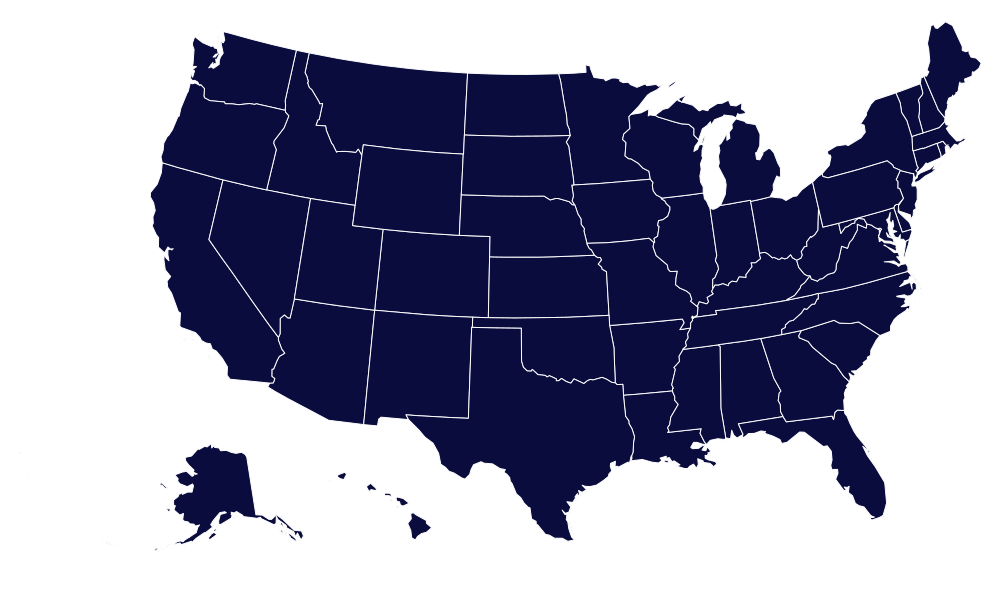
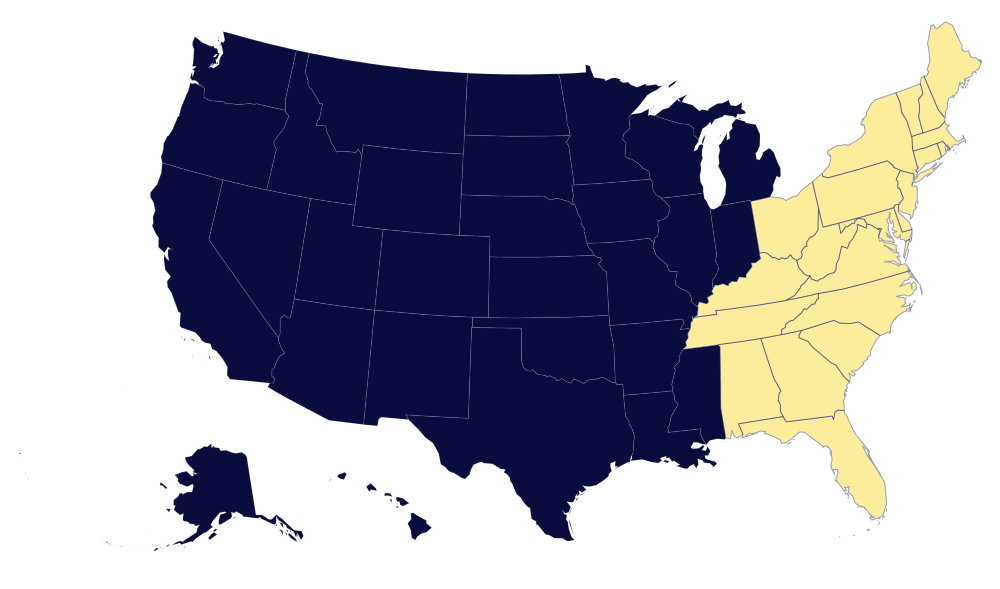
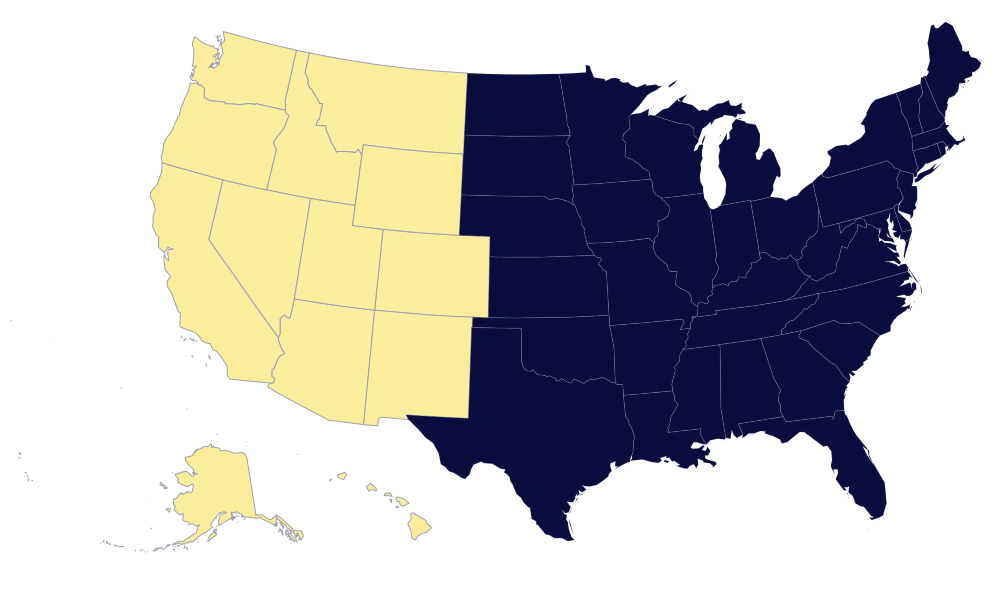
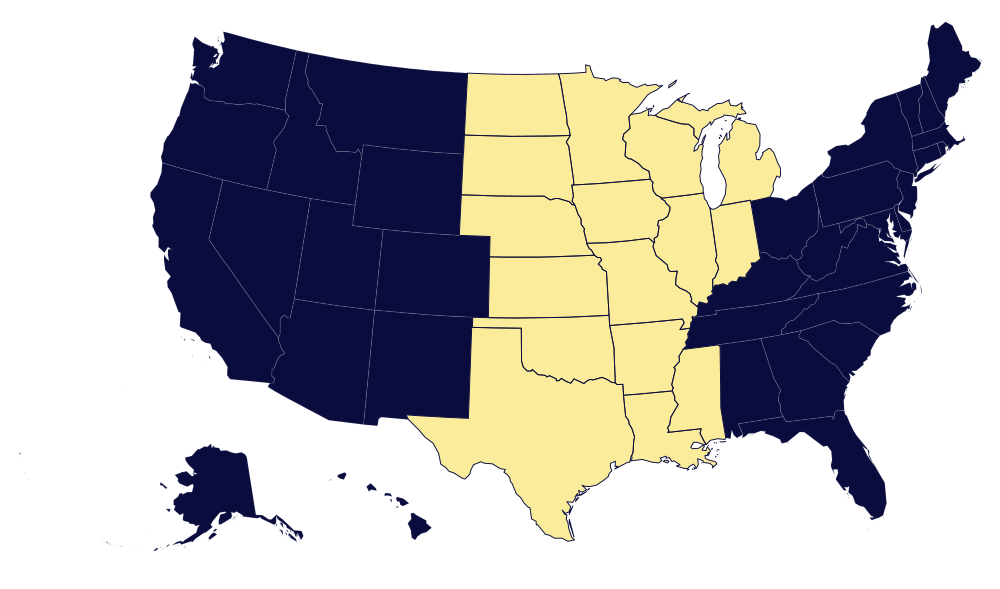
AVLS Nationwide Services
Central States
East Coast
*COMING SOON
West Coast



*COMING SOON
East Coast
Central States
West Coast
AVLS Nationwide Services
CONTACT US
When your event matters, trust your audio visual labor needs to AV Labor Source.
AVLS operate and has proven pool of AV technicians in major cities US Nationwide, such as Las Vegas, Los Angeles, Orlando, Dallas, San Antonio, Austin, Houston, Washington DC, Atlanta, New Orleans, Tennessee and more.
Please complete the form below and we will respond to you as soon as possible. We are available 24 hours a day to assist with your needs. We look forward to showing you what we can do toward the success of your next event.
AVLS operate and has proven pool of AV technicians in major cities US Nationwide, such as Las Vegas, Los Angeles, Orlando, Dallas, San Antonio, Austin, Houston, Washington DC, Atlanta, New Orleans, Tennessee and more.
Please complete the form below and we will respond to you as soon as possible. We are available 24 hours a day to assist with your needs. We look forward to showing you what we can do toward the success of your next event.
EVENT INFORMATION
