





June 28, 2026
AV Technician Roles Explained: A1, A2, V1, V2, L1, and L2
The audiovisual industry employs over 300,000 professionals nationwide, yet most event planners struggle to understand the specific role classifications that determine project success and budget allocation. AV Technician Roles Explained: A1, A2, V1, V2, L1, and L2 represent a standardized hierarchy system used across the industry to match technical expertise with event complexity and ensure proper staffing for corporate events, trade shows, and live productions.
Key Takeaways
What Are AV Technician Classifications?
AV technician classifications represent a standardized system that categorizes audiovisual professionals based on their technical expertise, experience level, and ability to handle complex equipment. The classification system divides technicians into three main categories (Audio, Video, Lighting) with two skill levels each (Level 1 and Level 2).
This hierarchy system emerged from the need to standardize roles across the fragmented AV industry. Before standardization, event planners struggled to communicate their technical needs, often resulting in overqualified (and expensive) technicians handling simple tasks or underqualified staff managing complex systems.
Level 1 technicians typically possess 3-5+ years of experience, hold relevant certifications, and can work independently on complex systems. Level 2 technicians usually have 6 months to 3 years of experience and work under supervision while handling routine tasks and equipment setup.
The classification system benefits both clients and technicians by creating clear expectations for responsibilities, compensation, and required expertise levels.
Audio Technician Roles: A1 vs A2 Explained
A1 Audio Technicians serve as senior audio engineers capable of designing, implementing, and troubleshooting complex audio systems for large-scale events. A2 Audio Technicians function as audio assistants who handle basic setup tasks and equipment operation under supervision.
A1 Audio Technician ResponsibilitiesA1 technicians manage the entire audio production chain for events. Their core responsibilities include:
A1 technicians typically earn $35-55 per hour depending on location and event complexity. Choose A1 technicians for events requiring live music, complex presentations with multiple audio sources, or any situation where audio quality directly impacts event success.
A2 Audio Technician Responsibilities
A2 technicians focus on support tasks that keep audio systems running smoothly. Their primary duties include:
A2 technicians typically earn $20-30 per hour. Use A2 technicians for straightforward corporate presentations, small meetings, or as additional support for large events managed by A1 staff.
Video Technician Roles: V1 vs V2 Breakdown
V1 Video Technicians operate as senior video engineers who manage complex video systems, live streaming, and multi-screen presentations. V2 Video Technicians handle basic video operations including projector setup, cable connections, and simple playback systems.
V1 Video Technician Capabilities
V1 technicians oversee sophisticated video production requirements for high-stakes events. Their expertise includes:
V1 video technicians command $40-60 per hour in most markets. Deploy V1 technicians for trade shows with multiple presentation areas, corporate events requiring live streaming, or any situation involving complex video routing and switching.
V2 Video Technician Functions
V2 technicians manage routine video tasks that support overall event production. Their responsibilities encompass:
V2 technicians typically earn $22-32 per hour. Utilize V2 technicians for standard corporate presentations, small conferences, or as support staff for larger video productions managed by V1 professionals.
Lighting Technician Roles: L1 vs L2 Distinctions
L1 Lighting Technicians design and execute complex lighting schemes for events, concerts, and theatrical productions. L2 Lighting Technicians assist with lighting setup, fixture positioning, and basic operation tasks under L1 supervision.
L1 Lighting Technician ExpertiseL1 technicians create the visual atmosphere that transforms ordinary spaces into engaging event environments. Their specialized skills include:
L1 lighting technicians earn $38-58 per hour depending on event complexity and regional markets. Engage L1 technicians for galas, product launches, concerts, or any event where lighting significantly impacts the attendee experience.
L2 Lighting Technician Duties
L2 technicians provide essential support that enables complex lighting productions to function smoothly. Their key tasks include:
L2 technicians typically earn $24-34 per hour. Deploy L2 technicians for basic corporate events, small meetings requiring accent lighting, or as additional crew for large productions directed by L1 staff.
How AV Technician Role Classifications Impact Event Planning
Understanding AV technician role classifications directly affects event budget allocation, timeline planning, and technical execution quality. Events that match technician skill levels to actual requirements achieve better outcomes while controlling costs effectively.
Budget Planning Considerations
The 40-60% wage difference between Level 1 and Level 2 technicians significantly impacts event budgets. A typical corporate conference requiring 8 technicians for 10 hours could see costs range from $1,600 (all L2) to $4,400 (all L1) depending on role selection.
Cost-effective staffing strategies include:
Timeline and Logistics Impact
Level 1 technicians work more efficiently on complex tasks, potentially reducing setup time by 20-30% compared to Level 2-only crews. However, Level 2 technicians excel at labor-intensive tasks like cable runs and equipment transportation.
Optimal scheduling approaches involve:
Choose mixed crews for most corporate events, all-L1 teams for high-stakes productions, and L2-heavy crews for simple presentations with minimal technical complexity.
Salary Ranges and Market Rates for Each AV Role
AV technician compensation varies significantly based on role classification, geographic location, and event type. Understanding current market rates helps event planners budget accurately and ensures competitive compensation for technical staff.
National Salary Benchmarks by ClassificationAudio Technician Rates:
Video Technician Rates:
Lighting Technician Rates:
Regional Rate Variations
Major metropolitan markets command premium rates due to higher living costs and increased demand. AV technicians in Las Vegas, Los Angeles, and New York City typically earn 15-25% above national averages.
Secondary markets like Austin, Denver, and Nashville offer competitive rates while maintaining lower overall event costs.
Rate-influencing factors include:
Career Progression Paths in AV Technology
The AV industry offers clear advancement opportunities for technicians willing to develop specialized skills and gain experience across different event types. Career progression typically follows predictable patterns within each technical discipline.
Advancement Timeline Expectations
Level 2 to Level 1 Progression typically requires 18-36 months of consistent work experience, completion of manufacturer certifications, and demonstrated ability to work independently on moderately complex systems.
Level 1 to Senior/Lead Roles usually takes 3-5 additional years and involves developing project management skills, client communication abilities, and expertise with cutting-edge equipment.
Skill Development Requirements
Technical Certifications that accelerate career advancement include:
Soft Skills essential for advancement:
Cross-training opportunities allow technicians to command higher rates by developing expertise across multiple disciplines. Many successful AV professionals eventually specialize in systems integration, event management, or technical sales roles.
The most successful technicians continuously update their skills as technology evolves, maintain professional networks through industry associations, and seek diverse event experience to broaden their capabilities.
Common Mistakes When Hiring AV Technicians
Event planners frequently make costly errors when selecting AV technician classifications, leading to budget overruns, technical problems, and suboptimal event experiences. Understanding these pitfalls helps ensure proper staffing decisions.
Overqualification and Budget Waste
Hiring all Level 1 technicians for simple events represents the most common and expensive mistake. A basic corporate presentation requiring only laptop connectivity and microphone support doesn't justify $50/hour V1 technicians when $25/hour V2 staff can handle the requirements effectively.
Signs of overqualification:
Underqualification and Technical Risks
Relying exclusively on Level 2 technicians for complex events creates significant risks including equipment damage, poor audio/video quality, and potential event delays or failures.
Situations requiring Level 1 expertise:
Communication and Expectation Errors
Failing to specify role requirements clearly leads to mismatched technician assignments. Event planners should provide detailed technical requirements rather than generic "AV support" requests.
Best practices for clear communication:
Choose mixed crews for most corporate events, ensure Level 1 supervision for complex productions, and match technician expertise to actual technical requirements rather than event prestige or budget assumptions.
FAQ
What's the difference between A1 and A2 audio technicians?
A1 audio technicians are senior engineers who design audio systems, operate complex mixing boards, and troubleshoot problems independently. A2 technicians are assistants who handle setup tasks, basic operations, and equipment maintenance under A1 supervision.
How much do V1 video technicians typically earn?
V1 video technicians earn $40-60 per hour nationally, with rates varying by location and event complexity. Major markets like Las Vegas and Los Angeles typically pay 15-25% above the national average.
Can L2 lighting technicians work without supervision?
L2 lighting technicians can handle basic tasks independently but require L1 supervision for complex lighting programming, design decisions, and safety-critical installations involving electrical work.
What certifications help advance from Level 2 to Level 1?
Key certifications include Dante audio networking, Crestron/Extron video programming, ETC lighting console training, and manufacturer-specific equipment certifications from companies like Meyer Sound and grandMA.
How do I know which technician levels my event needs?
Match technician levels to technical complexity: use Level 1 for live streaming, complex audio mixing, or sophisticated lighting design. Level 2 works for basic presentations, simple setups, and support roles under Level 1 supervision.
What's the typical career progression timeline in AV?
Advancement from Level 2 to Level 1 typically takes 18-36 months with consistent experience and certifications. Progression to senior/lead roles requires an additional 3-5 years and development of project management skills.
Do AV technician rates vary by event type?
Yes, rates vary based on event complexity, duration, and venue requirements. Corporate events, concerts, and trade shows may have different rate structures, with premium rates for weekend work and specialized skills.
Should I hire all Level 1 technicians for important events?
Not necessarily. Mix Level 1 and Level 2 technicians based on actual technical requirements rather than event importance. Level 1 should handle complex systems and leadership while Level 2 manages setup and support tasks.
What happens if I hire underqualified technicians?
Underqualified technicians may cause equipment damage, poor audio/video quality, event delays, or complete technical failures. Always match technician expertise to the actual complexity of your technical requirements.
How far in advance should I book Level 1 technicians?
Book Level 1 technicians 4-6 weeks in advance for major events, especially in high-demand markets. Skilled AV technicians are often scheduled months ahead for large conventions and corporate events.
Can technicians work across multiple classifications?
Yes, many experienced technicians have cross-training in audio, video, and lighting. Cross-trained professionals often command higher rates and provide more flexible staffing options for events requiring multiple technical disciplines.
What's the best staffing ratio for corporate events?
Most corporate events benefit from a 1:2 or 1:3 ratio of Level 1 to Level 2 technicians, ensuring expert supervision while controlling costs through appropriate use of support staff for routine tasks.
Conclusion
Understanding AV technician role classifications transforms event planning from guesswork into strategic decision-making. The A1/A2, V1/V2, and L1/L2 system provides a clear framework for matching technical expertise with event requirements while managing budgets effectively.
Key implementation steps for event planners include assessing actual technical complexity before requesting quotes, specifying role requirements clearly when communicating with AV vendors, and budgeting for appropriate skill level mixes rather than defaulting to all Level 1 or Level 2 staff.
The 40-60% cost difference between technician levels makes proper classification essential for budget control, while the expertise gap ensures technical success when roles align with requirements. Most corporate events achieve optimal results through mixed crews that deploy Level 1 technicians for complex systems and leadership while utilizing Level 2 staff for setup, support, and routine operations.
For your next event, start by listing specific technical requirements, then work with experienced AV labor staffing services to match those needs with appropriate technician classifications. This approach ensures both technical success and cost-effective resource allocation across your event production requirements.
Key Takeaways
- A1 and A2 designate audio technician skill levels, with A1 being senior audio engineers and A2 being junior audio assistants
- V1 and V2 classify video technician expertise, where V1 handles complex video systems and V2 supports basic video operations
- L1 and L2 define lighting technician capabilities, with L1 managing sophisticated lighting designs and L2 assisting with setup tasks
- Each role level determines hourly rates, with Level 1 technicians commanding 40-60% higher wages than Level 2 positions
- Proper role classification ensures event success by matching technical complexity with appropriate skill levels
- Most corporate events require a mix of both Level 1 and Level 2 technicians for cost-effective staffing
- Understanding these classifications helps event planners budget accurately and communicate needs clearly to AV vendors
What Are AV Technician Classifications?
AV technician classifications represent a standardized system that categorizes audiovisual professionals based on their technical expertise, experience level, and ability to handle complex equipment. The classification system divides technicians into three main categories (Audio, Video, Lighting) with two skill levels each (Level 1 and Level 2).
This hierarchy system emerged from the need to standardize roles across the fragmented AV industry. Before standardization, event planners struggled to communicate their technical needs, often resulting in overqualified (and expensive) technicians handling simple tasks or underqualified staff managing complex systems.
Level 1 technicians typically possess 3-5+ years of experience, hold relevant certifications, and can work independently on complex systems. Level 2 technicians usually have 6 months to 3 years of experience and work under supervision while handling routine tasks and equipment setup.
The classification system benefits both clients and technicians by creating clear expectations for responsibilities, compensation, and required expertise levels.
Audio Technician Roles: A1 vs A2 Explained
A1 Audio Technicians serve as senior audio engineers capable of designing, implementing, and troubleshooting complex audio systems for large-scale events. A2 Audio Technicians function as audio assistants who handle basic setup tasks and equipment operation under supervision.
A1 Audio Technician ResponsibilitiesA1 technicians manage the entire audio production chain for events. Their core responsibilities include:
- System Design: Creating audio plans for venues ranging from 50-person boardrooms to 10,000+ attendee conventions
- Mixing and Engineering: Operating complex digital mixing consoles with 32+ channels during live events
- Troubleshooting: Diagnosing and resolving audio issues in real-time without disrupting events
- Equipment Management: Selecting and configuring professional audio gear including line arrays, wireless microphone systems, and digital signal processors
- Team Leadership: Supervising A2 technicians and coordinating with other departments
A1 technicians typically earn $35-55 per hour depending on location and event complexity. Choose A1 technicians for events requiring live music, complex presentations with multiple audio sources, or any situation where audio quality directly impacts event success.
A2 Audio Technician Responsibilities
A2 technicians focus on support tasks that keep audio systems running smoothly. Their primary duties include:
- Equipment Setup: Installing microphones, speakers, and basic audio connections
- Cable Management: Running and organizing audio cables throughout event spaces
- Basic Operation: Operating simple mixing boards and adjusting volume levels
- Equipment Maintenance: Testing microphones, replacing batteries, and performing routine equipment checks
- Assistance: Supporting A1 technicians during complex operations
A2 technicians typically earn $20-30 per hour. Use A2 technicians for straightforward corporate presentations, small meetings, or as additional support for large events managed by A1 staff.
Video Technician Roles: V1 vs V2 Breakdown
V1 Video Technicians operate as senior video engineers who manage complex video systems, live streaming, and multi-screen presentations. V2 Video Technicians handle basic video operations including projector setup, cable connections, and simple playback systems.
V1 Video Technician Capabilities
V1 technicians oversee sophisticated video production requirements for high-stakes events. Their expertise includes:
- Multi-Screen Management: Coordinating video content across multiple displays, LED walls, and projection surfaces
- Live Production: Operating video switchers, cameras, and recording equipment for live events and streaming
- Signal Processing: Managing video scalers, matrix switchers, and format converters for seamless content delivery
- Content Management: Handling presentation files, video playback systems, and real-time graphics integration
- Technical Direction: Making split-second decisions during live events to maintain video quality and timing
V1 video technicians command $40-60 per hour in most markets. Deploy V1 technicians for trade shows with multiple presentation areas, corporate events requiring live streaming, or any situation involving complex video routing and switching.
V2 Video Technician Functions
V2 technicians manage routine video tasks that support overall event production. Their responsibilities encompass:
- Display Setup: Installing and positioning projectors, monitors, and basic video displays
- Content Loading: Transferring presentation files to playback systems and conducting pre-event testing
- Cable Installation: Running HDMI, VGA, and other video cables between sources and displays
- Basic Troubleshooting: Resolving common issues like resolution mismatches and connection problems
- Equipment Support: Assisting V1 technicians with camera positioning and equipment transportation
V2 technicians typically earn $22-32 per hour. Utilize V2 technicians for standard corporate presentations, small conferences, or as support staff for larger video productions managed by V1 professionals.
Lighting Technician Roles: L1 vs L2 Distinctions
L1 Lighting Technicians design and execute complex lighting schemes for events, concerts, and theatrical productions. L2 Lighting Technicians assist with lighting setup, fixture positioning, and basic operation tasks under L1 supervision.
L1 Lighting Technician ExpertiseL1 technicians create the visual atmosphere that transforms ordinary spaces into engaging event environments. Their specialized skills include:
- Lighting Design: Developing lighting plots that enhance presentations, create ambiance, and support brand messaging
- Console Programming: Operating sophisticated lighting control boards with hundreds of channels and automated fixtures
- Fixture Management: Selecting and positioning LED fixtures, moving lights, and specialty effects equipment
- Color Theory Application: Using color temperature and intensity to create mood and direct audience attention
- Safety Compliance: Ensuring all lighting installations meet electrical codes and safety regulations
L1 lighting technicians earn $38-58 per hour depending on event complexity and regional markets. Engage L1 technicians for galas, product launches, concerts, or any event where lighting significantly impacts the attendee experience.
L2 Lighting Technician Duties
L2 technicians provide essential support that enables complex lighting productions to function smoothly. Their key tasks include:
- Fixture Installation: Mounting and positioning lights according to L1 technician specifications
- Cable Management: Running power and data cables for lighting systems throughout venues
- Basic Programming: Operating simple lighting boards and executing pre-programmed lighting cues
- Equipment Maintenance: Testing fixtures, replacing bulbs, and performing routine equipment care
- Setup Assistance: Supporting L1 technicians during focus sessions and technical rehearsals
L2 technicians typically earn $24-34 per hour. Deploy L2 technicians for basic corporate events, small meetings requiring accent lighting, or as additional crew for large productions directed by L1 staff.
How AV Technician Role Classifications Impact Event Planning
Understanding AV technician role classifications directly affects event budget allocation, timeline planning, and technical execution quality. Events that match technician skill levels to actual requirements achieve better outcomes while controlling costs effectively.
Budget Planning Considerations
The 40-60% wage difference between Level 1 and Level 2 technicians significantly impacts event budgets. A typical corporate conference requiring 8 technicians for 10 hours could see costs range from $1,600 (all L2) to $4,400 (all L1) depending on role selection.
Cost-effective staffing strategies include:
- Using L1 technicians for complex technical roles and event leadership
- Deploying L2 technicians for setup, breakdown, and routine operational tasks
- Mixing skill levels based on specific event requirements rather than defaulting to all L1 or L2 staff
Timeline and Logistics Impact
Level 1 technicians work more efficiently on complex tasks, potentially reducing setup time by 20-30% compared to Level 2-only crews. However, Level 2 technicians excel at labor-intensive tasks like cable runs and equipment transportation.
Optimal scheduling approaches involve:
- Bringing L1 technicians for system design and initial configuration
- Using L2 technicians for extended setup and breakdown periods
- Ensuring L1 supervision during critical event moments like rehearsals and live presentations
Choose mixed crews for most corporate events, all-L1 teams for high-stakes productions, and L2-heavy crews for simple presentations with minimal technical complexity.
Salary Ranges and Market Rates for Each AV Role
AV technician compensation varies significantly based on role classification, geographic location, and event type. Understanding current market rates helps event planners budget accurately and ensures competitive compensation for technical staff.
National Salary Benchmarks by ClassificationAudio Technician Rates:
- A1 Audio Engineers: $35-55/hour ($72,800-$114,400 annually)
- A2 Audio Assistants: $20-30/hour ($41,600-$62,400 annually)
Video Technician Rates:
- V1 Video Engineers: $40-60/hour ($83,200-$124,800 annually)
- V2 Video Assistants: $22-32/hour ($45,760-$66,560 annually)
Lighting Technician Rates:
- L1 Lighting Designers: $38-58/hour ($79,040-$120,640 annually)
- L2 Lighting Assistants: $24-34/hour ($49,920-$70,720 annually)
Regional Rate Variations
Major metropolitan markets command premium rates due to higher living costs and increased demand. AV technicians in Las Vegas, Los Angeles, and New York City typically earn 15-25% above national averages.
Secondary markets like Austin, Denver, and Nashville offer competitive rates while maintaining lower overall event costs.
Rate-influencing factors include:
- Event duration and complexity
- Weekend and holiday premiums (typically 1.5x standard rates)
- Travel requirements and per diem allowances
- Union vs. non-union venue requirements
- Specialized equipment expertise
Career Progression Paths in AV Technology
The AV industry offers clear advancement opportunities for technicians willing to develop specialized skills and gain experience across different event types. Career progression typically follows predictable patterns within each technical discipline.
Advancement Timeline Expectations
Level 2 to Level 1 Progression typically requires 18-36 months of consistent work experience, completion of manufacturer certifications, and demonstrated ability to work independently on moderately complex systems.
Level 1 to Senior/Lead Roles usually takes 3-5 additional years and involves developing project management skills, client communication abilities, and expertise with cutting-edge equipment.
Skill Development Requirements
Technical Certifications that accelerate career advancement include:
- Audio: Dante networking, Meyer Sound, L-Acoustics system certifications
- Video: Extron, Crestron, and AMX programming credentials
- Lighting: ETC console training, grandMA certification, LED fixture specialization
Soft Skills essential for advancement:
- Project management and timeline coordination
- Client communication and problem-solving abilities
- Team leadership and training capabilities
- Vendor relationship management
Cross-training opportunities allow technicians to command higher rates by developing expertise across multiple disciplines. Many successful AV professionals eventually specialize in systems integration, event management, or technical sales roles.
The most successful technicians continuously update their skills as technology evolves, maintain professional networks through industry associations, and seek diverse event experience to broaden their capabilities.
Common Mistakes When Hiring AV Technicians
Event planners frequently make costly errors when selecting AV technician classifications, leading to budget overruns, technical problems, and suboptimal event experiences. Understanding these pitfalls helps ensure proper staffing decisions.
Overqualification and Budget Waste
Hiring all Level 1 technicians for simple events represents the most common and expensive mistake. A basic corporate presentation requiring only laptop connectivity and microphone support doesn't justify $50/hour V1 technicians when $25/hour V2 staff can handle the requirements effectively.
Signs of overqualification:
- Using A1 engineers for events with pre-recorded audio only
- Deploying V1 technicians for single-screen presentations
- Hiring L1 designers for venues with fixed house lighting
Underqualification and Technical Risks
Relying exclusively on Level 2 technicians for complex events creates significant risks including equipment damage, poor audio/video quality, and potential event delays or failures.
Situations requiring Level 1 expertise:
- Live streaming with multiple camera angles
- Events with 8+ wireless microphones
- Multi-room presentations with synchronized content
- Any event where technical failure would cause significant business impact
Communication and Expectation Errors
Failing to specify role requirements clearly leads to mismatched technician assignments. Event planners should provide detailed technical requirements rather than generic "AV support" requests.
Best practices for clear communication:
- List specific equipment that will be used
- Describe the event flow and technical complexity
- Specify any specialized skills required (live streaming, recording, etc.)
- Indicate whether technicians will work independently or under supervision
Choose mixed crews for most corporate events, ensure Level 1 supervision for complex productions, and match technician expertise to actual technical requirements rather than event prestige or budget assumptions.
FAQ
What's the difference between A1 and A2 audio technicians?
A1 audio technicians are senior engineers who design audio systems, operate complex mixing boards, and troubleshoot problems independently. A2 technicians are assistants who handle setup tasks, basic operations, and equipment maintenance under A1 supervision.
How much do V1 video technicians typically earn?
V1 video technicians earn $40-60 per hour nationally, with rates varying by location and event complexity. Major markets like Las Vegas and Los Angeles typically pay 15-25% above the national average.
Can L2 lighting technicians work without supervision?
L2 lighting technicians can handle basic tasks independently but require L1 supervision for complex lighting programming, design decisions, and safety-critical installations involving electrical work.
What certifications help advance from Level 2 to Level 1?
Key certifications include Dante audio networking, Crestron/Extron video programming, ETC lighting console training, and manufacturer-specific equipment certifications from companies like Meyer Sound and grandMA.
How do I know which technician levels my event needs?
Match technician levels to technical complexity: use Level 1 for live streaming, complex audio mixing, or sophisticated lighting design. Level 2 works for basic presentations, simple setups, and support roles under Level 1 supervision.
What's the typical career progression timeline in AV?
Advancement from Level 2 to Level 1 typically takes 18-36 months with consistent experience and certifications. Progression to senior/lead roles requires an additional 3-5 years and development of project management skills.
Do AV technician rates vary by event type?
Yes, rates vary based on event complexity, duration, and venue requirements. Corporate events, concerts, and trade shows may have different rate structures, with premium rates for weekend work and specialized skills.
Should I hire all Level 1 technicians for important events?
Not necessarily. Mix Level 1 and Level 2 technicians based on actual technical requirements rather than event importance. Level 1 should handle complex systems and leadership while Level 2 manages setup and support tasks.
What happens if I hire underqualified technicians?
Underqualified technicians may cause equipment damage, poor audio/video quality, event delays, or complete technical failures. Always match technician expertise to the actual complexity of your technical requirements.
How far in advance should I book Level 1 technicians?
Book Level 1 technicians 4-6 weeks in advance for major events, especially in high-demand markets. Skilled AV technicians are often scheduled months ahead for large conventions and corporate events.
Can technicians work across multiple classifications?
Yes, many experienced technicians have cross-training in audio, video, and lighting. Cross-trained professionals often command higher rates and provide more flexible staffing options for events requiring multiple technical disciplines.
What's the best staffing ratio for corporate events?
Most corporate events benefit from a 1:2 or 1:3 ratio of Level 1 to Level 2 technicians, ensuring expert supervision while controlling costs through appropriate use of support staff for routine tasks.
Conclusion
Understanding AV technician role classifications transforms event planning from guesswork into strategic decision-making. The A1/A2, V1/V2, and L1/L2 system provides a clear framework for matching technical expertise with event requirements while managing budgets effectively.
Key implementation steps for event planners include assessing actual technical complexity before requesting quotes, specifying role requirements clearly when communicating with AV vendors, and budgeting for appropriate skill level mixes rather than defaulting to all Level 1 or Level 2 staff.
The 40-60% cost difference between technician levels makes proper classification essential for budget control, while the expertise gap ensures technical success when roles align with requirements. Most corporate events achieve optimal results through mixed crews that deploy Level 1 technicians for complex systems and leadership while utilizing Level 2 staff for setup, support, and routine operations.
For your next event, start by listing specific technical requirements, then work with experienced AV labor staffing services to match those needs with appropriate technician classifications. This approach ensures both technical success and cost-effective resource allocation across your event production requirements.

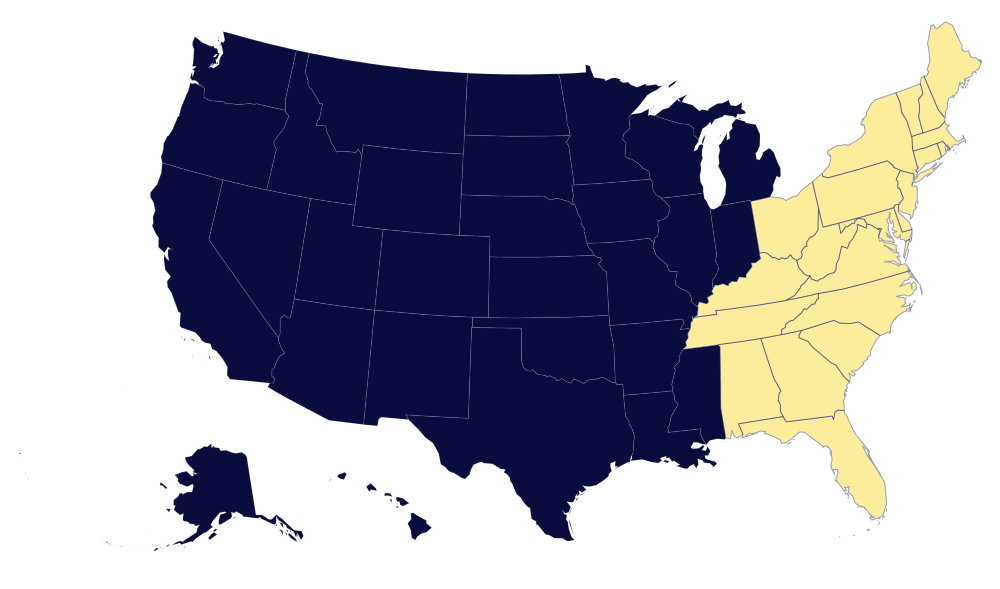
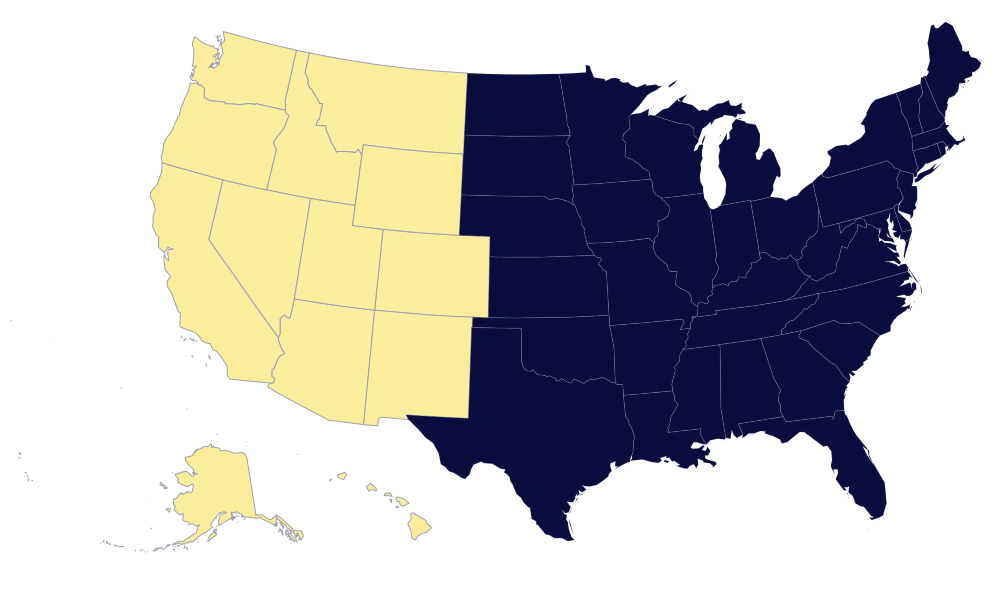
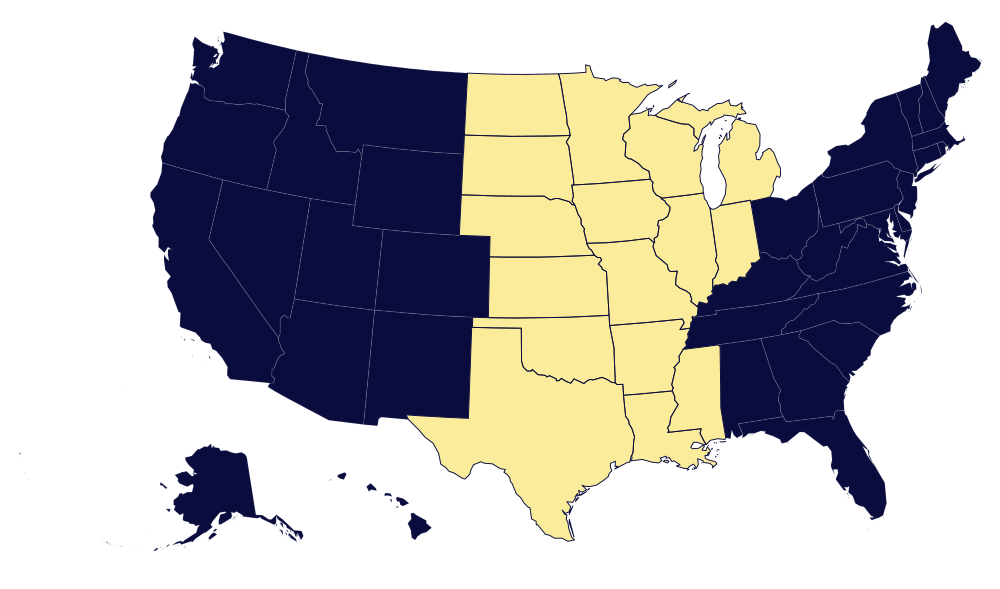
AVLS Nationwide Services
Central States
East Coast
*COMING SOON
West Coast



*COMING SOON
East Coast
Central States
West Coast
AVLS Nationwide Services
CONTACT US
When your event matters, trust your audio visual labor needs to AV Labor Source.
AVLS operate and has proven pool of AV technicians in major cities US Nationwide, such as Las Vegas, Los Angeles, Orlando, Dallas, San Antonio, Austin, Houston, Washington DC, Atlanta, New Orleans, Tennessee and more.
Please complete the form below and we will respond to you as soon as possible. We are available 24 hours a day to assist with your needs. We look forward to showing you what we can do toward the success of your next event.
AVLS operate and has proven pool of AV technicians in major cities US Nationwide, such as Las Vegas, Los Angeles, Orlando, Dallas, San Antonio, Austin, Houston, Washington DC, Atlanta, New Orleans, Tennessee and more.
Please complete the form below and we will respond to you as soon as possible. We are available 24 hours a day to assist with your needs. We look forward to showing you what we can do toward the success of your next event.
EVENT INFORMATION
