





July 8, 2026
Conference Audio Setup Guide for Event Planners
Quick Answer
A successful conference audio setup requires matching your equipment to venue size and audience type, with wireless microphones for speakers, a mixing console for control, and amplification systems scaled to room acoustics. Most 500-person conferences need 4-6 wireless mics, a 16-channel mixer, and distributed speaker placement to ensure clear sound coverage without feedback issues.
Key Takeaways
This Conference Audio Setup Guide for Event Planners addresses the technical and logistical challenges that can make or break your conference experience. Poor audio quality remains the top complaint at corporate events, yet it's entirely preventable with proper planning and equipment selection.
What Equipment Do You Need for Different Conference Sizes
Small conferences (50-100 people) require basic portable systems, while large events (500+ attendees) demand professional-grade distributed audio networks. The key is matching amplification power and microphone coverage to your specific venue acoustics and audience size.
For 50-100 person conferences, a portable PA system with 200-400 watts, two wireless microphones, and a simple 4-channel mixer handles most presentations effectively. Choose systems with built-in Bluetooth for easy music playback and USB recording capabilities.
Medium conferences (100-300 people) need stepped-up power and control. Plan for 600-1000 watts of amplification, 4-6 wireless microphones, an 8-12 channel mixing console, and separate monitor speakers for stage feedback. This setup costs $1,500-$3,000 to rent or $4,000-$8,000 to purchase.
Large conferences (300-500 people) require distributed speaker systems with zone control, professional mixing consoles with 16+ channels, and dedicated audio technicians. Expect 1500+ watts of power, 6-10 microphones, and acoustic treatment considerations. Budget $3,000-$6,000 for rental or $10,000+ for purchase.
Mega conferences (500+ people) demand line array speakers, digital mixing consoles, RF coordination for wireless systems, and full-time audio engineers. These setups often require professional AV technicians with specialized training and certification.
Lapel Mic vs Headset Mic: Which Works Best for Conference Speakers
Lapel microphones offer discretion and natural appearance, while headset mics provide consistent positioning and better sound quality for animated speakers. Choose lapel mics for formal presentations and headset mics for interactive sessions or speakers who move frequently.
Lapel microphones clip to clothing 6-8 inches below the speaker's mouth. They work well for podium presentations, panel discussions, and speakers who prefer minimal visible equipment. However, lapel mics pick up clothing rustle, require careful positioning, and lose quality when speakers turn their heads.
Headset microphones maintain consistent distance from the speaker's mouth regardless of head movement. They're ideal for energetic presenters, demonstration sessions, and Q&A periods. The trade-off is visibility - some speakers feel self-conscious wearing obvious headgear.
Handheld microphones remain popular for traditional conference formats. They give speakers control over audio pickup, work well for audience interaction, and provide a familiar presentation tool. The downside is occupying one hand and potential handling noise.
For panel discussions with multiple speakers, use individual lapel mics rather than passing handheld mics. This prevents audio gaps and maintains consistent levels across all participants.
Setting Up Audio for Hybrid Conferences with Remote Attendees
Hybrid conference audio requires separate mixing zones for in-room and streaming audio, with acoustic echo cancellation to prevent feedback between remote and live participants. The key challenge is balancing room audio levels with clear streaming quality for online attendees.
Audio routing for hybrid events needs three distinct paths: room speakers for live attendees, streaming audio for remote participants, and return audio from online speakers back to the room. Use a digital mixing console with USB or network connectivity to manage these separate feeds.
Microphone selection becomes critical in hybrid setups. Choose directional mics to minimize room noise pickup, and position them closer to speakers than typical room-only events. Gooseneck mics on podiums work better than lapel mics for streaming clarity.
Acoustic treatment becomes more important with hybrid events. Hard surfaces create echo that sounds acceptable in-room but terrible on streaming platforms. Add temporary acoustic panels, carpet runners, or fabric draping to reduce reflections.
Technical requirements include dedicated streaming hardware, backup internet connections, and audio monitoring for both room and stream feeds. Plan for professional event production services when managing complex hybrid setups with multiple remote presenters.
Why Wireless Microphones Cut Out and How to Fix It
Wireless microphone dropouts occur due to RF interference, low battery power, or antenna positioning issues. The most common cause is frequency conflicts with other wireless devices in the venue, including Wi-Fi networks, cell phones, and other audio equipment.
Frequency coordination prevents most wireless issues. Scan available frequencies 24 hours before your event using spectrum analyzer apps or professional RF meters. Avoid frequencies used by local TV stations, wireless internet, and other conference equipment.
Battery management requires systematic monitoring. Use fresh batteries for each session, carry spares for all microphones, and check power levels every 2 hours during long events. Rechargeable systems need 4-6 hours charging time between full-day uses.
Antenna placement affects signal strength significantly. Position receiver antennas at speaker height, maintain line-of-sight when possible, and use antenna distribution systems for large venues. Avoid placing antennas near metal surfaces or other electronic equipment.
Backup planning should include spare microphones on the same frequencies, extra batteries, and wired microphone alternatives. Professional events always maintain 20% equipment redundancy for critical audio components.
Best Conference Audio Setup Under $2000 Budget
A complete conference audio system under $2000 should include a powered mixer, two wireless microphones, and portable speakers suitable for 100-200 person events. Focus on reliable brands with good warranty support rather than feature-heavy budget options.
Recommended equipment breakdown:
Brand recommendations in this price range include Yamaha Stagepas systems, Shure wireless microphones, and QSC powered speakers. These offer professional reliability without premium pricing.
Money-saving strategies include buying used professional equipment, renting for occasional events, or partnering with local AV equipment suppliers for bulk discounts.
Avoid ultra-budget wireless systems under $200 per microphone - they often cause more problems than they solve. Instead, use one quality wireless mic and supplement with wired options when budget is tight.
Do You Need a Professional Sound Engineer or Can You DIY
Events under 200 people with basic presentation needs can often be managed by trained event staff, while conferences over 300 people or complex hybrid setups require professional audio engineers. The deciding factors are venue acoustics, equipment complexity, and consequences of audio failure.
DIY audio works when you have simple equipment, predictable venue acoustics, and staff trained on the specific gear. Powered mixers with automatic feedback elimination and preset configurations reduce the technical knowledge needed.
Professional engineers become essential for multi-room events, live streaming integration, complex wireless coordination, and venues with challenging acoustics. They also provide real-time problem solving and equipment backup that untrained staff cannot match.
Training requirements for DIY audio include understanding mixer controls, microphone positioning, feedback elimination, and basic troubleshooting. Plan 4-6 hours of training time with your specific equipment before attempting independent operation.
Cost considerations show professional engineers typically cost $300-600 per day, while audio problems can derail entire conference sessions. For critical events, professional support often pays for itself through risk reduction alone.
Consider hiring experienced AV technicians who can handle both setup and real-time operation, especially for multi-day conferences where consistent quality matters most.
How to Test Audio Equipment Before Your Conference
Complete audio testing should occur 24 hours before the event with full equipment setup in the actual venue, followed by final checks 2 hours before attendee arrival. Testing in different locations or with different equipment configurations doesn't accurately predict real-world performance.
Pre-event testing checklist:
Sound check procedures require testing with actual speakers, not just technicians. Different voices, speaking styles, and movement patterns reveal issues that technical tests miss. Schedule 30 minutes per speaker for proper sound checks.
Documentation during testing should include optimal mixer settings, microphone preferences for each speaker, and any venue-specific acoustic challenges. This information becomes crucial for quick problem resolution during the actual event.
Common testing mistakes include checking equipment in empty rooms (acoustics change dramatically with audiences), testing only one microphone type, and skipping backup equipment verification.
Handling Feedback and Echo in Large Conference Rooms
Audio feedback occurs when amplified sound from speakers reaches microphones and creates a loop, while echo results from sound reflections off hard surfaces in large spaces. Both issues require different solutions but often appear together in challenging venues.
Feedback prevention starts with proper speaker placement. Position speakers in front of microphones when possible, angle speakers down 15-20 degrees, and maintain adequate distance between mics and speakers. Use directional microphones that reject sound from behind the capsule.
Echo control requires acoustic treatment or electronic processing. Temporary solutions include fabric draping, portable acoustic panels, or digital reverb reduction processors. Permanent venues benefit from professional acoustic design consultation.
Electronic solutions include automatic feedback eliminators, parametric equalizers, and digital signal processors with acoustic echo cancellation. These tools help but cannot overcome poor microphone technique or inappropriate equipment placement.
Room-specific strategies vary significantly. Ballrooms with high ceilings need different approaches than conference rooms with glass walls. Always conduct acoustic testing in the actual event space rather than relying on general guidelines.
Conference Audio Setup: Indoor vs Outdoor Venues
Outdoor conference audio faces wind noise, ambient sound competition, and power distribution challenges that don't exist in indoor venues. Successful outdoor setups require weather-resistant equipment, higher power levels, and different microphone selection strategies.
Indoor venue advantages include controlled acoustics, reliable power, and protection from weather. However, indoor spaces often have HVAC noise, hard surface reflections, and electrical interference from building systems.
Outdoor equipment requirements include weather covers for electronics, wind screens for microphones, and generator power systems. Plan for 50% more amplification power outdoors due to lack of sound reflection and ambient noise competition.
Wind management for outdoor events requires foam windscreens on all microphones, weighted microphone stands, and backup indoor locations for critical presentations. Even light breezes create significant microphone noise that's unacceptable for professional events.
Power considerations outdoors often require generator systems, long cable runs, and ground fault protection. Coordinate with professional event production teams experienced in outdoor audio challenges.
How Many Microphones for a 5-Person Panel Discussion
A 5-person panel discussion requires individual microphones for each panelist plus one handheld mic for audience questions. Sharing microphones between panelists creates audio gaps and uneven sound levels that disrupt the flow of discussion.
Microphone types for panels work best with gooseneck mics on individual stands or lapel mics for each participant. Avoid passing handheld mics between speakers as this creates dead air and handling noise.
Mixing considerations require a console with at least 8 channels to accommodate 5 panel mics, audience mic, moderator mic, and music/video playback. Each panelist needs individual level control since speaking volumes vary significantly.
Positioning strategy places microphones 6-8 inches from each speaker's mouth, angled to minimize pickup from adjacent panelists. This reduces crosstalk and allows individual volume adjustment without affecting others.
Backup planning should include spare microphones and batteries for wireless systems. Panel discussions often run longer than scheduled, increasing the risk of battery failure during critical moments.
Can You Use Existing PA Systems or Need New Equipment
Existing PA systems work for conferences if they provide adequate power, proper input connections, and reliable wireless microphone integration. However, many installed systems are designed for music rather than speech and may need supplementation or replacement.
Evaluation criteria for existing systems include power output (minimum 10 watts per person), frequency response optimized for speech, and sufficient input channels for your microphone requirements. Music-focused systems often lack the clarity needed for conference presentations.
Common limitations of existing PA systems include outdated wireless technology, insufficient microphone inputs, and speaker placement designed for background music rather than speech intelligibility.
Integration strategies can combine existing amplification with professional microphone systems and mixing consoles. This approach often provides better results than complete system replacement while controlling costs.
Upgrade priorities should focus on microphone quality and mixing capability first, then amplification and speakers. Poor microphones cannot be fixed with better amplifiers, but good microphones can work with adequate existing amplification.
Common Audio Mistakes Event Planners Make
The most critical audio mistake is inadequate advance planning, leading to equipment mismatches, insufficient testing time, and no backup strategies. Many planners treat audio as an afterthought rather than a foundational element of successful conferences.
Equipment sizing errors include underestimating power requirements, choosing too few microphones, and selecting inappropriate microphone types for the presentation style. Always plan for larger requirements than initial estimates suggest.
Testing shortcuts create the majority of event-day audio problems. Skipping venue-specific testing, using different equipment for testing than actual events, and testing in empty rooms all lead to unexpected issues with live audiences.
Backup planning failures leave events vulnerable to equipment malfunctions, battery failures, and interference issues. Professional events always maintain spare equipment and alternative solutions for critical audio components.
Vendor communication problems occur when audio requirements aren't clearly specified, technical details are omitted from contracts, and setup timing isn't coordinated with other event elements.
Working with experienced AV labor staffing services helps avoid these common pitfalls through professional expertise and proven event management processes.
Setting Up Live Streaming Audio for Conferences
Live streaming audio requires separate mixing paths from room audio, with dedicated equipment for encoding, internet connectivity, and stream monitoring. The challenge is maintaining broadcast-quality audio while ensuring good sound for live attendees.
Technical requirements include audio interfaces with USB or network connectivity, streaming software or hardware encoders, and dedicated internet bandwidth for audio transmission. Plan for minimum 128 kbps audio bitrates for professional quality.
Mixing strategy uses auxiliary sends from the main console to create streaming-specific audio feeds. This allows different processing, levels, and content for stream versus room audio without compromising either experience.
Monitoring systems must track both room audio and streaming audio simultaneously. Use headphones and audio meters to verify stream quality throughout the event, as streaming audio problems often go unnoticed by room-focused technicians.
Backup systems for streaming include redundant internet connections, backup streaming platforms, and local recording systems that can be uploaded if live streaming fails.
XLR vs Wireless Microphone Systems for Events
XLR wired microphone systems provide superior audio quality and reliability, while wireless systems offer mobility and convenience for dynamic presentations. The choice depends on presentation style, venue layout, and budget considerations.
XLR advantages include no battery requirements, no interference issues, and typically better audio quality at equivalent price points. Wired systems work well for podium presentations, panel discussions, and fixed-position speakers.
Wireless benefits enable speaker mobility, cleaner stage appearance, and easier microphone sharing between multiple presenters. They're essential for interactive presentations, large stages, and speakers who move frequently during presentations.
Quality considerations show that professional wireless systems can match wired audio quality, but at significantly higher costs. Budget wireless systems often compromise audio quality for convenience.
Hybrid approaches use wired microphones for fixed positions (podiums, panel tables) and wireless for mobile applications. This strategy provides optimal audio quality while maintaining presentation flexibility where needed.
Cost analysis shows XLR systems cost 30-50% less than equivalent wireless systems, but require more cable management and limit speaker mobility. Consider your specific presentation requirements when making this decision.
Frequently Asked Questions
How far in advance should I book audio equipment for my conference?
Book professional audio equipment 4-6 weeks in advance for standard events, 8-12 weeks for peak conference seasons (spring and fall). Popular venues and equipment often get reserved months ahead, especially in major conference cities.
What's the difference between powered and passive speakers for conferences?
Powered speakers have built-in amplifiers and connect directly to mixing consoles, while passive speakers require separate amplifiers. Powered speakers are easier to set up and transport, making them ideal for most conference applications.
How do I calculate the right amount of amplification power for my venue?
Plan for 10-15 watts per person in typical conference rooms, 15-20 watts per person in large ballrooms or outdoor venues. A 300-person conference typically needs 3000-6000 watts of amplification depending on venue acoustics.
Should I rent or buy audio equipment for occasional conferences?
Rent equipment if you host fewer than 6 events per year or need different setups for different venues. Purchase makes sense for regular events with consistent requirements and dedicated storage space.
How many backup microphones should I have available?
Maintain 20% backup capacity for wireless microphones and 50% for batteries. A 5-microphone event should have 1 spare mic and 10 spare batteries readily available.
What audio equipment works best for outdoor conferences?
Use weather-resistant powered speakers, wireless microphones with wind protection, and generator power systems. Plan for 50% more amplification power outdoors due to lack of sound reflection and ambient noise.
How do I prevent audio feedback during Q&A sessions?
Use directional microphones for audience questions, maintain adequate distance between mics and speakers, and have technicians ready to adjust levels quickly. Consider using wireless handheld mics that can be moved away from speakers when not in use.
What's the most important audio equipment to invest in first?
Prioritize high-quality wireless microphones and a reliable mixing console. These components have the greatest impact on audio quality and are hardest to substitute with alternatives during events.
How do I handle audio for speakers with heavy accents or soft voices?
Use headset or lapel microphones positioned closer to the mouth, apply gentle compression and EQ processing, and conduct thorough sound checks with each speaker to optimize settings for their voice characteristics.
What audio setup works best for simultaneous translation services?
Coordinate with translation equipment providers to ensure compatible audio feeds, use dedicated auxiliary outputs from your mixing console, and maintain separate audio zones for different language channels.
How do I manage audio when switching between multiple presentation formats?
Use a mixing console with scene memory or preset configurations, label all equipment clearly, and assign dedicated technicians to manage transitions between different audio setups during format changes.
What should I do if wireless microphones stop working during the event?
Have wired backup microphones ready, spare batteries easily accessible, and know how to quickly switch to alternate wireless frequencies. Train staff on basic troubleshooting procedures before the event begins.
Conclusion
Successful conference audio setup requires careful planning, appropriate equipment selection, and thorough testing to ensure clear communication between speakers and audiences. The key elements include matching microphone types to presentation styles, sizing amplification systems to venue requirements, and maintaining backup equipment for critical components.
Professional audio quality makes the difference between engaging conferences and frustrating experiences for attendees. Whether you choose to manage audio setup internally or work with professional technicians depends on event complexity, budget considerations, and risk tolerance for audio-related problems.
The investment in proper audio equipment and setup pays dividends through improved attendee satisfaction, better speaker performance, and successful event outcomes. Start planning your audio requirements early in the event planning process, conduct thorough testing in the actual venue, and always maintain backup solutions for critical audio components.
For complex conferences or when audio quality is critical to your event success, consider working with experienced professionals who can ensure optimal results while managing technical risks effectively.
Need Professional Audio Support for Your Next Conference?
Planning a conference and want to ensure flawless audio quality? AV Labor Source provides experienced audio technicians and comprehensive event production support nationwide. Our certified professionals handle everything from equipment selection and setup to real-time operation and troubleshooting. Contact us today to discuss your conference audio requirements
A successful conference audio setup requires matching your equipment to venue size and audience type, with wireless microphones for speakers, a mixing console for control, and amplification systems scaled to room acoustics. Most 500-person conferences need 4-6 wireless mics, a 16-channel mixer, and distributed speaker placement to ensure clear sound coverage without feedback issues.
Key Takeaways
- Match microphone types to speaker preferences: lapel mics for hands-free movement, handheld for traditional presentations
- Budget $2,000-$5,000 for professional audio equipment covering venues up to 500 attendees
- Test all wireless frequencies 24 hours before the event to identify and avoid interference
- Position speakers at ear level, angled down 15-20 degrees to minimize feedback
- Hire professional audio engineers for events over 300 people or complex hybrid setups
- Plan for 20% equipment redundancy with backup microphones and cables readily available
- Conduct full sound checks with actual speakers, not just technicians, 2 hours before start time
- Use directional microphones and acoustic treatments to control echo in large venues
This Conference Audio Setup Guide for Event Planners addresses the technical and logistical challenges that can make or break your conference experience. Poor audio quality remains the top complaint at corporate events, yet it's entirely preventable with proper planning and equipment selection.
What Equipment Do You Need for Different Conference Sizes
Small conferences (50-100 people) require basic portable systems, while large events (500+ attendees) demand professional-grade distributed audio networks. The key is matching amplification power and microphone coverage to your specific venue acoustics and audience size.
For 50-100 person conferences, a portable PA system with 200-400 watts, two wireless microphones, and a simple 4-channel mixer handles most presentations effectively. Choose systems with built-in Bluetooth for easy music playback and USB recording capabilities.
Medium conferences (100-300 people) need stepped-up power and control. Plan for 600-1000 watts of amplification, 4-6 wireless microphones, an 8-12 channel mixing console, and separate monitor speakers for stage feedback. This setup costs $1,500-$3,000 to rent or $4,000-$8,000 to purchase.
Large conferences (300-500 people) require distributed speaker systems with zone control, professional mixing consoles with 16+ channels, and dedicated audio technicians. Expect 1500+ watts of power, 6-10 microphones, and acoustic treatment considerations. Budget $3,000-$6,000 for rental or $10,000+ for purchase.
Mega conferences (500+ people) demand line array speakers, digital mixing consoles, RF coordination for wireless systems, and full-time audio engineers. These setups often require professional AV technicians with specialized training and certification.
Lapel Mic vs Headset Mic: Which Works Best for Conference Speakers
Lapel microphones offer discretion and natural appearance, while headset mics provide consistent positioning and better sound quality for animated speakers. Choose lapel mics for formal presentations and headset mics for interactive sessions or speakers who move frequently.
Lapel microphones clip to clothing 6-8 inches below the speaker's mouth. They work well for podium presentations, panel discussions, and speakers who prefer minimal visible equipment. However, lapel mics pick up clothing rustle, require careful positioning, and lose quality when speakers turn their heads.
Headset microphones maintain consistent distance from the speaker's mouth regardless of head movement. They're ideal for energetic presenters, demonstration sessions, and Q&A periods. The trade-off is visibility - some speakers feel self-conscious wearing obvious headgear.
Handheld microphones remain popular for traditional conference formats. They give speakers control over audio pickup, work well for audience interaction, and provide a familiar presentation tool. The downside is occupying one hand and potential handling noise.
For panel discussions with multiple speakers, use individual lapel mics rather than passing handheld mics. This prevents audio gaps and maintains consistent levels across all participants.
Setting Up Audio for Hybrid Conferences with Remote Attendees
Hybrid conference audio requires separate mixing zones for in-room and streaming audio, with acoustic echo cancellation to prevent feedback between remote and live participants. The key challenge is balancing room audio levels with clear streaming quality for online attendees.
Audio routing for hybrid events needs three distinct paths: room speakers for live attendees, streaming audio for remote participants, and return audio from online speakers back to the room. Use a digital mixing console with USB or network connectivity to manage these separate feeds.
Microphone selection becomes critical in hybrid setups. Choose directional mics to minimize room noise pickup, and position them closer to speakers than typical room-only events. Gooseneck mics on podiums work better than lapel mics for streaming clarity.
Acoustic treatment becomes more important with hybrid events. Hard surfaces create echo that sounds acceptable in-room but terrible on streaming platforms. Add temporary acoustic panels, carpet runners, or fabric draping to reduce reflections.
Technical requirements include dedicated streaming hardware, backup internet connections, and audio monitoring for both room and stream feeds. Plan for professional event production services when managing complex hybrid setups with multiple remote presenters.
Why Wireless Microphones Cut Out and How to Fix It
Wireless microphone dropouts occur due to RF interference, low battery power, or antenna positioning issues. The most common cause is frequency conflicts with other wireless devices in the venue, including Wi-Fi networks, cell phones, and other audio equipment.
Frequency coordination prevents most wireless issues. Scan available frequencies 24 hours before your event using spectrum analyzer apps or professional RF meters. Avoid frequencies used by local TV stations, wireless internet, and other conference equipment.
Battery management requires systematic monitoring. Use fresh batteries for each session, carry spares for all microphones, and check power levels every 2 hours during long events. Rechargeable systems need 4-6 hours charging time between full-day uses.
Antenna placement affects signal strength significantly. Position receiver antennas at speaker height, maintain line-of-sight when possible, and use antenna distribution systems for large venues. Avoid placing antennas near metal surfaces or other electronic equipment.
Backup planning should include spare microphones on the same frequencies, extra batteries, and wired microphone alternatives. Professional events always maintain 20% equipment redundancy for critical audio components.
Best Conference Audio Setup Under $2000 Budget
A complete conference audio system under $2000 should include a powered mixer, two wireless microphones, and portable speakers suitable for 100-200 person events. Focus on reliable brands with good warranty support rather than feature-heavy budget options.
Recommended equipment breakdown:
- Powered mixer with 8-12 channels: $400-600
- Two wireless microphone systems: $600-800
- Pair of powered speakers: $500-700
- Cables, stands, and accessories: $200-300
- Acoustic feedback eliminator: $200-300
Brand recommendations in this price range include Yamaha Stagepas systems, Shure wireless microphones, and QSC powered speakers. These offer professional reliability without premium pricing.
Money-saving strategies include buying used professional equipment, renting for occasional events, or partnering with local AV equipment suppliers for bulk discounts.
Avoid ultra-budget wireless systems under $200 per microphone - they often cause more problems than they solve. Instead, use one quality wireless mic and supplement with wired options when budget is tight.
Do You Need a Professional Sound Engineer or Can You DIY
Events under 200 people with basic presentation needs can often be managed by trained event staff, while conferences over 300 people or complex hybrid setups require professional audio engineers. The deciding factors are venue acoustics, equipment complexity, and consequences of audio failure.
DIY audio works when you have simple equipment, predictable venue acoustics, and staff trained on the specific gear. Powered mixers with automatic feedback elimination and preset configurations reduce the technical knowledge needed.
Professional engineers become essential for multi-room events, live streaming integration, complex wireless coordination, and venues with challenging acoustics. They also provide real-time problem solving and equipment backup that untrained staff cannot match.
Training requirements for DIY audio include understanding mixer controls, microphone positioning, feedback elimination, and basic troubleshooting. Plan 4-6 hours of training time with your specific equipment before attempting independent operation.
Cost considerations show professional engineers typically cost $300-600 per day, while audio problems can derail entire conference sessions. For critical events, professional support often pays for itself through risk reduction alone.
Consider hiring experienced AV technicians who can handle both setup and real-time operation, especially for multi-day conferences where consistent quality matters most.
How to Test Audio Equipment Before Your Conference
Complete audio testing should occur 24 hours before the event with full equipment setup in the actual venue, followed by final checks 2 hours before attendee arrival. Testing in different locations or with different equipment configurations doesn't accurately predict real-world performance.
Pre-event testing checklist:
- Verify all wireless frequencies are clear of interference
- Test each microphone at various positions throughout the venue
- Check speaker coverage and volume levels from all seating areas
- Confirm backup equipment functions properly
- Test audio recording or streaming systems if applicable
- Verify power requirements and outlet locations
Sound check procedures require testing with actual speakers, not just technicians. Different voices, speaking styles, and movement patterns reveal issues that technical tests miss. Schedule 30 minutes per speaker for proper sound checks.
Documentation during testing should include optimal mixer settings, microphone preferences for each speaker, and any venue-specific acoustic challenges. This information becomes crucial for quick problem resolution during the actual event.
Common testing mistakes include checking equipment in empty rooms (acoustics change dramatically with audiences), testing only one microphone type, and skipping backup equipment verification.
Handling Feedback and Echo in Large Conference Rooms
Audio feedback occurs when amplified sound from speakers reaches microphones and creates a loop, while echo results from sound reflections off hard surfaces in large spaces. Both issues require different solutions but often appear together in challenging venues.
Feedback prevention starts with proper speaker placement. Position speakers in front of microphones when possible, angle speakers down 15-20 degrees, and maintain adequate distance between mics and speakers. Use directional microphones that reject sound from behind the capsule.
Echo control requires acoustic treatment or electronic processing. Temporary solutions include fabric draping, portable acoustic panels, or digital reverb reduction processors. Permanent venues benefit from professional acoustic design consultation.
Electronic solutions include automatic feedback eliminators, parametric equalizers, and digital signal processors with acoustic echo cancellation. These tools help but cannot overcome poor microphone technique or inappropriate equipment placement.
Room-specific strategies vary significantly. Ballrooms with high ceilings need different approaches than conference rooms with glass walls. Always conduct acoustic testing in the actual event space rather than relying on general guidelines.
Conference Audio Setup: Indoor vs Outdoor Venues
Outdoor conference audio faces wind noise, ambient sound competition, and power distribution challenges that don't exist in indoor venues. Successful outdoor setups require weather-resistant equipment, higher power levels, and different microphone selection strategies.
Indoor venue advantages include controlled acoustics, reliable power, and protection from weather. However, indoor spaces often have HVAC noise, hard surface reflections, and electrical interference from building systems.
Outdoor equipment requirements include weather covers for electronics, wind screens for microphones, and generator power systems. Plan for 50% more amplification power outdoors due to lack of sound reflection and ambient noise competition.
Wind management for outdoor events requires foam windscreens on all microphones, weighted microphone stands, and backup indoor locations for critical presentations. Even light breezes create significant microphone noise that's unacceptable for professional events.
Power considerations outdoors often require generator systems, long cable runs, and ground fault protection. Coordinate with professional event production teams experienced in outdoor audio challenges.
How Many Microphones for a 5-Person Panel Discussion
A 5-person panel discussion requires individual microphones for each panelist plus one handheld mic for audience questions. Sharing microphones between panelists creates audio gaps and uneven sound levels that disrupt the flow of discussion.
Microphone types for panels work best with gooseneck mics on individual stands or lapel mics for each participant. Avoid passing handheld mics between speakers as this creates dead air and handling noise.
Mixing considerations require a console with at least 8 channels to accommodate 5 panel mics, audience mic, moderator mic, and music/video playback. Each panelist needs individual level control since speaking volumes vary significantly.
Positioning strategy places microphones 6-8 inches from each speaker's mouth, angled to minimize pickup from adjacent panelists. This reduces crosstalk and allows individual volume adjustment without affecting others.
Backup planning should include spare microphones and batteries for wireless systems. Panel discussions often run longer than scheduled, increasing the risk of battery failure during critical moments.
Can You Use Existing PA Systems or Need New Equipment
Existing PA systems work for conferences if they provide adequate power, proper input connections, and reliable wireless microphone integration. However, many installed systems are designed for music rather than speech and may need supplementation or replacement.
Evaluation criteria for existing systems include power output (minimum 10 watts per person), frequency response optimized for speech, and sufficient input channels for your microphone requirements. Music-focused systems often lack the clarity needed for conference presentations.
Common limitations of existing PA systems include outdated wireless technology, insufficient microphone inputs, and speaker placement designed for background music rather than speech intelligibility.
Integration strategies can combine existing amplification with professional microphone systems and mixing consoles. This approach often provides better results than complete system replacement while controlling costs.
Upgrade priorities should focus on microphone quality and mixing capability first, then amplification and speakers. Poor microphones cannot be fixed with better amplifiers, but good microphones can work with adequate existing amplification.
Common Audio Mistakes Event Planners Make
The most critical audio mistake is inadequate advance planning, leading to equipment mismatches, insufficient testing time, and no backup strategies. Many planners treat audio as an afterthought rather than a foundational element of successful conferences.
Equipment sizing errors include underestimating power requirements, choosing too few microphones, and selecting inappropriate microphone types for the presentation style. Always plan for larger requirements than initial estimates suggest.
Testing shortcuts create the majority of event-day audio problems. Skipping venue-specific testing, using different equipment for testing than actual events, and testing in empty rooms all lead to unexpected issues with live audiences.
Backup planning failures leave events vulnerable to equipment malfunctions, battery failures, and interference issues. Professional events always maintain spare equipment and alternative solutions for critical audio components.
Vendor communication problems occur when audio requirements aren't clearly specified, technical details are omitted from contracts, and setup timing isn't coordinated with other event elements.
Working with experienced AV labor staffing services helps avoid these common pitfalls through professional expertise and proven event management processes.
Setting Up Live Streaming Audio for Conferences
Live streaming audio requires separate mixing paths from room audio, with dedicated equipment for encoding, internet connectivity, and stream monitoring. The challenge is maintaining broadcast-quality audio while ensuring good sound for live attendees.
Technical requirements include audio interfaces with USB or network connectivity, streaming software or hardware encoders, and dedicated internet bandwidth for audio transmission. Plan for minimum 128 kbps audio bitrates for professional quality.
Mixing strategy uses auxiliary sends from the main console to create streaming-specific audio feeds. This allows different processing, levels, and content for stream versus room audio without compromising either experience.
Monitoring systems must track both room audio and streaming audio simultaneously. Use headphones and audio meters to verify stream quality throughout the event, as streaming audio problems often go unnoticed by room-focused technicians.
Backup systems for streaming include redundant internet connections, backup streaming platforms, and local recording systems that can be uploaded if live streaming fails.
XLR vs Wireless Microphone Systems for Events
XLR wired microphone systems provide superior audio quality and reliability, while wireless systems offer mobility and convenience for dynamic presentations. The choice depends on presentation style, venue layout, and budget considerations.
XLR advantages include no battery requirements, no interference issues, and typically better audio quality at equivalent price points. Wired systems work well for podium presentations, panel discussions, and fixed-position speakers.
Wireless benefits enable speaker mobility, cleaner stage appearance, and easier microphone sharing between multiple presenters. They're essential for interactive presentations, large stages, and speakers who move frequently during presentations.
Quality considerations show that professional wireless systems can match wired audio quality, but at significantly higher costs. Budget wireless systems often compromise audio quality for convenience.
Hybrid approaches use wired microphones for fixed positions (podiums, panel tables) and wireless for mobile applications. This strategy provides optimal audio quality while maintaining presentation flexibility where needed.
Cost analysis shows XLR systems cost 30-50% less than equivalent wireless systems, but require more cable management and limit speaker mobility. Consider your specific presentation requirements when making this decision.
Frequently Asked Questions
How far in advance should I book audio equipment for my conference?
Book professional audio equipment 4-6 weeks in advance for standard events, 8-12 weeks for peak conference seasons (spring and fall). Popular venues and equipment often get reserved months ahead, especially in major conference cities.
What's the difference between powered and passive speakers for conferences?
Powered speakers have built-in amplifiers and connect directly to mixing consoles, while passive speakers require separate amplifiers. Powered speakers are easier to set up and transport, making them ideal for most conference applications.
How do I calculate the right amount of amplification power for my venue?
Plan for 10-15 watts per person in typical conference rooms, 15-20 watts per person in large ballrooms or outdoor venues. A 300-person conference typically needs 3000-6000 watts of amplification depending on venue acoustics.
Should I rent or buy audio equipment for occasional conferences?
Rent equipment if you host fewer than 6 events per year or need different setups for different venues. Purchase makes sense for regular events with consistent requirements and dedicated storage space.
How many backup microphones should I have available?
Maintain 20% backup capacity for wireless microphones and 50% for batteries. A 5-microphone event should have 1 spare mic and 10 spare batteries readily available.
What audio equipment works best for outdoor conferences?
Use weather-resistant powered speakers, wireless microphones with wind protection, and generator power systems. Plan for 50% more amplification power outdoors due to lack of sound reflection and ambient noise.
How do I prevent audio feedback during Q&A sessions?
Use directional microphones for audience questions, maintain adequate distance between mics and speakers, and have technicians ready to adjust levels quickly. Consider using wireless handheld mics that can be moved away from speakers when not in use.
What's the most important audio equipment to invest in first?
Prioritize high-quality wireless microphones and a reliable mixing console. These components have the greatest impact on audio quality and are hardest to substitute with alternatives during events.
How do I handle audio for speakers with heavy accents or soft voices?
Use headset or lapel microphones positioned closer to the mouth, apply gentle compression and EQ processing, and conduct thorough sound checks with each speaker to optimize settings for their voice characteristics.
What audio setup works best for simultaneous translation services?
Coordinate with translation equipment providers to ensure compatible audio feeds, use dedicated auxiliary outputs from your mixing console, and maintain separate audio zones for different language channels.
How do I manage audio when switching between multiple presentation formats?
Use a mixing console with scene memory or preset configurations, label all equipment clearly, and assign dedicated technicians to manage transitions between different audio setups during format changes.
What should I do if wireless microphones stop working during the event?
Have wired backup microphones ready, spare batteries easily accessible, and know how to quickly switch to alternate wireless frequencies. Train staff on basic troubleshooting procedures before the event begins.
Conclusion
Successful conference audio setup requires careful planning, appropriate equipment selection, and thorough testing to ensure clear communication between speakers and audiences. The key elements include matching microphone types to presentation styles, sizing amplification systems to venue requirements, and maintaining backup equipment for critical components.
Professional audio quality makes the difference between engaging conferences and frustrating experiences for attendees. Whether you choose to manage audio setup internally or work with professional technicians depends on event complexity, budget considerations, and risk tolerance for audio-related problems.
The investment in proper audio equipment and setup pays dividends through improved attendee satisfaction, better speaker performance, and successful event outcomes. Start planning your audio requirements early in the event planning process, conduct thorough testing in the actual venue, and always maintain backup solutions for critical audio components.
For complex conferences or when audio quality is critical to your event success, consider working with experienced professionals who can ensure optimal results while managing technical risks effectively.
Need Professional Audio Support for Your Next Conference?
Planning a conference and want to ensure flawless audio quality? AV Labor Source provides experienced audio technicians and comprehensive event production support nationwide. Our certified professionals handle everything from equipment selection and setup to real-time operation and troubleshooting. Contact us today to discuss your conference audio requirements
AVLS Nationwide Services
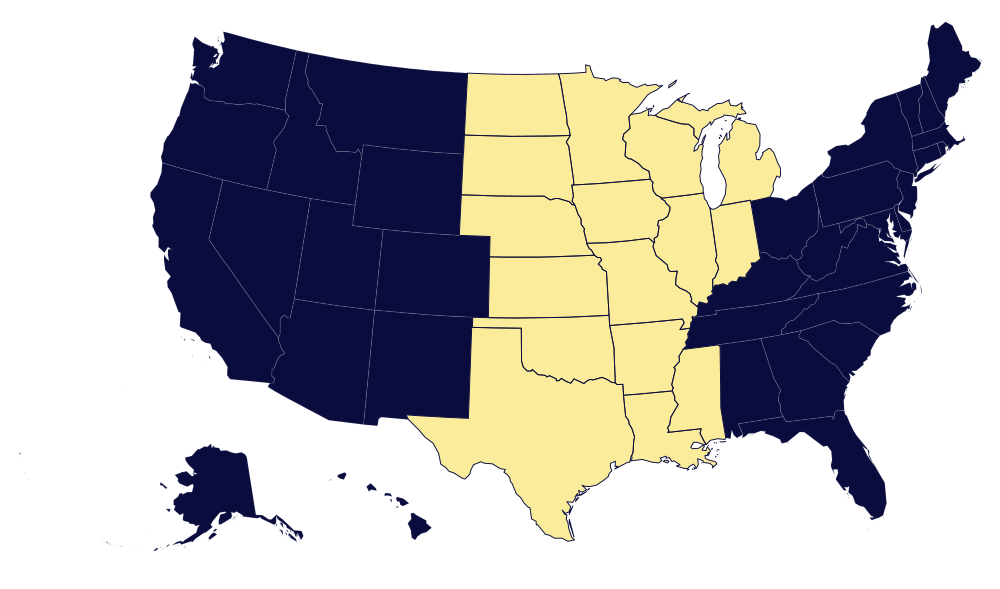
Central States
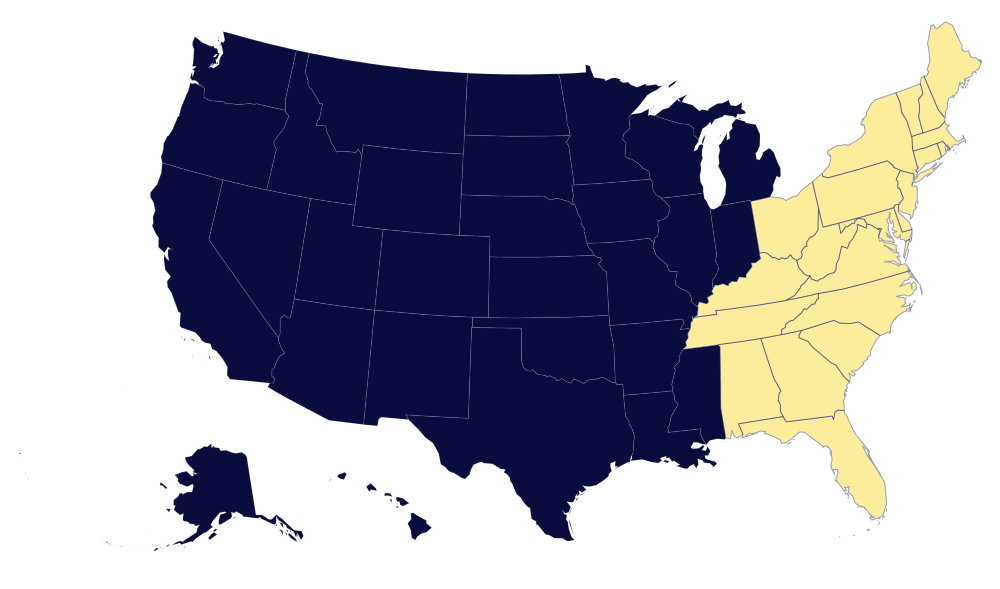
East Coast
*COMING SOON
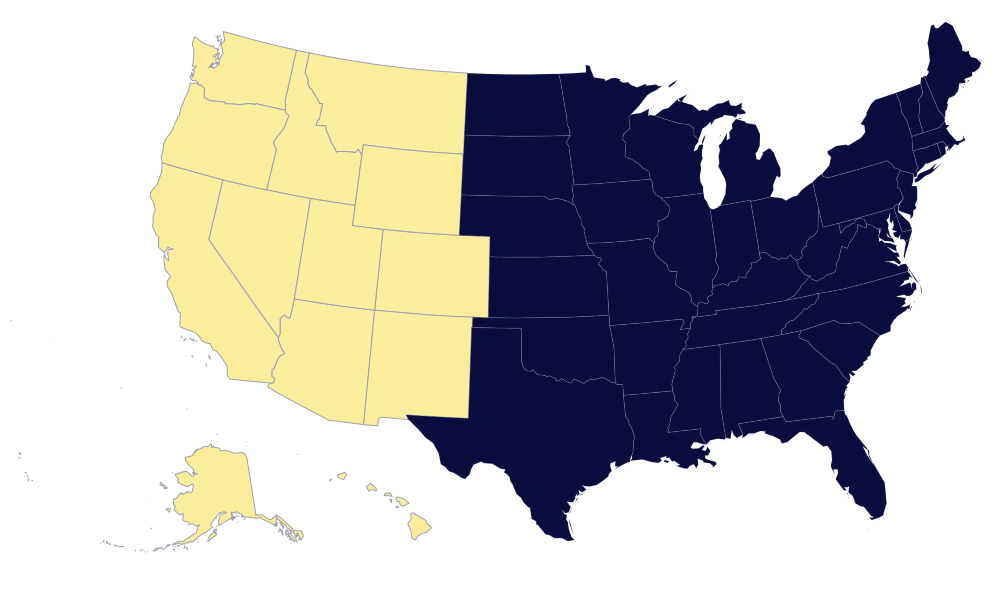
West Coast



*COMING SOON
East Coast
Central States
West Coast
AVLS Nationwide Services
CONTACT US
When your event matters, trust your audio visual labor needs to AV Labor Source.
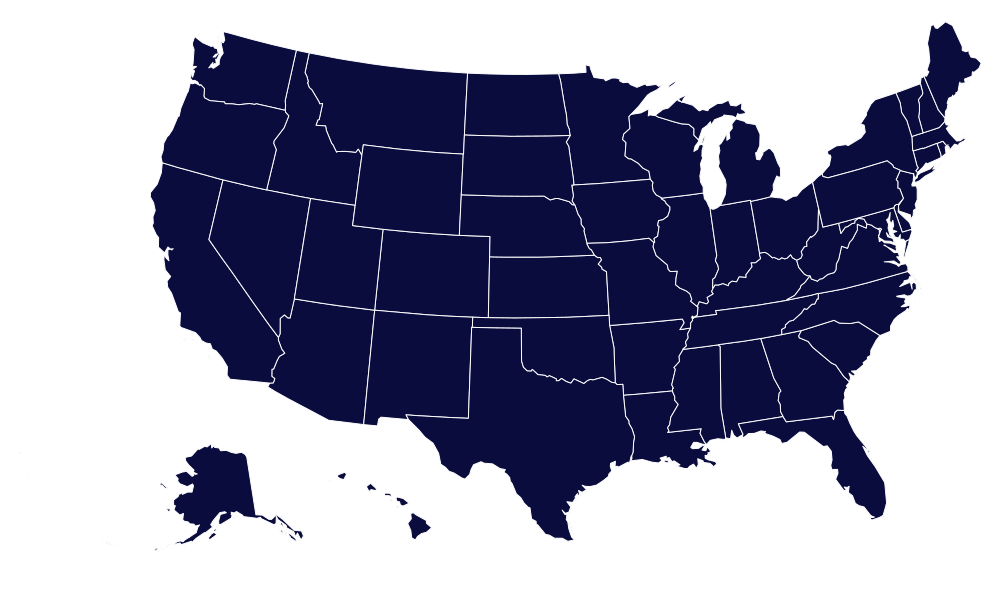
AVLS operate and has proven pool of AV technicians in major cities US Nationwide, such as Las Vegas, Los Angeles, Orlando, Dallas, San Antonio, Austin, Houston, Washington DC, Atlanta, New Orleans, Tennessee and more.
Please complete the form below and we will respond to you as soon as possible. We are available 24 hours a day to assist with your needs. We look forward to showing you what we can do toward the success of your next event.
AVLS operate and has proven pool of AV technicians in major cities US Nationwide, such as Las Vegas, Los Angeles, Orlando, Dallas, San Antonio, Austin, Houston, Washington DC, Atlanta, New Orleans, Tennessee and more.
Please complete the form below and we will respond to you as soon as possible. We are available 24 hours a day to assist with your needs. We look forward to showing you what we can do toward the success of your next event.
EVENT INFORMATION
