





July 6, 2026
How to Avoid Audio Problems at Corporate Events
Quick Answer: Preventing audio problems at corporate events requires thorough equipment testing 2-4 hours before the event, using quality microphones appropriate for your venue size, conducting sound checks with actual speakers, and having backup equipment ready. Most audio failures stem from inadequate preparation, improper microphone placement, and failure to account for room acoustics.
Key Takeaways
What Causes Audio Problems at Corporate Events
Audio problems at corporate events typically result from equipment failure, poor setup, or environmental factors that weren't properly addressed during planning. The most common culprits include dead batteries in wireless microphones, feedback loops caused by improper speaker placement, and connectivity issues between devices.
Equipment-related causes:
Environmental factors:
Human error factors:
Choose wired connections over wireless when possible for critical presentations, as they eliminate battery and interference concerns. However, wireless systems offer more flexibility for speakers who need to move around the stage or interact with the audience.
How to Test Audio Equipment Before an Event
Audio equipment testing should begin 2-4 hours before your event to allow adequate time for troubleshooting and adjustments. Start with individual components before testing the complete system to isolate any problems quickly.
Pre-event testing checklist:
Testing with actual conditions:
Document your audio settings during successful tests so you can quickly return to optimal levels if adjustments are needed during the event. Professional AV technicians typically create detailed setup sheets for this purpose.
Best Microphone Types for Conference Rooms
The optimal microphone choice depends on your room size, speaker mobility needs, and presentation style. Lavalier microphones work best for formal presentations, while handheld mics suit interactive sessions with audience Q&A.
Lavalier (lapel) microphones:
Handheld microphones:
Headset microphones:
Podium/lectern microphones:
Choose wireless systems with at least 8-hour battery life and always have backup batteries charged and ready. For critical events, consider having both primary and backup microphone types available.
How to Prevent Feedback and Echo During Presentations
Feedback occurs when microphones pick up sound from speakers, creating a loop that produces the characteristic squealing noise. Prevention requires proper speaker placement, microphone positioning, and audio level management.
Speaker placement guidelines:
Microphone techniques:
Audio level management:
Echo prevention strategies:
If feedback occurs during an event, immediately lower the overall volume or turn off the problematic microphone, identify the cause, and make adjustments before resuming.
What Audio Equipment Do I Need for a 200 Person Event
A 200-person corporate event requires professional-grade equipment with sufficient power and coverage to ensure every attendee hears clearly. The exact setup depends on your venue size, ceiling height, and presentation format.
Essential equipment list:
Backup equipment:
Power requirements:
Setup considerations for 200 people:
For events of this size, strongly consider hiring professional AV technicians who can properly calculate power requirements and ensure optimal speaker placement for your specific venue.
How to Troubleshoot Sound Cutting Out During a Live Event
When audio cuts out during an event, quick diagnosis and resolution are critical to maintaining professionalism. Most cutouts result from power issues, loose connections, or wireless interference that can be resolved without stopping the presentation.
Immediate response steps:
Wireless microphone troubleshooting:
Power-related solutions:
Quick communication protocol:
Prevention during events:
Most audio problems can be resolved within 30-60 seconds if proper backup systems and procedures are in place.
Wireless vs Wired Microphones for Corporate Events Pros and Cons
The choice between wireless and wired microphones depends on your event format, venue constraints, and reliability requirements. Each option offers distinct advantages that make them suitable for different corporate event scenarios.
Wireless microphone advantages:
Wireless microphone disadvantages:
Wired microphone advantages:
Wired microphone disadvantages:
Best use cases:
For critical presentations, consider a hybrid approach with wireless as primary and wired backup systems ready for immediate deployment.
How Far in Advance Should I Set Up Audio Equipment
Audio equipment setup timing depends on event complexity, venue access, and whether you're using professional technicians or handling setup internally. Plan for significantly more time than the actual setup requires to accommodate unexpected issues.
Timeline for different event sizes:
Small events (under 50 people):
Medium events (50-200 people):
Large events (200+ people):
Factors affecting setup time:
Pre-event day preparation:
Day-of-event priorities:
Never schedule setup to finish right before your event starts. Audio problems discovered at the last minute often cannot be resolved without delaying the program.
Common Audio Mistakes to Avoid at Business Conferences
Audio failures at corporate events often result from preventable mistakes that experienced event production teams know to avoid. Understanding these common pitfalls helps ensure your event maintains professional standards.
Equipment preparation mistakes:
Setup and positioning errors:
Testing and rehearsal oversights:
Communication and coordination failures:
Budget and planning mistakes:
Prevention strategies:
How to Handle Audio Problems If They Happen During an Event
When audio problems occur during a live corporate event, quick response and clear communication protocols minimize disruption and maintain professional credibility. Preparation and practiced procedures make the difference between minor hiccups and major embarrassments.
Immediate response protocol:
Common quick fixes:
Communication strategies:
Escalation procedures:
Post-incident actions:
Preparation that enables quick recovery:
The key to professional audio problem management is preparation, clear communication, and practiced procedures that your team can execute under pressure.
Do I Need a Professional Sound Technician for My Corporate Event
Professional sound technicians become essential when event complexity, audience size, or business importance exceed your team's technical capabilities. The decision depends on risk tolerance, budget, and the consequences of audio failure.
Events that require professional technicians:
Events where internal teams may suffice:
Professional technician benefits:
Cost considerations:
Questions to evaluate your needs:
For critical corporate events, the cost of professional audio support is typically much less than the potential impact of audio failure on your company's reputation and business objectives.
Best Practices for Audio During Hybrid Corporate Events
Hybrid corporate events require separate audio considerations for in-person and remote audiences, creating technical complexity that demands careful planning and often professional expertise. Success requires balancing the needs of both audience segments without compromising either experience.
Dual audio feed requirements:
Technical setup considerations:
Microphone strategies for hybrid events:
Common hybrid audio challenges:
Quality assurance for hybrid events:
Platform-specific considerations:
Hybrid events typically require professional AV technicians due to the technical complexity of managing multiple audio feeds and ensuring quality for both audience segments simultaneously.
How to Check Audio Levels and Sound Quality Before Guests Arrive
Proper audio level setting and quality verification require systematic testing that accounts for how sound behaves differently in empty versus occupied spaces. Effective sound checks involve multiple stages and realistic simulation of actual event conditions.
Pre-guest sound check procedure:
Realistic testing conditions:
Audio level guidelines:
Quality assessment checklist:
Documentation and settings:
Final verification steps:
Timing considerations:
Proper sound checking prevents most audio problems and ensures professional quality throughout your corporate event.
What Backup Audio Equipment Should I Have at an Event
Backup audio equipment planning should cover the most common failure points while remaining practical to transport and deploy quickly during an event. Focus on redundancy for critical components rather than duplicating every piece of equipment.
Essential backup equipment:
Advanced backup considerations:
Backup deployment strategies:
Battery management system:
Quick deployment procedures:
Budget-conscious backup planning:
Post-event backup management:
Effective backup planning focuses on quick deployment of essential equipment rather than complete system redundancy, allowing you to resolve most audio problems within 30-60 seconds.
Frequently Asked Questions
How long do wireless microphone batteries typically last during an event?
Quality wireless microphone batteries last 6-8 hours of continuous use, but you should replace them after 4-5 hours to prevent failure during presentations. Always use fresh alkaline or fully charged rechargeable batteries, and monitor battery indicators throughout your event.
What's the minimum distance between speakers and microphones to prevent feedback?
Maintain at least 6 feet between microphones and speakers when possible, with speakers positioned in front of microphone locations. The exact distance depends on microphone sensitivity, speaker power, and room acoustics, so always test for feedback at your actual event volume levels.
Can I use Bluetooth microphones for corporate presentations?
Bluetooth microphones are not recommended for professional corporate events due to audio latency, compression artifacts, and connection reliability issues. Use dedicated wireless microphone systems with UHF or digital transmission for professional results.
How do I prevent interference with wireless microphones?
Choose wireless systems that scan for clear frequencies automatically, keep transmitters within recommended range of receivers, and avoid frequency conflicts with Wi-Fi networks. Professional wireless systems offer better interference rejection than consumer-grade equipment.
What audio equipment do I need for outdoor corporate events?
Outdoor events require weather-resistant equipment, more powerful speakers to overcome ambient noise, and additional power planning since venues may lack adequate electrical infrastructure. Wind screens for microphones and backup power sources are essential.
Should I rent or buy audio equipment for corporate events?
Rent equipment for occasional events or when you need professional-grade systems. Buy basic equipment (microphones, cables, small speakers) if you host regular events. Rental provides access to higher-quality equipment and often includes technical support.
How do I handle audio for speakers with heavy accents or quiet voices?
Use close-positioned microphones (lavalier or headset styles), apply gentle compression to even out volume variations, and consider real-time captioning services for accessibility. Test audio with the actual speakers during sound check, not just technical staff.
What's the difference between powered and passive speakers for events?
Powered speakers have built-in amplifiers and only need audio signal and power connections, making them simpler to set up. Passive speakers require separate amplifiers but offer more flexibility for complex systems. Choose powered speakers for most corporate events.
How do I ensure good audio for both in-person and remote attendees?
Use separate audio feeds optimized for each audience - room speakers for in-person attendees and a direct mixer output for streaming. This prevents room echo and ambient noise from affecting the remote audience experience.
What should I do if the venue's built-in audio system isn't working?
Have a complete backup audio system available including portable speakers, microphones, and mixing equipment. Many venues have outdated or poorly maintained built-in systems, so always plan for the possibility of bringing your own equipment.
How early should I arrive to set up audio equipment?
Arrive at least 4 hours before your event for basic setups, or 6-8 hours for complex systems. This allows time for setup, thorough testing, troubleshooting any issues, and final sound checks with actual speakers.
Do I need different microphones for different types of presentations?
Yes - use lavalier microphones for formal presentations, handheld mics for interactive sessions, and headset mics for high-energy or movement-intensive presentations. Having multiple microphone types available gives you flexibility for different speaker styles and presentation formats.
Need Professional Audio Support for Your Corporate Event?
Don't let audio problems undermine your important corporate presentations and meetings. AV Labor Source provides experienced audio technicians and complete equipment solutions for corporate events nationwide. Our skilled professionals handle everything from initial planning and equipment selection to on-site setup, monitoring, and troubleshooting.
Whether you're planning a small board meeting or a large-scale conference, our team ensures flawless audio quality that keeps your event running smoothly and professionally. Contact us today to discuss your corporate event audio needs and get a customized quote for technical support services.
Get in touch with our event audio specialists to ensure your next corporate event sounds perfect.
Conclusion
Successfully avoiding audio problems at corporate events requires thorough preparation, proper equipment selection, and systematic testing procedures. The key elements include testing all equipment 2-4 hours before your event, choosing appropriate microphone types for your venue and presentation style, positioning speakers correctly to prevent feedback, and maintaining backup equipment for quick problem resolution.
Remember that most audio failures stem from inadequate preparation rather than equipment defects. By following the testing procedures, backup planning strategies, and troubleshooting protocols outlined in this guide, you can significantly reduce the risk of audio problems disrupting your corporate events.
For complex events, large audiences, or high-stakes presentations, consider working with professional AV technicians who bring specialized expertise and comprehensive backup systems. The investment in professional audio support is typically much less than the potential business impact of audio failure during critical corporate communications.
Key Takeaways
- Test all audio equipment 2-4 hours before your event starts to identify and resolve issues
- Choose the right microphone type based on your venue size and presentation style
- Position speakers away from microphones and use proper gain settings to prevent feedback
- Have backup wireless microphones, batteries, and cables readily available
- Hire professional AV technicians for events with 100+ attendees or complex setups
- Account for room acoustics by testing audio in the actual event space with people present
- Create a detailed audio checklist and assign specific responsibilities to team members
- Plan for hybrid events with separate audio feeds for in-person and remote audiences
- Keep spare batteries, extension cords, and basic tools easily accessible during the event
- Establish clear communication protocols between presenters and audio technicians
What Causes Audio Problems at Corporate Events
Audio problems at corporate events typically result from equipment failure, poor setup, or environmental factors that weren't properly addressed during planning. The most common culprits include dead batteries in wireless microphones, feedback loops caused by improper speaker placement, and connectivity issues between devices.
Equipment-related causes:
- Battery failure in wireless microphones and transmitters
- Loose or damaged cable connections
- Incompatible devices or outdated firmware
- Overloaded power circuits causing equipment shutdowns
Environmental factors:
- Room acoustics that create echo or dead zones
- Interference from Wi-Fi networks, cell phones, or other wireless devices
- HVAC systems creating background noise
- Venue power issues or electrical interference
Human error factors:
- Insufficient sound checks before the event
- Improper microphone technique by speakers
- Incorrect audio level settings
- Failure to account for audience size affecting room acoustics
Choose wired connections over wireless when possible for critical presentations, as they eliminate battery and interference concerns. However, wireless systems offer more flexibility for speakers who need to move around the stage or interact with the audience.
How to Test Audio Equipment Before an Event
Audio equipment testing should begin 2-4 hours before your event to allow adequate time for troubleshooting and adjustments. Start with individual components before testing the complete system to isolate any problems quickly.
Pre-event testing checklist:
- Power and connectivity test - Verify all equipment powers on and connections are secure
- Individual microphone test - Check each microphone separately at normal speaking volume
- Speaker placement test - Confirm speakers provide even coverage without dead zones
- Feedback threshold test - Gradually increase volume to identify potential feedback points
- Recording/streaming test - If applicable, test audio recording or live streaming quality
Testing with actual conditions:
- Have someone speak from each microphone position using normal presentation volume
- Test with background noise present (HVAC, audience chatter simulation)
- Check audio levels with people in the room, as bodies absorb sound differently than empty spaces
- Verify backup systems activate properly if primary equipment fails
Document your audio settings during successful tests so you can quickly return to optimal levels if adjustments are needed during the event. Professional AV technicians typically create detailed setup sheets for this purpose.
Best Microphone Types for Conference Rooms
The optimal microphone choice depends on your room size, speaker mobility needs, and presentation style. Lavalier microphones work best for formal presentations, while handheld mics suit interactive sessions with audience Q&A.
Lavalier (lapel) microphones:
- Best for: Formal presentations, speakers who use gestures, hands-free operation
- Pros: Consistent audio quality, allows natural movement, professional appearance
- Cons: Can pick up clothing noise, requires proper placement training
- Recommended for: Rooms with 50-300 people, keynote presentations
Handheld microphones:
- Best for: Q&A sessions, audience interaction, multiple speakers
- Pros: Familiar to most speakers, easy to pass between people, good directional pickup
- Cons: Requires one hand, can create handling noise, speakers may hold incorrectly
- Recommended for: Interactive sessions, panel discussions, audience questions
Headset microphones:
- Best for: High-energy presentations, speakers who move extensively, fitness or training sessions
- Pros: Stays in position during movement, consistent distance from mouth
- Cons: More visible, can be uncomfortable for long wear, requires proper fitting
- Recommended for: Training sessions, product demonstrations, energetic speakers
Podium/lectern microphones:
- Best for: Formal speeches, speakers who prefer to stay in one location
- Pros: No batteries required, professional appearance, hands-free operation
- Cons: Restricts speaker movement, can pick up paper shuffling, fixed position
- Recommended for: Board meetings, formal presentations, award ceremonies
Choose wireless systems with at least 8-hour battery life and always have backup batteries charged and ready. For critical events, consider having both primary and backup microphone types available.
How to Prevent Feedback and Echo During Presentations
Feedback occurs when microphones pick up sound from speakers, creating a loop that produces the characteristic squealing noise. Prevention requires proper speaker placement, microphone positioning, and audio level management.
Speaker placement guidelines:
- Position speakers in front of microphone positions, never behind or directly beside them
- Angle speakers slightly downward toward the audience to reduce ceiling reflections
- Maintain at least 6 feet of distance between microphones and speakers when possible
- Use directional speakers that focus sound toward the audience rather than omnidirectional models
Microphone techniques:
- Keep microphones 6-8 inches from the speaker's mouth for optimal pickup
- Use directional (cardioid) microphones that reject sound from behind
- Turn off unused microphones to reduce the chance of feedback
- Train speakers to avoid pointing microphones toward speakers or reflective surfaces
Audio level management:
- Set initial levels conservatively and increase gradually while monitoring for feedback
- Use automatic feedback suppression if available in your mixing equipment
- Monitor audio levels continuously during the event, not just during sound check
- Have someone designated to adjust levels who can see both speakers and audience
Echo prevention strategies:
- Add soft materials (drapes, carpeting, audience members) to reduce hard surface reflections
- Position microphones closer to speakers' mouths to increase direct sound vs. reflected sound
- Use acoustic panels or temporary sound dampening in problematic rooms
- Test acoustics with people in the room, as empty rooms behave very differently
If feedback occurs during an event, immediately lower the overall volume or turn off the problematic microphone, identify the cause, and make adjustments before resuming.
What Audio Equipment Do I Need for a 200 Person Event
A 200-person corporate event requires professional-grade equipment with sufficient power and coverage to ensure every attendee hears clearly. The exact setup depends on your venue size, ceiling height, and presentation format.
Essential equipment list:
- Main speakers: Two powered speakers with at least 500 watts each, positioned to cover the entire audience area
- Microphones: 2-3 wireless lavalier systems plus 1-2 handheld microphones for Q&A
- Mixing console: 8-12 channel mixer with EQ controls and feedback suppression
- Audio interface: For connecting laptops, phones, or other audio sources
- Cables and adapters: XLR, 1/4", and 3.5mm cables plus common adapters
Backup equipment:
- Spare wireless microphone system with charged batteries
- Backup cables for all critical connections
- Portable speaker as emergency backup
- Extra batteries for all wireless equipment
- Basic tool kit with screwdrivers and cable testers
Power requirements:
- Dedicated 20-amp circuits for main speakers
- UPS (uninterruptible power supply) for mixing console and wireless receivers
- Extension cords rated for audio equipment power draw
- Power strips with surge protection
Setup considerations for 200 people:
- Plan for 90-100 dB sound pressure level at the back of the room
- Position speakers to avoid coverage gaps in seating areas
- Account for higher ceilings requiring more powerful equipment
- Consider delay speakers for rooms longer than 60 feet
For events of this size, strongly consider hiring professional AV technicians who can properly calculate power requirements and ensure optimal speaker placement for your specific venue.
How to Troubleshoot Sound Cutting Out During a Live Event
When audio cuts out during an event, quick diagnosis and resolution are critical to maintaining professionalism. Most cutouts result from power issues, loose connections, or wireless interference that can be resolved without stopping the presentation.
Immediate response steps:
- Check power connections - Verify all equipment remains plugged in and power strips are functioning
- Examine cable connections - Look for loose XLR, USB, or power cables that may have been disturbed
- Switch to backup microphone - If wireless mic fails, immediately activate spare system
- Bypass problematic equipment - Route audio around failed components using alternate inputs
Wireless microphone troubleshooting:
- Replace batteries immediately if audio becomes weak or intermittent
- Switch to different wireless frequency if interference is suspected
- Check that transmitter and receiver are within proper range (typically 100-300 feet)
- Verify antenna connections on wireless receivers are secure
Power-related solutions:
- Reset circuit breakers if equipment suddenly loses power
- Switch to UPS backup power if available
- Redistribute equipment across different electrical circuits
- Check for overloaded power strips causing equipment shutdowns
Quick communication protocol:
- Have hand signals established between audio technician and presenter
- Use backup communication method (text, walkie-talkie) to coordinate solutions
- Designate someone to communicate with audience if extended troubleshooting is needed
- Keep spare microphone readily accessible for immediate deployment
Prevention during events:
- Tape down cables in high-traffic areas to prevent accidental disconnection
- Monitor battery levels continuously and replace proactively
- Have audio technician stationed where they can see all equipment status lights
- Conduct brief audio checks between presentation segments
Most audio problems can be resolved within 30-60 seconds if proper backup systems and procedures are in place.
Wireless vs Wired Microphones for Corporate Events Pros and Cons
The choice between wireless and wired microphones depends on your event format, venue constraints, and reliability requirements. Each option offers distinct advantages that make them suitable for different corporate event scenarios.
Wireless microphone advantages:
- Speaker mobility: Allows presenters to move freely around stage and interact with audience
- Clean appearance: Eliminates visible cables that can detract from professional presentation
- Flexible setup: Easy to reposition speakers without rewiring
- Audience interaction: Handheld wireless mics can be passed to audience members for questions
Wireless microphone disadvantages:
- Battery dependence: Risk of failure during presentations if batteries die
- Interference potential: Wi-Fi, cell phones, and other wireless devices can cause dropouts
- Higher cost: Quality wireless systems cost significantly more than wired equivalents
- Complexity: More components that can fail, requiring additional technical knowledge
Wired microphone advantages:
- Reliability: No batteries to fail or wireless interference to disrupt signal
- Consistent quality: Direct connection provides stable, high-quality audio
- Lower cost: Significantly less expensive than wireless systems
- Simplicity: Fewer components reduce potential failure points
Wired microphone disadvantages:
- Limited mobility: Speakers must stay within cable length of connection point
- Trip hazard: Cables across walkways can cause safety issues
- Setup complexity: Cable routing requires more planning and time
- Professional appearance: Visible cables can look less polished
Best use cases:
- Choose wireless for: Keynote presentations, product demonstrations, interactive sessions, large stages
- Choose wired for: Panel discussions, podium presentations, budget-conscious events, high-reliability requirements
For critical presentations, consider a hybrid approach with wireless as primary and wired backup systems ready for immediate deployment.
How Far in Advance Should I Set Up Audio Equipment
Audio equipment setup timing depends on event complexity, venue access, and whether you're using professional technicians or handling setup internally. Plan for significantly more time than the actual setup requires to accommodate unexpected issues.
Timeline for different event sizes:
Small events (under 50 people):
- Setup time needed: 2-3 hours
- Recommended start: 4 hours before event
- Sound check: 1 hour before guests arrive
- Buffer time: 1 hour for troubleshooting
Medium events (50-200 people):
- Setup time needed: 4-6 hours
- Recommended start: 6-8 hours before event
- Sound check: 2 hours before guests arrive
- Buffer time: 2 hours for troubleshooting
Large events (200+ people):
- Setup time needed: 6-12 hours
- Recommended start: Day before event when possible
- Sound check: 3-4 hours before guests arrive
- Buffer time: 3+ hours for troubleshooting
Factors affecting setup time:
- Venue access restrictions - Some venues limit setup hours or require union labor
- Equipment complexity - Wireless systems and mixing consoles require more configuration time
- Acoustic challenges - Difficult rooms need additional time for speaker positioning and EQ adjustments
- Coordination requirements - Multiple vendors or presenters extend setup and testing time
Pre-event day preparation:
- Confirm all equipment is functional and charged 24 hours prior
- Create detailed setup diagrams and equipment lists
- Coordinate venue access and loading dock availability
- Brief all team members on their specific responsibilities
Day-of-event priorities:
- Hour 1: Equipment positioning and power connections
- Hour 2: Cable routing and device connections
- Hour 3: Initial system testing and level setting
- Hour 4: Fine-tuning and presenter rehearsals
Never schedule setup to finish right before your event starts. Audio problems discovered at the last minute often cannot be resolved without delaying the program.
Common Audio Mistakes to Avoid at Business Conferences
Audio failures at corporate events often result from preventable mistakes that experienced event production teams know to avoid. Understanding these common pitfalls helps ensure your event maintains professional standards.
Equipment preparation mistakes:
- Untested backup equipment - Backup systems that haven't been tested often fail when needed
- Insufficient battery inventory - Running out of charged batteries during multi-day events
- Wrong cable types - Bringing incompatible connectors for venue or presenter equipment
- Inadequate power planning - Overloading circuits or lacking sufficient extension cords
Setup and positioning errors:
- Speakers behind microphones - Creates immediate feedback problems that disrupt presentations
- Microphones too far from speakers - Forces excessive volume levels that cause audio quality issues
- Ignoring room acoustics - Failing to account for hard surfaces that create echo and reverberation
- Poor cable management - Loose connections that fail during events and create safety hazards
Testing and rehearsal oversights:
- Sound check with empty room - Audio behaves completely differently with audience present
- Testing at low volumes - Problems only appear at actual presentation volume levels
- Skipping presenter training - Speakers who don't understand microphone technique cause audio issues
- No rehearsal with actual content - Different presentation styles require different audio approaches
Communication and coordination failures:
- Unclear responsibility assignments - Multiple people adjusting audio settings creates conflicts
- No backup communication method - Unable to coordinate solutions when problems arise
- Missing contact information - Cannot reach venue technical support or equipment vendors
- Inadequate briefing of presenters - Speakers unaware of audio protocols and backup procedures
Budget and planning mistakes:
- Underestimating equipment needs - Insufficient power or coverage for actual event requirements
- Choosing price over reliability - Cheap equipment that fails during critical moments
- Last-minute equipment rental - Limited selection and higher costs when booking close to event date
- Skipping professional help - Attempting complex setups without proper technical expertise
Prevention strategies:
- Create detailed checklists for equipment, setup, and testing procedures
- Assign specific audio responsibilities to trained team members
- Build extra time into all setup and testing schedules
- Establish clear communication protocols before problems arise
- Hire experienced AV technicians for complex or high-stakes events
How to Handle Audio Problems If They Happen During an Event
When audio problems occur during a live corporate event, quick response and clear communication protocols minimize disruption and maintain professional credibility. Preparation and practiced procedures make the difference between minor hiccups and major embarrassments.
Immediate response protocol:
- Signal the presenter - Use predetermined hand signals to indicate audio issues
- Activate backup systems - Switch to spare microphone or alternate audio path immediately
- Communicate with audience - Brief, professional explanation while resolving the issue
- Document the problem - Note what failed for post-event analysis and prevention
Common quick fixes:
- Dead microphone: Switch to backup wireless system or handheld microphone
- Feedback: Lower volume immediately, reposition microphone, adjust speaker angle
- No sound from laptop: Check mute settings, verify cable connections, switch to backup audio source
- Intermittent wireless: Replace batteries, change frequency, move closer to receiver
Communication strategies:
- Keep audience informed: "We're making a quick audio adjustment" rather than ignoring the problem
- Use humor appropriately: Light, professional humor can ease tension but avoid making fun of technical issues
- Maintain presenter confidence: Reassure speakers that the problem is being resolved quickly
- Set time expectations: Let audience know if the fix will take more than 30 seconds
Escalation procedures:
- 30 seconds: Basic troubleshooting (cables, batteries, settings)
- 1 minute: Switch to backup equipment or alternate setup
- 2 minutes: Consider brief break while implementing more complex solutions
- 5+ minutes: Formal break with clear timeline for resolution
Post-incident actions:
- Resume presentation with brief audio check to confirm resolution
- Monitor affected equipment more closely for remainder of event
- Have backup systems ready for immediate deployment if problems recur
- Conduct post-event analysis to prevent similar issues at future events
Preparation that enables quick recovery:
- Practice switching between primary and backup systems
- Position backup equipment for immediate access
- Train multiple team members on basic troubleshooting procedures
- Establish clear roles so multiple people aren't attempting fixes simultaneously
The key to professional audio problem management is preparation, clear communication, and practiced procedures that your team can execute under pressure.
Do I Need a Professional Sound Technician for My Corporate Event
Professional sound technicians become essential when event complexity, audience size, or business importance exceed your team's technical capabilities. The decision depends on risk tolerance, budget, and the consequences of audio failure.
Events that require professional technicians:
- Large audiences (100+ people) - Complex audio requirements and higher stakes
- Multi-day conferences - Extended setup time and ongoing technical support needs
- Hybrid events - Separate audio feeds for in-person and remote audiences require expertise
- High-profile speakers - VIP presenters expect flawless audio quality and professional support
- Complex venues - Challenging acoustics or technical requirements beyond basic setup
Events where internal teams may suffice:
- Small meetings (under 50 people) - Simple microphone and speaker setups
- Familiar venues - Locations where your team has successful experience
- Low-risk presentations - Internal meetings where minor issues won't damage business relationships
- Budget constraints - When professional fees exceed the cost of potential audio problems
Professional technician benefits:
- Equipment expertise - Proper selection and configuration of audio systems
- Acoustic knowledge - Understanding of room acoustics and speaker placement
- Troubleshooting skills - Quick problem resolution during live events
- Backup planning - Comprehensive redundancy and failure recovery procedures
- Vendor relationships - Access to quality equipment and emergency support
Cost considerations:
- Day rates: Professional audio technicians typically charge $300-800 per day
- Equipment included: Many technicians provide equipment as part of their service
- Insurance coverage: Professional services often include liability protection
- Opportunity cost: Compare technician fees to potential business impact of audio failure
Questions to evaluate your needs:
- Can your team properly test and troubleshoot audio equipment under pressure?
- Do you have backup equipment and procedures for common failure scenarios?
- Are you familiar with the venue's acoustic properties and technical requirements?
- What are the business consequences if audio problems disrupt your event?
For critical corporate events, the cost of professional audio support is typically much less than the potential impact of audio failure on your company's reputation and business objectives.
Best Practices for Audio During Hybrid Corporate Events
Hybrid corporate events require separate audio considerations for in-person and remote audiences, creating technical complexity that demands careful planning and often professional expertise. Success requires balancing the needs of both audience segments without compromising either experience.
Dual audio feed requirements:
- Room audio - Optimized for in-person audience with appropriate volume and coverage
- Streaming audio - Clean, consistent feed for remote participants without room noise
- Audience interaction - Microphones for in-person questions that remote attendees can hear clearly
- Remote participation - Audio system that allows virtual attendees to ask questions audibly in the room
Technical setup considerations:
- Audio mixing console - Professional mixer with multiple outputs for room and streaming feeds
- Acoustic isolation - Separate microphone feeds to prevent room echo in streaming audio
- Monitoring capabilities - Ability to monitor both room and streaming audio quality simultaneously
- Backup systems - Redundancy for both in-person and virtual audio paths
Microphone strategies for hybrid events:
- Presenter microphones - Lavalier mics that provide consistent audio for both audiences
- Audience microphones - Handheld or wireless systems for in-person questions
- Ambient room microphones - Capture audience reactions and energy for remote viewers
- Dedicated streaming microphones - Close-mic setup optimized for broadcast quality
Common hybrid audio challenges:
- Echo and feedback - Streaming audio feeding back through room speakers
- Volume balancing - Different optimal levels for room vs. streaming audiences
- Audience participation - Ensuring remote attendees can hear in-person questions and comments
- Technical coordination - Managing multiple audio feeds and monitoring systems simultaneously
Quality assurance for hybrid events:
- Test both audio feeds with actual participants before the event
- Have separate technicians monitoring room and streaming audio quality
- Establish communication protocols between in-person and remote technical teams
- Plan for independent backup systems that don't affect both audio feeds simultaneously
Platform-specific considerations:
- Zoom/Teams integration - Direct audio feeds that bypass computer microphones
- Streaming platform requirements - Specific audio formats and quality standards
- Latency management - Minimizing delay between in-person and remote audio
- Recording quality - Ensuring archived content has professional audio quality
Hybrid events typically require professional AV technicians due to the technical complexity of managing multiple audio feeds and ensuring quality for both audience segments simultaneously.
How to Check Audio Levels and Sound Quality Before Guests Arrive
Proper audio level setting and quality verification require systematic testing that accounts for how sound behaves differently in empty versus occupied spaces. Effective sound checks involve multiple stages and realistic simulation of actual event conditions.
Pre-guest sound check procedure:
- Equipment functionality test - Verify all components power on and connect properly
- Individual microphone test - Check each microphone separately at normal speaking volume
- Speaker coverage test - Walk the entire audience area while someone speaks into each microphone
- Feedback threshold identification - Gradually increase volume to find maximum levels without feedback
- Audio source testing - Test laptop connections, phone audio, and any recorded content
Realistic testing conditions:
- Simulate audience presence - Add soft materials or have team members sit in audience area
- Test at actual presentation volume - Many problems only appear at realistic sound levels
- Include background noise - Test with HVAC running and normal venue ambient sound
- Use actual presentation content - Different speakers and content types may reveal issues
Audio level guidelines:
- Comfortable conversation level - 65-70 dB for small meetings
- Presentation level - 75-80 dB for medium-sized rooms
- Large venue level - 85-90 dB for audiences over 200 people
- Maximum safe level - Never exceed 95 dB to protect hearing and prevent discomfort
Quality assessment checklist:
- Clarity - Speech is intelligible from all seating positions
- Coverage - Even volume throughout audience area without dead zones
- Frequency response - Natural sound without excessive bass or harsh treble
- Background noise - Minimal hum, buzz, or interference
Documentation and settings:
- Record optimal mixer settings for each microphone and input
- Note speaker positions and angles that provide best coverage
- Document any problematic areas or acoustic challenges
- Create quick reference sheet for adjustments during event
Final verification steps:
- Have someone unfamiliar with the setup evaluate audio quality
- Test emergency procedures like switching to backup microphones
- Verify all wireless systems show strong signal strength
- Confirm recording or streaming audio quality if applicable
Timing considerations:
- Complete initial sound check 2-3 hours before guests arrive
- Plan final audio verification 30 minutes before event start
- Account for acoustic changes as audience fills the room
- Be prepared to make minor level adjustments as event begins
Proper sound checking prevents most audio problems and ensures professional quality throughout your corporate event.
What Backup Audio Equipment Should I Have at an Event
Backup audio equipment planning should cover the most common failure points while remaining practical to transport and deploy quickly during an event. Focus on redundancy for critical components rather than duplicating every piece of equipment.
Essential backup equipment:
- Spare wireless microphone system - Complete transmitter and receiver with charged batteries
- Backup cables - XLR, 1/4", USB, and 3.5mm cables for all critical connections
- Extra batteries - Charged spares for all wireless equipment, plus battery charger
- Portable powered speaker - Battery-operated backup that can function independently
- Basic tool kit - Screwdrivers, cable tester, electrical tape, zip ties
Advanced backup considerations:
- Backup mixing console - Smaller portable mixer for emergency use
- Wired microphone - Handheld or lavalier with long cable as wireless backup
- Audio interface - USB or analog backup for laptop/device connections
- Extension cords and power strips - Extra power options rated for audio equipment
- Mobile hotspot - Internet backup for streaming or remote participation
Backup deployment strategies:
- Immediate access - Keep most critical backups (spare mic, batteries, cables) within arm's reach
- Staged positioning - Place backup equipment where it can be deployed without disrupting event
- Clear labeling - Mark all backup equipment and cables for quick identification
- Tested readiness - Verify all backup equipment functions properly before event
Battery management system:
- Rotation schedule - Replace batteries proactively based on time, not just when they fail
- Charge monitoring - Track battery levels and replace when they reach 25-30% capacity
- Battery types - Stock correct battery types for all wireless equipment
- Charging station - Dedicated area with chargers for continuous battery rotation
Quick deployment procedures:
- Practice switching - Train team members to deploy backup systems quickly
- Clear procedures - Written steps for common backup scenarios
- Communication protocols - Hand signals or communication method to coordinate backup deployment
- Responsibility assignment - Designate who handles each type of backup equipment
Budget-conscious backup planning:
- Prioritize by failure probability - Wireless microphones and batteries fail most often
- Rent vs. buy decision - Backup equipment may be more cost-effective to rent
- Shared resources - Coordinate with other events or departments to share backup inventory
- Vendor support - Some equipment rental companies provide emergency replacement services
Post-event backup management:
- Inventory check - Verify all backup equipment is accounted for and functional
- Battery maintenance - Properly store and maintain rechargeable batteries
- Equipment testing - Test any backup equipment that was used during the event
- Lessons learned - Update backup inventory based on actual event experience
Effective backup planning focuses on quick deployment of essential equipment rather than complete system redundancy, allowing you to resolve most audio problems within 30-60 seconds.
Frequently Asked Questions
How long do wireless microphone batteries typically last during an event?
Quality wireless microphone batteries last 6-8 hours of continuous use, but you should replace them after 4-5 hours to prevent failure during presentations. Always use fresh alkaline or fully charged rechargeable batteries, and monitor battery indicators throughout your event.
What's the minimum distance between speakers and microphones to prevent feedback?
Maintain at least 6 feet between microphones and speakers when possible, with speakers positioned in front of microphone locations. The exact distance depends on microphone sensitivity, speaker power, and room acoustics, so always test for feedback at your actual event volume levels.
Can I use Bluetooth microphones for corporate presentations?
Bluetooth microphones are not recommended for professional corporate events due to audio latency, compression artifacts, and connection reliability issues. Use dedicated wireless microphone systems with UHF or digital transmission for professional results.
How do I prevent interference with wireless microphones?
Choose wireless systems that scan for clear frequencies automatically, keep transmitters within recommended range of receivers, and avoid frequency conflicts with Wi-Fi networks. Professional wireless systems offer better interference rejection than consumer-grade equipment.
What audio equipment do I need for outdoor corporate events?
Outdoor events require weather-resistant equipment, more powerful speakers to overcome ambient noise, and additional power planning since venues may lack adequate electrical infrastructure. Wind screens for microphones and backup power sources are essential.
Should I rent or buy audio equipment for corporate events?
Rent equipment for occasional events or when you need professional-grade systems. Buy basic equipment (microphones, cables, small speakers) if you host regular events. Rental provides access to higher-quality equipment and often includes technical support.
How do I handle audio for speakers with heavy accents or quiet voices?
Use close-positioned microphones (lavalier or headset styles), apply gentle compression to even out volume variations, and consider real-time captioning services for accessibility. Test audio with the actual speakers during sound check, not just technical staff.
What's the difference between powered and passive speakers for events?
Powered speakers have built-in amplifiers and only need audio signal and power connections, making them simpler to set up. Passive speakers require separate amplifiers but offer more flexibility for complex systems. Choose powered speakers for most corporate events.
How do I ensure good audio for both in-person and remote attendees?
Use separate audio feeds optimized for each audience - room speakers for in-person attendees and a direct mixer output for streaming. This prevents room echo and ambient noise from affecting the remote audience experience.
What should I do if the venue's built-in audio system isn't working?
Have a complete backup audio system available including portable speakers, microphones, and mixing equipment. Many venues have outdated or poorly maintained built-in systems, so always plan for the possibility of bringing your own equipment.
How early should I arrive to set up audio equipment?
Arrive at least 4 hours before your event for basic setups, or 6-8 hours for complex systems. This allows time for setup, thorough testing, troubleshooting any issues, and final sound checks with actual speakers.
Do I need different microphones for different types of presentations?
Yes - use lavalier microphones for formal presentations, handheld mics for interactive sessions, and headset mics for high-energy or movement-intensive presentations. Having multiple microphone types available gives you flexibility for different speaker styles and presentation formats.
Need Professional Audio Support for Your Corporate Event?
Don't let audio problems undermine your important corporate presentations and meetings. AV Labor Source provides experienced audio technicians and complete equipment solutions for corporate events nationwide. Our skilled professionals handle everything from initial planning and equipment selection to on-site setup, monitoring, and troubleshooting.
Whether you're planning a small board meeting or a large-scale conference, our team ensures flawless audio quality that keeps your event running smoothly and professionally. Contact us today to discuss your corporate event audio needs and get a customized quote for technical support services.
Get in touch with our event audio specialists to ensure your next corporate event sounds perfect.
Conclusion
Successfully avoiding audio problems at corporate events requires thorough preparation, proper equipment selection, and systematic testing procedures. The key elements include testing all equipment 2-4 hours before your event, choosing appropriate microphone types for your venue and presentation style, positioning speakers correctly to prevent feedback, and maintaining backup equipment for quick problem resolution.
Remember that most audio failures stem from inadequate preparation rather than equipment defects. By following the testing procedures, backup planning strategies, and troubleshooting protocols outlined in this guide, you can significantly reduce the risk of audio problems disrupting your corporate events.
For complex events, large audiences, or high-stakes presentations, consider working with professional AV technicians who bring specialized expertise and comprehensive backup systems. The investment in professional audio support is typically much less than the potential business impact of audio failure during critical corporate communications.


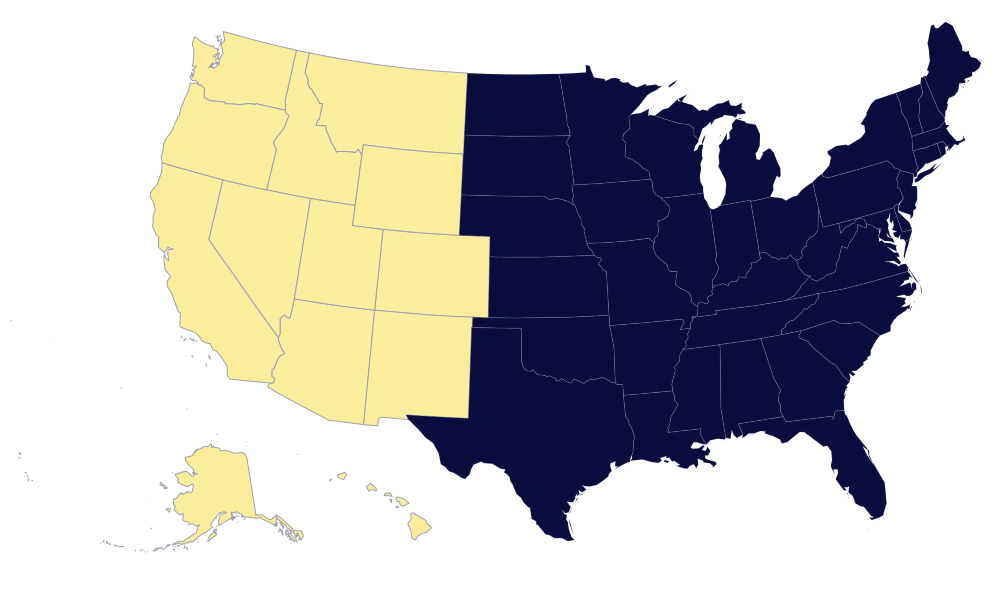
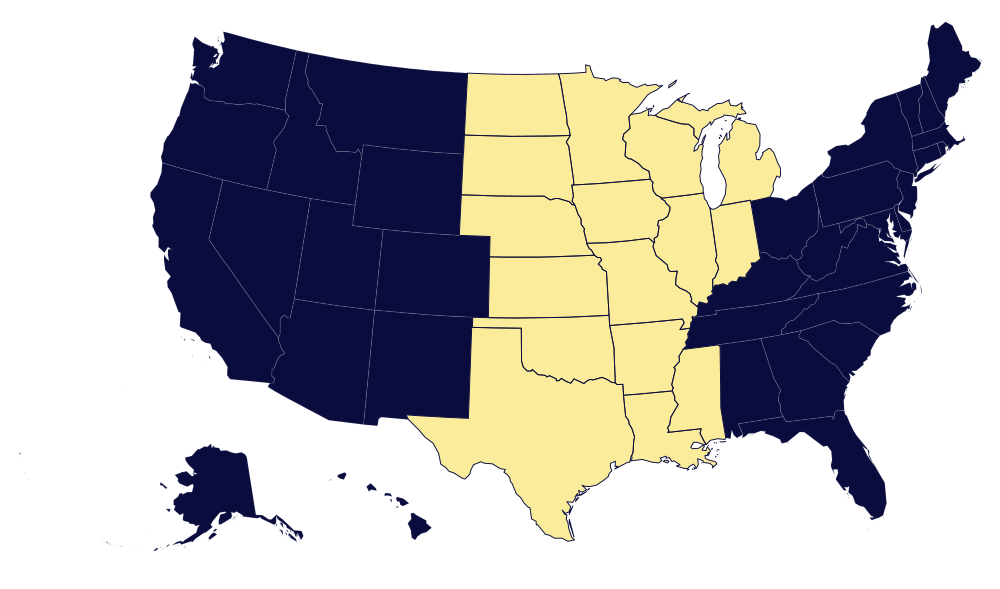
AVLS Nationwide Services
Central States
East Coast
*COMING SOON
West Coast



*COMING SOON
East Coast
Central States
West Coast
AVLS Nationwide Services
CONTACT US
When your event matters, trust your audio visual labor needs to AV Labor Source.
AVLS operate and has proven pool of AV technicians in major cities US Nationwide, such as Las Vegas, Los Angeles, Orlando, Dallas, San Antonio, Austin, Houston, Washington DC, Atlanta, New Orleans, Tennessee and more.
Please complete the form below and we will respond to you as soon as possible. We are available 24 hours a day to assist with your needs. We look forward to showing you what we can do toward the success of your next event.
AVLS operate and has proven pool of AV technicians in major cities US Nationwide, such as Las Vegas, Los Angeles, Orlando, Dallas, San Antonio, Austin, Houston, Washington DC, Atlanta, New Orleans, Tennessee and more.
Please complete the form below and we will respond to you as soon as possible. We are available 24 hours a day to assist with your needs. We look forward to showing you what we can do toward the success of your next event.
EVENT INFORMATION
