





AV Crew Planning Guide for Large Corporate Events
Key Takeaways
- Plan crew requirements 4-6 weeks before your event to secure qualified technicians
- Calculate 1 AV technician per 50-75 attendees for standard corporate events
- Assign specialized roles: audio engineer, video technician, lighting operator, and crew chief
- Budget 15-20% of total AV costs for professional crew labor
- Establish clear load-in, rehearsal, show, and strike schedules with defined crew responsibilities
- Require crew certifications for complex equipment like LED walls and automated lighting
- Plan for 12-16 hour crew days including setup, rehearsal, event, and breakdown
- Maintain backup crew contacts for last-minute replacements or additional support
What Is an AV Crew Planning Guide for Large Corporate Events?
An AV crew planning guide for large corporate events is a comprehensive framework that determines staffing requirements, role assignments, and scheduling protocols for audiovisual production teams.
This planning process ensures adequate technical support for complex corporate presentations, product launches, conferences, and multi-day conventions.
The guide addresses three critical components: crew sizing based on event scale, skill matching to equipment complexity, and timeline coordination from load-in through strike. Corporate events typically require specialized technicians who understand business presentation standards, equipment redundancy needs, and professional appearance requirements.
Key planning elements include:
- Calculating crew-to-attendee ratios based on venue size and technical complexity
- Defining specific roles like audio engineers, video operators, and lighting technicians
- Establishing clear communication protocols between crew members and event managers
- Creating contingency plans for equipment failures or last-minute changes
Choose this structured approach if your event involves multiple presentation spaces, live streaming components, or audiences exceeding 100 people. Events with basic AV needs may require only 1-2 technicians, while complex multi-room productions often need 8-12 specialized crew members.
How Many AV Technicians Do You Need for Large Corporate Events?
Large corporate events require 1 technician per 50-75 attendees as a baseline, with adjustments based on technical complexity and venue layout. A 500-person conference typically needs 7-10 AV professionals, while events exceeding 1,000 attendees often require 12-15 crew members across multiple roles.
Crew sizing factors:
- Audience size: Base calculation of 1:50-75 ratio for standard setups
- Equipment complexity: LED walls, automated lighting, and multi-camera setups require additional specialists
- Venue layout: Multiple rooms or outdoor spaces increase crew requirements by 2-3 technicians per additional space
- Event duration: Multi-day events need crew rotation to maintain performance quality
Essential crew positions for large events:
- Crew Chief: Oversees all technical operations and client communication
- Audio Engineer: Manages sound systems, microphones, and mixing consoles
- Video Technician: Operates cameras, switchers, and projection systems
- Lighting Operator: Controls stage lighting and environmental effects
- General Technicians: Handle cable management, equipment setup, and support tasks
For events requiring professional event production services, plan for additional specialists like riggers for overhead installations or broadcast engineers for live streaming capabilities. Budget constraints often limit crew size, but understaffing creates risks of equipment failures and poor event execution.
What Roles Should You Include in Your AV Crew Planning Guide for Large Corporate Events?
Your AV crew planning guide for large corporate events should define six core positions: crew chief, audio engineer, video technician, lighting operator, general technicians, and backup specialists. Each role requires specific skills and certifications to handle complex corporate production requirements effectively.
Crew Chief responsibilities:
- Coordinates all technical operations and serves as primary client contact
- Manages crew schedules, equipment assignments, and troubleshooting decisions
- Requires 5+ years experience with corporate events and team leadership skills
- Handles vendor coordination and maintains event timeline adherence
Audio Engineer duties:
- Operates mixing consoles, wireless microphone systems, and speaker arrays
- Manages audio recording, playback, and live streaming audio feeds
- Requires certification on digital mixing platforms and RF coordination knowledge
- Handles presenter coaching and microphone etiquette training
Video Technician tasks:
- Controls projection systems, LED walls, and camera operations
- Manages content switching, graphics playback, and video recording
- Requires expertise in video formats, signal routing, and display calibration
- Coordinates with presentation teams for seamless content delivery
Lighting Operator functions:
- Controls stage lighting, ambient room lighting, and special effects
- Programs lighting cues for presentations and manages color temperature
- Requires knowledge of LED fixtures, control protocols, and power distribution
- Coordinates lighting design with video requirements to prevent conflicts
When working with skilled AV technicians, ensure each crew member understands corporate event standards including professional appearance, client interaction protocols, and confidentiality requirements. Avoid assigning multiple critical roles to single technicians during peak event periods.
When Should You Start Planning Your AV Crew for Corporate Events?
Start planning your AV crew for corporate events 4-6 weeks before the event date to secure qualified technicians and allow proper preparation time. Peak event seasons (September-November and March-May) require 6-8 weeks advance booking due to increased demand for experienced corporate AV professionals.
Timeline breakdown:
- 6-8 weeks prior: Initial crew requirements assessment and budget approval
- 4-6 weeks prior: Crew booking confirmations and role assignments
- 2-3 weeks prior: Equipment specifications review and crew briefings
- 1 week prior: Final headcount confirmation and backup crew arrangements
Critical planning milestones:
- Equipment specifications finalized: Crew requirements depend on confirmed AV equipment lists
- Venue details confirmed: Room layouts and power availability affect crew sizing
- Event schedule locked: Load-in times and show durations determine crew hour calculations
- Client expectations established: Special requirements like live streaming or recording need specialized technicians
Regional considerations for crew availability:
Major markets like Las Vegas, Orlando, and Chicago offer larger talent pools but higher competition during convention seasons. Secondary markets may require longer lead times to secure experienced corporate event technicians.
Rush bookings within 2 weeks often result in 20-30% higher labor costs and limited crew selection. Emergency crew arrangements typically compromise either experience level or budget requirements, making early planning essential for successful corporate events.
How Do You Calculate AV Crew Costs for Large Corporate Events?
AV crew costs for large corporate events typically range from 15-25% of total audiovisual budget, with daily rates varying from $300-800 per technician depending on role complexity and market location. A $50,000 AV production usually requires $7,500-12,500 in crew labor costs.
Crew rate structure:
- General Technicians: $300-450 per day (10-12 hour shifts)
- Specialized Engineers: $450-650 per day for audio/video/lighting experts
- Crew Chiefs: $600-800 per day for senior leadership roles
- Overtime rates: 1.5x standard rate after 10-12 hours, 2x rate after 16 hours
Additional cost factors:
- Travel and lodging: Required for out-of-market crew, adds $200-400 per person daily
- Equipment certifications: Specialized training requirements increase rates by 10-20%
- Union requirements: Some venues mandate union crews with higher rate structures
- Rush booking premiums: Last-minute crew needs add 20-30% to standard rates
Cost calculation example for 500-person corporate conference:
- 8 technicians × $500 average daily rate = $4,000
- 2-day event with setup/strike = $8,000 base cost
- Travel expenses for 3 out-of-market specialists = $1,200
- Total crew investment: $9,200 (18% of $50,000 AV budget)
Markets like New York City and San Francisco command premium rates due to higher living costs and union requirements. Budget-conscious planners often find competitive rates in markets like Austin or Nashville without sacrificing crew quality.
What Equipment Expertise Should Your AV Crew Have?
Your AV crew should possess certifications and hands-on experience with digital mixing consoles, LED video walls, automated lighting systems, and live streaming platforms commonly used in corporate environments. Equipment expertise directly impacts event success and determines appropriate crew assignments.
Essential audio equipment knowledge:
- Digital mixing consoles: Yamaha CL/QL series, DiGiCo, Allen & Heath platforms
- Wireless systems: Shure, Sennheiser, and Audio-Technica RF coordination
- Line array systems: Meyer Sound, d&b audiotechnik, and L-Acoustics speaker arrays
- Recording/streaming: Dante networking, multi-track recording, and broadcast feeds
Critical video system expertise:
- LED walls: ROE Visual, Absen, and NovaStar processing systems
- Projection systems: Christie, Barco, and Panasonic large-venue projectors
- Video switching: Barco E2, Analog Way, and Roland V-mixing platforms
- Camera systems: PTZ cameras, multi-camera switching, and IMAG operations
Lighting control requirements:
- Console operation: GrandMA, ETC Eos, and Chamsys lighting control
- LED fixtures: Color mixing, pixel mapping, and DMX protocol management
- Conventional systems: Dimmer control and traditional tungsten/HMI fixtures
- Rigging knowledge: Truss systems, motor control, and safety protocols
When hiring skilled technical crews, verify certifications through manufacturer training programs or industry organizations. Crew members lacking specific equipment experience create risks of operational delays and technical failures during critical presentation moments.
How Do You Manage AV Crew Schedules for Multi-Day Corporate Events?
Multi-day corporate events require rotating crew schedules that maintain 12-16 hour coverage while preventing technician fatigue and ensuring consistent service quality. Effective schedule management balances labor costs with operational requirements across event duration.
Schedule planning framework:
- Load-in day: Full crew for equipment setup and system testing (10-14 hours)
- Event days: Reduced crew for operations with specialized roles covered (8-12 hours)
- Strike day: Full crew returns for breakdown and load-out (6-10 hours)
- Overlap periods: 2-hour crew transitions during shift changes for continuity
Crew rotation strategies:
- A/B team approach: Alternate full crews for events exceeding 3 days
- Staggered shifts: Overlap key positions while rotating support technicians
- Specialized coverage: Maintain audio/video engineers throughout while rotating general crew
- Emergency backup: Keep 20% additional crew on standby for equipment issues
Daily schedule example for 3-day corporate conference:
- Day 1: 8 technicians, 6 AM - 8 PM (setup and opening sessions)
- Day 2: 6 technicians, 7 AM - 7 PM (full conference operations)
- Day 3: 8 technicians, 7 AM - 9 PM (closing events and breakdown)
Fatigue management protocols:
- Limit individual shifts to 14 hours maximum with mandatory breaks
- Rotate high-stress positions like audio engineering every 2 days
- Provide meal breaks and rest areas away from event noise
- Monitor crew performance and replace fatigued technicians when necessary
For events in major markets with deep talent pools like Los Angeles or Atlanta, crew rotation becomes easier due to available backup technicians. Smaller markets may require bringing additional crew from neighboring regions to maintain proper coverage.
What Are Common AV Crew Planning Mistakes to Avoid?
The most common AV crew planning mistake is underestimating crew requirements by 20-30%, leading to overworked technicians and increased risk of technical failures during critical presentation moments. Inadequate crew planning affects 40% of corporate events according to industry feedback.
Critical planning errors:
- Insufficient crew sizing: Using 1:100 attendee ratios instead of proper 1:50-75 calculations
- Single-point failures: Assigning one person to multiple critical roles without backup coverage
- Inadequate skill matching: Booking general technicians for specialized equipment requirements
- Poor timeline estimation: Underestimating setup, rehearsal, and breakdown time requirements
Scheduling and communication mistakes:
- No overlap planning: Failing to schedule crew transitions during shift changes
- Unclear role definitions: Leaving crew responsibilities undefined until event day
- Missing contingency plans: No backup crew arrangements for equipment failures or illness
- Inadequate briefing time: Rushing crew orientation without proper equipment familiarization
Budget and logistics errors:
- Hidden cost surprises: Forgetting overtime, travel, and meal allowances in crew budgets
- Last-minute bookings: Waiting until 2 weeks before events to secure crew availability
- Venue requirement gaps: Missing union requirements or venue-specific crew certifications
- Equipment mismatch: Booking crew without confirming their experience with specific gear
Real-world example: A 750-person product launch initially planned for 6 technicians but required 10 crew members when LED wall complexity and live streaming requirements became clear. The late crew additions cost 35% more than proper advance planning would have required.
Successful planners using comprehensive AV labor staffing services avoid these mistakes by establishing crew requirements during initial event planning phases, not as afterthoughts to equipment selections.
AV Crew Planning Checklist for Large Corporate Events
Planning Phase | Timeline | Key Actions | Crew Requirements |
Initial Planning | 6-8 weeks prior | Define event scope, attendee count, venue requirements | Estimate crew size (1:50-75 ratio) |
Equipment Confirmation | 4-6 weeks prior | Finalize AV equipment list, technical specifications | Match crew skills to equipment needs |
Crew Booking | 4-6 weeks prior | Secure crew commitments, define roles and rates | Confirm specialized certifications |
Schedule Development | 2-3 weeks prior | Create detailed timeline, assign specific responsibilities | Plan crew rotations and breaks |
Final Preparation | 1 week prior | Conduct crew briefings, confirm backup arrangements | Verify contact information and schedules |
Event Execution | Event days | Monitor crew performance, manage schedule adjustments | Maintain communication protocols |
Pre-event crew verification:
- Confirm all crew certifications and equipment experience
- Establish clear communication channels and emergency contacts
- Review venue requirements including union rules and security protocols
- Verify crew arrival times and coordinate with venue loading dock schedules
Day-of-event management:
- Conduct crew check-in and safety briefing before load-in begins
- Assign crew chief as single point of contact for client communications
- Monitor crew fatigue levels and rotate positions as needed
- Document any equipment issues or crew performance concerns
Post-event evaluation:
- Review crew performance and gather feedback for future improvements
- Process crew payments and handle any overtime or expense reimbursements
- Update crew database with performance notes and skill confirmations
- Analyze actual vs. planned crew requirements for better future estimates
This systematic approach ensures comprehensive crew planning that supports successful corporate event execution while maintaining budget control and quality standards.
FAQ
How far in advance should I book AV crew for a large corporate event?
Book AV crew 4-6 weeks in advance for standard events, or 6-8 weeks during peak seasons (September-November, March-May). This timeline ensures access to qualified technicians and allows proper preparation time.
What's the typical crew-to-attendee ratio for corporate events?
Plan for 1 AV technician per 50-75 attendees as a baseline. A 500-person event typically requires 7-10 crew members, while 1,000+ attendee events need 12-15 technicians across specialized roles.
How much should I budget for AV crew costs?
AV crew costs typically represent 15-25% of your total audiovisual budget. Daily rates range from $300-800 per technician depending on role complexity and market location.
What crew positions are essential for large corporate events?
Essential positions include crew chief, audio engineer, video technician, lighting operator, and general technicians. Events with complex requirements may need additional specialists for rigging, broadcast, or LED wall operations.
How do I handle crew scheduling for multi-day events?
Use rotating schedules with 12-16 hour coverage while preventing technician fatigue. Plan for crew overlaps during shift changes and maintain backup technicians for equipment issues or emergencies.
What equipment certifications should my crew have?
Crew should have certifications on digital mixing consoles, LED video systems, automated lighting, and live streaming platforms. Verify manufacturer training or industry certifications before booking.
How do I calculate overtime costs for AV crew?
Most markets use 1.5x standard rates after 10-12 hours and 2x rates after 16 hours. Factor overtime into budgets for events requiring extended setup or breakdown periods.
What happens if crew members don't show up on event day?
Maintain backup crew contacts and work with professional AV staffing services that provide replacement guarantees. Plan for 10-20% backup coverage for critical positions.
Should I hire local crew or bring technicians from other markets?
Hire locally when possible to reduce travel costs. Major markets like Dallas, Denver, and Phoenix offer strong local talent pools for most corporate event requirements.
How do I verify crew qualifications before hiring?
Request references from recent corporate events, verify equipment certifications, and confirm experience with similar event scales. Professional staffing services pre-screen technicians and maintain qualification databases.
What's included in a typical crew day rate?
Day rates typically cover 10-12 hour shifts including setup, event operations, and basic breakdown. Additional costs include overtime, travel expenses, meals, and lodging for out-of-market crew.
How do venue requirements affect crew planning?
Some venues require union crews, specific certifications, or security clearances. Verify venue requirements during initial planning and factor additional costs or lead times into crew arrangements.
Conclusion
Successful AV crew planning for large corporate events requires systematic approach that balances technical expertise, proper staffing levels, and budget management. The foundation starts with accurate crew sizing using 1:50-75 attendee ratios, then builds through specialized role assignments and detailed scheduling protocols.
Key success factors include:
- Early planning: Secure qualified crew 4-6 weeks in advance to ensure availability and competitive rates
- Proper role definition: Assign specialized positions including crew chief, audio engineer, video technician, and lighting operator based on event requirements
- Budget allocation: Plan for crew costs representing 15-25% of total AV budget with contingencies for overtime and travel expenses
- Equipment matching: Verify crew certifications and experience with specific equipment before booking confirmments
The most critical element is understanding that crew quality directly impacts event success. Experienced corporate AV technicians prevent technical failures, manage client interactions professionally, and adapt to last-minute changes that characterize high-stakes business events.
Take action now: Start your crew planning process by defining event technical requirements, calculating proper crew sizing, and establishing contact with qualified AV technician networks in your event market. Early planning and professional crew selection transform potentially stressful corporate events into seamless, memorable experiences that support your business objectives.


CONTACT US
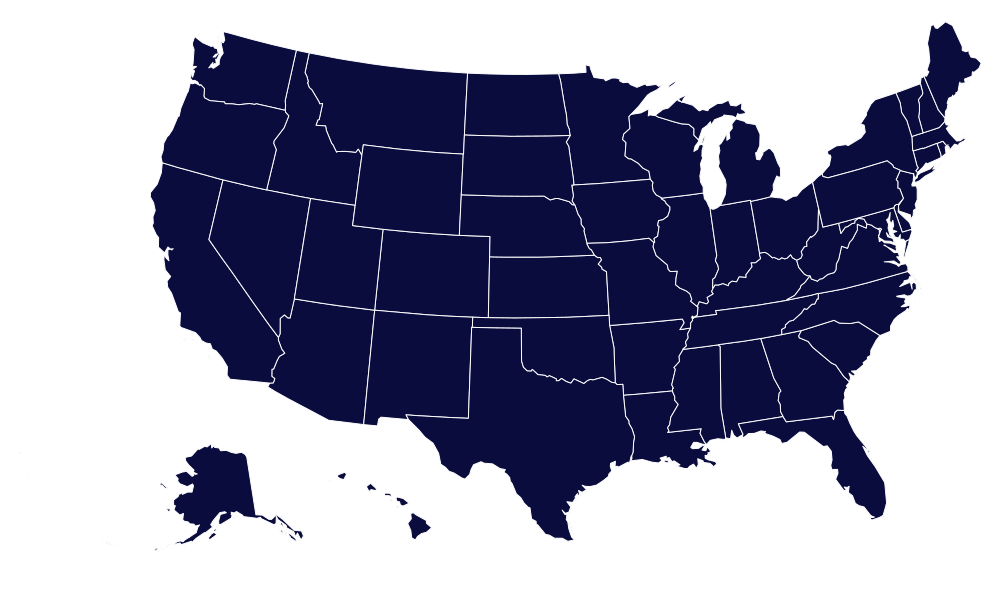
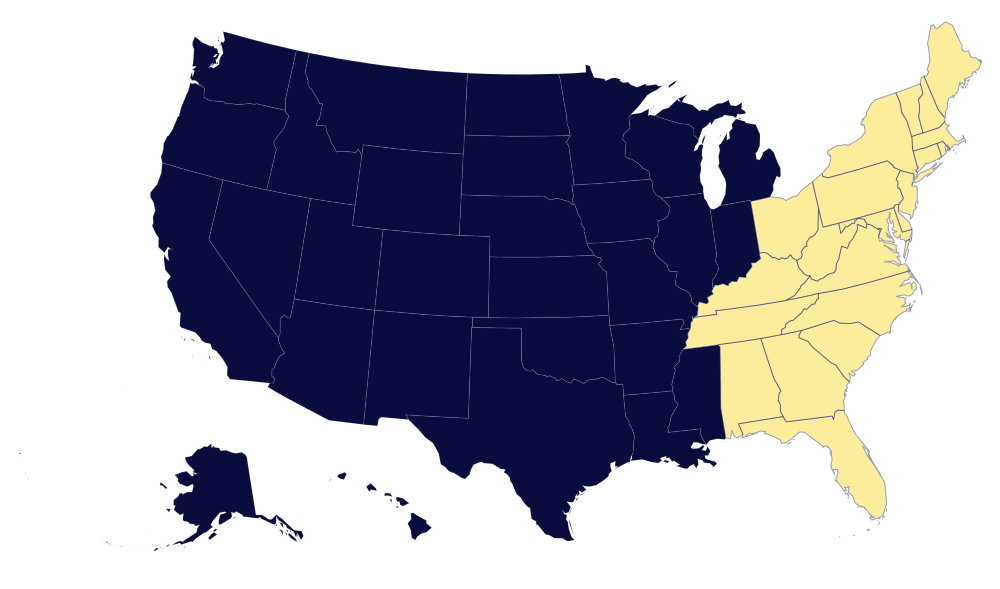
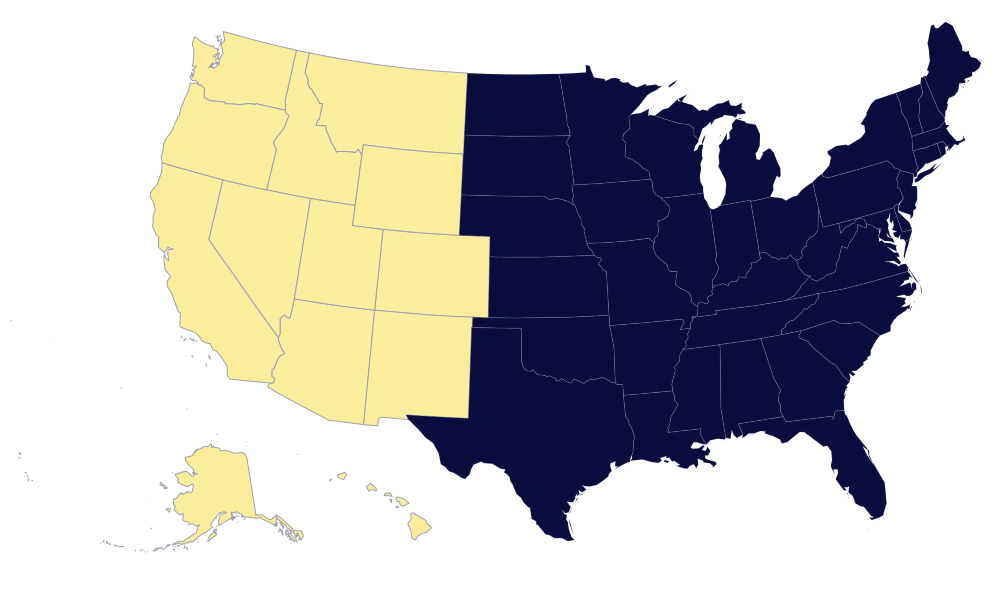
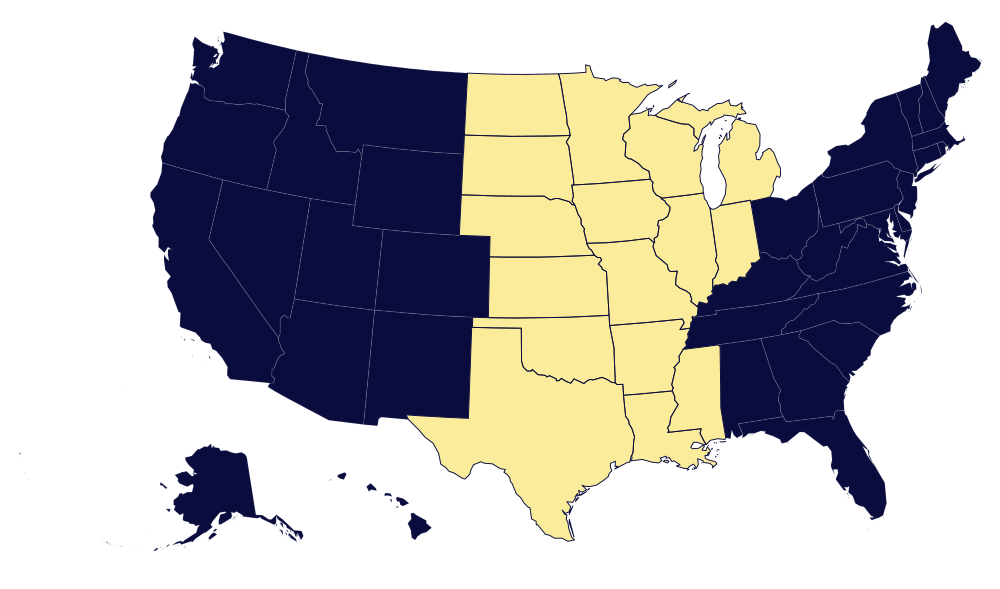
AVLS operate and has proven pool of AV technicians in major cities US Nationwide, such as Las Vegas, Los Angeles, Orlando, Dallas, San Antonio, Austin, Houston, Washington DC, Atlanta, New Orleans, Tennessee and more.
Please complete the form below and we will respond to you as soon as possible. We are available 24 hours a day to assist with your needs. We look forward to showing you what we can do toward the success of your next event.
EVENT INFORMATION
