





June 29, 2026
Corporate Event AV Staffing Checklist
A comprehensive Corporate Event AV Staffing Checklist ensures you hire the right audio-visual professionals with appropriate skill levels, certifications, and experience for your specific event requirements. This systematic approach prevents technical failures, reduces costs, and guarantees seamless event execution by matching qualified technicians to your equipment complexity and venue demands.
Key Takeaways
What Is a Corporate Event AV Staffing Checklist?
A Corporate Event AV Staffing Checklist is a systematic framework for identifying, hiring, and managing audio-visual technicians and engineers for corporate events. This checklist covers role definitions, skill requirements, certification verification, staffing ratios, and operational protocols to ensure technical success.
The checklist addresses three critical areas: personnel qualifications (certifications, experience levels, equipment expertise), operational planning (staffing ratios, shift schedules, backup coverage), and execution management (communication systems, troubleshooting protocols, quality control measures). Event planners use this framework to avoid common pitfalls like understaffing complex productions or hiring unqualified technicians for specialized equipment.
Choose a comprehensive checklist if your event involves multiple venues, complex lighting designs, live streaming, or mission-critical presentations. Opt for a simplified version if you're managing basic meetings with standard projection and sound requirements.
Essential AV Roles for Corporate Events
Corporate events require specific AV roles based on technical complexity and production scale. Audio engineers manage sound systems, microphones, and mixing boards. Video technicians handle cameras, projection, and display systems. Lighting designers control stage lighting and ambient room lighting. Technical directors oversee all AV operations and troubleshoot complex issues.
Determine your core staffing needs by evaluating these factors:
Common mistake: Hiring generalist AV technicians for specialized equipment like broadcast-quality cameras or complex lighting rigs. These systems require manufacturer training and hands-on experience that basic technicians often lack.
For large corporate events, consider partnering with skilled AV technicians who can provide pre-vetted professionals with verified certifications and equipment expertise.
Corporate Event AV Staffing Checklist: Pre-Event Planning
Effective AV staffing begins 4-6 weeks before your event with detailed planning and personnel sourcing. Start with a technical requirements assessment that identifies specific equipment, venue challenges, and skill requirements. Create detailed job descriptions that specify required certifications, experience levels, and equipment familiarity.
Essential pre-event planning steps:
Critical decision point: Book qualified AV staff early, especially during peak conference seasons (September-November, March-May). Experienced technicians often have advance bookings with regular clients.
Budget consideration: Senior AV engineers cost 40-60% more than basic technicians but reduce risk of equipment failures, audio feedback, or projection issues that can derail presentations.
Skill Assessment and Certification Requirements
Professional AV technicians should hold relevant industry certifications that match your equipment complexity and event requirements. CTS (Certified Technology Specialist) certification indicates comprehensive AV system knowledge. Manufacturer-specific certifications from companies like Crestron, AMX, or QSC demonstrate equipment expertise.
Verify these qualifications during hiring:
Red flags to avoid: Technicians who can't explain basic signal flow, lack manufacturer training for your specific equipment, or have gaps in recent event experience. These issues often surface during critical presentation moments.
Best practice: Conduct practical skill assessments where candidates demonstrate equipment setup, signal routing, and basic troubleshooting on your actual gear or similar systems.
For complex productions, work with professional AV specialists who maintain current certifications and equipment training.
Staffing Ratios and Coverage Requirements
Proper staffing ratios prevent technical failures while controlling labor costs. Basic corporate meetings need 1 AV technician per 100 attendees. Complex productions with multiple breakout rooms, live streaming, or interactive displays require 1 technician per 25-50 attendees.
Calculate your staffing needs using these guidelines:
Always include 15-20% backup coverage for sick calls, equipment failures, or unexpected technical challenges. Multi-day events need shift overlap to ensure smooth equipment handoffs and system continuity.
Critical consideration: Peak presentation times (morning keynotes, afternoon sessions) require full staffing even if overall attendance is lower. Technical issues during high-visibility presentations damage event credibility and speaker confidence.
Corporate Event AV Staffing Checklist: Day-of-Event Management
Successful event execution requires clear communication protocols and defined responsibilities for your AV team. Assign a lead technician who coordinates all AV operations and serves as the primary contact for event organizers. Establish headset communication systems that connect all technicians for real-time coordination.
Day-of-event management protocols:
Communication structure: Lead technician reports to event manager, specialized operators (video, audio, lighting) report to lead technician, support staff handle equipment movement and basic setup tasks.
Common failure point: Inadequate communication during equipment failures leads to delayed problem resolution and frustrated presenters. Establish clear escalation procedures and backup system activation protocols.
For nationwide events, consider AV labor staffing services that provide consistent quality standards and communication protocols across multiple locations.
Equipment-Specific Staffing Considerations
Different AV equipment categories require specialized knowledge and certification levels. Digital mixing consoles need operators familiar with specific manufacturer interfaces and signal routing. LED video walls require technicians trained in processor programming and color calibration. Broadcast cameras need operators with live production experience and lens operation skills.
Match technician expertise to your equipment:
Budget impact: Specialized equipment operators command premium rates but prevent costly mistakes. LED wall misconfiguration can delay events by hours, while improper audio mixing creates poor attendee experiences.
Training requirement: If using venue-specific or rental equipment, schedule training sessions 24-48 hours before the event. This allows technicians to familiarize themselves with control interfaces and signal routing.
Quality Control and Performance Standards
Establish measurable performance standards for your AV team to ensure consistent service quality. Audio quality standards include feedback-free operation, appropriate volume levels, and clear speech intelligibility. Video standards cover proper aspect ratios, color accuracy, and stable projection without flickering or signal drops.
Define these performance metrics:
Quality assurance process: Conduct system tests 2 hours before event start, document any issues with resolution plans, and assign backup operators for critical presentations.
Performance monitoring: Designate a technical supervisor who observes operations, addresses issues immediately, and documents lessons learned for future events.
Budget Planning for AV Staffing
AV staffing costs typically represent 30-40% of total technical budgets for corporate events. Entry-level technicians cost $25-35 per hour in most markets. Experienced engineers command $45-65 per hour. Specialized operators for complex equipment can exceed $75 per hour in major metropolitan areas.
Budget planning factors:
Cost optimization strategies: Book qualified local technicians early to avoid premium rates, negotiate package deals for multi-day events, and invest in senior staff for critical roles while using entry-level support for basic tasks.
Hidden costs: Last-minute staffing changes, inadequate skill levels requiring additional support, and equipment failures due to improper operation can double your effective labor costs.
For major markets like Las Vegas, Orlando, or Chicago, work with established AV staffing providers who understand local market rates and technician availability.
Common Staffing Mistakes to Avoid
Understaffing complex events is the most costly mistake in AV production. Inadequate backup coverage leaves events vulnerable to single points of failure. Hiring unqualified technicians to save money often results in equipment damage, presentation delays, and poor attendee experiences.
Critical mistakes that damage events:
Prevention strategies: Start staffing planning 6-8 weeks early, verify certifications through independent sources, conduct equipment training sessions, and maintain relationships with backup staffing providers.
Quality vs. cost balance: Experienced technicians prevent problems that cost far more than their premium rates. A single audio feedback incident or projection failure can undermine presenter confidence and audience engagement.
Frequently Asked Questions
How many AV technicians do I need for a 500-person corporate event?
For a standard corporate event with 500 attendees, plan for 5-10 technicians depending on complexity. Basic presentations need 5-6 staff, while multi-room conferences with breakout sessions require 8-10 technicians including specialized roles for audio, video, and lighting.
What certifications should I require for AV technicians?
Require CTS (Certified Technology Specialist) certification for lead technicians and equipment-specific training for specialized gear. Verify AVIXA membership, manufacturer certifications for your equipment brands, and recent continuing education credits.
How far in advance should I book AV staff?
Book qualified AV technicians 4-6 weeks in advance, especially during peak conference seasons (September-November, March-May). Last-minute bookings often result in higher costs and limited technician availability.
What's the typical hourly rate for corporate event AV technicians?
Entry-level technicians cost $25-35 per hour, experienced engineers command $45-65 per hour, and specialized operators can exceed $75 per hour in major markets. Rates vary by location, experience level, and equipment complexity.
Should I hire local technicians or bring my own team?
Hire local technicians when possible to reduce travel costs and leverage venue familiarity. Bring your own team only for highly specialized equipment or when local talent is unavailable. Hybrid approaches work well for large productions.
How do I verify AV technician qualifications?
Check certifications through AVIXA databases, contact previous employers for references, and conduct practical skill assessments on your actual equipment. Verify manufacturer training certificates for specialized gear.
What backup coverage should I plan for AV staff?
Maintain 15-20% backup coverage above minimum staffing requirements. This covers sick calls, equipment failures, and unexpected technical challenges without disrupting event operations.
How do I handle AV technician scheduling for multi-day events?
Plan overlapping shifts with 2-4 hour handoff periods for equipment continuity. Assign consistent teams to specific venues or systems to maintain operational knowledge and reduce setup time.
What communication systems do AV teams need during events?
Provide wireless headset systems for all technicians with multiple channels for different operational areas. Include event management in communication loops with designated AV liaisons for coordination.
How do I manage AV staffing costs effectively?
Optimize costs by booking early, using local talent, negotiating package rates for multi-day events, and balancing senior staff in critical roles with entry-level support for basic tasks.
What should be included in AV technician contracts?
Include specific skill requirements, equipment certifications, performance standards, communication protocols, overtime policies, and backup coverage obligations. Define roles clearly to prevent operational confusion.
How do I handle AV equipment training for hired technicians?
Schedule mandatory training sessions 24-48 hours before events for venue-specific or specialized equipment. Document training completion and assign mentors for complex systems during initial operations.
Conclusion
A comprehensive Corporate Event AV Staffing Checklist transforms technical execution from a potential liability into a competitive advantage. Success depends on matching qualified technicians to specific equipment requirements, maintaining appropriate staffing ratios, and establishing clear communication protocols that prevent issues before they impact your event.
Start your planning process by conducting a detailed technical assessment of your venue and equipment needs. Verify technician qualifications through certification databases and practical skill assessments rather than relying solely on resumes. Build in adequate backup coverage to handle unexpected challenges without compromising event quality.
Take action now by developing relationships with qualified AV staffing providers in your key markets, creating standardized job descriptions for different event types, and establishing performance metrics that ensure consistent service quality. Your investment in proper AV staffing planning will pay dividends through flawless technical execution and enhanced attendee experiences.
Key Takeaways
- Define roles first: Identify specific AV positions needed based on event complexity, venue size, and equipment requirements before posting job descriptions
- Verify certifications: Check for relevant industry certifications like CTS, AVIXA, or manufacturer-specific training for complex equipment operation
- Plan staffing ratios: Use 1 technician per 50-100 attendees for basic events, 1 per 25-50 for complex productions with multiple breakout rooms
- Include backup coverage: Always staff 15-20% above minimum requirements to handle equipment failures, sick calls, or unexpected technical challenges
- Conduct pre-event briefings: Schedule mandatory technical rehearsals 24-48 hours before the event to test all systems and confirm staff competency
- Establish clear communication protocols: Assign lead technicians with headset systems and define escalation procedures for technical issues
- Budget for skill premiums: Senior AV engineers command 40-60% higher rates than basic technicians but prevent costly mistakes and delays
What Is a Corporate Event AV Staffing Checklist?
A Corporate Event AV Staffing Checklist is a systematic framework for identifying, hiring, and managing audio-visual technicians and engineers for corporate events. This checklist covers role definitions, skill requirements, certification verification, staffing ratios, and operational protocols to ensure technical success.
The checklist addresses three critical areas: personnel qualifications (certifications, experience levels, equipment expertise), operational planning (staffing ratios, shift schedules, backup coverage), and execution management (communication systems, troubleshooting protocols, quality control measures). Event planners use this framework to avoid common pitfalls like understaffing complex productions or hiring unqualified technicians for specialized equipment.
Choose a comprehensive checklist if your event involves multiple venues, complex lighting designs, live streaming, or mission-critical presentations. Opt for a simplified version if you're managing basic meetings with standard projection and sound requirements.
Essential AV Roles for Corporate Events
Corporate events require specific AV roles based on technical complexity and production scale. Audio engineers manage sound systems, microphones, and mixing boards. Video technicians handle cameras, projection, and display systems. Lighting designers control stage lighting and ambient room lighting. Technical directors oversee all AV operations and troubleshoot complex issues.
Determine your core staffing needs by evaluating these factors:
- Event duration: Multi-day events need shift coverage and backup personnel
- Attendee count: Larger audiences require more microphones, cameras, and monitoring stations
- Venue complexity: Multiple rooms need dedicated technicians per location
- Equipment sophistication: LED walls, robotic cameras, and digital mixing consoles require specialized operators
Common mistake: Hiring generalist AV technicians for specialized equipment like broadcast-quality cameras or complex lighting rigs. These systems require manufacturer training and hands-on experience that basic technicians often lack.
For large corporate events, consider partnering with skilled AV technicians who can provide pre-vetted professionals with verified certifications and equipment expertise.
Corporate Event AV Staffing Checklist: Pre-Event Planning
Effective AV staffing begins 4-6 weeks before your event with detailed planning and personnel sourcing. Start with a technical requirements assessment that identifies specific equipment, venue challenges, and skill requirements. Create detailed job descriptions that specify required certifications, experience levels, and equipment familiarity.
Essential pre-event planning steps:
- Conduct venue site surveys to identify power limitations, acoustics challenges, and equipment access points
- Define staffing ratios based on event complexity and attendee count
- Verify technician certifications through AVIXA, manufacturer databases, or previous employer references
- Schedule equipment training sessions for venue-specific or specialized gear
- Establish communication protocols including headset systems and emergency contacts
- Plan shift schedules with adequate overlap for equipment handoffs
Critical decision point: Book qualified AV staff early, especially during peak conference seasons (September-November, March-May). Experienced technicians often have advance bookings with regular clients.
Budget consideration: Senior AV engineers cost 40-60% more than basic technicians but reduce risk of equipment failures, audio feedback, or projection issues that can derail presentations.
Skill Assessment and Certification Requirements
Professional AV technicians should hold relevant industry certifications that match your equipment complexity and event requirements. CTS (Certified Technology Specialist) certification indicates comprehensive AV system knowledge. Manufacturer-specific certifications from companies like Crestron, AMX, or QSC demonstrate equipment expertise.
Verify these qualifications during hiring:
- AVIXA membership and continuing education credits
- Equipment-specific training for digital mixing consoles, LED processors, or camera systems
- Safety certifications including electrical safety and rigging for overhead installations
- Previous event experience with similar venue sizes and technical requirements
- Troubleshooting skills demonstrated through practical equipment tests
Red flags to avoid: Technicians who can't explain basic signal flow, lack manufacturer training for your specific equipment, or have gaps in recent event experience. These issues often surface during critical presentation moments.
Best practice: Conduct practical skill assessments where candidates demonstrate equipment setup, signal routing, and basic troubleshooting on your actual gear or similar systems.
For complex productions, work with professional AV specialists who maintain current certifications and equipment training.
Staffing Ratios and Coverage Requirements
Proper staffing ratios prevent technical failures while controlling labor costs. Basic corporate meetings need 1 AV technician per 100 attendees. Complex productions with multiple breakout rooms, live streaming, or interactive displays require 1 technician per 25-50 attendees.
Calculate your staffing needs using these guidelines:
Event Type | Technician Ratio | Minimum Staff |
Basic presentations | 1:100 attendees | 2 technicians |
Multi-room conferences | 1:50 attendees | 1 per room + roving tech |
Live streaming events | 1:25 attendees | Video director + camera ops |
Trade shows | 1:30 attendees | Dedicated troubleshooting team |
Always include 15-20% backup coverage for sick calls, equipment failures, or unexpected technical challenges. Multi-day events need shift overlap to ensure smooth equipment handoffs and system continuity.
Critical consideration: Peak presentation times (morning keynotes, afternoon sessions) require full staffing even if overall attendance is lower. Technical issues during high-visibility presentations damage event credibility and speaker confidence.
Corporate Event AV Staffing Checklist: Day-of-Event Management
Successful event execution requires clear communication protocols and defined responsibilities for your AV team. Assign a lead technician who coordinates all AV operations and serves as the primary contact for event organizers. Establish headset communication systems that connect all technicians for real-time coordination.
Day-of-event management protocols:
- Pre-event briefing 2 hours before attendee arrival covering system status, potential issues, and emergency procedures
- Equipment check sequences with documented sign-offs for all critical systems
- Troubleshooting escalation with clear authority levels and decision-making protocols
- Backup equipment staging in accessible locations with rapid deployment procedures
- Post-event shutdown following manufacturer specifications to protect equipment
Communication structure: Lead technician reports to event manager, specialized operators (video, audio, lighting) report to lead technician, support staff handle equipment movement and basic setup tasks.
Common failure point: Inadequate communication during equipment failures leads to delayed problem resolution and frustrated presenters. Establish clear escalation procedures and backup system activation protocols.
For nationwide events, consider AV labor staffing services that provide consistent quality standards and communication protocols across multiple locations.
Equipment-Specific Staffing Considerations
Different AV equipment categories require specialized knowledge and certification levels. Digital mixing consoles need operators familiar with specific manufacturer interfaces and signal routing. LED video walls require technicians trained in processor programming and color calibration. Broadcast cameras need operators with live production experience and lens operation skills.
Match technician expertise to your equipment:
- Basic sound systems: Entry-level technicians with mixer operation experience
- Complex audio rigs: Certified audio engineers with digital console training
- Standard projection: AV generalists with lens adjustment and source switching knowledge
- LED displays: Specialists with processor programming and troubleshooting experience
- Lighting systems: Designers familiar with DMX programming and fixture operation
Budget impact: Specialized equipment operators command premium rates but prevent costly mistakes. LED wall misconfiguration can delay events by hours, while improper audio mixing creates poor attendee experiences.
Training requirement: If using venue-specific or rental equipment, schedule training sessions 24-48 hours before the event. This allows technicians to familiarize themselves with control interfaces and signal routing.
Quality Control and Performance Standards
Establish measurable performance standards for your AV team to ensure consistent service quality. Audio quality standards include feedback-free operation, appropriate volume levels, and clear speech intelligibility. Video standards cover proper aspect ratios, color accuracy, and stable projection without flickering or signal drops.
Define these performance metrics:
- Setup completion times with specific deadlines for each system category
- Response times for technical issues during presentations (target: under 2 minutes)
- System reliability measured by uptime percentages and failure incidents
- Professional appearance including appropriate attire and discrete equipment operation
- Communication standards for interactions with presenters and event staff
Quality assurance process: Conduct system tests 2 hours before event start, document any issues with resolution plans, and assign backup operators for critical presentations.
Performance monitoring: Designate a technical supervisor who observes operations, addresses issues immediately, and documents lessons learned for future events.
Budget Planning for AV Staffing
AV staffing costs typically represent 30-40% of total technical budgets for corporate events. Entry-level technicians cost $25-35 per hour in most markets. Experienced engineers command $45-65 per hour. Specialized operators for complex equipment can exceed $75 per hour in major metropolitan areas.
Budget planning factors:
- Market rates vary significantly by city and event season
- Overtime premiums apply after 8-10 hours depending on local labor agreements
- Travel costs for out-of-town technicians include transportation and lodging
- Equipment training time may require additional compensation for specialized gear
- Backup coverage adds 15-20% to base staffing costs but prevents event failures
Cost optimization strategies: Book qualified local technicians early to avoid premium rates, negotiate package deals for multi-day events, and invest in senior staff for critical roles while using entry-level support for basic tasks.
Hidden costs: Last-minute staffing changes, inadequate skill levels requiring additional support, and equipment failures due to improper operation can double your effective labor costs.
For major markets like Las Vegas, Orlando, or Chicago, work with established AV staffing providers who understand local market rates and technician availability.
Common Staffing Mistakes to Avoid
Understaffing complex events is the most costly mistake in AV production. Inadequate backup coverage leaves events vulnerable to single points of failure. Hiring unqualified technicians to save money often results in equipment damage, presentation delays, and poor attendee experiences.
Critical mistakes that damage events:
- Insufficient lead time for booking qualified technicians during peak seasons
- Mismatched skills between technician experience and equipment complexity
- Poor communication planning without headset systems or clear protocols
- Inadequate training on venue-specific or specialized equipment
- No backup plans for equipment failures or staff emergencies
Prevention strategies: Start staffing planning 6-8 weeks early, verify certifications through independent sources, conduct equipment training sessions, and maintain relationships with backup staffing providers.
Quality vs. cost balance: Experienced technicians prevent problems that cost far more than their premium rates. A single audio feedback incident or projection failure can undermine presenter confidence and audience engagement.
Frequently Asked Questions
How many AV technicians do I need for a 500-person corporate event?
For a standard corporate event with 500 attendees, plan for 5-10 technicians depending on complexity. Basic presentations need 5-6 staff, while multi-room conferences with breakout sessions require 8-10 technicians including specialized roles for audio, video, and lighting.
What certifications should I require for AV technicians?
Require CTS (Certified Technology Specialist) certification for lead technicians and equipment-specific training for specialized gear. Verify AVIXA membership, manufacturer certifications for your equipment brands, and recent continuing education credits.
How far in advance should I book AV staff?
Book qualified AV technicians 4-6 weeks in advance, especially during peak conference seasons (September-November, March-May). Last-minute bookings often result in higher costs and limited technician availability.
What's the typical hourly rate for corporate event AV technicians?
Entry-level technicians cost $25-35 per hour, experienced engineers command $45-65 per hour, and specialized operators can exceed $75 per hour in major markets. Rates vary by location, experience level, and equipment complexity.
Should I hire local technicians or bring my own team?
Hire local technicians when possible to reduce travel costs and leverage venue familiarity. Bring your own team only for highly specialized equipment or when local talent is unavailable. Hybrid approaches work well for large productions.
How do I verify AV technician qualifications?
Check certifications through AVIXA databases, contact previous employers for references, and conduct practical skill assessments on your actual equipment. Verify manufacturer training certificates for specialized gear.
What backup coverage should I plan for AV staff?
Maintain 15-20% backup coverage above minimum staffing requirements. This covers sick calls, equipment failures, and unexpected technical challenges without disrupting event operations.
How do I handle AV technician scheduling for multi-day events?
Plan overlapping shifts with 2-4 hour handoff periods for equipment continuity. Assign consistent teams to specific venues or systems to maintain operational knowledge and reduce setup time.
What communication systems do AV teams need during events?
Provide wireless headset systems for all technicians with multiple channels for different operational areas. Include event management in communication loops with designated AV liaisons for coordination.
How do I manage AV staffing costs effectively?
Optimize costs by booking early, using local talent, negotiating package rates for multi-day events, and balancing senior staff in critical roles with entry-level support for basic tasks.
What should be included in AV technician contracts?
Include specific skill requirements, equipment certifications, performance standards, communication protocols, overtime policies, and backup coverage obligations. Define roles clearly to prevent operational confusion.
How do I handle AV equipment training for hired technicians?
Schedule mandatory training sessions 24-48 hours before events for venue-specific or specialized equipment. Document training completion and assign mentors for complex systems during initial operations.
Conclusion
A comprehensive Corporate Event AV Staffing Checklist transforms technical execution from a potential liability into a competitive advantage. Success depends on matching qualified technicians to specific equipment requirements, maintaining appropriate staffing ratios, and establishing clear communication protocols that prevent issues before they impact your event.
Start your planning process by conducting a detailed technical assessment of your venue and equipment needs. Verify technician qualifications through certification databases and practical skill assessments rather than relying solely on resumes. Build in adequate backup coverage to handle unexpected challenges without compromising event quality.
Take action now by developing relationships with qualified AV staffing providers in your key markets, creating standardized job descriptions for different event types, and establishing performance metrics that ensure consistent service quality. Your investment in proper AV staffing planning will pay dividends through flawless technical execution and enhanced attendee experiences.
AVLS Nationwide Services
Central States
East Coast
*COMING SOON
West Coast


*COMING SOON
East Coast
Central States
West Coast
AVLS Nationwide Services
CONTACT US
When your event matters, trust your audio visual labor needs to AV Labor Source.
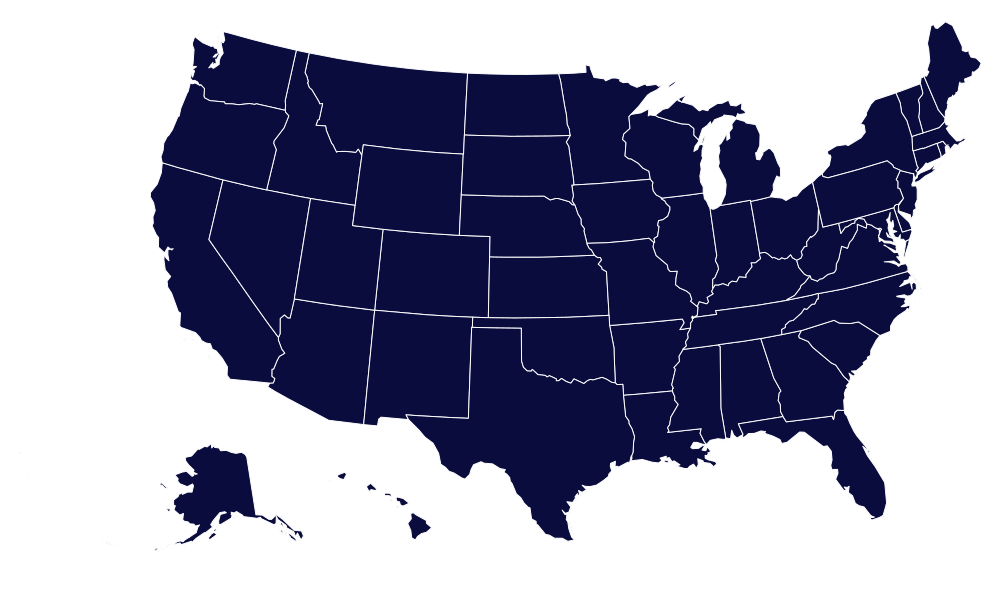
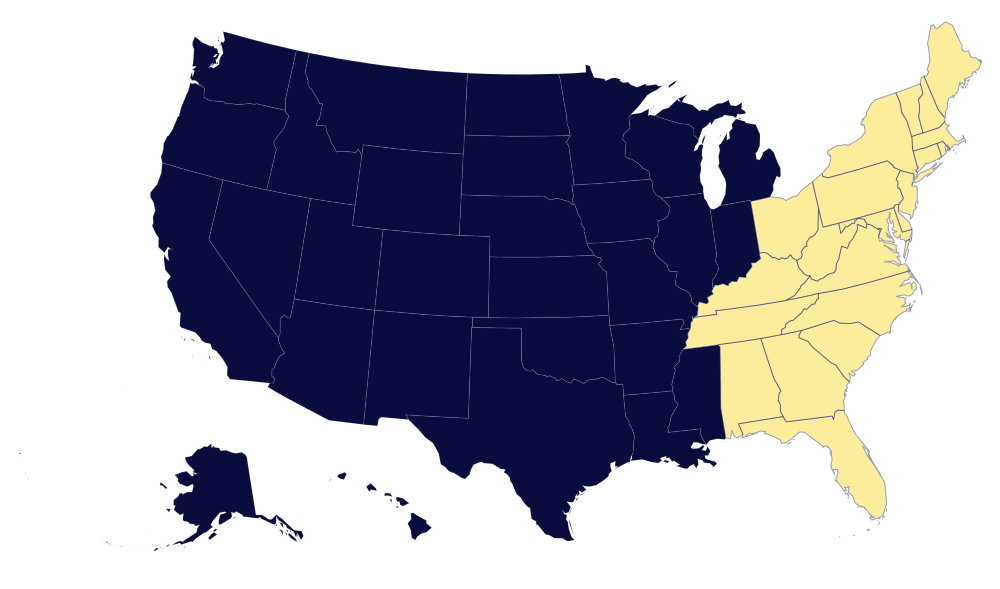
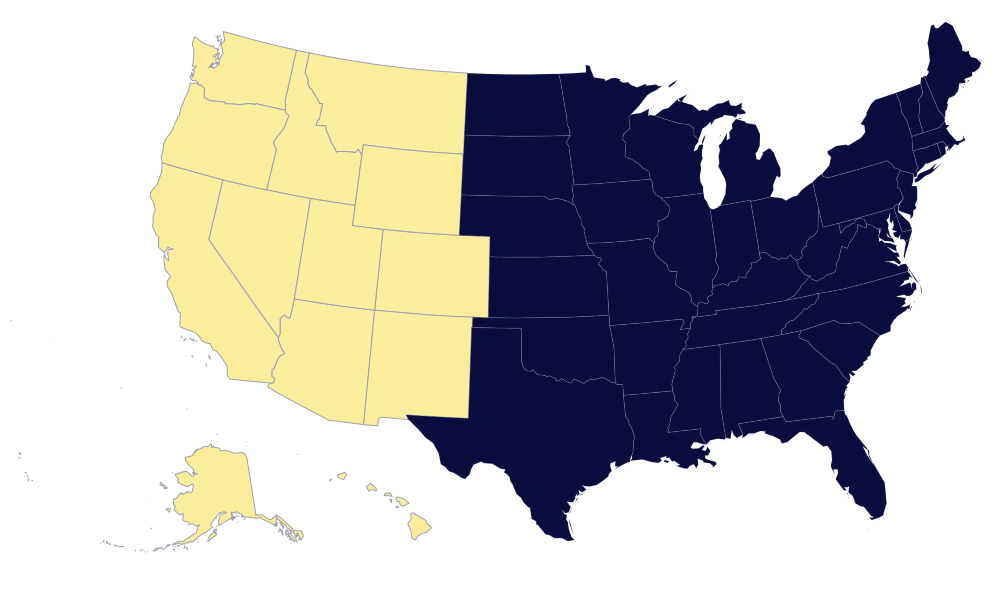
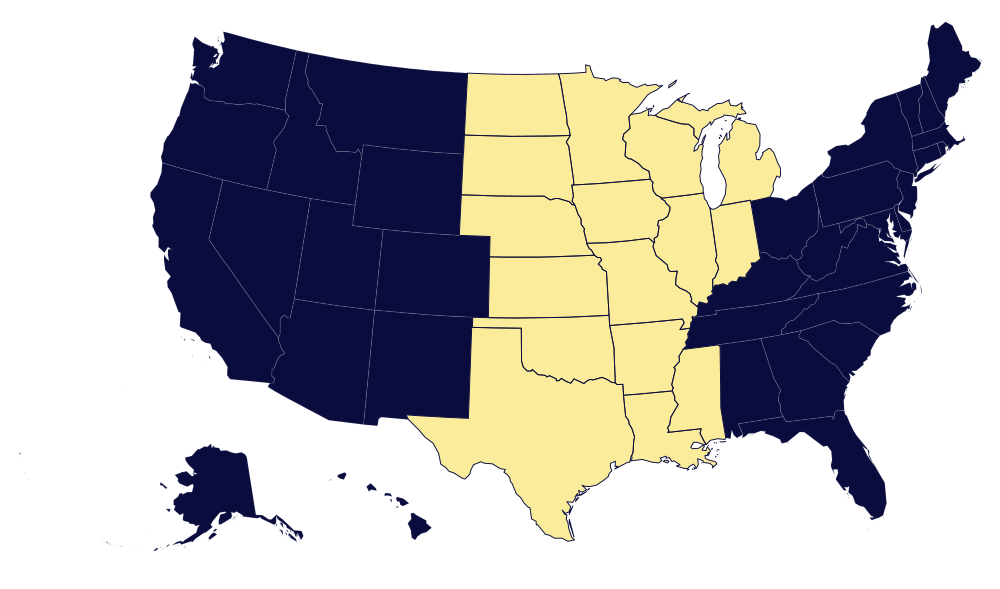
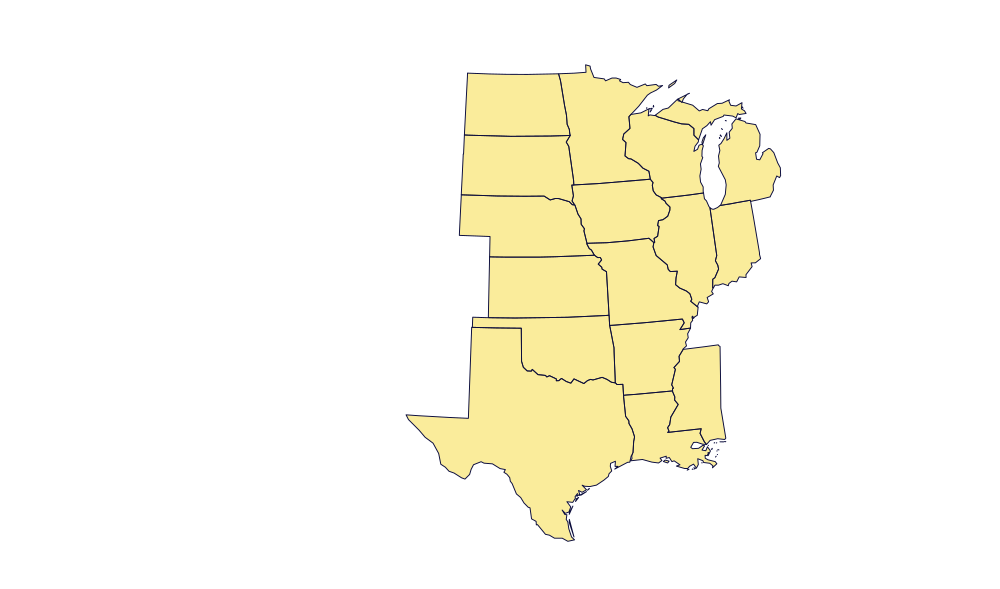
AVLS operate and has proven pool of AV technicians in major cities US Nationwide, such as Las Vegas, Los Angeles, Orlando, Dallas, San Antonio, Austin, Houston, Washington DC, Atlanta, New Orleans, Tennessee and more.
Please complete the form below and we will respond to you as soon as possible. We are available 24 hours a day to assist with your needs. We look forward to showing you what we can do toward the success of your next event.
AVLS operate and has proven pool of AV technicians in major cities US Nationwide, such as Las Vegas, Los Angeles, Orlando, Dallas, San Antonio, Austin, Houston, Washington DC, Atlanta, New Orleans, Tennessee and more.
Please complete the form below and we will respond to you as soon as possible. We are available 24 hours a day to assist with your needs. We look forward to showing you what we can do toward the success of your next event.
EVENT INFORMATION
