





August 12, 2026
Las Vegas AV Labor Guide for Corporate Events and Trade Shows
Quick Answer
Las Vegas AV labor for corporate events and trade shows typically costs $35-85 per hour depending on skill level, with union requirements for major venues like the Las Vegas Convention Center. Most corporate events need a mix of AV technicians ($35-50/hour), audio engineers ($55-75/hour), and lighting specialists ($45-65/hour), with setup and breakdown time adding 2-4 hours per event day.
Key Takeaways
What Qualifies as AV Labor for Corporate Events in Las Vegas
AV labor for corporate events encompasses all technical personnel responsible for audio, video, lighting, and staging equipment operation. This includes equipment setup, live event support, troubleshooting, and breakdown services for meetings, conferences, and trade shows.
Core AV labor categories include:
Las Vegas venues often require union labor for electrical work, rigging above 12 feet, and equipment weighing over 50 pounds. Non-union technicians can handle basic setup, audio mixing, and equipment operation under proper supervision.
Common mistake: Assuming all AV work requires union labor. Many corporate meeting rooms and smaller venues allow non-union technicians for standard equipment setup and operation.
How Much Does AV Labor Cost Per Hour in Las Vegas
AV labor rates in Las Vegas range from $35-85 per hour based on skill level, union requirements, and event complexity. Union rates typically run 20-30% higher than non-union equivalents, with additional overtime and benefit costs.
Standard hourly rates for 2026:
Union vs. non-union cost comparison:
Additional costs to factor in:
Choose union labor if your venue requires it or if you need specialized rigging and electrical work. Non-union crews work well for hotel meeting rooms and smaller corporate events.
For detailed guidance on hiring AV technicians for corporate events, consider factors beyond hourly rates including experience level and venue requirements.
Difference Between AV Technician and AV Engineer for Trade Shows
AV technicians handle equipment setup and basic operation, while AV engineers design systems, troubleshoot complex issues, and manage multi-room installations. Engineers typically have 5+ years experience and specialized certifications compared to technicians' 1-3 years.
AV Technician responsibilities:
AV Engineer responsibilities:
Key qualifications that separate engineers from technicians:
When to hire each role:
Engineers cost 40-60% more than technicians but prevent costly delays and equipment failures during critical presentations.
Where to Hire AV Labor for Corporate Events Las Vegas
Las Vegas offers multiple sources for AV labor including staffing agencies, freelance platforms, venue-preferred vendors, and direct hire from professional AV technicians in Las Vegas. Each option provides different cost structures, quality levels, and booking flexibility.
Primary hiring sources:
Staffing agencies provide vetted technicians with insurance, backup coverage, and consistent quality standards. Agencies handle payroll, workers' compensation, and replacement staff if someone calls out sick.
Freelance platforms offer direct access to individual technicians at lower rates but require more management overhead and carry higher risk if contractors don't show up.
Venue-preferred vendors often have exclusive or preferred relationships with major Las Vegas venues, providing streamlined coordination but potentially higher costs.
Direct hire from production companies works well for ongoing relationships and can offer package deals combining labor and equipment.
Recommended approach by event size:
Key questions when hiring:
Book through agencies for mission-critical events where backup coverage and insurance matter most. Use freelancers for smaller, lower-risk meetings where cost savings justify the additional management effort.
What's Included in AV Labor Setup and Breakdown Time
AV labor setup typically requires 1.5-2x the event duration, while breakdown takes 50-75% of setup time. This includes equipment delivery, testing, rehearsals, and complete system removal with venue restoration.
Standard setup timeline breakdown:
Pre-event day (optional):
Event day setup:
During event:
Breakdown process:
Factors that extend setup time:
Common mistake: Underestimating setup time for multi-day events. Each day typically needs 1-2 hours of prep time even with equipment already in place.
Plan for minimum 4-hour call times at most Las Vegas venues, with overtime rates applying after 8 hours. Factor in meal breaks for crews working over 6 hours.
Do I Need Union AV Labor for My Corporate Event in Vegas
Union AV labor is required at major Las Vegas venues including the Las Vegas Convention Center, Mandalay Bay Convention Center, and Sands Expo for electrical work, rigging above 12 feet, and equipment over 50 pounds. Hotel meeting rooms and smaller venues typically allow non-union technicians.
Venues requiring union labor:
Venues allowing non-union labor:
Union work rules in Las Vegas:
Union benefits:
Union drawbacks:
Decision framework:
Check with your venue's event coordinator about specific labor requirements before booking. Some venues offer hybrid approaches where union crews handle electrical/rigging while non-union technicians manage audio/video operation.
How Far in Advance Should I Book AV Labor for Trade Shows
Book AV labor 4-6 weeks ahead during peak Las Vegas convention season and 2-3 weeks for off-peak periods. Major trade shows like CES, NAB, and MAGIC require 8-12 weeks advance booking due to high demand and limited qualified technician availability.
Booking timeline by season:
Peak season (January-April, September-November):
Off-peak season (May-August, December):
Factors requiring longer lead times:
Major Las Vegas trade show periods to avoid:
Booking strategy:
Last-minute booking risks:
Early booking ensures access to the most experienced AV technicians and specialists while maintaining budget predictability and crew consistency.
What Are Common Mistakes When Budgeting AV Labor
The most common AV labor budgeting mistakes include underestimating setup time, ignoring union requirements, and failing to account for overtime rates after 8-hour shifts. Many event planners also forget to budget for rehearsal time and backup technician coverage.
Top budgeting mistakes and solutions:
Mistake 1: Using equipment rental rates to estimate labor costs
Mistake 2: Ignoring minimum call times
Mistake 3: Underestimating setup complexity
Mistake 4: Forgetting peak season premiums
Mistake 5: Not budgeting for rehearsal time
Hidden costs that derail budgets:
Budget planning checklist:
Sample budget breakdown for 4-hour corporate event:
Plan conservatively and build in buffer time rather than cutting labor hours to meet budget targets.
AV Labor Rates for Small vs Large Corporate Events
Small corporate events (under 50 people) typically require 1-2 AV technicians at $35-50/hour, while large events (200+ people) need specialized teams including engineers, audio specialists, and lighting technicians with rates ranging from $45-85/hour depending on complexity and venue requirements.
Small event AV labor (10-50 attendees):
Mid-size event AV labor (50-200 attendees):
Large event AV labor (200+ attendees):
Cost scaling factors:
Why large events cost less per attendee:
When to upgrade from basic to specialized crew:
Large events benefit from experienced corporate event AV staffing that can handle complex logistics and multiple simultaneous sessions.
What Happens if AV Equipment Fails During My Event
Equipment failures during corporate events require immediate backup systems and dedicated troubleshooting technicians. Professional AV labor includes redundant equipment planning, rapid response protocols, and spare components to minimize disruption to presentations and maintain event continuity.
Standard failure response protocol:
Common equipment failures and solutions:
Audio system failures:
Video system failures:
Critical backup requirements:
Response time expectations:
Prevention strategies:
When to add backup technicians:
Professional AV labor teams maintain spare equipment inventories and response procedures that can resolve most failures within 2-3 minutes without significant event disruption.
Can AV Labor Handle Both Setup and Day-of Support
Professional AV labor provides comprehensive coverage including pre-event setup, live technical support during presentations, and post-event breakdown. The same technician team typically handles all phases, ensuring system familiarity and consistent quality throughout the event lifecycle.
Integrated service approach benefits:
Typical service timeline:
Pre-event phase (1-2 days before):
Event day setup (2-4 hours before start):
Live event support:
Post-event breakdown:
Crew rotation strategies:
When to consider separate teams:
Staffing recommendations by event type:
Most corporate events benefit from integrated service where the same experienced team manages all technical aspects from initial setup through final breakdown.
Is AV Labor More Expensive During Peak Vegas Convention Season
AV labor rates increase 15-25% during peak Las Vegas convention season due to high demand and limited technician availability. Major trade shows like CES, NAB, and MAGIC create supply shortages that drive premium pricing for qualified AV professionals.
Peak season periods and rate increases:
Highest demand (25-40% premium):
High demand (15-25% premium):
Moderate demand (5-15% premium):
Low demand (standard rates):
Factors driving peak season pricing:
Peak season planning strategies:
Cost comparison example:
Alternative approaches during peak season:
Plan corporate events during off-peak periods when possible, or budget for 20-30% higher labor costs during major Las Vegas convention weeks. Early booking remains the best strategy for controlling costs and ensuring crew availability.
What Certifications Should AV Labor Have in Las Vegas
Las Vegas AV labor should hold CTS (Certified Technology Specialist) certification as the industry standard, plus ETCP rigging certification for overhead installations and venue-specific safety training. Union venues often require additional IATSE or IBEW certifications depending on the type of work performed.
Essential certifications for Las Vegas AV work:
CTS (Certified Technology Specialist):
ETCP (Entertainment Technician Certification Program):
Venue-specific safety certifications:
Union certifications (when required):
IATSE (International Alliance of Theatrical Stage Employees):
IBEW (International Brotherhood of Electrical Workers):
Specialized skill certifications:
Red flags - avoid technicians without:
Certification verification process:
When certifications matter most:
Choose technicians with current, relevant certifications for your specific venue and technical requirements. Proper certification reduces liability risk and ensures professional competency standards.
FAQ
How much should I budget for AV labor for a 100-person corporate event in Las Vegas?
Budget $2,000-4,000 for AV labor for a 100-person corporate event, including 3-5 technicians for setup, live support, and breakdown. This covers an audio engineer ($55-70/hour), video technician ($45-60/hour), and general AV support ($35-50/hour) for approximately 8-12 total hours including setup time.
Can I hire non-union AV technicians for my Las Vegas corporate meeting?
Yes, you can hire non-union AV technicians for most hotel meeting rooms and smaller venues under 2,000 square feet. However, major venues like the Las Vegas Convention Center, Mandalay Bay, and Sands Expo require union labor for electrical work, rigging above 12 feet, and equipment over 50 pounds.
What's the minimum number of hours I need to book AV technicians in Las Vegas?
Most Las Vegas venues require 4-8 hour minimum bookings for AV technicians, even for shorter events. Union venues typically have 8-hour minimums, while non-union locations may accept 4-hour minimums. Factor these minimums into your budget regardless of actual event duration.
Do AV technicians provide their own equipment or just labor?
AV technicians typically provide labor only - you'll need to rent equipment separately through AV rental companies or venue-preferred vendors. Some technicians can recommend equipment suppliers, but labor and equipment are usually separate line items in event budgets.
How far in advance should I book AV labor for a Las Vegas trade show?
Book AV labor 8-12 weeks ahead for major Las Vegas trade shows during peak season (January-April, September-November). For smaller corporate events during off-peak periods, 2-4 weeks advance booking is usually sufficient, but earlier booking ensures better crew selection and rates.
What happens if my AV technician doesn't show up on event day?
Professional AV staffing agencies provide backup coverage and replacement technicians if someone doesn't show up. Freelance technicians carry higher risk of no-shows without backup options. Always confirm backup procedures and emergency contact information when booking AV labor.
Are AV labor rates higher during CES and other major Las Vegas conventions?
Yes, AV labor rates increase 15-25% during major Las Vegas conventions like CES, NAB, and MAGIC due to high demand and limited technician availability. Plan for premium pricing during peak convention periods or schedule events during off-peak times for standard rates.
Do I need different AV technicians for setup vs. live event support?
No, the same AV technician team typically handles both setup and live event support for better system familiarity and consistency. Using the same crew eliminates handoff issues and ensures technicians understand the equipment configuration for faster troubleshooting during your event.
What certifications should I look for when hiring Las Vegas AV technicians?
Look for CTS (Certified Technology Specialist) certification as the industry standard, plus ETCP rigging certification for overhead work and venue-specific safety training. Union venues require IATSE or IBEW certifications. Always verify current certification status and venue-specific training completion.
Can AV technicians handle both audio and video, or do I need separate specialists?
Experienced AV technicians can handle both audio and video for smaller events under 50 people. Larger events benefit from dedicated audio engineers and video specialists who can focus on their specific systems for better quality and faster problem resolution during live presentations.
What's included in AV labor setup time vs. event support time?
Setup time includes equipment positioning, cable connections, system testing, and rehearsals (typically 1.5-2x event duration). Event support covers live technical operation, presentation transitions, troubleshooting, and break management during the actual event. Breakdown takes an additional 50-75% of setup time.
Do Las Vegas AV technicians charge extra for working evenings and weekends?
Standard AV labor rates apply for normal business hours (typically 8 AM - 6 PM). Evening and weekend work may carry 10-25% premiums depending on the vendor and timing. Overtime rates (time-and-a-half) apply after 8 hours regardless of the day, with double-time after 12 hours.
Ready to Staff Your Las Vegas Corporate Event?
Planning a corporate event or trade show in Las Vegas and need experienced AV professionals? AV Labor Source provides certified technicians, audio engineers, and lighting specialists for events of all sizes throughout the Las Vegas area. Our team handles everything from intimate corporate meetings to large-scale convention productions.
Get expert AV staffing for your next Las Vegas event. Contact AV Labor Source today for a customized quote and crew recommendations based on your specific venue and technical requirements.
Las Vegas AV labor for corporate events and trade shows typically costs $35-85 per hour depending on skill level, with union requirements for major venues like the Las Vegas Convention Center. Most corporate events need a mix of AV technicians ($35-50/hour), audio engineers ($55-75/hour), and lighting specialists ($45-65/hour), with setup and breakdown time adding 2-4 hours per event day.
Key Takeaways
- Union requirements apply at major Las Vegas venues including LVCC, Mandalay Bay, and Sands Expo
- Labor costs range from $35/hour for basic AV techs to $85/hour for senior engineers
- Book 4-6 weeks ahead during peak convention season (January-April, September-November)
- Setup time typically equals 1.5-2x the event duration for proper equipment configuration
- Certification requirements include CTS, ETCP, and venue-specific safety training
- Peak season rates increase 15-25% during major trade shows like CES and NAB
- Day-of support requires dedicated technicians beyond setup crew for events over 100 attendees
- Equipment failure protocols need backup technicians and redundant systems for mission-critical events
What Qualifies as AV Labor for Corporate Events in Las Vegas
AV labor for corporate events encompasses all technical personnel responsible for audio, video, lighting, and staging equipment operation. This includes equipment setup, live event support, troubleshooting, and breakdown services for meetings, conferences, and trade shows.
Core AV labor categories include:
- Audio technicians (A1/A2) - Sound system setup, mixing, and live audio support
- Video technicians (V1/V2) - Camera operation, video switching, and display management
- Lighting technicians (L1/L2) - Stage lighting design, programming, and operation
- LED/projection specialists - Large format display installation and content management
- Rigging technicians - Overhead equipment installation and safety compliance
- System engineers - Complex AV system design and integration oversight
Las Vegas venues often require union labor for electrical work, rigging above 12 feet, and equipment weighing over 50 pounds. Non-union technicians can handle basic setup, audio mixing, and equipment operation under proper supervision.
Common mistake: Assuming all AV work requires union labor. Many corporate meeting rooms and smaller venues allow non-union technicians for standard equipment setup and operation.
How Much Does AV Labor Cost Per Hour in Las Vegas
AV labor rates in Las Vegas range from $35-85 per hour based on skill level, union requirements, and event complexity. Union rates typically run 20-30% higher than non-union equivalents, with additional overtime and benefit costs.
Standard hourly rates for 2026:
- AV Technician (entry-level): $35-45/hour
- Audio Engineer (A1): $55-75/hour
- Video Engineer (V1): $50-70/hour
- Lighting Designer: $60-85/hour
- LED Specialist: $45-65/hour
- System Engineer: $70-85/hour
Union vs. non-union cost comparison:
Position | Non-Union Rate | Union Rate | Peak Season |
AV Technician | $35-45/hr | $45-55/hr | $50-65/hr |
Audio Engineer | $55-70/hr | $70-85/hr | $80-100/hr |
Lighting Tech | $45-60/hr | $60-75/hr | $70-90/hr |
Additional costs to factor in:
- Minimum call time: 4-8 hours depending on venue and union rules
- Overtime rates: Time-and-a-half after 8 hours, double-time after 12 hours
- Travel time: $25-50 for venues outside the Strip corridor
- Equipment handling fees: $15-25/hour for gear over 50 pounds
Choose union labor if your venue requires it or if you need specialized rigging and electrical work. Non-union crews work well for hotel meeting rooms and smaller corporate events.
For detailed guidance on hiring AV technicians for corporate events, consider factors beyond hourly rates including experience level and venue requirements.
Difference Between AV Technician and AV Engineer for Trade Shows
AV technicians handle equipment setup and basic operation, while AV engineers design systems, troubleshoot complex issues, and manage multi-room installations. Engineers typically have 5+ years experience and specialized certifications compared to technicians' 1-3 years.
AV Technician responsibilities:
- Equipment setup and breakdown
- Cable running and connections
- Basic audio mixing and video switching
- Equipment testing and operation
- Following engineer's technical specifications
AV Engineer responsibilities:
- System design and signal flow planning
- Complex troubleshooting and problem-solving
- Multi-room audio/video distribution
- Integration with building systems
- Training and supervising technician teams
- Real-time system optimization
Key qualifications that separate engineers from technicians:
- Education: Engineers often have technical degrees or extensive certification
- Certifications: CTS-D (design), CTS-I (installation), ETCP (rigging)
- Experience: 5+ years in commercial AV vs. 1-3 years for technicians
- Problem-solving: Engineers diagnose system failures; technicians follow procedures
- Leadership: Engineers manage teams; technicians focus on individual tasks
When to hire each role:
- Small meetings (under 50 people): 1-2 AV technicians sufficient
- Corporate conferences (50-200 people): Lead engineer plus 2-4 technicians
- Large trade shows (200+ people): Senior engineer, audio engineer, plus technician team
Engineers cost 40-60% more than technicians but prevent costly delays and equipment failures during critical presentations.
Where to Hire AV Labor for Corporate Events Las Vegas
Las Vegas offers multiple sources for AV labor including staffing agencies, freelance platforms, venue-preferred vendors, and direct hire from professional AV technicians in Las Vegas. Each option provides different cost structures, quality levels, and booking flexibility.
Primary hiring sources:
Staffing agencies provide vetted technicians with insurance, backup coverage, and consistent quality standards. Agencies handle payroll, workers' compensation, and replacement staff if someone calls out sick.
Freelance platforms offer direct access to individual technicians at lower rates but require more management overhead and carry higher risk if contractors don't show up.
Venue-preferred vendors often have exclusive or preferred relationships with major Las Vegas venues, providing streamlined coordination but potentially higher costs.
Direct hire from production companies works well for ongoing relationships and can offer package deals combining labor and equipment.
Recommended approach by event size:
- Small meetings (10-50 people): Freelance technicians or small local companies
- Mid-size events (50-200 people): Professional staffing agencies with backup coverage
- Large trade shows (200+ people): Established production companies with full-service capabilities
Key questions when hiring:
- Do technicians have current venue certifications?
- What's the backup plan if someone doesn't show up?
- Are workers' compensation and liability insurance included?
- Can they provide references from similar Las Vegas events?
Book through agencies for mission-critical events where backup coverage and insurance matter most. Use freelancers for smaller, lower-risk meetings where cost savings justify the additional management effort.
What's Included in AV Labor Setup and Breakdown Time
AV labor setup typically requires 1.5-2x the event duration, while breakdown takes 50-75% of setup time. This includes equipment delivery, testing, rehearsals, and complete system removal with venue restoration.
Standard setup timeline breakdown:
Pre-event day (optional):
- Equipment delivery and staging: 2-4 hours
- Initial setup for complex systems: 4-6 hours
- Overnight security if required
Event day setup:
- Equipment positioning and connections: 2-3 hours
- System testing and optimization: 1-2 hours
- Rehearsal and sound check: 1-2 hours
- Final adjustments: 30-60 minutes
During event:
- Live technical support: Full event duration
- Break management: 15-30 minutes between sessions
- Troubleshooting and adjustments: As needed
Breakdown process:
- Equipment shutdown and disconnection: 1-2 hours
- Packing and loading: 1-3 hours depending on complexity
- Venue cleanup and restoration: 30-60 minutes
Factors that extend setup time:
- Complex rigging or truss systems (add 2-4 hours)
- Multiple breakout rooms (add 1-2 hours per room)
- Custom lighting programming (add 2-6 hours)
- Integration with venue systems (add 1-3 hours)
- Union load-in procedures (add 1-2 hours)
Common mistake: Underestimating setup time for multi-day events. Each day typically needs 1-2 hours of prep time even with equipment already in place.
Plan for minimum 4-hour call times at most Las Vegas venues, with overtime rates applying after 8 hours. Factor in meal breaks for crews working over 6 hours.
Do I Need Union AV Labor for My Corporate Event in Vegas
Union AV labor is required at major Las Vegas venues including the Las Vegas Convention Center, Mandalay Bay Convention Center, and Sands Expo for electrical work, rigging above 12 feet, and equipment over 50 pounds. Hotel meeting rooms and smaller venues typically allow non-union technicians.
Venues requiring union labor:
- Las Vegas Convention Center (LVCC)
- Mandalay Bay Convention Center
- Sands Expo and Convention Center
- Cashman Center
- Most major hotel ballrooms over 5,000 sq ft
Venues allowing non-union labor:
- Hotel meeting rooms under 2,000 sq ft
- Private event spaces
- Outdoor venues
- Some smaller convention centers
Union work rules in Las Vegas:
- Electrical connections: Must use IBEW electricians for power distribution
- Rigging: IATSE riggers required for overhead installations above 12 feet
- Heavy equipment: Union labor for items over 50 pounds in some venues
- Load-in procedures: Specific timing windows and crew requirements
Union benefits:
- Guaranteed skill levels and certifications
- Insurance and workers' compensation coverage
- Standardized safety procedures
- Backup crew availability
- Established venue relationships
Union drawbacks:
- Higher hourly rates (20-30% premium)
- Strict work rules and break schedules
- Minimum crew sizes for certain tasks
- Limited flexibility in scheduling
Decision framework:
- Use union labor if: Venue requires it, complex rigging needed, or mission-critical event
- Consider non-union if: Small meeting room, budget constraints, or simple setup
Check with your venue's event coordinator about specific labor requirements before booking. Some venues offer hybrid approaches where union crews handle electrical/rigging while non-union technicians manage audio/video operation.
How Far in Advance Should I Book AV Labor for Trade Shows
Book AV labor 4-6 weeks ahead during peak Las Vegas convention season and 2-3 weeks for off-peak periods. Major trade shows like CES, NAB, and MAGIC require 8-12 weeks advance booking due to high demand and limited qualified technician availability.
Booking timeline by season:
Peak season (January-April, September-November):
- 8-12 weeks: Major trade shows and conventions
- 6-8 weeks: Large corporate events (200+ attendees)
- 4-6 weeks: Mid-size meetings and conferences
- 2-3 weeks minimum: Small corporate meetings
Off-peak season (May-August, December):
- 4-6 weeks: Large events for best crew selection
- 2-3 weeks: Most corporate events
- 1-2 weeks: Small meetings (risk of limited availability)
Factors requiring longer lead times:
- Specialized skills: LED specialists, rigging experts, broadcast engineers
- Large crew requirements: Teams of 10+ technicians
- Union venues: Limited pool of certified workers
- Multi-day events: Crew availability for consecutive days
- Custom requirements: Specific certifications or experience levels
Major Las Vegas trade show periods to avoid:
- CES (January): Consumer electronics, highest demand period
- NAB (April): Broadcast industry, heavy AV labor demand
- MAGIC (February/August): Fashion trade shows
- SEMA (November): Automotive aftermarket
Booking strategy:
- Secure key positions first: Lead engineers and specialized roles
- Build in buffer time: Account for potential crew changes
- Confirm venue requirements: Union certifications and safety training
- Plan for rehearsals: Additional crew time for complex shows
Last-minute booking risks:
- Limited technician availability
- Higher rates due to rush demand
- Less experienced crew members
- No backup coverage options
Early booking ensures access to the most experienced AV technicians and specialists while maintaining budget predictability and crew consistency.
What Are Common Mistakes When Budgeting AV Labor
The most common AV labor budgeting mistakes include underestimating setup time, ignoring union requirements, and failing to account for overtime rates after 8-hour shifts. Many event planners also forget to budget for rehearsal time and backup technician coverage.
Top budgeting mistakes and solutions:
Mistake 1: Using equipment rental rates to estimate labor costs
- Problem: Labor often costs 40-60% of total AV budget, not just equipment add-on
- Solution: Calculate labor separately based on crew size and event duration
Mistake 2: Ignoring minimum call times
- Problem: Most venues require 4-8 hour minimums even for 2-hour events
- Solution: Factor in full minimum when comparing venue options
Mistake 3: Underestimating setup complexity
- Problem: Assuming 1:1 ratio between event time and setup time
- Solution: Plan for 1.5-2x event duration for setup plus breakdown time
Mistake 4: Forgetting peak season premiums
- Problem: Rates increase 15-25% during major Las Vegas trade shows
- Solution: Check convention calendar and adjust budgets accordingly
Mistake 5: Not budgeting for rehearsal time
- Problem: Complex presentations need 1-3 hours of technical rehearsal
- Solution: Add rehearsal time to labor calculations for scripted events
Hidden costs that derail budgets:
- Overtime rates: Time-and-a-half after 8 hours, double-time after 12 hours
- Meal penalties: Additional fees if crews work through scheduled breaks
- Travel time: Charges for venues outside main Strip corridor
- Equipment handling: Extra labor fees for heavy or complex gear
- Union benefit contributions: Additional 20-30% on top of hourly rates
Budget planning checklist:
- Confirm venue union requirements and minimum crew sizes
- Calculate total hours including setup, event, and breakdown
- Add 10-15% contingency for unexpected technical issues
- Include rehearsal time for presentations over 30 minutes
- Factor in peak season rate increases if applicable
Sample budget breakdown for 4-hour corporate event:
- Setup time: 6 hours
- Event support: 4 hours
- Breakdown: 3 hours
- Total: 13 hours per technician (5 hours overtime)
Plan conservatively and build in buffer time rather than cutting labor hours to meet budget targets.
AV Labor Rates for Small vs Large Corporate Events
Small corporate events (under 50 people) typically require 1-2 AV technicians at $35-50/hour, while large events (200+ people) need specialized teams including engineers, audio specialists, and lighting technicians with rates ranging from $45-85/hour depending on complexity and venue requirements.
Small event AV labor (10-50 attendees):
- Crew size: 1-2 technicians
- Typical roles: General AV tech, audio operator
- Hourly rates: $35-50/hour
- Total labor cost: $500-1,200 per event day
- Setup time: 2-4 hours
- Venues: Hotel meeting rooms, small conference centers
Mid-size event AV labor (50-200 attendees):
- Crew size: 3-5 technicians
- Typical roles: Lead tech, audio engineer, video operator, lighting tech
- Hourly rates: $40-65/hour average
- Total labor cost: $1,500-4,000 per event day
- Setup time: 4-8 hours
- Venues: Hotel ballrooms, mid-size convention spaces
Large event AV labor (200+ attendees):
- Crew size: 6-15+ technicians
- Typical roles: System engineer, A1 audio, lighting designer, LED specialists, camera operators
- Hourly rates: $45-85/hour depending on role
- Total labor cost: $4,000-15,000+ per event day
- Setup time: 8-16 hours
- Venues: Convention centers, large ballrooms, outdoor venues
Cost scaling factors:
Event Size | Crew Size | Daily Labor Cost | Cost Per Attendee |
Small (25 people) | 1-2 techs | $500-1,200 | $20-48 |
Medium (100 people) | 3-5 techs | $2,000-4,000 | $20-40 |
Large (500 people) | 8-12 techs | $8,000-15,000 | $16-30 |
Why large events cost less per attendee:
- Equipment efficiency: Fixed setup costs spread across more attendees
- Crew specialization: Dedicated roles increase efficiency
- Venue economies: Better rates at larger facilities
- Bulk pricing: Volume discounts on multi-day events
When to upgrade from basic to specialized crew:
- Upgrade at 75+ attendees: Add dedicated audio engineer
- Upgrade at 150+ attendees: Add lighting technician and video specialist
- Upgrade at 300+ attendees: Add system engineer and backup technicians
Large events benefit from experienced corporate event AV staffing that can handle complex logistics and multiple simultaneous sessions.
What Happens if AV Equipment Fails During My Event
Equipment failures during corporate events require immediate backup systems and dedicated troubleshooting technicians. Professional AV labor includes redundant equipment planning, rapid response protocols, and spare components to minimize disruption to presentations and maintain event continuity.
Standard failure response protocol:
- Immediate assessment: Technician identifies problem within 30-60 seconds
- Backup activation: Switch to redundant systems while troubleshooting primary
- Rapid repair: Attempt quick fixes during natural breaks or transitions
- Component replacement: Swap failed equipment with spare units if available
- System restoration: Return to primary systems once repairs complete
Common equipment failures and solutions:
Audio system failures:
- Microphone issues: Backup wireless mics with different frequency ranges
- Mixer problems: Secondary audio console or direct connections
- Speaker failures: Redundant speaker zones and amplifier backup
Video system failures:
- Projector lamp burnout: Backup projectors or LED display alternatives
- Switcher malfunctions: Direct laptop connections or backup switching
- Display issues: Multiple screen zones to maintain partial coverage
Critical backup requirements:
- Redundant power: UPS systems and separate electrical circuits
- Spare equipment: 20% backup inventory for mission-critical components
- Multiple signal paths: Primary and backup routing for all connections
- Dedicated troubleshooter: Senior technician not involved in live operation
Response time expectations:
- Audio issues: 15-30 seconds to activate backup microphones
- Video problems: 1-2 minutes to switch projection sources
- Lighting failures: 2-5 minutes to reconfigure zones
- Complete system failure: 5-15 minutes for full backup activation
Prevention strategies:
- Pre-event testing: Full system checks 2-4 hours before event start
- Stress testing: Run equipment at full capacity during rehearsals
- Component inspection: Check cables, connections, and wear items
- Environmental monitoring: Temperature and humidity control for sensitive gear
When to add backup technicians:
- Events over 200 attendees need dedicated troubleshooting staff
- Mission-critical presentations require redundant operator coverage
- Multi-room events need technicians in each space
- Live streaming adds complexity requiring additional support
Professional AV labor teams maintain spare equipment inventories and response procedures that can resolve most failures within 2-3 minutes without significant event disruption.
Can AV Labor Handle Both Setup and Day-of Support
Professional AV labor provides comprehensive coverage including pre-event setup, live technical support during presentations, and post-event breakdown. The same technician team typically handles all phases, ensuring system familiarity and consistent quality throughout the event lifecycle.
Integrated service approach benefits:
- System knowledge: Setup crew understands equipment configuration for faster troubleshooting
- Consistency: Same technicians maintain quality standards from start to finish
- Efficiency: No handoff delays between setup and operational teams
- Cost savings: Single crew booking vs. separate setup and support contracts
Typical service timeline:
Pre-event phase (1-2 days before):
- Equipment delivery and inventory
- Initial setup and cable routing
- System integration and testing
- Programming and configuration
Event day setup (2-4 hours before start):
- Final equipment positioning
- System optimization and sound check
- Rehearsal support and adjustments
- Final testing and backup verification
Live event support:
- Real-time audio/video operation
- Presentation transitions and cues
- Immediate troubleshooting and repairs
- Break management and system monitoring
Post-event breakdown:
- Equipment shutdown and disconnection
- Packing and inventory management
- Venue cleanup and restoration
- Equipment return logistics
Crew rotation strategies:
- Single-day events: Same team handles setup through breakdown
- Multi-day events: Rotating shifts with overlap for continuity
- Complex events: Lead technicians stay consistent with rotating support staff
- 24-hour events: Multiple shifts with detailed handoff procedures
When to consider separate teams:
- Very large events: Setup crews may be too large for efficient live operation
- Specialized requirements: Different skill sets needed for installation vs. operation
- Budget constraints: Lower-cost operators for simple live support
- Scheduling conflicts: Setup crew unavailable for full event duration
Staffing recommendations by event type:
- Corporate meetings: 1-2 technicians handle complete service
- Conferences: 2-4 technicians with lead tech managing both phases
- Trade shows: Separate setup crews with dedicated operational support
- Multi-day events: Core team plus rotating support technicians
Most corporate events benefit from integrated service where the same experienced team manages all technical aspects from initial setup through final breakdown.
Is AV Labor More Expensive During Peak Vegas Convention Season
AV labor rates increase 15-25% during peak Las Vegas convention season due to high demand and limited technician availability. Major trade shows like CES, NAB, and MAGIC create supply shortages that drive premium pricing for qualified AV professionals.
Peak season periods and rate increases:
Highest demand (25-40% premium):
- CES (January): Consumer electronics show, maximum AV demand
- NAB (April): Broadcast industry, specialized technician shortage
- MAGIC (February/August): Fashion industry trade shows
High demand (15-25% premium):
- September-November: Multiple large conventions overlap
- March-April: Spring conference season
- January-February: Post-holiday event surge
Moderate demand (5-15% premium):
- October: Steady convention activity
- May: Transitional period with some major events
Low demand (standard rates):
- June-August: Summer slowdown, fewer major conventions
- December: Holiday period, minimal corporate activity
Factors driving peak season pricing:
- Limited technician pool: Fixed number of qualified professionals in Las Vegas
- Competing events: Multiple shows requiring same skill sets simultaneously
- Travel technicians: Higher costs to bring in out-of-state crews
- Overtime demand: Extended hours during busy periods
- Equipment scarcity: Higher labor costs when gear is limited
Peak season planning strategies:
- Book early: Secure crews 8-12 weeks ahead during peak periods
- Flexible dates: Consider off-peak scheduling if possible
- Package deals: Multi-day bookings may offer better rates
- Local relationships: Established vendor partnerships provide priority access
- Backup plans: Secondary crew options if primary team unavailable
Cost comparison example:
- Off-season audio engineer: $55-65/hour
- Peak season audio engineer: $70-85/hour
- Premium event periods: $85-100/hour
Alternative approaches during peak season:
- Hybrid crews: Mix of local and imported technicians
- Extended schedules: Spread setup over more days to reduce daily crew size
- Simplified systems: Reduce complexity to need fewer specialized technicians
- Off-site preparation: Pre-configure equipment to minimize on-site labor
Plan corporate events during off-peak periods when possible, or budget for 20-30% higher labor costs during major Las Vegas convention weeks. Early booking remains the best strategy for controlling costs and ensuring crew availability.
What Certifications Should AV Labor Have in Las Vegas
Las Vegas AV labor should hold CTS (Certified Technology Specialist) certification as the industry standard, plus ETCP rigging certification for overhead installations and venue-specific safety training. Union venues often require additional IATSE or IBEW certifications depending on the type of work performed.
Essential certifications for Las Vegas AV work:
CTS (Certified Technology Specialist):
- Purpose: Industry-standard AV competency certification
- Requirements: 2+ years experience plus exam passage
- Renewal: Every 3 years with continuing education
- Value: Demonstrates professional knowledge and troubleshooting skills
ETCP (Entertainment Technician Certification Program):
- Arena Rigging: Required for overhead installations above 12 feet
- Theatre Rigging: Specialized for stage and performance venues
- Renewal: Every 3 years with safety training updates
- Las Vegas requirement: Most major venues mandate ETCP for rigging work
Venue-specific safety certifications:
- LVCC Safety Training: Required for Las Vegas Convention Center work
- Mandalay Bay Certification: Specific to MGM properties
- Sands Safety Program: Required for Venetian/Palazzo venues
- Caesars Properties: Safety training for Caesars Entertainment venues
Union certifications (when required):
IATSE (International Alliance of Theatrical Stage Employees):
- Local 720: Las Vegas stagehands and technicians
- Requirements: Apprenticeship program or experience verification
- Coverage: Rigging, lighting, audio, and general stagehand work
IBEW (International Brotherhood of Electrical Workers):
- Local 357: Las Vegas electrical workers
- Requirements: Electrical apprenticeship or journeyman status
- Coverage: Power distribution, electrical connections, and safety
Specialized skill certifications:
- Dante Audio Networking: For complex audio systems
- Crestron/AMX Programming: Control system configuration
- LED Processor Certification: Large format display management
- Broadcast Engineering: For live streaming and recording
Red flags - avoid technicians without:
- Current safety training certificates
- Venue-specific certifications for your location
- Insurance and workers' compensation coverage
- Verifiable references from similar Las Vegas events
Certification verification process:
- Request copies of current certificates
- Verify certification status through issuing organizations
- Confirm venue-specific training completion
- Check expiration dates and renewal status
When certifications matter most:
- Rigging work: ETCP absolutely required for safety and insurance
- Union venues: Proper union membership and training mandatory
- Complex systems: CTS certification indicates troubleshooting capability
- Insurance requirements: Many venues require certified technicians for coverage
Choose technicians with current, relevant certifications for your specific venue and technical requirements. Proper certification reduces liability risk and ensures professional competency standards.
FAQ
How much should I budget for AV labor for a 100-person corporate event in Las Vegas?
Budget $2,000-4,000 for AV labor for a 100-person corporate event, including 3-5 technicians for setup, live support, and breakdown. This covers an audio engineer ($55-70/hour), video technician ($45-60/hour), and general AV support ($35-50/hour) for approximately 8-12 total hours including setup time.
Can I hire non-union AV technicians for my Las Vegas corporate meeting?
Yes, you can hire non-union AV technicians for most hotel meeting rooms and smaller venues under 2,000 square feet. However, major venues like the Las Vegas Convention Center, Mandalay Bay, and Sands Expo require union labor for electrical work, rigging above 12 feet, and equipment over 50 pounds.
What's the minimum number of hours I need to book AV technicians in Las Vegas?
Most Las Vegas venues require 4-8 hour minimum bookings for AV technicians, even for shorter events. Union venues typically have 8-hour minimums, while non-union locations may accept 4-hour minimums. Factor these minimums into your budget regardless of actual event duration.
Do AV technicians provide their own equipment or just labor?
AV technicians typically provide labor only - you'll need to rent equipment separately through AV rental companies or venue-preferred vendors. Some technicians can recommend equipment suppliers, but labor and equipment are usually separate line items in event budgets.
How far in advance should I book AV labor for a Las Vegas trade show?
Book AV labor 8-12 weeks ahead for major Las Vegas trade shows during peak season (January-April, September-November). For smaller corporate events during off-peak periods, 2-4 weeks advance booking is usually sufficient, but earlier booking ensures better crew selection and rates.
What happens if my AV technician doesn't show up on event day?
Professional AV staffing agencies provide backup coverage and replacement technicians if someone doesn't show up. Freelance technicians carry higher risk of no-shows without backup options. Always confirm backup procedures and emergency contact information when booking AV labor.
Are AV labor rates higher during CES and other major Las Vegas conventions?
Yes, AV labor rates increase 15-25% during major Las Vegas conventions like CES, NAB, and MAGIC due to high demand and limited technician availability. Plan for premium pricing during peak convention periods or schedule events during off-peak times for standard rates.
Do I need different AV technicians for setup vs. live event support?
No, the same AV technician team typically handles both setup and live event support for better system familiarity and consistency. Using the same crew eliminates handoff issues and ensures technicians understand the equipment configuration for faster troubleshooting during your event.
What certifications should I look for when hiring Las Vegas AV technicians?
Look for CTS (Certified Technology Specialist) certification as the industry standard, plus ETCP rigging certification for overhead work and venue-specific safety training. Union venues require IATSE or IBEW certifications. Always verify current certification status and venue-specific training completion.
Can AV technicians handle both audio and video, or do I need separate specialists?
Experienced AV technicians can handle both audio and video for smaller events under 50 people. Larger events benefit from dedicated audio engineers and video specialists who can focus on their specific systems for better quality and faster problem resolution during live presentations.
What's included in AV labor setup time vs. event support time?
Setup time includes equipment positioning, cable connections, system testing, and rehearsals (typically 1.5-2x event duration). Event support covers live technical operation, presentation transitions, troubleshooting, and break management during the actual event. Breakdown takes an additional 50-75% of setup time.
Do Las Vegas AV technicians charge extra for working evenings and weekends?
Standard AV labor rates apply for normal business hours (typically 8 AM - 6 PM). Evening and weekend work may carry 10-25% premiums depending on the vendor and timing. Overtime rates (time-and-a-half) apply after 8 hours regardless of the day, with double-time after 12 hours.
Ready to Staff Your Las Vegas Corporate Event?
Planning a corporate event or trade show in Las Vegas and need experienced AV professionals? AV Labor Source provides certified technicians, audio engineers, and lighting specialists for events of all sizes throughout the Las Vegas area. Our team handles everything from intimate corporate meetings to large-scale convention productions.
Get expert AV staffing for your next Las Vegas event. Contact AV Labor Source today for a customized quote and crew recommendations based on your specific venue and technical requirements.
AVLS Nationwide Services
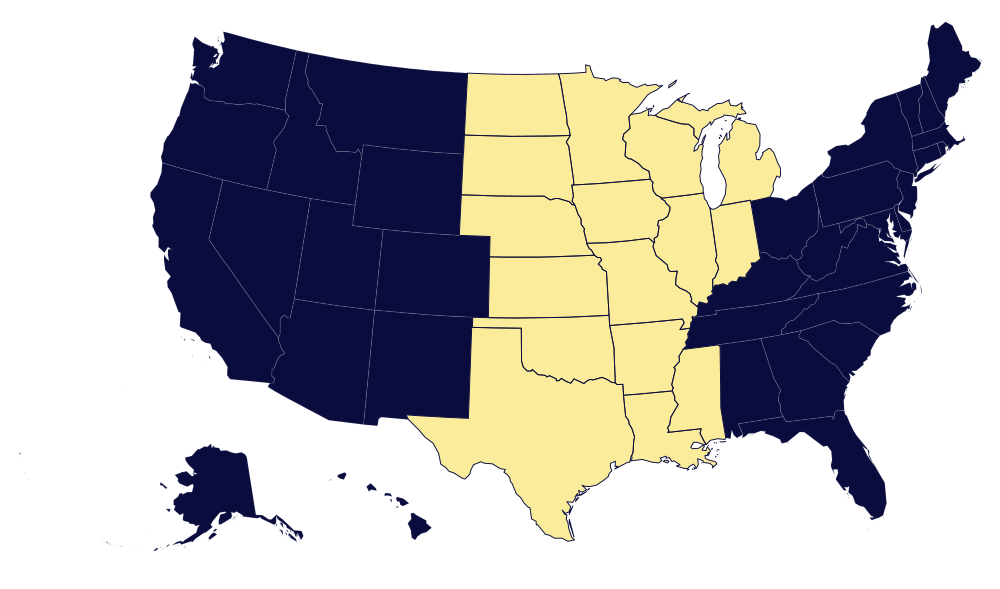
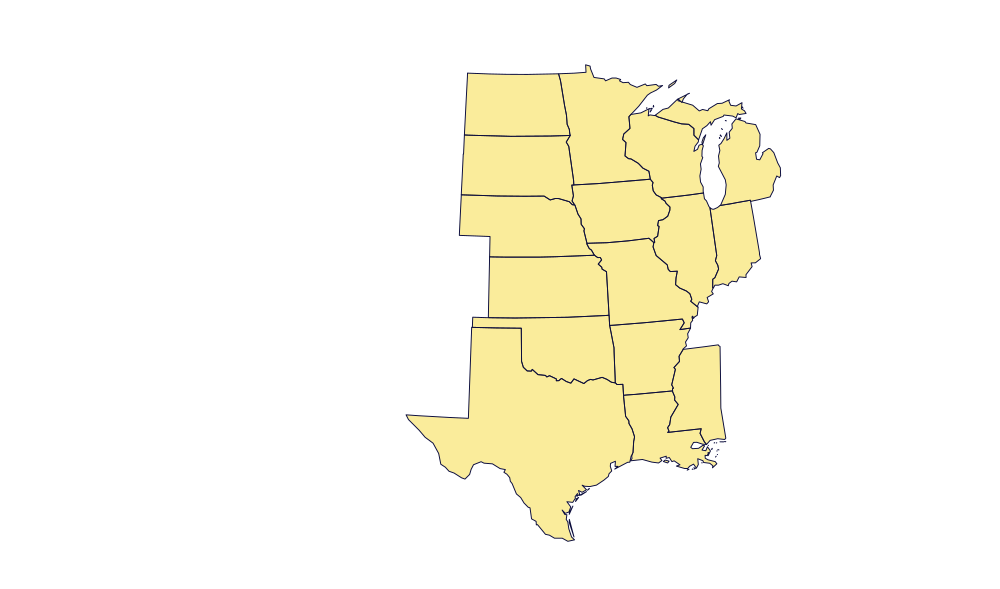
Central States
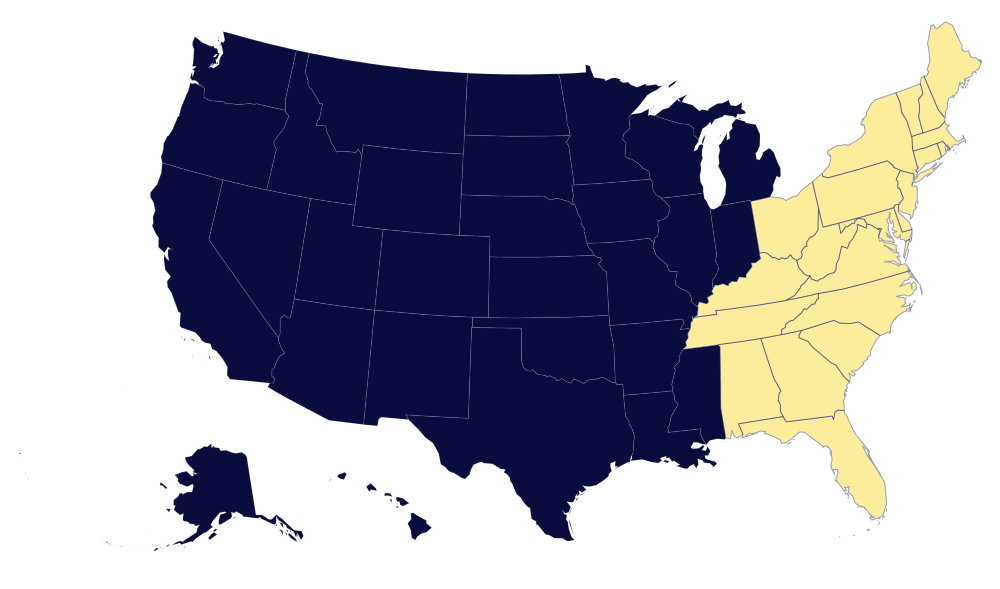
East Coast
*COMING SOON
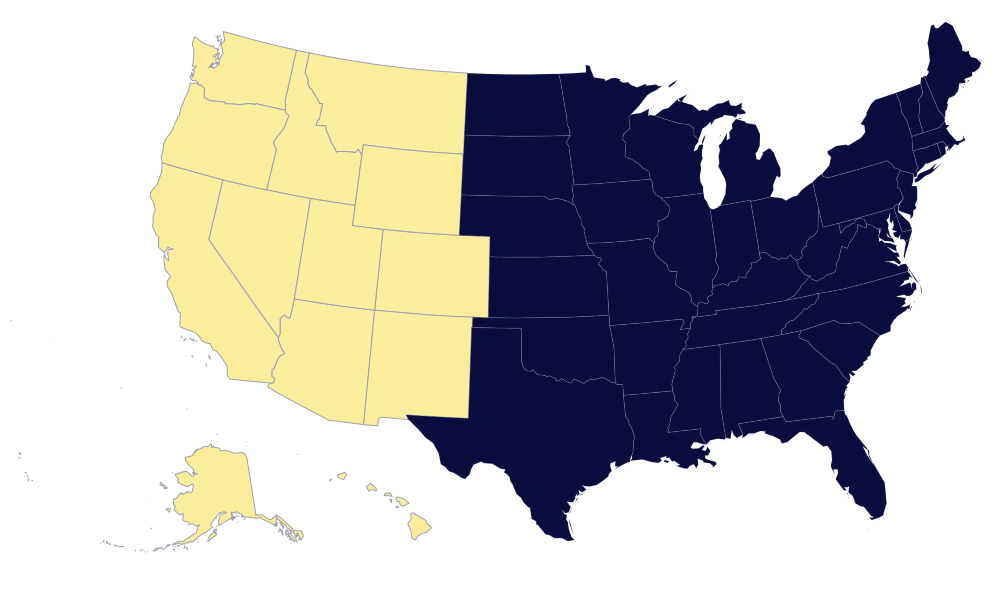
West Coast


*COMING SOON
East Coast
Central States
West Coast
AVLS Nationwide Services
CONTACT US
When your event matters, trust your audio visual labor needs to AV Labor Source.
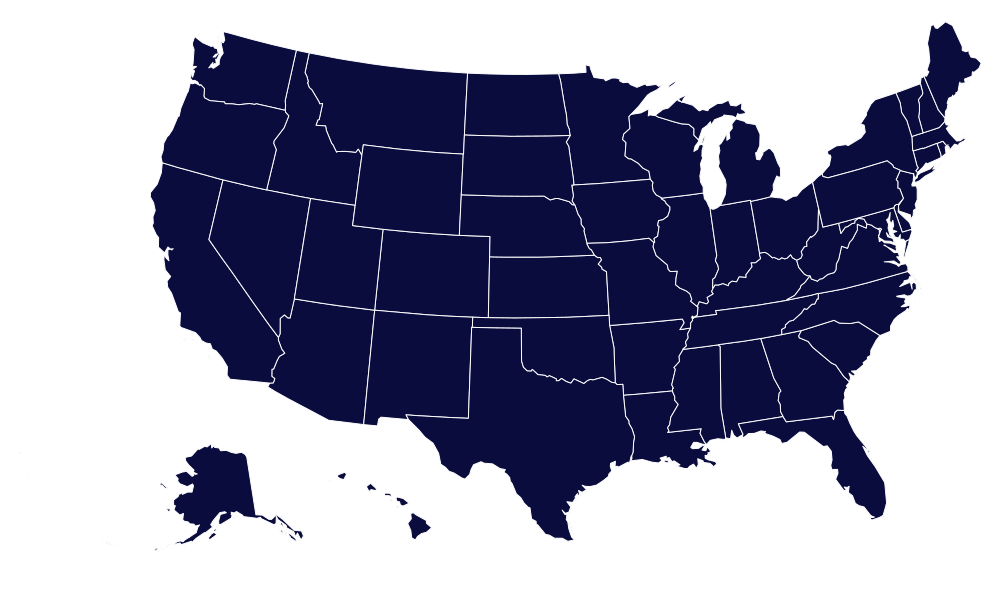
AVLS operate and has proven pool of AV technicians in major cities US Nationwide, such as Las Vegas, Los Angeles, Orlando, Dallas, San Antonio, Austin, Houston, Washington DC, Atlanta, New Orleans, Tennessee and more.
Please complete the form below and we will respond to you as soon as possible. We are available 24 hours a day to assist with your needs. We look forward to showing you what we can do toward the success of your next event.
AVLS operate and has proven pool of AV technicians in major cities US Nationwide, such as Las Vegas, Los Angeles, Orlando, Dallas, San Antonio, Austin, Houston, Washington DC, Atlanta, New Orleans, Tennessee and more.
Please complete the form below and we will respond to you as soon as possible. We are available 24 hours a day to assist with your needs. We look forward to showing you what we can do toward the success of your next event.
EVENT INFORMATION
