





Event Project Manager vs Technical Director: Key Differences
Event Project Managers focus on overall event coordination, budgets, timelines, and client relationships, while Technical Directors specialize in the technical execution of audio, visual, lighting, and staging elements. Project managers handle logistics and communication; technical directors ensure flawless technical delivery during live events.
Key Takeaways
- Event Project Managers oversee the entire event lifecycle from planning to execution, managing budgets, vendors, and client expectations
- Technical Directors specialize in audio-visual systems, lighting design, staging, and technical crew management
- Project managers earn $45,000-$85,000 annually while technical directors typically earn $55,000-$95,000
- Most complex events require both roles working together rather than one person handling everything
- Technical directors need hands-on AV experience while project managers focus on organizational and communication skills
- Career progression often moves from project coordination to technical specialization or vice versa
- Common mistakes include unclear role boundaries and poor communication between both positions
What Does an Event Project Manager Actually Do
An Event Project Manager serves as the central coordinator for all aspects of an event, from initial client consultation through post-event wrap-up. They manage budgets, timelines, vendor relationships, and ensure every detail aligns with client expectations.
Core responsibilities include:
- Budget management and cost control - Creating detailed budgets, tracking expenses, and ensuring events stay within financial parameters
- Vendor coordination - Sourcing, negotiating with, and managing relationships with caterers, venues, entertainment, and technical suppliers
- Timeline development - Building comprehensive project schedules with milestones, deadlines, and contingency plans
- Client communication - Serving as the primary point of contact, managing expectations, and providing regular updates
- Risk management - Identifying potential issues and developing backup plans for weather, vendor failures, or other disruptions
- Team leadership - Coordinating internal staff and external contractors to ensure seamless execution
Event project managers typically work 40-50 hours per week during normal periods, but this can extend to 60-80 hours during peak event seasons or in the weeks leading up to major events. They spend roughly 60% of their time in planning phases and 40% in execution and follow-up activities.
The role requires strong organizational skills but doesn't demand deep technical knowledge of audio-visual systems or staging equipment. Instead, project managers rely on technical specialists to handle those aspects while they focus on the bigger picture.
Understanding Event Project Manager vs Technical Director: Key Differences in Daily Work
The fundamental difference between these roles lies in their focus areas and expertise requirements. Event Project Managers operate as generalists who coordinate all event elements, while Technical Directors function as specialists who ensure flawless technical execution.
Event Project Manager daily activities:
- Reviewing budgets and approving expenses
- Communicating with clients about changes or updates
- Coordinating with multiple vendors and suppliers
- Managing event registration and attendee logistics
- Creating detailed run-of-show documents
- Handling permits, insurance, and legal requirements
Technical Director daily activities:
- Designing audio-visual layouts and equipment specifications
- Managing technical crew schedules and assignments
- Conducting site surveys for power, rigging, and equipment placement
- Programming lighting systems and audio consoles
- Troubleshooting technical issues during rehearsals and live events
- Ensuring compliance with safety regulations for equipment installation
The project manager thinks in terms of overall event success and client satisfaction, while the technical director focuses on seamless technical delivery and crew performance. Project managers spend more time in meetings and on phones; technical directors spend more time hands-on with equipment and crew.
Choose an Event Project Manager when you need someone to coordinate multiple moving parts and maintain client relationships. Choose a Technical Director when your event has complex audio-visual requirements that demand specialized expertise.
Do You Need Both an Event Project Manager and Technical Director
Most events with budgets over $50,000 or complex technical requirements benefit from having both roles filled by separate professionals. The combination provides comprehensive coverage of both logistical coordination and technical expertise.
When you need both:
- Corporate conferences with multiple breakout rooms and AV setups
- Concerts or festivals requiring extensive sound and lighting systems
- Trade shows with complex booth installations and networking requirements
- Awards ceremonies with live streaming, multiple cameras, and theatrical lighting
- Product launches involving interactive displays and multimedia presentations
When one person might handle both:
- Small corporate meetings under 100 attendees
- Simple wedding receptions with basic sound systems
- Community events with minimal technical requirements
- Budget constraints that prevent hiring specialized roles
The decision often comes down to event complexity and budget allocation. A skilled Technical Director can handle basic project coordination for smaller events, while an experienced Event Project Manager can coordinate simple technical setups with vendor support.
However, attempting to combine both roles for complex events frequently leads to compromised results. The project management demands can prevent proper attention to technical details, while technical troubleshooting can pull focus from critical client communications during crucial moments.
For professional event production services, having dedicated specialists in each role typically produces better outcomes and reduces stress for all involved parties.
Event Project Manager vs Technical Director Salary Comparison
Compensation for both roles varies significantly based on experience, location, and event complexity, but Technical Directors typically command higher salaries due to specialized technical skills.
Event Project Manager salary ranges:
- Entry level (0-2 years): $35,000-$50,000
- Mid-level (3-7 years): $45,000-$70,000
- Senior level (8+ years): $65,000-$85,000
- Freelance day rates: $300-$800
Technical Director salary ranges:
- Entry level (0-2 years): $40,000-$55,000
- Mid-level (3-7 years): $55,000-$80,000
- Senior level (8+ years): $75,000-$95,000
- Freelance day rates: $400-$1,200
Geographic location significantly impacts these ranges. Major markets like New York, Los Angeles, and Las Vegas typically offer 20-30% higher compensation than smaller cities. Corporate events generally pay more than social events, while concert and festival work often provides the highest day rates but less consistent employment.
Factors that increase earning potential:
- Specialized certifications (CMP, CTS, or industry-specific credentials)
- Experience with high-profile clients or major brands
- Ability to manage multiple simultaneous projects
- Technical expertise in emerging technologies like LED walls or immersive audio
- Strong relationships with venues and vendors in key markets
Freelance professionals in both roles often earn more per day but face income variability and must handle their own benefits and business development. Staff positions provide stability but may cap earning potential.
Can One Person Do Both Event Project Manager and Technical Director
A single professional can handle both roles effectively for smaller events or those with limited technical complexity, but this approach has clear limitations as event size and technical demands increase.
Successful combination scenarios:
- Events under 200 attendees with standard AV needs
- Professionals with 5+ years experience in both areas
- Events with extended setup periods allowing time for both coordination and technical work
- Simple technical requirements that don't require constant monitoring
When it becomes problematic:
- Live events requiring real-time technical adjustments during client presentations
- Multiple simultaneous technical setups competing for attention
- Complex troubleshooting needs that conflict with client communication requirements
- Events where technical failures could significantly impact client relationships
The main challenge lies in divided attention during critical moments. Technical issues often arise during the most important parts of events, exactly when project managers need to focus on client needs and overall coordination.
Skills required for dual-role success:
- Strong technical background in audio, video, and lighting systems
- Excellent project management and communication abilities
- Ability to delegate effectively to technical crew members
- Experience with hiring skilled technical crews who can work independently
- Stress management skills for handling multiple priorities simultaneously
Many professionals start in one role and gradually develop skills in the other, creating valuable hybrid expertise for mid-sized events and production companies.
What Skills Do You Need to Be a Technical Director for Events
Technical Directors require a combination of hands-on technical expertise, leadership abilities, and safety knowledge to manage complex event production systems effectively.
Essential technical skills:
- Audio systems - Mixing console operation, microphone selection, speaker placement, and acoustic problem-solving
- Video production - Camera operation, switching systems, projection mapping, and LED wall management
- Lighting design - Programming moving lights, color theory, theatrical lighting principles, and power distribution
- Rigging and staging - Load calculations, truss systems, motor control, and structural safety requirements
- Networking - IP-based audio/video systems, wireless coordination, and signal routing
Leadership and management abilities:
- Crew scheduling and task delegation
- Safety protocol enforcement and risk assessment
- Budget management for technical equipment and labor
- Vendor relationship management with equipment suppliers
- Problem-solving under pressure during live events
Industry knowledge requirements:
- Understanding of venue limitations and capabilities
- Familiarity with union regulations and labor agreements
- Knowledge of local permitting and inspection requirements
- Awareness of insurance and liability considerations for technical installations
Most successful Technical Directors start as AV technicians and progress through increasingly complex roles. Formal education in audio engineering, theater technology, or electrical systems provides valuable foundation knowledge, but hands-on experience remains the most critical qualification.
Recommended certifications:
- CTS (Certified Technology Specialist) from AVIXA
- ETCP (Entertainment Technician Certification Program) for rigging
- OSHA safety certifications for construction and electrical work
- Manufacturer-specific training for major equipment brands
The role demands continuous learning as technology evolves rapidly, particularly in areas like LED technology, wireless systems, and integration platforms.
Event Project Manager Responsibilities vs Technical Director Responsibilities
Clear role definition prevents overlap and ensures comprehensive event coverage when both positions work together on the same project.
Event Project Manager | Technical Director |
Pre-Event Planning • Client consultation and needs assessment • Budget development and cost tracking • Venue selection and contract negotiation • Vendor sourcing and coordination • Timeline creation and milestone management • Permit acquisition and insurance coordination | Technical Design • Site surveys and technical assessments • Equipment specification and selection • Crew sizing and skill requirements • Power and infrastructure planning • Safety protocol development • Technical rider creation |
Event Execution • Client communication and updates • Overall event coordination • Problem resolution and decision making • Guest services and logistics • Schedule adherence monitoring • Post-event client follow-up | Technical Operations • Equipment setup supervision • Crew management and task assignment • System testing and troubleshooting • Live event technical support • Safety compliance monitoring • Equipment strike and inventory |
Shared responsibilities often include:
- Risk assessment and contingency planning
- Communication with venue staff and security
- Coordination during load-in and load-out periods
- Documentation of lessons learned and improvement opportunities
The most successful events establish clear communication protocols between both roles, with regular check-ins during planning phases and defined escalation procedures during live events.
When Should You Hire a Technical Director Instead of Project Manager
Choose a Technical Director over a Project Manager when technical execution represents the primary challenge and risk factor for your event success.
Prioritize Technical Director for:
- Concert and festival productions where audio quality and lighting design drive the experience
- Corporate product launches featuring complex multimedia presentations and interactive technology
- Broadcast events requiring camera coordination, switching, and live streaming capabilities
- Trade show installations with extensive booth technology and networking requirements
- Award ceremonies involving theatrical lighting, video walls, and live production elements
Prioritize Project Manager for:
- Corporate meetings and conferences where logistics and coordination matter more than technical complexity
- Social events and weddings requiring vendor management and timeline coordination
- Fundraising galas where guest experience and program flow take precedence
- Community events with simple technical needs but complex logistical requirements
Budget considerations also influence this decision. Technical Directors command higher day rates but can prevent costly technical failures that damage client relationships. Project Managers provide better value for events where technical requirements are straightforward but coordination demands are high.
For events requiring both skill sets, consider hiring a Technical Director with strong communication skills for technically complex events, or a Project Manager with technical experience for coordination-heavy events with moderate AV requirements.
When working with AV technicians in major markets, having a Technical Director ensures proper crew management and technical quality control.
What's the Career Path from Event Project Manager to Technical Director
The transition from Event Project Manager to Technical Director typically requires 2-4 years of focused technical skill development, depending on your starting technical knowledge and learning opportunities.
Common progression steps:
- Gain hands-on technical experience - Volunteer for technical setup tasks, shadow technical crews during events, and request assignments involving AV coordination
- Pursue technical education - Enroll in audio engineering courses, lighting design workshops, or AV technology certification programs
- Start with hybrid roles - Seek positions combining project management with technical coordination responsibilities
- Build technical specialization - Focus on one area (audio, lighting, or video) before expanding to full technical direction
- Develop crew management skills - Learn to supervise technical teams and manage complex installations
Advantages of this career transition:
- Higher earning potential and day rates
- More specialized expertise leading to job security
- Opportunities to work on high-profile productions
- Greater creative input in event design and execution
Challenges to expect:
- Significant time investment in technical skill development
- Physical demands of equipment handling and long setup hours
- Need to stay current with rapidly evolving technology
- Responsibility for safety and technical failure prevention
Alternative path considerations:
Some professionals choose to remain in project management while developing technical knowledge for better coordination with technical teams, rather than becoming full Technical Directors. This hybrid approach works well for those who prefer client interaction and coordination over hands-on technical work.
The most successful transitions involve finding mentors in technical roles and seeking employment with companies that support cross-training between departments.
Common Mistakes Event Managers Make with Technical Directors
Poor coordination between Event Project Managers and Technical Directors can derail even well-planned events, but these issues are preventable with proper communication and role clarity.
Most frequent coordination problems:
Inadequate technical briefings - Project managers who don't provide complete technical requirements force Technical Directors to make assumptions that may not align with client expectations. Always share detailed client notes, special requests, and any technical limitations discussed during planning.
Last-minute changes without technical consultation - Modifying room layouts, adding equipment, or changing schedules without Technical Director input can create impossible technical situations. Establish change approval processes that include technical feasibility review.
Unclear authority during events - When both roles are present during live events, unclear decision-making authority creates confusion for crew members and can delay problem resolution. Define who has final authority for different types of decisions before the event begins.
Insufficient buffer time for technical setup - Project managers focused on maximizing event time often underestimate technical requirements, creating rushed installations that increase failure risk. Technical Directors should provide realistic setup and strike timeframes that project managers incorporate into overall schedules.
Poor communication about client priorities - Technical Directors need to understand which elements are most critical to client success so they can allocate attention and resources appropriately during problem-solving situations.
Budget conflicts over technical specifications - Disagreements about equipment quality or crew sizing can create tension that affects event execution. Establish technical standards and budget parameters during initial planning phases.
The best working relationships develop when both roles understand each other's constraints and priorities, creating collaborative rather than competitive dynamics.
How Do Event Project Managers and Technical Directors Work Together
Successful collaboration between Event Project Managers and Technical Directors requires structured communication, clear role boundaries, and shared commitment to event success.
Effective collaboration frameworks:
Planning phase coordination:
- Joint client meetings for technical requirement gathering
- Shared project management systems with real-time updates
- Regular check-ins during design and planning phases
- Collaborative budget development including technical and logistical costs
Pre-event preparation:
- Combined site visits and venue walkthroughs
- Integrated timeline development including technical and logistical milestones
- Shared vendor management with clear responsibility divisions
- Joint contingency planning for technical and logistical challenges
Event day operations:
- Established communication protocols using headsets or messaging systems
- Clear escalation procedures for different types of problems
- Defined check-in schedules throughout the event day
- Coordinated client communication to prevent conflicting information
Best practices for ongoing collaboration:
Create shared documentation - Use project management platforms that both roles can access and update, ensuring everyone works from current information.
Establish communication rhythms - Schedule regular planning meetings and maintain consistent check-in procedures during events.
Define decision-making authority - Clearly specify who makes final decisions about technical changes, budget adjustments, and client communications.
Cross-train team members - Project managers should understand basic technical concepts while Technical Directors should grasp client management principles.
When both professionals respect each other's expertise and maintain open communication, they create synergistic partnerships that consistently deliver exceptional events and build strong client relationships.
Is Technical Director Harder Than Event Project Manager
Both roles present significant challenges, but they require different skill sets and stress management approaches, making direct difficulty comparison subjective and dependent on individual strengths.
Technical Director challenges:
- Physical demands - Long hours on feet, equipment lifting, and work in challenging environments
- Safety responsibility - Personal liability for crew safety and equipment failure prevention
- Real-time problem solving - Technical issues requiring immediate solutions during live events
- Continuous learning - Rapidly evolving technology requiring ongoing education and adaptation
- High-pressure troubleshooting - Equipment failures that can derail entire events with limited time for solutions
Event Project Manager challenges:
- Client relationship management - Balancing multiple stakeholder expectations and managing difficult personalities
- Budget pressure - Delivering quality results within tight financial constraints
- Coordination complexity - Managing numerous vendors, timelines, and moving parts simultaneously
- Scope creep management - Handling client requests that exceed original agreements
- Stress from responsibility without control - Being accountable for outcomes while depending on others for execution
Factors that influence perceived difficulty:
Personal aptitude plays the largest role. Individuals with strong technical backgrounds often find Technical Director roles more natural, while those with communication and organizational strengths gravitate toward project management.
Event type and complexity also matter significantly. A Technical Director managing a simple corporate presentation faces less pressure than a Project Manager coordinating a multi-day conference with international speakers and complex logistics.
Experience level affects both roles differently. Entry-level Technical Directors face steeper learning curves for safety and technical skills, while new Project Managers often struggle with client management and vendor coordination.
Most industry professionals agree that both roles become more manageable with experience, but Technical Director positions typically require longer skill development periods and carry higher liability risks.
What Certifications Do Event Project Managers and Technical Directors Need
While certifications aren't always required, they significantly enhance credibility, earning potential, and job opportunities in both career paths.
Event Project Manager certifications:
Certified Meeting Professional (CMP) - The industry standard for meeting and event planning professionals, requiring 25 hours of continuing education every five years and demonstrating comprehensive event management knowledge.
Certified Special Events Professional (CSEP) - Focuses specifically on special events rather than corporate meetings, emphasizing creativity and unique event design alongside traditional planning skills.
Project Management Professional (PMP) - General project management certification that applies well to event coordination, particularly valuable for corporate event managers working with business clients.
Digital Event Strategist (DES) - Newer certification addressing virtual and hybrid event management, increasingly important in 2026's event landscape.
Technical Director certifications:
Certified Technology Specialist (CTS) - AVIXA's foundational certification covering audio-visual technology, system design, and installation principles. Most respected credential in the AV industry.
Entertainment Technician Certification Program (ETCP) - Covers rigging, electrical, and arena safety for live event production. Essential for Technical Directors working in concert and festival environments.
OSHA 30-Hour Construction Safety - Required for many venues and production companies, covering workplace safety regulations and hazard identification.
Manufacturer-specific certifications - Training programs from companies like d&b audiotechnik, Meyer Sound, or Barco that demonstrate expertise with specific equipment lines.
Continuing education requirements:
Most certifications require ongoing education to maintain active status. Budget 20-40 hours annually for recertification activities and stay current with industry developments.
ROI considerations:
Certified professionals typically earn 15-25% more than non-certified counterparts and have access to better job opportunities. The investment in certification often pays for itself within 12-18 months through increased earning potential.
For professionals working with skilled technical crews, certifications provide credibility when managing and directing experienced technicians.
Frequently Asked Questions
What's the main difference between an Event Project Manager and Technical Director?
Event Project Managers handle overall event coordination, budgets, timelines, and client relationships, while Technical Directors focus specifically on audio-visual systems, lighting, staging, and technical crew management. Project managers are generalists; technical directors are specialists.
Can someone transition from Event Project Manager to Technical Director?
Yes, but it typically requires 2-4 years of focused technical skill development including hands-on AV experience, technical certifications, and crew management training. Many professionals successfully make this transition by starting with hybrid roles.
Do small events need both roles?
Events under 100 attendees with basic AV needs can often be handled by one experienced professional. However, events over $50,000 budget or with complex technical requirements benefit significantly from having dedicated specialists in each role.
Which role pays more - Event Project Manager or Technical Director?
Technical Directors typically earn 10-20% more due to specialized technical skills, with senior-level Technical Directors earning $75,000-$95,000 compared to $65,000-$85,000 for senior Event Project Managers. Freelance day rates also favor Technical Directors.
What happens when Event Project Managers and Technical Directors disagree?
Successful teams establish clear decision-making authority during planning phases. Technical Directors typically have final say on safety and technical feasibility issues, while Project Managers lead on client communications and budget decisions.
How long does it take to become qualified as a Technical Director?
Most Technical Directors need 3-5 years of hands-on AV experience plus relevant certifications. Starting as an AV technician and progressing through increasingly complex roles provides the best foundation for technical direction responsibilities.
Are certifications required for these roles?
While not always mandatory, certifications like CMP for Project Managers and CTS for Technical Directors significantly improve job prospects and earning potential. Most employers prefer certified candidates for senior-level positions.
What's the biggest challenge in each role?
Event Project Managers face the challenge of coordinating multiple moving parts while managing client expectations. Technical Directors deal with real-time problem-solving under pressure and responsibility for crew safety and equipment performance.
Can Event Project Managers work without technical knowledge?
Basic technical understanding helps significantly, but deep technical expertise isn't required. Project Managers need enough knowledge to communicate effectively with Technical Directors and understand technical constraints and possibilities.
Which role has better job security?
Both roles offer good job security, but Technical Directors may have an advantage due to specialized skills that are harder to replace. However, strong Project Managers with excellent client relationships also enjoy high job security.
How do these roles work together during live events?
They maintain constant communication through headsets or messaging systems, with Project Managers handling client interactions and overall coordination while Technical Directors focus on equipment performance and crew management. Clear escalation procedures prevent conflicts.
What size events typically need a Technical Director?
Events requiring multiple microphones, complex lighting, video projection, or live streaming typically benefit from a Technical Director. Corporate conferences, concerts, award ceremonies, and trade shows almost always need dedicated technical leadership.
Conclusion
Understanding the Event Project Manager vs Technical Director key differences helps organizations make informed staffing decisions and ensures successful event execution. Event Project Managers excel at coordination, client relationships, and overall event logistics, while Technical Directors bring specialized expertise in audio-visual systems, lighting, and technical crew management.
For smaller events with basic technical needs, one experienced professional can often handle both roles effectively. However, complex events with budgets over $50,000 or significant technical requirements benefit substantially from having dedicated specialists in each position.
The collaboration between these roles creates the strongest foundation for event success. Project Managers provide the organizational framework and client focus, while Technical Directors ensure flawless technical execution and crew performance. Clear communication protocols and defined responsibilities prevent conflicts and maximize the strengths of both positions.
Career progression between these roles is possible but requires dedicated skill development and typically 2-4 years of focused training. Both paths offer strong earning potential and job security, with Technical Directors generally commanding higher compensation due to specialized technical expertise.
Ready to build your event team with skilled professionals? Whether you need experienced Event Project Managers, certified Technical Directors, or complete AV labor staffing solutions, AV Labor Source connects you with qualified professionals nationwide. Contact us today to discuss your event staffing needs and ensure your next production has the right expertise in place.
Get in touch with our team to find the perfect Event Project Manager or Technical Director for your upcoming events.




CONTACT US
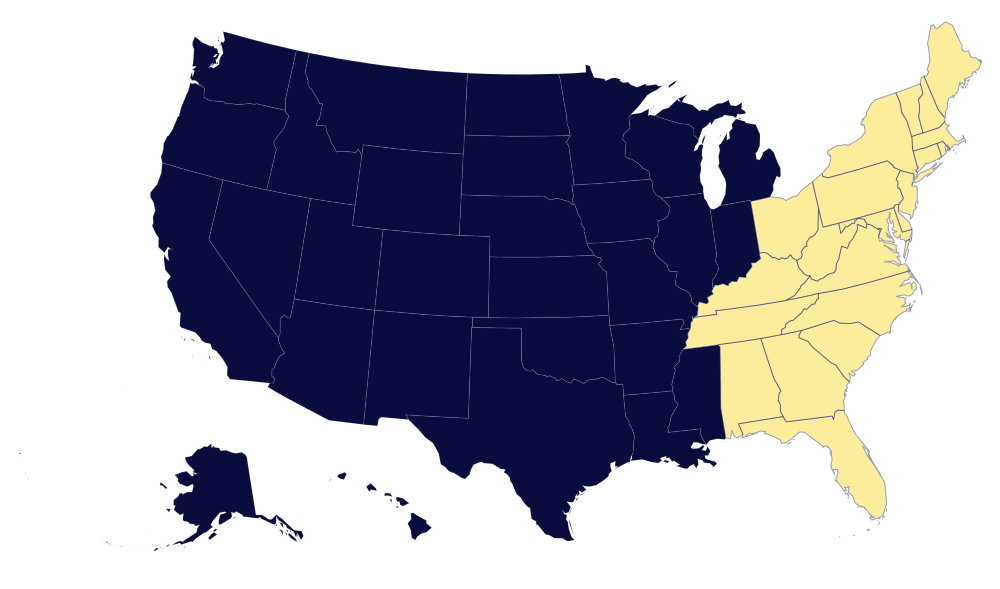
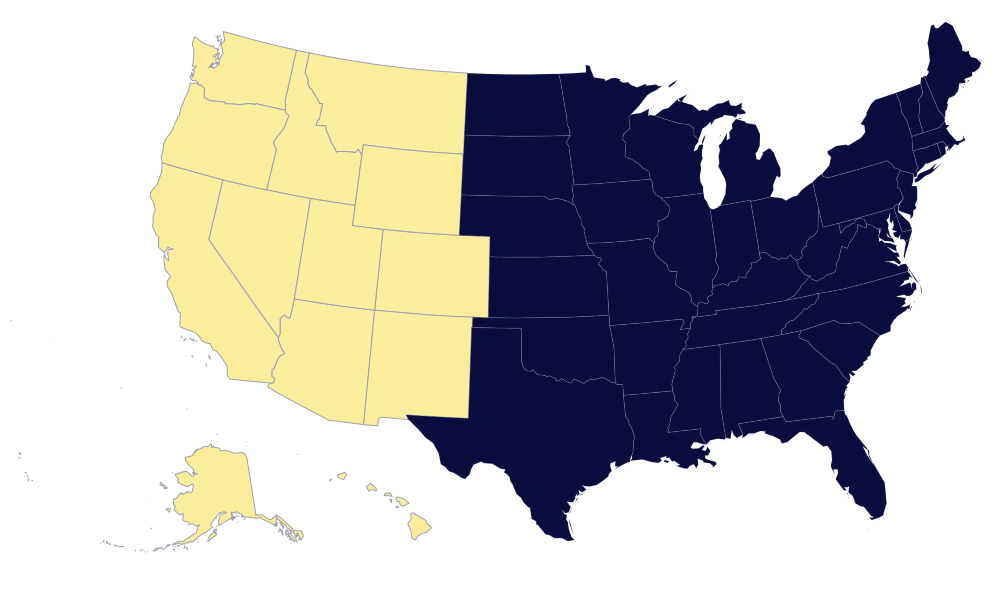
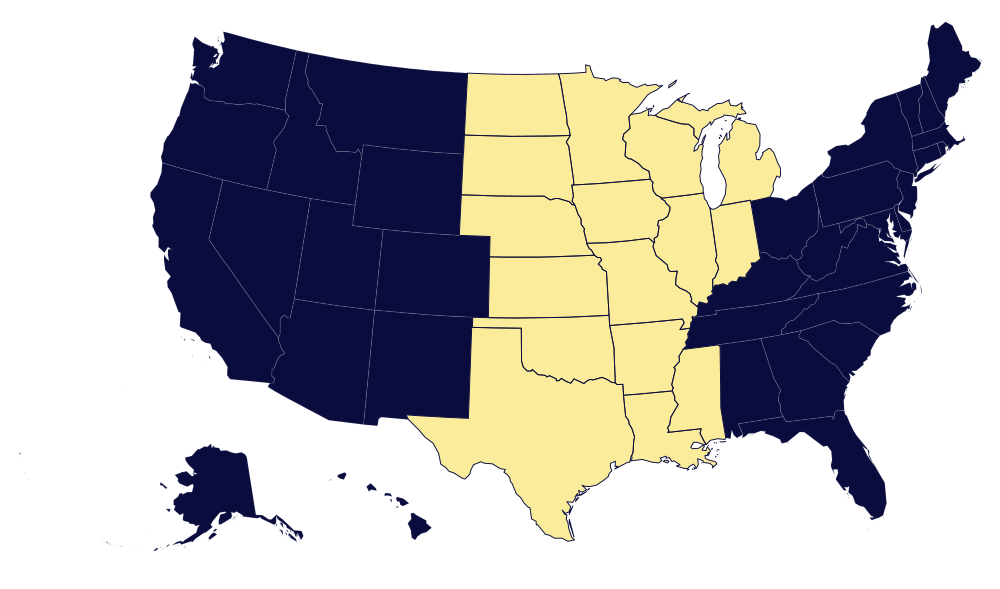
AVLS operate and has proven pool of AV technicians in major cities US Nationwide, such as Las Vegas, Los Angeles, Orlando, Dallas, San Antonio, Austin, Houston, Washington DC, Atlanta, New Orleans, Tennessee and more.
Please complete the form below and we will respond to you as soon as possible. We are available 24 hours a day to assist with your needs. We look forward to showing you what we can do toward the success of your next event.
EVENT INFORMATION
