





July 5, 2026
What Does an A1 Audio Engineer Do at an Event?
A single misconfigured microphone can derail a million-dollar corporate presentation in seconds. Behind every flawless event audio experience stands an A1 Audio Engineer—the commanding officer of sound who orchestrates complex audio systems with surgical precision. Understanding what does an A1 Audio Engineer do at an event reveals the critical role these professionals play in transforming technical chaos into seamless auditory experiences.
The A1 Audio Engineer serves as the lead audio professional responsible for managing all sound-related aspects of live events, from intimate corporate meetings to massive stadium concerts. This role demands exceptional technical expertise, leadership skills, and the ability to make split-second decisions under intense pressure.
Key Takeaways
The Core Responsibilities of an A1 Audio Engineer
Leading the Audio Team
The A1 Audio Engineer functions as the audio department's field general, directing a team of A2s, monitor engineers, and audio assistants. This leadership extends beyond technical oversight to include crew scheduling, task delegation, and maintaining quality standards across all audio operations. During large-scale productions, an A1 might manage teams of 10-15 audio professionals, each with specialized responsibilities.
Team coordination involves:
Operating the Front of House Console
The mixing console represents the A1's command center, where they blend multiple audio sources into a cohesive sound experience for the audience. This involves managing dozens of input channels simultaneously, applying real-time effects processing, and adjusting levels based on venue acoustics and audience response.
Modern digital consoles offer sophisticated automation capabilities, but the A1's trained ear remains the ultimate arbiter of sound quality. They must balance competing audio elements—vocals, instruments, ambient sound, and playback tracks—while maintaining clarity and preventing feedback issues.
Pre-Event Planning and System Design
Venue Assessment and Equipment Selection
Understanding what does an A1 Audio Engineer do at an event begins long before the first guest arrives. The planning phase involves comprehensive venue analysis, including acoustic measurements, power requirements, and equipment positioning strategies. A1s conduct site surveys to identify potential audio challenges such as reflective surfaces, ambient noise sources, and structural limitations.
Critical planning elements include:
For professional AV specialists working live events, this planning phase often determines the success of the entire production.
Collaboration with Other Departments
A1 Audio Engineers work closely with lighting designers, video engineers, and stage managers to create integrated production experiences. This collaboration requires understanding how different technical elements interact and potentially interfere with each other.
Cross-departmental coordination involves:
Real-Time Event Management
Live Mixing and Sound Reinforcement
During active events, the A1 Audio Engineer's primary focus shifts to live mixing and sound reinforcement. This involves continuous monitoring of audio levels, EQ adjustments, and dynamic range management to ensure optimal sound quality throughout the venue.
The complexity of live mixing varies significantly based on event type. Corporate presentations might require subtle reinforcement of spoken word content, while concert productions demand sophisticated balancing of multiple instruments and vocal elements. AV technicians and engineers for live events must adapt their approach based on these varying requirements.
Problem-Solving and Technical Troubleshooting
Equipment failures and technical issues are inevitable during live events, making rapid problem-solving a crucial A1 skill. Common challenges include microphone feedback, speaker failures, and digital console malfunctions. The A1 must diagnose problems quickly while maintaining audio coverage for ongoing presentations or performances.
Typical troubleshooting scenarios:
Communication and Coordination During Events
Artist and Speaker Liaison
A1 Audio Engineers serve as the primary technical contact for performers, speakers, and presenters. This role requires excellent interpersonal skills and the ability to translate technical concepts into understandable terms for non-technical clients.
Communication responsibilities include:
Production Team Integration
Understanding what does an A1 Audio Engineer do at an event encompasses their role as a key member of the production team. They participate in production meetings, contribute to creative discussions, and help solve logistical challenges that impact audio quality.
The A1 maintains constant communication with the show caller or stage manager, responding to cues and adapting to real-time changes in the event schedule. This requires exceptional multitasking abilities and the capacity to prioritize competing demands.
Technical Expertise and Equipment Management
Advanced Audio Processing
Modern A1 Audio Engineers must master sophisticated digital signal processing techniques, including multi-band compression, parametric EQ, and time-alignment systems. These tools allow precise control over audio characteristics, enabling optimal sound quality in challenging acoustic environments.
Advanced processing techniques:
System Integration and Networking
Contemporary audio systems increasingly rely on digital networking protocols such as Dante, AVB, and MADI. A1 Engineers must understand these technologies and troubleshoot network-related audio issues. This technical evolution has expanded the role beyond traditional analog mixing to include IT networking concepts.
For those interested in how to hire AV technicians for corporate events, understanding these advanced technical requirements is essential for proper staffing decisions.
Quality Control and Performance Standards
Monitoring and Measurement
Professional A1 Audio Engineers employ objective measurement tools alongside subjective listening skills to ensure consistent audio quality. This includes using spectrum analyzers, SPL meters, and acoustic measurement software to verify system performance and identify potential issues.
Quality control measures:
Documentation and Reporting
Successful A1s maintain detailed documentation of system configurations, problem resolutions, and performance notes. This information proves valuable for future events and helps identify recurring issues that require systematic solutions.
Career Development and Industry Standards
Professional Certifications and Training
The audio engineering field offers various certification programs and training opportunities for career advancement. Organizations like the Audio Engineering Society (AES) and InfoComm provide educational resources and professional development programs.
Professional development paths:
Industry Networking and Opportunities
Building relationships within the live event industry is crucial for A1 Audio Engineers seeking career advancement. Professional associations, trade shows, and industry publications provide networking opportunities and access to job openings.
The demand for skilled A1 Audio Engineers continues growing as live events become more sophisticated and technically demanding. Event production services for corporate events increasingly require specialized audio expertise to meet client expectations.
Conclusion
Understanding what does an A1 Audio Engineer do at an event reveals a multifaceted role that combines technical mastery, leadership skills, and creative problem-solving. These professionals serve as the cornerstone of successful live event audio, managing complex systems while leading technical teams and ensuring flawless sound quality for audiences.
The A1 position demands continuous learning and adaptation as audio technology evolves and client expectations increase. Success requires not only technical proficiency but also strong communication skills, leadership abilities, and the capacity to perform under pressure.
For event producers and venue managers, investing in experienced A1 Audio Engineers represents a critical factor in event success. The expertise these professionals bring to live productions directly impacts audience experience and overall event quality.
Whether planning corporate conferences, concert productions, or specialized events, partnering with skilled A1 Audio Engineers ensures technical excellence and professional execution that meets the highest industry standards.
Need Expert A1 Audio Engineers for Your Next Event?
AV Labor Source connects you with experienced A1 Audio Engineers and complete audio crews for events nationwide. Our vetted professionals bring the technical expertise and leadership skills essential for flawless live event audio production. Contact us today to discuss your staffing needs and ensure your event delivers exceptional sound quality that exceeds expectations.
Get in touch with our team to learn more about our A1 Audio Engineer staffing solutions.
The A1 Audio Engineer serves as the lead audio professional responsible for managing all sound-related aspects of live events, from intimate corporate meetings to massive stadium concerts. This role demands exceptional technical expertise, leadership skills, and the ability to make split-second decisions under intense pressure.
Key Takeaways
- A1 Audio Engineers lead entire audio crews and manage complex mixing console operations during live events
- They coordinate with multiple departments including lighting, video, and stage management to ensure seamless production
- Real-time problem-solving and technical troubleshooting are essential skills for handling equipment failures and audio issues
- The role requires extensive pre-event planning, equipment selection, and system design based on venue acoustics
- A1s must maintain clear communication with artists, speakers, and production teams throughout the event duration
The Core Responsibilities of an A1 Audio Engineer
Leading the Audio Team
The A1 Audio Engineer functions as the audio department's field general, directing a team of A2s, monitor engineers, and audio assistants. This leadership extends beyond technical oversight to include crew scheduling, task delegation, and maintaining quality standards across all audio operations. During large-scale productions, an A1 might manage teams of 10-15 audio professionals, each with specialized responsibilities.
Team coordination involves:
- Assigning specific roles to A2 engineers and audio assistants
- Conducting pre-show briefings and technical rehearsals
- Monitoring crew performance and providing real-time guidance
- Ensuring safety protocols are followed throughout the event
Operating the Front of House Console
The mixing console represents the A1's command center, where they blend multiple audio sources into a cohesive sound experience for the audience. This involves managing dozens of input channels simultaneously, applying real-time effects processing, and adjusting levels based on venue acoustics and audience response.
Modern digital consoles offer sophisticated automation capabilities, but the A1's trained ear remains the ultimate arbiter of sound quality. They must balance competing audio elements—vocals, instruments, ambient sound, and playback tracks—while maintaining clarity and preventing feedback issues.
Pre-Event Planning and System Design
Venue Assessment and Equipment Selection
Understanding what does an A1 Audio Engineer do at an event begins long before the first guest arrives. The planning phase involves comprehensive venue analysis, including acoustic measurements, power requirements, and equipment positioning strategies. A1s conduct site surveys to identify potential audio challenges such as reflective surfaces, ambient noise sources, and structural limitations.
Critical planning elements include:
- Acoustic analysis: Measuring reverberation times and identifying problematic frequencies
- Equipment specification: Selecting appropriate speakers, microphones, and processing gear
- Signal flow design: Creating redundant audio paths to prevent system failures
- Load-in logistics: Coordinating equipment delivery and installation schedules
For professional AV specialists working live events, this planning phase often determines the success of the entire production.
Collaboration with Other Departments
A1 Audio Engineers work closely with lighting designers, video engineers, and stage managers to create integrated production experiences. This collaboration requires understanding how different technical elements interact and potentially interfere with each other.
Cross-departmental coordination involves:
- Synchronizing audio cues with lighting and video effects
- Managing cable runs to avoid electromagnetic interference
- Coordinating power distribution with other technical departments
- Establishing communication protocols for live show calling
Real-Time Event Management
Live Mixing and Sound Reinforcement
During active events, the A1 Audio Engineer's primary focus shifts to live mixing and sound reinforcement. This involves continuous monitoring of audio levels, EQ adjustments, and dynamic range management to ensure optimal sound quality throughout the venue.
The complexity of live mixing varies significantly based on event type. Corporate presentations might require subtle reinforcement of spoken word content, while concert productions demand sophisticated balancing of multiple instruments and vocal elements. AV technicians and engineers for live events must adapt their approach based on these varying requirements.
Problem-Solving and Technical Troubleshooting
Equipment failures and technical issues are inevitable during live events, making rapid problem-solving a crucial A1 skill. Common challenges include microphone feedback, speaker failures, and digital console malfunctions. The A1 must diagnose problems quickly while maintaining audio coverage for ongoing presentations or performances.
Typical troubleshooting scenarios:
- Feedback elimination: Identifying and notching problematic frequencies
- Equipment redundancy: Switching to backup systems without audio interruption
- Signal path diagnosis: Tracing audio problems through complex routing systems
- Interference resolution: Eliminating RF interference from wireless systems
Communication and Coordination During Events
Artist and Speaker Liaison
A1 Audio Engineers serve as the primary technical contact for performers, speakers, and presenters. This role requires excellent interpersonal skills and the ability to translate technical concepts into understandable terms for non-technical clients.
Communication responsibilities include:
- Conducting soundcheck sessions with performers
- Explaining monitor mix capabilities and limitations
- Coordinating microphone techniques and stage positioning
- Managing client expectations regarding technical possibilities
Production Team Integration
Understanding what does an A1 Audio Engineer do at an event encompasses their role as a key member of the production team. They participate in production meetings, contribute to creative discussions, and help solve logistical challenges that impact audio quality.
The A1 maintains constant communication with the show caller or stage manager, responding to cues and adapting to real-time changes in the event schedule. This requires exceptional multitasking abilities and the capacity to prioritize competing demands.
Technical Expertise and Equipment Management
Advanced Audio Processing
Modern A1 Audio Engineers must master sophisticated digital signal processing techniques, including multi-band compression, parametric EQ, and time-alignment systems. These tools allow precise control over audio characteristics, enabling optimal sound quality in challenging acoustic environments.
Advanced processing techniques:
- Delay compensation: Aligning audio timing across distributed speaker systems
- Dynamic EQ: Automatically adjusting frequency response based on input levels
- Matrix mixing: Creating custom audio feeds for different venue zones
- Digital networking: Managing audio distribution over Ethernet-based systems
System Integration and Networking
Contemporary audio systems increasingly rely on digital networking protocols such as Dante, AVB, and MADI. A1 Engineers must understand these technologies and troubleshoot network-related audio issues. This technical evolution has expanded the role beyond traditional analog mixing to include IT networking concepts.
For those interested in how to hire AV technicians for corporate events, understanding these advanced technical requirements is essential for proper staffing decisions.
Quality Control and Performance Standards
Monitoring and Measurement
Professional A1 Audio Engineers employ objective measurement tools alongside subjective listening skills to ensure consistent audio quality. This includes using spectrum analyzers, SPL meters, and acoustic measurement software to verify system performance and identify potential issues.
Quality control measures:
- Frequency response verification: Ensuring flat response across the listening area
- SPL management: Maintaining appropriate volume levels for audience comfort
- Phase coherence: Verifying proper speaker alignment and timing
- Noise floor monitoring: Minimizing system noise and interference
Documentation and Reporting
Successful A1s maintain detailed documentation of system configurations, problem resolutions, and performance notes. This information proves valuable for future events and helps identify recurring issues that require systematic solutions.
Career Development and Industry Standards
Professional Certifications and Training
The audio engineering field offers various certification programs and training opportunities for career advancement. Organizations like the Audio Engineering Society (AES) and InfoComm provide educational resources and professional development programs.
Professional development paths:
- Manufacturer training: Specialized courses on specific console and speaker systems
- Industry certifications: Credentials demonstrating proficiency with standard protocols
- Continuing education: Staying current with evolving technology and techniques
- Mentorship programs: Learning from experienced professionals in real-world settings
Industry Networking and Opportunities
Building relationships within the live event industry is crucial for A1 Audio Engineers seeking career advancement. Professional associations, trade shows, and industry publications provide networking opportunities and access to job openings.
The demand for skilled A1 Audio Engineers continues growing as live events become more sophisticated and technically demanding. Event production services for corporate events increasingly require specialized audio expertise to meet client expectations.
Conclusion
Understanding what does an A1 Audio Engineer do at an event reveals a multifaceted role that combines technical mastery, leadership skills, and creative problem-solving. These professionals serve as the cornerstone of successful live event audio, managing complex systems while leading technical teams and ensuring flawless sound quality for audiences.
The A1 position demands continuous learning and adaptation as audio technology evolves and client expectations increase. Success requires not only technical proficiency but also strong communication skills, leadership abilities, and the capacity to perform under pressure.
For event producers and venue managers, investing in experienced A1 Audio Engineers represents a critical factor in event success. The expertise these professionals bring to live productions directly impacts audience experience and overall event quality.
Whether planning corporate conferences, concert productions, or specialized events, partnering with skilled A1 Audio Engineers ensures technical excellence and professional execution that meets the highest industry standards.
Need Expert A1 Audio Engineers for Your Next Event?
AV Labor Source connects you with experienced A1 Audio Engineers and complete audio crews for events nationwide. Our vetted professionals bring the technical expertise and leadership skills essential for flawless live event audio production. Contact us today to discuss your staffing needs and ensure your event delivers exceptional sound quality that exceeds expectations.
Get in touch with our team to learn more about our A1 Audio Engineer staffing solutions.


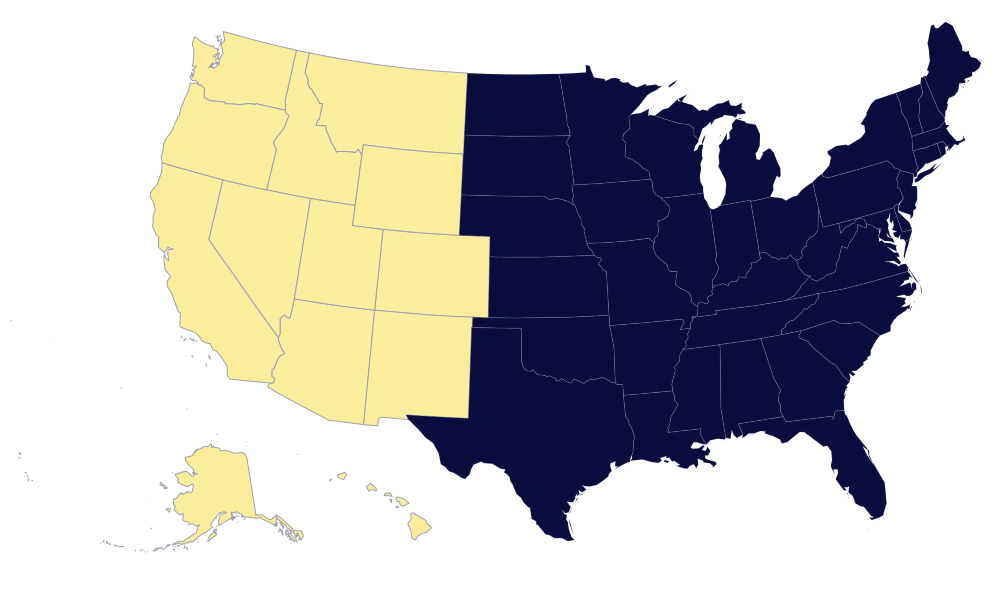
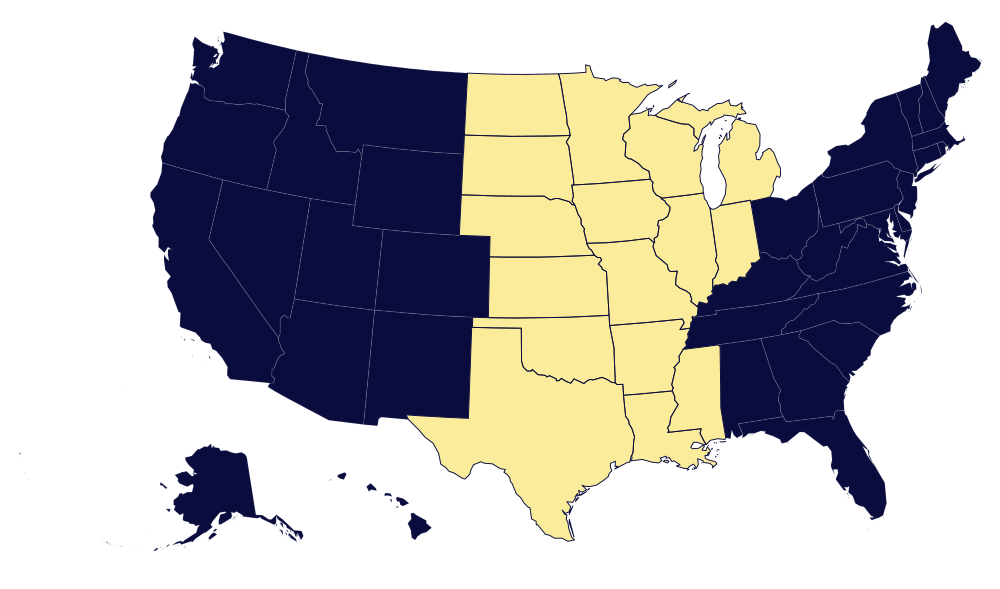
AVLS Nationwide Services
Central States
East Coast
*COMING SOON
West Coast



*COMING SOON
East Coast
Central States
West Coast
AVLS Nationwide Services
CONTACT US
When your event matters, trust your audio visual labor needs to AV Labor Source.
AVLS operate and has proven pool of AV technicians in major cities US Nationwide, such as Las Vegas, Los Angeles, Orlando, Dallas, San Antonio, Austin, Houston, Washington DC, Atlanta, New Orleans, Tennessee and more.
Please complete the form below and we will respond to you as soon as possible. We are available 24 hours a day to assist with your needs. We look forward to showing you what we can do toward the success of your next event.
AVLS operate and has proven pool of AV technicians in major cities US Nationwide, such as Las Vegas, Los Angeles, Orlando, Dallas, San Antonio, Austin, Houston, Washington DC, Atlanta, New Orleans, Tennessee and more.
Please complete the form below and we will respond to you as soon as possible. We are available 24 hours a day to assist with your needs. We look forward to showing you what we can do toward the success of your next event.
EVENT INFORMATION
