





Crew Lead Responsibilities for Corporate Event Production
A crew lead in corporate event production manages technical teams, coordinates equipment setup, ensures safety protocols, and serves as the primary communication bridge between production managers and crew members. They oversee everything from load-in to strike while maintaining quality standards and troubleshooting issues in real-time. The role combines technical expertise with leadership skills to deliver flawless corporate events.
Key Takeaways
- Crew leads manage teams of 5-15 technicians during corporate event setup, execution, and breakdown
- They earn between $25-45 per hour depending on experience, location, and event complexity
- Strong communication skills and technical knowledge across audio, video, and lighting systems are essential
- The role requires physical stamina, problem-solving abilities, and leadership experience
- Crew leads differ from event coordinators by focusing on technical execution rather than client relations
- Career advancement opportunities include production manager and technical director positions
- Certification through organizations like InfoComm or IATSE enhances credibility and earning potential
- Equipment management, safety oversight, and crew scheduling are core daily responsibilities
- Common mistakes include poor communication, inadequate pre-event planning, and neglecting safety protocols
- The position offers excellent entry into the growing corporate events industry
What Does a Crew Lead Do at Corporate Events
A crew lead manages the technical execution of corporate events by supervising equipment setup, coordinating team activities, and ensuring all technical systems function properly. They serve as the on-site leader for audio-visual technicians, lighting crews, and staging personnel throughout the entire event lifecycle.
Primary responsibilities include:
- Team supervision: Direct 5-15 crew members during load-in, show time, and strike
- Equipment coordination: Oversee proper setup and operation of AV systems, lighting rigs, and staging elements
- Quality control: Conduct system checks, troubleshoot technical issues, and maintain performance standards
- Safety management: Enforce safety protocols, conduct site assessments, and manage risk mitigation
- Communication hub: Relay information between production managers, venue staff, and crew members
- Timeline adherence: Ensure all technical elements meet scheduled deadlines and show requirements
The crew lead position requires both hands-on technical skills and leadership capabilities. Unlike general technicians who focus on specific equipment, crew leads must understand multiple technical disciplines and coordinate complex workflows. They often work 12-16 hour days during major corporate events, making physical stamina and stress management crucial.
Common event types include:
- Corporate conferences and conventions
- Product launches and trade shows
- Executive meetings and board presentations
- Awards ceremonies and galas
- Training seminars and workshops
Crew Lead vs Event Coordinator Differences
Crew leads focus on technical execution while event coordinators handle client relations and overall event logistics. The crew lead manages equipment and technical staff, whereas coordinators work with vendors, timelines, and client expectations.
Key distinctions:
Aspect | Crew Lead | Event Coordinator |
Primary focus | Technical systems and crew management | Client relations and vendor coordination |
Team oversight | AV technicians, lighting crews, staging staff | Catering, decor, transportation, logistics |
Timeline | Load-in through strike (technical phases) | Planning through post-event follow-up |
Client interaction | Minimal, primarily through production manager | Direct client communication and relationship management |
Problem-solving | Equipment failures, technical issues | Budget concerns, vendor conflicts, schedule changes |
Required skills | Technical expertise, hands-on experience | Project management, communication, negotiation |
Crew leads typically earn hourly wages and work event-specific contracts, while coordinators often receive salaries and manage multiple events simultaneously. The crew lead role requires physical presence during technical setup and breakdown, making it more demanding but offering direct involvement in event execution.
Many professionals transition between roles as they gain experience. Event production services often require both positions to work closely together for successful corporate events.
How Much Do Crew Leads Make in Event Production
Crew leads in corporate event production earn between $25-45 per hour, with experienced professionals in major markets commanding $35-50 per hour for complex events. Annual earnings vary significantly based on location, specialization, and work frequency.
Salary breakdown by experience level:
- Entry-level (0-2 years): $22-28 per hour
- Mid-level (3-5 years): $28-38 per hour
- Senior-level (5+ years): $35-50 per hour
- Specialized roles (LED walls, broadcast): $40-60 per hour
Geographic variations:
- Major markets (NYC, LA, Chicago): 15-25% premium
- Secondary markets (Atlanta, Denver): Standard rates
- Smaller markets: 10-15% below national average
Factors affecting compensation:
- Event complexity: Multi-day conferences pay more than single-day meetings
- Technical specialization: Audio engineers and lighting designers earn premiums
- Union membership: IATSE members often receive higher rates and benefits
- Overtime policies: Time-and-a-half after 8-10 hours is standard
- Travel requirements: Per diem and travel pay for out-of-town events
Full-time crew leads working 40+ events annually can earn $55,000-85,000, while freelancers may work seasonally with higher hourly rates but less consistent income. Corporate AV crew positions in high-demand markets offer the best earning potential.
Essential Skills for Crew Lead Success
Successful crew leads combine technical expertise with strong leadership abilities and excellent communication skills. The role demands both hands-on equipment knowledge and the ability to manage diverse teams under pressure.
Technical competencies:
- Audio systems: Mixing consoles, microphones, speakers, signal flow
- Video production: Cameras, switchers, projection systems, LED displays
- Lighting control: Conventional and LED fixtures, control consoles, programming
- Rigging and staging: Load calculations, safety protocols, structural knowledge
- Networking: IP-based systems, wireless coordination, troubleshooting
Leadership skills:
- Team management: Delegating tasks, motivating crew members, conflict resolution
- Decision-making: Quick problem-solving under tight deadlines
- Communication: Clear instructions, active listening, professional demeanor
- Adaptability: Handling last-minute changes and unexpected challenges
- Time management: Coordinating multiple tasks and maintaining schedules
Physical requirements:
- Ability to lift 50+ pounds regularly
- Standing and walking for 12+ hour shifts
- Working at heights and in confined spaces
- Manual dexterity for cable management and equipment operation
Soft skills that matter:
- Patience: Training new crew members and explaining complex procedures
- Diplomacy: Managing client expectations and crew concerns
- Attention to detail: Catching potential issues before they become problems
- Stress tolerance: Maintaining composure during high-pressure situations
Crew Lead Responsibilities Checklist
A comprehensive checklist ensures crew leads cover all essential tasks from pre-event planning through final breakdown. This systematic approach prevents oversights and maintains professional standards.
Pre-event preparation:
- Review technical riders and equipment lists
- Conduct site surveys and load-in assessments
- Coordinate crew schedules and contact information
- Verify equipment delivery and inventory
- Identify potential safety hazards and mitigation strategies
- Establish communication protocols with production management
Load-in and setup:
- Supervise equipment placement and cable routing
- Conduct power distribution and grounding checks
- Test all audio, video, and lighting systems
- Verify backup equipment functionality
- Complete safety inspections and documentation
- Brief crew on show procedures and emergency protocols
Show execution:
- Monitor system performance throughout the event
- Coordinate with client representatives and speakers
- Manage crew rotations and break schedules
- Troubleshoot technical issues quickly and quietly
- Document any equipment problems or failures
- Maintain communication with production management
Strike and wrap:
- Supervise equipment breakdown in reverse order
- Conduct final equipment counts and condition assessments
- Coordinate load-out logistics with venue staff
- Complete incident reports and equipment damage documentation
- Ensure proper cable coiling and case packing
- Submit crew time sheets and final reports
Common oversights to avoid:
- Skipping system redundancy checks
- Inadequate cable management creating safety hazards
- Poor crew communication leading to coordination failures
- Rushing setup without proper testing procedures
How to Manage a Crew Team During Events
Effective crew management requires clear communication, proper delegation, and consistent leadership throughout the event timeline. Successful crew leads balance authority with collaboration to maintain team morale and productivity.
Team organization strategies:
- Assign specific roles: Audio, video, lighting, and staging specialists
- Create buddy systems: Pair experienced technicians with newer crew members
- Establish clear hierarchies: Define reporting structures and decision-making authority
- Rotate demanding tasks: Share physically challenging work among team members
- Schedule regular breaks: Maintain energy levels during long event days
Communication best practices:
- Use two-way radios for instant coordination across large venues
- Establish code words for common situations and emergencies
- Hold brief team meetings at shift changes and meal breaks
- Provide written instructions for complex procedures
- Maintain open-door policies for crew concerns and suggestions
Motivation techniques:
- Recognition: Acknowledge good work publicly and thank team members
- Problem-solving involvement: Ask for crew input on technical challenges
- Professional development: Share knowledge and teach new skills
- Fair treatment: Ensure equitable work distribution and break schedules
- Positive attitude: Model the behavior and energy you expect from others
Managing difficult situations:
- Address performance issues privately and constructively
- De-escalate conflicts between crew members quickly
- Adapt to personality differences and work styles
- Maintain professional standards while being approachable
- Document serious issues for follow-up with management
Choose experienced crew members for critical positions and newer technicians for support roles. Building the right AV crew requires matching skills to specific event requirements.
Common Crew Lead Mistakes and How to Avoid Them
New crew leads often make predictable errors that can compromise event success and team effectiveness. Understanding these pitfalls helps prevent costly mistakes and builds professional credibility.
Poor pre-event planning:
- Mistake: Arriving on-site without reviewing technical requirements
- Solution: Study all event documentation 24-48 hours in advance
- Impact: Last-minute surprises, inadequate crew preparation, rushed setup
Inadequate communication:
- Mistake: Failing to establish clear communication channels with crew and management
- Solution: Set up radio protocols and regular check-in schedules from day one
- Impact: Coordination failures, missed cues, safety incidents
Neglecting safety protocols:
- Mistake: Rushing setup without proper safety checks and crew briefings
- Solution: Always prioritize safety over speed, conduct thorough inspections
- Impact: Workplace injuries, liability issues, event shutdowns
Micromanaging experienced crew:
- Mistake: Over-directing skilled technicians who know their jobs
- Solution: Delegate clearly then trust team members to execute
- Impact: Reduced morale, inefficiency, crew turnover
Ignoring equipment maintenance:
- Mistake: Using damaged or untested equipment without proper checks
- Solution: Inspect all gear during load-in and maintain backup options
- Impact: Mid-show failures, client dissatisfaction, reputation damage
Poor time management:
- Mistake: Underestimating setup time and pushing crews beyond safe limits
- Solution: Build realistic schedules with buffer time for complications
- Impact: Crew fatigue, increased errors, overtime costs
Recovery strategies:
When mistakes happen, acknowledge them quickly, implement immediate corrections, and document lessons learned for future events. Professional crew leads view errors as learning opportunities rather than failures.
Crew Lead Communication Best Practices
Clear, consistent communication forms the foundation of successful crew leadership in corporate event production. Effective crew leads master both formal protocols and informal relationship-building to maintain team coordination.
Radio communication standards:
- Use clear, concise language with proper radio etiquette
- Establish channel assignments for different departments (audio on 1, lighting on 2)
- Implement standardized terminology for common situations and equipment
- Maintain professional tone even during stressful moments
- Test all communication equipment before each event day
Meeting structures:
- Pre-show briefings: Cover safety, schedules, and special requirements
- Shift changes: Transfer critical information between crew rotations
- Problem-solving huddles: Address technical issues with relevant team members
- Wrap meetings: Review performance and document lessons learned
Documentation practices:
- Maintain written logs of equipment issues and resolutions
- Create crew contact sheets with roles and emergency information
- Document safety incidents and near-misses for future prevention
- Keep detailed notes on client preferences and special requirements
Interpersonal communication:
- Active listening: Pay attention to crew concerns and suggestions
- Clear instructions: Provide specific, actionable direction rather than vague requests
- Feedback delivery: Address performance issues constructively and privately
- Recognition: Acknowledge good work and celebrate team successes
Crisis communication:
During emergencies, crew leads must communicate calmly and decisively. Establish emergency protocols in advance, designate backup communication methods, and ensure all team members understand escalation procedures.
Effective communication prevents most crew management problems before they develop into serious issues.
What Happens When a Crew Lead Doesn't Show Up
When a crew lead fails to appear for an event, it creates immediate operational challenges that require quick decision-making and resource reallocation. Professional event production companies maintain contingency plans for these situations.
Immediate consequences:
- Team confusion: Crew members lack clear direction and coordination
- Setup delays: Technical work proceeds more slowly without experienced leadership
- Safety concerns: Reduced oversight increases risk of accidents and injuries
- Client impact: Visible disorganization affects professional image
- Cost increases: Overtime expenses and potential equipment rental fees
Emergency response procedures:
- Promote senior technician: Elevate the most experienced crew member to temporary lead
- Contact backup leads: Maintain a roster of available substitute crew leads
- Adjust crew size: Add additional technicians to compensate for leadership gap
- Increase supervision: Have production managers provide more direct oversight
- Modify timeline: Allow extra time for setup and coordination activities
Prevention strategies:
- Require 24-hour advance notice for schedule changes
- Maintain backup crew lead contact lists for each market
- Cross-train senior technicians in basic leadership responsibilities
- Implement confirmation calls 48 hours before event start
- Establish clear consequences for no-show incidents
Long-term solutions:
Professional staffing companies like those providing AV technician services maintain deep rosters specifically to handle these situations. They also track reliability metrics and prioritize dependable crew leads for critical events.
Recovery tactics:
When crew lead absences occur, focus on clear communication with remaining team members, simplified workflows, and additional quality checks. Document the incident and adjust future planning to prevent similar disruptions.
Is Crew Lead a Good Career Path
Crew lead positions offer excellent entry into the corporate events industry with strong advancement opportunities and competitive compensation. The role provides hands-on experience across multiple technical disciplines while developing valuable leadership skills.
Career advantages:
- Industry growth: Corporate events market continues expanding, creating steady demand
- Skill development: Exposure to cutting-edge AV technology and production techniques
- Networking opportunities: Build relationships with industry professionals and potential clients
- Geographic flexibility: Skills transfer across markets and event types
- Advancement potential: Clear progression to production manager and technical director roles
Typical career progression:
- Entry-level technician (1-2 years): Learn basic equipment and safety procedures
- Senior technician (2-4 years): Specialize in audio, video, or lighting systems
- Assistant crew lead (1-2 years): Support crew management and coordination
- Crew lead (3-5 years): Full team leadership and technical responsibility
- Production manager (5+ years): Multi-event oversight and client relations
- Technical director (7+ years): Strategic planning and business development
Earning potential timeline:
- Years 1-3: $45,000-65,000 annually
- Years 4-7: $65,000-85,000 annually
- Years 8+: $85,000-120,000+ annually
Industry challenges:
- Physical demands: Long hours and manual labor requirements
- Schedule variability: Irregular work patterns and travel requirements
- Technology changes: Continuous learning needed to stay current
- Economic sensitivity: Corporate events affected by business spending cycles
Best fit candidates:
The crew lead path suits individuals who enjoy problem-solving, working with technology, and leading teams. Success requires combining technical aptitude with people skills and physical stamina.
Crew Lead Training and Certification Options
Professional certification enhances crew lead credibility and earning potential while providing structured learning paths for technical and leadership skills. Multiple organizations offer relevant programs for corporate event production.
Industry certifications:
InfoComm CTS (Certified Technology Specialist):
- Covers AV fundamentals, system design, and installation principles
- Requires 2+ years experience or formal education
- Renewal every 3 years with continuing education units
- Cost: $395 exam fee plus preparation materials
IATSE Training Programs:
- Local union apprenticeships combining classroom and hands-on experience
- Specialized tracks for audio, lighting, rigging, and video
- Provides access to union jobs and benefits
- Requirements vary by local chapter
ETCP (Entertainment Technician Certification Program):
- Arena rigging and entertainment electrician certifications
- Focuses on safety protocols and technical standards
- Recognized across live events industry
- Requires experience verification and written examination
Manufacturer training:
- Equipment-specific certification from major AV manufacturers
- Programs from companies like Shure, QSC, Martin, and Barco
- Often free or low-cost with equipment purchase
- Valuable for technical specialization
Educational pathways:
- Community colleges: AV technology and live sound programs
- Trade schools: Hands-on training with industry equipment
- Online courses: Flexible learning for working professionals
- Mentorship programs: Learning from experienced crew leads and production managers
Continuing education:
The events industry evolves rapidly, making ongoing training essential. Attend trade shows, manufacturer workshops, and industry conferences to stay current with technology trends and best practices.
Professional development opportunities help crew leads advance their careers and command higher compensation.
How to Handle Difficult Crew Members
Managing challenging crew members requires diplomatic leadership skills and clear boundary-setting while maintaining team productivity and morale. Successful crew leads address problems quickly before they escalate.
Common difficult behaviors:
- Know-it-all attitude: Crew members who resist direction or question every decision
- Poor work ethic: Individuals who avoid responsibilities or work slowly
- Negative attitude: Team members who complain constantly or undermine morale
- Safety violations: Workers who ignore protocols or take unnecessary risks
- Interpersonal conflicts: Crew members who create drama or fight with colleagues
Management strategies:
For resistant crew members:
- Acknowledge their experience while maintaining authority
- Explain the reasoning behind decisions when time permits
- Give them challenging tasks that utilize their skills
- Address pushback privately and directly
For underperformers:
- Set clear expectations with specific, measurable goals
- Provide additional training or mentoring support
- Document performance issues for management review
- Consider reassignment to more suitable roles
For negative influences:
- Address attitude problems immediately and privately
- Focus on behavior impact rather than personality
- Set consequences for continued problems
- Remove disruptive individuals if necessary
De-escalation techniques:
- Stay calm and professional during confrontations
- Listen to concerns and acknowledge valid points
- Focus on solutions rather than blame
- Use witnesses for serious conversations
When to involve management:
- Safety violations that could cause injury
- Harassment or discriminatory behavior
- Theft or property damage
- Repeated performance problems after coaching
- Situations beyond your authority level
Prevention approaches:
Clear expectations, fair treatment, and consistent communication prevent many crew management problems. Build positive relationships during calm periods to make difficult conversations easier when they become necessary.
Essential Equipment and Tools for Crew Leads
Crew leads need specialized tools and equipment to manage teams effectively and troubleshoot technical issues quickly. The right gear improves efficiency and demonstrates professional competence.
Communication equipment:
- Two-way radio with headset: Clear hands-free communication across venues
- Smartphone with industry apps: Crew scheduling, technical references, emergency contacts
- Backup communication device: Secondary radio or cell phone for emergencies
- Portable PA system: Address large crews during briefings and meetings
Technical tools:
- Digital multimeter: Electrical troubleshooting and safety verification
- Cable tester: Verify audio, video, and data cable integrity
- Flashlight/headlamp: Work in dark venues and equipment racks
- Basic tool kit: Screwdrivers, Allen keys, wire strippers, electrical tape
- Laptop/tablet: Access technical documentation, system control software
Safety equipment:
- Hard hat and safety vest: Personal protection and visibility
- First aid kit: Basic medical supplies for minor injuries
- Safety glasses: Eye protection during rigging and construction
- Work gloves: Hand protection for cable handling and equipment moving
Documentation supplies:
- Clipboard and forms: Crew time sheets, incident reports, equipment logs
- Permanent markers: Cable labeling and equipment identification
- Measuring tape: Verify distances and clearances
- Camera: Document setup configurations and damage
Organizational tools:
- Equipment cases: Protect and organize personal tools
- Carabiners and tie-downs: Secure equipment and manage cables
- Gaffer tape: Temporary fixes and cable management
- Cable ties and Velcro: Permanent cable organization
Technology accessories:
- Power banks: Keep communication devices charged during long events
- USB cables: Connect to various devices and systems
- Network cable: Emergency data connections
- Adapters: Audio, video, and power connection compatibility
Quality tools last longer and perform better under demanding conditions. Professional AV technicians invest in reliable equipment that supports their daily responsibilities.
Crew Lead vs Production Manager Roles
While both positions involve leadership in corporate event production, crew leads focus on hands-on technical execution while production managers handle strategic planning and client relationships. Understanding these distinctions helps clarify career advancement paths.
Scope of responsibility:
Aspect | Crew Lead | Production Manager |
Team size | 5-15 technicians | Multiple departments (20-50+ people) |
Timeline | Technical phases only | Full event lifecycle |
Client contact | Minimal, through PM | Direct client relationships |
Budget authority | Equipment and labor oversight | Full financial responsibility |
Decision scope | Technical and crew issues | Strategic and business decisions |
Travel requirements | Event-specific | Multi-market, ongoing |
Daily activities comparison:
Crew leads:
- Supervise equipment setup and breakdown
- Coordinate technical team activities
- Troubleshoot system problems
- Ensure safety protocol compliance
- Manage crew schedules and breaks
Production managers:
- Develop project timelines and budgets
- Coordinate with clients and vendors
- Oversee multiple crew leads and departments
- Handle contract negotiations and change orders
- Manage risk assessment and contingency planning
Required skills overlap:
Both roles need strong communication abilities, technical knowledge, and leadership experience. Production managers additionally require business acumen, financial management skills, and advanced project management capabilities.
Career transition path:
Most production managers advance from crew lead positions after gaining 5-7 years of experience. The progression involves gradually taking on more responsibility for planning, budgeting, and client relations while maintaining technical competence.
Compensation differences:
Production managers typically earn $75,000-150,000+ annually compared to crew leads' $45,000-85,000 range. The higher compensation reflects increased responsibility, business development requirements, and strategic decision-making authority.
Frequently Asked Questions
Q: How long does it take to become a crew lead?
A: Most technicians advance to crew lead positions after 3-5 years of experience, depending on their technical skills, leadership abilities, and opportunities within their company. Some exceptional individuals may advance faster with intensive training and mentoring.
Q: Do crew leads work year-round or seasonally?
A: Employment patterns vary by market and specialization. Corporate events occur throughout the year, but many crew leads experience busy seasons during fall conferences and spring trade shows. Full-time positions offer more stability than freelance work.
Q: What's the physical demand of crew lead work?
A: The role requires significant physical activity including lifting 50+ pounds, standing for 12+ hours, and working in various environmental conditions. Good fitness levels and proper lifting techniques help prevent injuries.
Q: Can crew leads work remotely?
A: Crew lead work requires on-site presence during events. However, experienced crew leads may handle some planning and coordination tasks remotely between events, especially for companies managing multiple markets.
Q: What happens if a crew lead makes a major mistake during an event?
A: Professional crew leads focus on immediate problem-solving rather than blame assignment. Document the issue, implement fixes quickly, and conduct post-event analysis to prevent future occurrences. Most companies value learning from mistakes over perfection.
Q: Do crew leads need union membership?
A: Union requirements vary by market and venue. Major convention centers and hotels often require IATSE membership, while corporate venues may use non-union crews. Research local requirements before pursuing opportunities.
Q: How do crew leads handle equipment failures during live events?
A: Experienced crew leads maintain backup equipment, implement redundant systems, and develop contingency plans. Quick decision-making and calm problem-solving minimize client impact during technical failures.
Q: What's the difference between crew leads in different AV specialties?
A: Audio, video, and lighting crew leads have similar management responsibilities but require specialized technical knowledge. Some events use separate leads for each discipline, while smaller productions may have one lead overseeing all technical aspects.
Q: Can crew leads advance without formal education?
A: Yes, many successful crew leads and production managers advance through experience and industry certifications rather than college degrees. Hands-on skills and proven leadership abilities often matter more than formal education.
Q: How do crew leads stay current with technology changes?
A: Successful crew leads attend manufacturer training sessions, industry trade shows, and continuing education programs. Many companies provide ongoing training to keep their crew leads current with evolving technology.
Q: What's the job security like for crew leads?
A: The corporate events industry offers good job security for skilled crew leads, especially those willing to travel and work with multiple companies. Building strong professional networks and maintaining excellent reputations provides the best long-term security.
Q: Do crew leads need their own tools and equipment?
A: Most companies provide major equipment, but crew leads typically own personal tools like multimeters, flashlights, and basic hand tools. Some experienced crew leads invest in specialized equipment that enhances their value to employers.
Conclusion
Crew lead responsibilities for corporate event production encompass technical expertise, team management, and operational coordination that directly impacts event success. The role offers excellent career advancement opportunities with competitive compensation and exposure to cutting-edge technology across diverse industries.
Success as a crew lead requires combining hands-on technical skills with strong leadership abilities and clear communication practices. From managing teams of 5-15 technicians to coordinating complex AV systems, crew leads serve as the critical bridge between planning and execution in corporate events.
The position provides a clear pathway for career growth, with experienced crew leads advancing to production manager and technical director roles earning $75,000-150,000+ annually. Industry certifications, ongoing training, and professional networking enhance advancement opportunities and earning potential.
For individuals who enjoy problem-solving, working with technology, and leading teams, crew lead positions offer rewarding careers in the growing corporate events industry. The combination of technical challenges, leadership development, and direct impact on event outcomes makes this an attractive career path for motivated professionals.
Ready to advance your career in corporate event production? AV Labor Source connects skilled crew leads with top-tier corporate events nationwide. Whether you're seeking crew lead positions or need experienced technical leadership for your next event, our team provides the expertise and reliability that ensures flawless execution. Contact us today to discuss your staffing needs and career opportunities: https://avlaborsourceinc.com/#contacts



CONTACT US
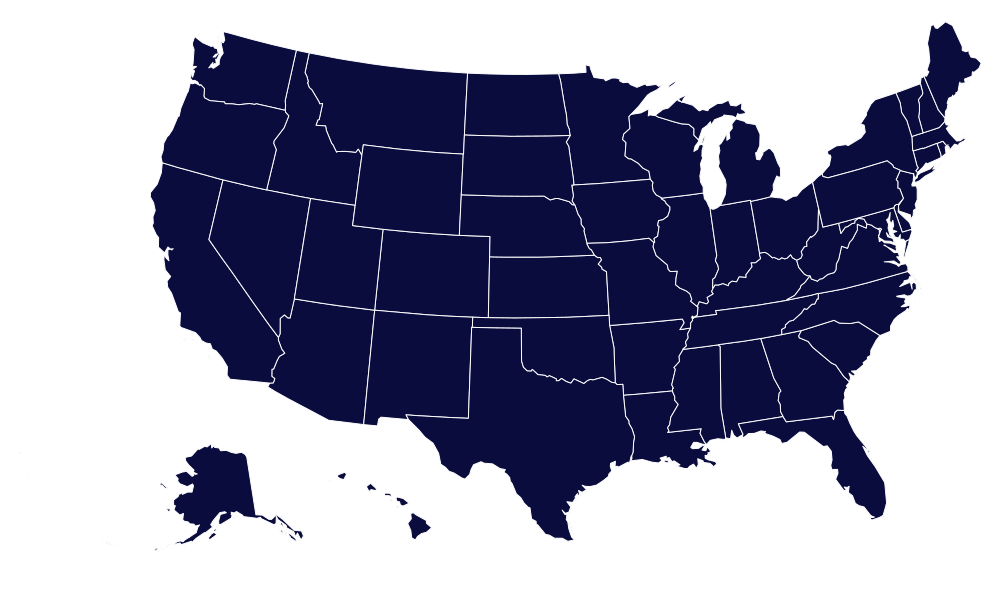
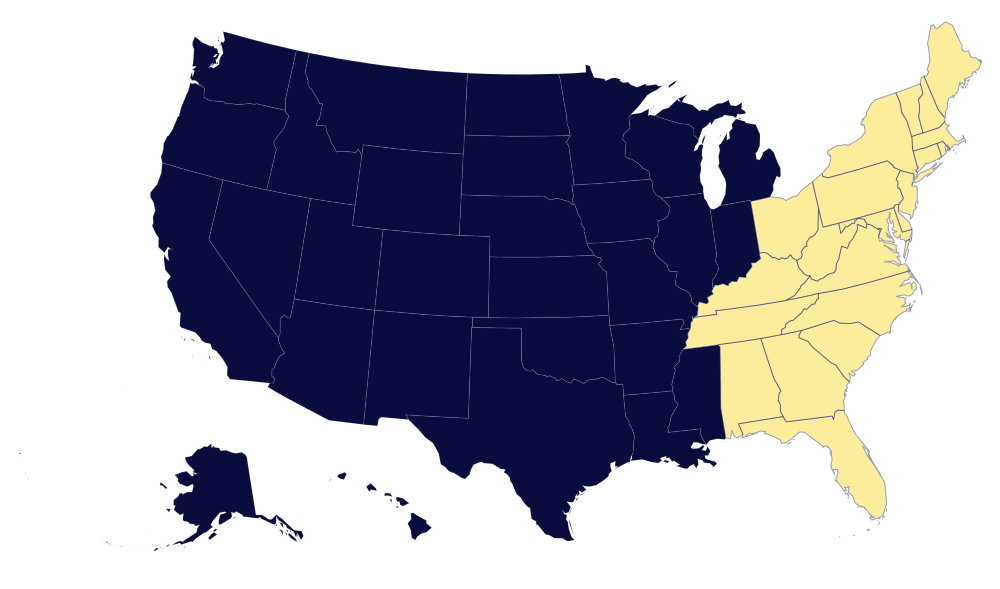
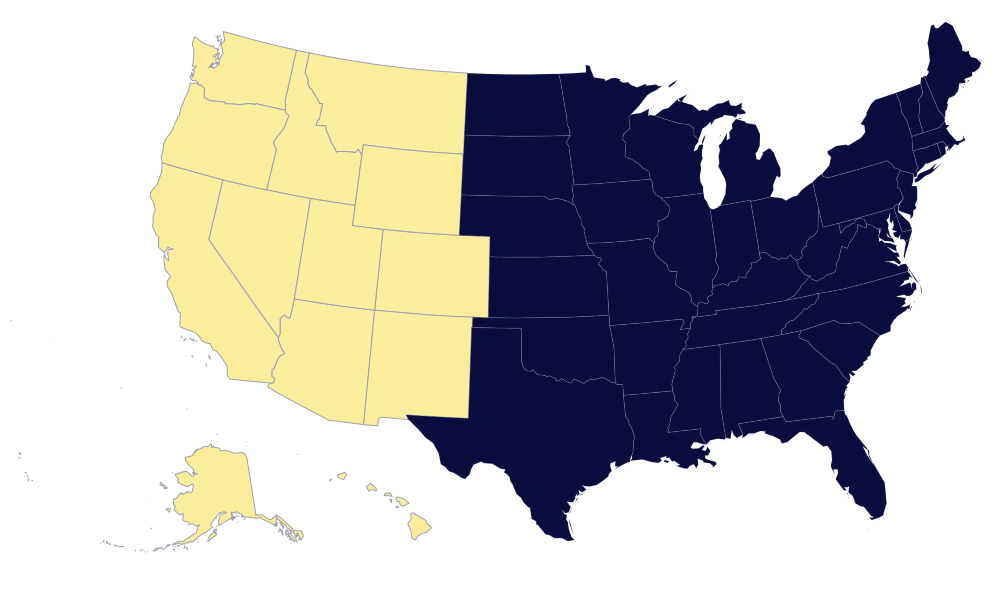
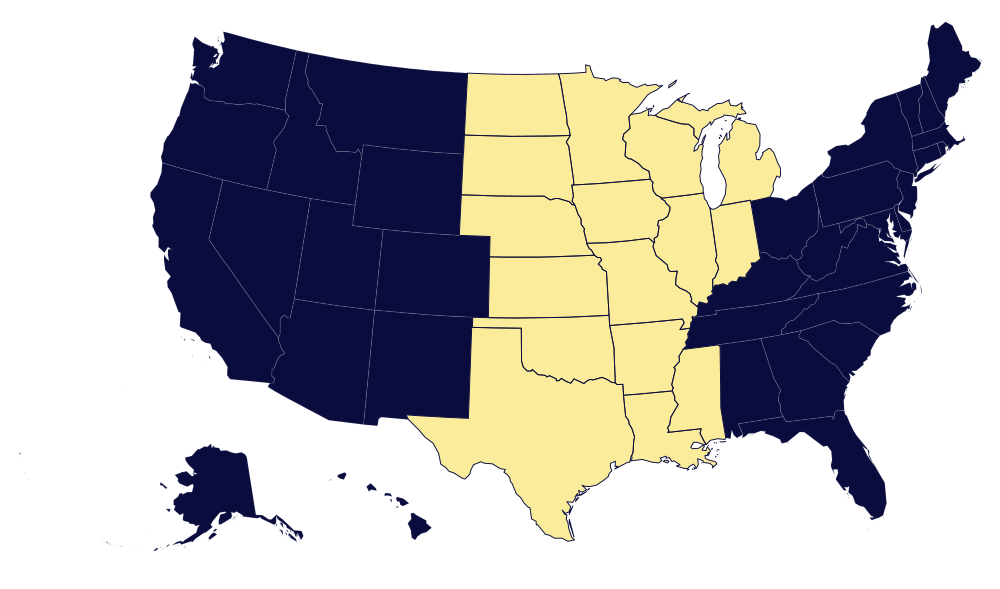
AVLS operate and has proven pool of AV technicians in major cities US Nationwide, such as Las Vegas, Los Angeles, Orlando, Dallas, San Antonio, Austin, Houston, Washington DC, Atlanta, New Orleans, Tennessee and more.
Please complete the form below and we will respond to you as soon as possible. We are available 24 hours a day to assist with your needs. We look forward to showing you what we can do toward the success of your next event.
EVENT INFORMATION
