





August 12, 2026
Nationwide AV Labor: What Event Companies Should Know
Quick Answer
Nationwide AV labor refers to skilled audio-visual technicians available for hire across multiple cities and states, providing consistent quality and expertise for events regardless of location. Event companies benefit from standardized service levels, vetted professionals, and streamlined coordination when producing events in unfamiliar markets. The key advantage is accessing reliable, qualified AV crews without the complexity of sourcing local talent independently.
Key Takeaways
What Is Nationwide AV Labor and Why Does It Matter for Events
Nationwide AV labor consists of professional audio-visual technicians who work across multiple geographic markets rather than being limited to a single city or region. These professionals travel to support events, conferences, and productions wherever needed, bringing standardized expertise and equipment knowledge.
For event companies, this approach solves several critical challenges. Local market limitations can leave you scrambling to find qualified technicians in smaller cities or during peak event seasons.
Quality inconsistency becomes a major risk when working with unfamiliar local crews who may have different skill levels or work standards.
Choose nationwide AV labor when you're producing events in multiple cities, need specialized skills not available locally, or want consistent service quality across all your productions. Avoid this approach for simple, single-day local events where established local relationships and lower travel costs make more sense.
The most significant benefit is risk reduction. Working with professional AV specialists who understand your equipment, protocols, and quality standards eliminates the uncertainty of local hiring.
How Much Does Nationwide AV Labor Cost for Different Event Sizes
AV labor costs vary significantly based on event complexity, location, and technician specialization.
Basic AV technicians typically charge $25-45 per hour, while specialized roles like lighting designers or system engineers command $75-150 per hour.
Small events (50-200 attendees) generally require 2-4 technicians and cost $2,000-5,000 total for labor. Medium events (200-1,000 attendees) need 4-8 technicians, with labor costs ranging $5,000-15,000. Large conventions (1,000+ attendees) can require 10-25+ technicians, pushing labor costs to $15,000-50,000 or more.
Additional cost factors include:
Budget planning tip: Allocate 30-40% of your total AV budget to labor costs. Equipment rental typically accounts for 40-50%, with the remainder covering management and contingencies.
Local AV Crew vs Nationwide AV Labor: Key Differences
Local AV crews offer lower travel costs and market familiarity but may lack specialized skills or availability during peak periods. Nationwide AV labor provides consistent quality and specialized expertise but comes with higher travel expenses and coordination complexity.
Local crews work best when:
Nationwide labor makes sense for:
Quality control represents the biggest difference. Local crews may vary significantly in skill level and work standards between markets. Nationwide AV technicians typically undergo standardized vetting and training processes.
Cost comparison: While hourly rates may be similar, nationwide labor includes travel expenses that can add 25-50% to total costs. However, reduced setup time and fewer technical issues often offset these expenses.
How to Hire Nationwide AV Labor for Your Event
Start with detailed requirements including event dates, venue specifications, equipment needs, and crew size estimates. This information helps providers give accurate quotes and availability confirmation.
The hiring process typically follows these steps:
Essential contract elements include:
Red flags to avoid: Providers who won't share technician credentials, refuse to provide references, or demand full payment upfront. Legitimate companies typically require 25-50% deposits with balance due after the event.
Required Qualifications for Nationwide AV Technicians
Industry certifications serve as the primary qualification benchmark for professional AV technicians. InfoComm/AVIXA CTS certification represents the industry standard for general AV competency, while manufacturer-specific certifications validate equipment expertise.
Essential certifications include:
Experience requirements typically include 2-5 years in live event production, with specializations requiring additional training. Safety certifications like OSHA 10-hour training become mandatory for rigging or elevated work.
Soft skills matter equally. Look for technicians with strong communication abilities, problem-solving experience, and professional appearance standards. Event production requires technical expertise combined with client-facing professionalism.
Verification process: Request certification copies, reference contacts, and background check confirmations. Reputable staffing companies maintain detailed technician databases with current credential status.
Booking Timeline: How Far in Advance to Secure AV Labor
Book nationwide AV labor 4-8 weeks minimum for large events or during peak seasons. Smaller productions may secure quality technicians with 2-3 weeks notice, but availability becomes increasingly limited.
Peak season considerations:
Booking strategy by event size:
Last-minute alternatives include accepting higher rates for available technicians or scaling back technical requirements. Some AV labor companies maintain emergency response teams, but expect 50-100% rate premiums.
Cancellation policies typically allow changes up to 2 weeks before the event with minimal penalties, but final week changes incur significant charges.
What Happens If Nationwide AV Labor Cancels Last Minute
Professional AV labor companies maintain backup systems to handle last-minute cancellations, but event companies should understand contingency procedures and contractual protections.
Typical replacement procedures:
Contract protections should include:
Your backup plan should identify local emergency contacts, simplified technical setups, and critical vs optional AV elements. Maintain relationships with venue AV departments who may provide emergency support.
Common cancellation causes include illness, family emergencies, transportation issues, or double-booking errors. Reputable companies track these metrics and maintain larger backup pools to minimize client impact.
Using the Same AV Crew for Multiple Events Across States
Consistent crews provide significant advantages for multi-city events, including reduced training time, familiar workflows, and standardized quality levels. However, logistics and costs require careful planning.
Benefits of crew consistency:
Logistical considerations:
Cost implications include travel expenses, per diems, and potential overtime for compressed schedules. Budget an additional 30-50% for multi-city crew travel compared to local hiring.
Optimal scenarios for consistent crews include corporate roadshows, touring productions, or conference series with similar technical requirements. Single-event productions rarely justify the additional coordination complexity.
Common Mistakes Event Companies Make with AV Labor
Underestimating crew size requirements represents the most frequent error, leading to rushed setups, stressed technicians, and potential safety issues. Budget 1.5x your initial crew estimate for complex productions.
Critical mistakes to avoid:
Inadequate advance booking - Waiting until 2-3 weeks before major events limits options and increases costs significantly
Unclear job descriptions - Vague requirements like "general AV support" prevent proper skill matching and create on-site confusion
Ignoring union requirements - Many convention centers mandate union labor, and non-compliance can halt your event
Insufficient technical documentation - Crews need detailed setup diagrams, equipment lists, and timeline specifications
Poor communication protocols - Failing to establish clear contact procedures and decision-making authority creates chaos during setup
Overlooking venue restrictions - Load-in times, noise limitations, and security requirements affect crew scheduling and costs
The most expensive mistake is hiring unqualified technicians to save money. Equipment damage, extended setup times, and client dissatisfaction far exceed the cost of skilled AV professionals.
Union vs Non-Union AV Labor Rates Nationwide
Union AV labor rates typically run 20-40% higher than non-union alternatives but offer standardized skill levels, established work rules, and dispute resolution procedures. Non-union crews provide more flexibility in scheduling and work assignments but with variable quality control.
Union rate examples (major markets):
Non-union equivalents:
Union advantages include:
Venue requirements often dictate your choice. Many convention centers, hotels, and major venues maintain exclusive union relationships. Check venue policies early in your planning process to avoid last-minute complications.
Geographic variations significantly impact rates. Union strongholds like New York, Chicago, and Las Vegas command premium pricing, while right-to-work states offer more competitive non-union options.
What's Included in Nationwide AV Labor Contracts
Comprehensive AV labor contracts protect both parties by clearly defining responsibilities, rates, and procedures. Standard contracts should specify hourly rates by skill level, overtime policies, travel arrangements, and equipment responsibilities.
Essential contract elements:
Rate structure - Base hourly rates, overtime multipliers, travel time compensation, and holiday premiums
Scope of work - Specific technical responsibilities, setup/strike duties, and equipment operation requirements
Travel provisions - Transportation reimbursement, hotel accommodations, meal per diems, and travel time compensation
Equipment liability - Damage responsibility limits, insurance requirements, and replacement procedures
Cancellation terms - Notice requirements, penalty structures, and force majeure provisions
Payment schedule - Deposit requirements, invoice timing, and payment terms
Additional provisions should cover dress codes, client interaction protocols, confidentiality requirements, and dispute resolution procedures. Safety requirements including OSHA compliance and venue-specific training become increasingly important.
Red flag contract terms include unlimited liability exposure, payment in full before services, or vague scope definitions. Professional companies use standardized contracts with clear, reasonable terms.
Finding Reliable AV Labor Companies in Unfamiliar Cities
Research and vetting become critical when working in new markets without established vendor relationships. Start with industry associations like InfoComm/AVIXA for member directories and regional recommendations.
Effective research strategies:
Industry referrals - Contact colleagues who've produced events in your target market for vendor recommendations
Venue partnerships - Ask venue AV managers about preferred labor providers and local market insights
Association directories - Use professional organization member lists to identify established companies
Online reviews - Check Google, Better Business Bureau, and industry forums for company reputations
Portfolio verification - Request recent client references and examples of similar event productions
Key qualification questions:
Local market knowledge proves valuable for venue-specific requirements, union relationships, and equipment sourcing. AV city guides can provide market-specific insights for major event destinations.
Equipment Problems: What to Expect and How AV Labor Handles Them
Equipment failures occur on 15-20% of events according to industry estimates, making technician problem-solving skills as important as setup expertise. Professional AV crews maintain troubleshooting protocols and backup equipment relationships to minimize disruptions.
Common equipment issues:
Professional response procedures:
Prevention strategies include pre-event equipment testing, redundant system design, and maintaining relationships with local rental houses for emergency equipment access. Experienced technicians can often prevent problems through proper system design and setup procedures.
Contract considerations should specify equipment failure response times, backup equipment availability, and cost responsibility for emergency rentals or extended labor hours.
FAQ
How much does nationwide AV labor typically cost per hour?
Basic AV technicians charge $25-45/hour, while specialized roles like lighting designers or system engineers command $75-150/hour. Union markets typically add 20-40% to these base rates.
Can I use the same AV crew for events in different states?
Yes, many nationwide AV labor companies coordinate crews across multiple states. This provides consistency but adds travel costs and requires careful scheduling between locations.
How far in advance should I book nationwide AV labor?
Book 4-8 weeks minimum for large events or peak seasons. Smaller productions may secure technicians with 2-3 weeks notice, but availability becomes limited.
What happens if my AV crew cancels at the last minute?
Professional companies maintain backup systems and should provide replacement technicians within 24-48 hours. Contracts should specify replacement procedures and rate protections.
Do I need union or non-union AV labor for my event?
This depends on your venue requirements. Many convention centers and major hotels require union labor. Check venue policies early in planning to avoid complications.
What certifications should nationwide AV technicians have?
Look for InfoComm/AVIXA CTS certification as the industry standard, plus manufacturer-specific credentials like Crestron, QSC, or lighting console certifications for specialized roles.
How do I find reliable AV labor companies in cities where I haven't worked before?
Start with industry association directories, venue referrals, and colleague recommendations. Verify credentials, insurance, and recent client references before booking.
What's included in a typical AV labor contract?
Contracts should specify hourly rates, overtime policies, travel arrangements, equipment responsibilities, cancellation terms, and payment schedules with clear scope definitions.
Can nationwide AV labor work with my existing equipment?
Professional technicians should be familiar with standard industry equipment. Provide detailed equipment lists and setup requirements during the booking process to ensure compatibility.
What should I do if equipment fails during my event?
Experienced AV crews maintain troubleshooting protocols and backup equipment relationships. Ensure your contract specifies equipment failure response times and emergency procedures.
Ready to Secure Professional AV Labor for Your Next Event?
Whether you're planning a single corporate meeting or a multi-city event tour, having the right AV professionals makes the difference between a seamless production and costly technical problems. Our nationwide network of certified AV technicians brings consistent quality and expertise to events across the country.
Contact us today to discuss your upcoming event requirements and get matched with qualified AV professionals who understand your technical needs and quality standards. Get started with your AV labor consultation.
Nationwide AV labor refers to skilled audio-visual technicians available for hire across multiple cities and states, providing consistent quality and expertise for events regardless of location. Event companies benefit from standardized service levels, vetted professionals, and streamlined coordination when producing events in unfamiliar markets. The key advantage is accessing reliable, qualified AV crews without the complexity of sourcing local talent independently.
Key Takeaways
- Nationwide AV labor provides consistent, professional technicians across multiple markets for seamless multi-city event production
- Cost ranges from $25-45/hour for basic technicians to $75-150/hour for specialized roles like lighting designers or system engineers
- Union vs non-union rates can vary by 20-40%, with union markets typically commanding higher wages but offering standardized skill levels
- Booking timeline should be 4-8 weeks minimum for large events, with 2-3 weeks possible for smaller productions
- Contracts must specify equipment responsibilities, overtime policies, travel requirements, and cancellation procedures
- Qualification standards include certifications from manufacturers like Crestron, QSC, or industry bodies like InfoComm/AVIXA
- Multi-event coordination allows the same crew to travel between cities, ensuring consistency and reducing training time
What Is Nationwide AV Labor and Why Does It Matter for Events
Nationwide AV labor consists of professional audio-visual technicians who work across multiple geographic markets rather than being limited to a single city or region. These professionals travel to support events, conferences, and productions wherever needed, bringing standardized expertise and equipment knowledge.
For event companies, this approach solves several critical challenges. Local market limitations can leave you scrambling to find qualified technicians in smaller cities or during peak event seasons.
Quality inconsistency becomes a major risk when working with unfamiliar local crews who may have different skill levels or work standards.
Choose nationwide AV labor when you're producing events in multiple cities, need specialized skills not available locally, or want consistent service quality across all your productions. Avoid this approach for simple, single-day local events where established local relationships and lower travel costs make more sense.
The most significant benefit is risk reduction. Working with professional AV specialists who understand your equipment, protocols, and quality standards eliminates the uncertainty of local hiring.
How Much Does Nationwide AV Labor Cost for Different Event Sizes
AV labor costs vary significantly based on event complexity, location, and technician specialization.
Basic AV technicians typically charge $25-45 per hour, while specialized roles like lighting designers or system engineers command $75-150 per hour.
Small events (50-200 attendees) generally require 2-4 technicians and cost $2,000-5,000 total for labor. Medium events (200-1,000 attendees) need 4-8 technicians, with labor costs ranging $5,000-15,000. Large conventions (1,000+ attendees) can require 10-25+ technicians, pushing labor costs to $15,000-50,000 or more.
Additional cost factors include:
- Travel expenses and per diems for out-of-market technicians
- Overtime rates (typically 1.5x after 8 hours, 2x after 12 hours)
- Union vs non-union wage scales
- Peak season premiums (20-30% higher during busy periods)
- Specialized certifications or security clearances
Budget planning tip: Allocate 30-40% of your total AV budget to labor costs. Equipment rental typically accounts for 40-50%, with the remainder covering management and contingencies.
Local AV Crew vs Nationwide AV Labor: Key Differences
Local AV crews offer lower travel costs and market familiarity but may lack specialized skills or availability during peak periods. Nationwide AV labor provides consistent quality and specialized expertise but comes with higher travel expenses and coordination complexity.
Local crews work best when:
- Your event is straightforward with standard AV requirements
- You have established relationships with reliable local providers
- Budget constraints make travel costs prohibitive
- The venue has preferred vendor relationships
Nationwide labor makes sense for:
- Complex productions requiring specialized skills
- Multi-city event tours needing consistent crews
- Markets where local talent is limited or unavailable
- Events with unique equipment or protocol requirements
Quality control represents the biggest difference. Local crews may vary significantly in skill level and work standards between markets. Nationwide AV technicians typically undergo standardized vetting and training processes.
Cost comparison: While hourly rates may be similar, nationwide labor includes travel expenses that can add 25-50% to total costs. However, reduced setup time and fewer technical issues often offset these expenses.
How to Hire Nationwide AV Labor for Your Event
Start with detailed requirements including event dates, venue specifications, equipment needs, and crew size estimates. This information helps providers give accurate quotes and availability confirmation.
The hiring process typically follows these steps:
- Request quotes from 2-3 reputable AV labor staffing services 4-8 weeks before your event
- Review technician profiles and certifications for key positions
- Confirm availability and backup options for critical roles
- Negotiate contracts covering rates, travel policies, and cancellation terms
- Schedule pre-event coordination calls with crew leads
Essential contract elements include:
- Hourly rates for different skill levels
- Overtime and meal break policies
- Travel expense reimbursement procedures
- Equipment damage liability terms
- Weather or force majeure cancellation policies
Red flags to avoid: Providers who won't share technician credentials, refuse to provide references, or demand full payment upfront. Legitimate companies typically require 25-50% deposits with balance due after the event.
Required Qualifications for Nationwide AV Technicians
Industry certifications serve as the primary qualification benchmark for professional AV technicians. InfoComm/AVIXA CTS certification represents the industry standard for general AV competency, while manufacturer-specific certifications validate equipment expertise.
Essential certifications include:
- Crestron programming for control system specialists
- QSC Q-SYS for digital audio system technicians
- Christie or Barco projector certifications for display specialists
- ETC or MA Lighting credentials for lighting technicians
- Shure or Sennheiser wireless system certifications
Experience requirements typically include 2-5 years in live event production, with specializations requiring additional training. Safety certifications like OSHA 10-hour training become mandatory for rigging or elevated work.
Soft skills matter equally. Look for technicians with strong communication abilities, problem-solving experience, and professional appearance standards. Event production requires technical expertise combined with client-facing professionalism.
Verification process: Request certification copies, reference contacts, and background check confirmations. Reputable staffing companies maintain detailed technician databases with current credential status.
Booking Timeline: How Far in Advance to Secure AV Labor
Book nationwide AV labor 4-8 weeks minimum for large events or during peak seasons. Smaller productions may secure quality technicians with 2-3 weeks notice, but availability becomes increasingly limited.
Peak season considerations:
- Corporate meeting season (September-November, January-March) requires earliest booking
- Trade show circuits create regional shortages during major conventions
- Holiday periods see reduced availability and premium pricing
- Summer festivals compete for outdoor event specialists
Booking strategy by event size:
- Small events (2-4 techs): 2-3 weeks minimum
- Medium events (5-10 techs): 4-6 weeks recommended
- Large productions (10+ techs): 6-8 weeks essential
- Multi-day conventions: 8-12 weeks for full crew coordination
Last-minute alternatives include accepting higher rates for available technicians or scaling back technical requirements. Some AV labor companies maintain emergency response teams, but expect 50-100% rate premiums.
Cancellation policies typically allow changes up to 2 weeks before the event with minimal penalties, but final week changes incur significant charges.
What Happens If Nationwide AV Labor Cancels Last Minute
Professional AV labor companies maintain backup systems to handle last-minute cancellations, but event companies should understand contingency procedures and contractual protections.
Typical replacement procedures:
- 24-48 hour notice: Full replacement with equivalent or higher-skilled technician
- Same-day emergencies: Best available substitute, potentially at different skill level
- No replacement available: Partial refund and assistance finding alternative solutions
Contract protections should include:
- Replacement guarantees for cancellations with 24+ hours notice
- Rate protection ensuring substitutes don't cost more than original booking
- Skill level minimums preventing unqualified replacements
- Cancellation penalties compensating for last-minute disruptions
Your backup plan should identify local emergency contacts, simplified technical setups, and critical vs optional AV elements. Maintain relationships with venue AV departments who may provide emergency support.
Common cancellation causes include illness, family emergencies, transportation issues, or double-booking errors. Reputable companies track these metrics and maintain larger backup pools to minimize client impact.
Using the Same AV Crew for Multiple Events Across States
Consistent crews provide significant advantages for multi-city events, including reduced training time, familiar workflows, and standardized quality levels. However, logistics and costs require careful planning.
Benefits of crew consistency:
- Faster setup times due to familiar equipment and procedures
- Reduced technical issues from experienced team coordination
- Consistent quality across all event locations
- Simplified management with established communication patterns
Logistical considerations:
- Travel scheduling between cities with adequate rest periods
- Equipment coordination ensuring gear arrives when crews do
- Hotel and transportation arrangements for multi-city tours
- Union jurisdiction compliance when crossing regional boundaries
Cost implications include travel expenses, per diems, and potential overtime for compressed schedules. Budget an additional 30-50% for multi-city crew travel compared to local hiring.
Optimal scenarios for consistent crews include corporate roadshows, touring productions, or conference series with similar technical requirements. Single-event productions rarely justify the additional coordination complexity.
Common Mistakes Event Companies Make with AV Labor
Underestimating crew size requirements represents the most frequent error, leading to rushed setups, stressed technicians, and potential safety issues. Budget 1.5x your initial crew estimate for complex productions.
Critical mistakes to avoid:
Inadequate advance booking - Waiting until 2-3 weeks before major events limits options and increases costs significantly
Unclear job descriptions - Vague requirements like "general AV support" prevent proper skill matching and create on-site confusion
Ignoring union requirements - Many convention centers mandate union labor, and non-compliance can halt your event
Insufficient technical documentation - Crews need detailed setup diagrams, equipment lists, and timeline specifications
Poor communication protocols - Failing to establish clear contact procedures and decision-making authority creates chaos during setup
Overlooking venue restrictions - Load-in times, noise limitations, and security requirements affect crew scheduling and costs
The most expensive mistake is hiring unqualified technicians to save money. Equipment damage, extended setup times, and client dissatisfaction far exceed the cost of skilled AV professionals.
Union vs Non-Union AV Labor Rates Nationwide
Union AV labor rates typically run 20-40% higher than non-union alternatives but offer standardized skill levels, established work rules, and dispute resolution procedures. Non-union crews provide more flexibility in scheduling and work assignments but with variable quality control.
Union rate examples (major markets):
- Audio technicians: $45-65/hour
- Lighting technicians: $50-70/hour
- Video specialists: $55-75/hour
- System engineers: $70-90/hour
Non-union equivalents:
- Audio technicians: $30-45/hour
- Lighting technicians: $35-50/hour
- Video specialists: $40-60/hour
- System engineers: $55-75/hour
Union advantages include:
- Standardized training and certification requirements
- Established overtime and break policies
- Professional conduct standards and dispute procedures
- Pension and benefit contributions
Venue requirements often dictate your choice. Many convention centers, hotels, and major venues maintain exclusive union relationships. Check venue policies early in your planning process to avoid last-minute complications.
Geographic variations significantly impact rates. Union strongholds like New York, Chicago, and Las Vegas command premium pricing, while right-to-work states offer more competitive non-union options.
What's Included in Nationwide AV Labor Contracts
Comprehensive AV labor contracts protect both parties by clearly defining responsibilities, rates, and procedures. Standard contracts should specify hourly rates by skill level, overtime policies, travel arrangements, and equipment responsibilities.
Essential contract elements:
Rate structure - Base hourly rates, overtime multipliers, travel time compensation, and holiday premiums
Scope of work - Specific technical responsibilities, setup/strike duties, and equipment operation requirements
Travel provisions - Transportation reimbursement, hotel accommodations, meal per diems, and travel time compensation
Equipment liability - Damage responsibility limits, insurance requirements, and replacement procedures
Cancellation terms - Notice requirements, penalty structures, and force majeure provisions
Payment schedule - Deposit requirements, invoice timing, and payment terms
Additional provisions should cover dress codes, client interaction protocols, confidentiality requirements, and dispute resolution procedures. Safety requirements including OSHA compliance and venue-specific training become increasingly important.
Red flag contract terms include unlimited liability exposure, payment in full before services, or vague scope definitions. Professional companies use standardized contracts with clear, reasonable terms.
Finding Reliable AV Labor Companies in Unfamiliar Cities
Research and vetting become critical when working in new markets without established vendor relationships. Start with industry associations like InfoComm/AVIXA for member directories and regional recommendations.
Effective research strategies:
Industry referrals - Contact colleagues who've produced events in your target market for vendor recommendations
Venue partnerships - Ask venue AV managers about preferred labor providers and local market insights
Association directories - Use professional organization member lists to identify established companies
Online reviews - Check Google, Better Business Bureau, and industry forums for company reputations
Portfolio verification - Request recent client references and examples of similar event productions
Key qualification questions:
- How long have you operated in this market?
- What certifications do your technicians maintain?
- Can you provide references from similar events?
- What backup procedures handle last-minute issues?
- Do you carry appropriate insurance coverage?
Local market knowledge proves valuable for venue-specific requirements, union relationships, and equipment sourcing. AV city guides can provide market-specific insights for major event destinations.
Equipment Problems: What to Expect and How AV Labor Handles Them
Equipment failures occur on 15-20% of events according to industry estimates, making technician problem-solving skills as important as setup expertise. Professional AV crews maintain troubleshooting protocols and backup equipment relationships to minimize disruptions.
Common equipment issues:
- Signal routing problems from incorrect cable connections or configuration errors
- Audio feedback due to microphone placement or system gain structure issues
- Video display failures including projector lamp burnouts or signal compatibility problems
- Network connectivity issues affecting streaming or remote participation features
- Power distribution problems from overloaded circuits or faulty connections
Professional response procedures:
- Immediate assessment to determine if issues affect critical event functions
- Backup activation using redundant systems or alternative signal paths
- Equipment substitution from on-site spares or emergency rental sources
- Client communication with realistic timelines and alternative options
- Post-event analysis to prevent similar issues in future productions
Prevention strategies include pre-event equipment testing, redundant system design, and maintaining relationships with local rental houses for emergency equipment access. Experienced technicians can often prevent problems through proper system design and setup procedures.
Contract considerations should specify equipment failure response times, backup equipment availability, and cost responsibility for emergency rentals or extended labor hours.
FAQ
How much does nationwide AV labor typically cost per hour?
Basic AV technicians charge $25-45/hour, while specialized roles like lighting designers or system engineers command $75-150/hour. Union markets typically add 20-40% to these base rates.
Can I use the same AV crew for events in different states?
Yes, many nationwide AV labor companies coordinate crews across multiple states. This provides consistency but adds travel costs and requires careful scheduling between locations.
How far in advance should I book nationwide AV labor?
Book 4-8 weeks minimum for large events or peak seasons. Smaller productions may secure technicians with 2-3 weeks notice, but availability becomes limited.
What happens if my AV crew cancels at the last minute?
Professional companies maintain backup systems and should provide replacement technicians within 24-48 hours. Contracts should specify replacement procedures and rate protections.
Do I need union or non-union AV labor for my event?
This depends on your venue requirements. Many convention centers and major hotels require union labor. Check venue policies early in planning to avoid complications.
What certifications should nationwide AV technicians have?
Look for InfoComm/AVIXA CTS certification as the industry standard, plus manufacturer-specific credentials like Crestron, QSC, or lighting console certifications for specialized roles.
How do I find reliable AV labor companies in cities where I haven't worked before?
Start with industry association directories, venue referrals, and colleague recommendations. Verify credentials, insurance, and recent client references before booking.
What's included in a typical AV labor contract?
Contracts should specify hourly rates, overtime policies, travel arrangements, equipment responsibilities, cancellation terms, and payment schedules with clear scope definitions.
Can nationwide AV labor work with my existing equipment?
Professional technicians should be familiar with standard industry equipment. Provide detailed equipment lists and setup requirements during the booking process to ensure compatibility.
What should I do if equipment fails during my event?
Experienced AV crews maintain troubleshooting protocols and backup equipment relationships. Ensure your contract specifies equipment failure response times and emergency procedures.
Ready to Secure Professional AV Labor for Your Next Event?
Whether you're planning a single corporate meeting or a multi-city event tour, having the right AV professionals makes the difference between a seamless production and costly technical problems. Our nationwide network of certified AV technicians brings consistent quality and expertise to events across the country.
Contact us today to discuss your upcoming event requirements and get matched with qualified AV professionals who understand your technical needs and quality standards. Get started with your AV labor consultation.
AVLS Nationwide Services
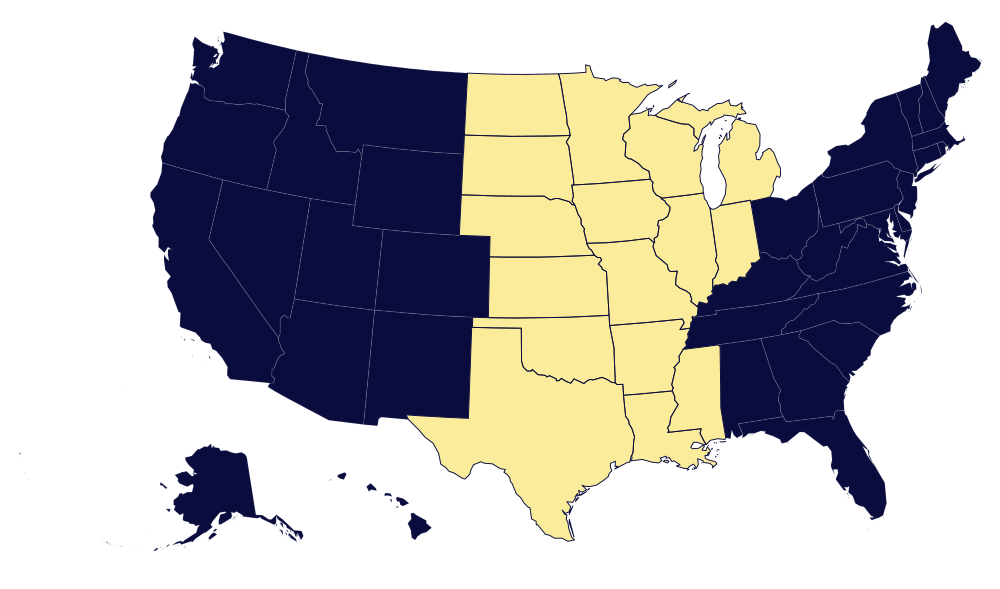
Central States
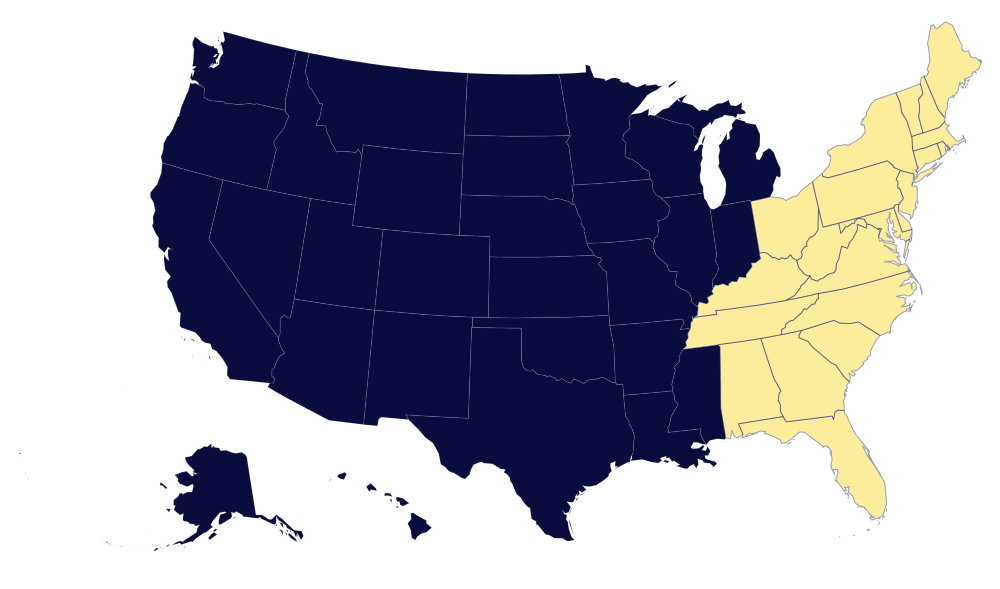
East Coast
*COMING SOON
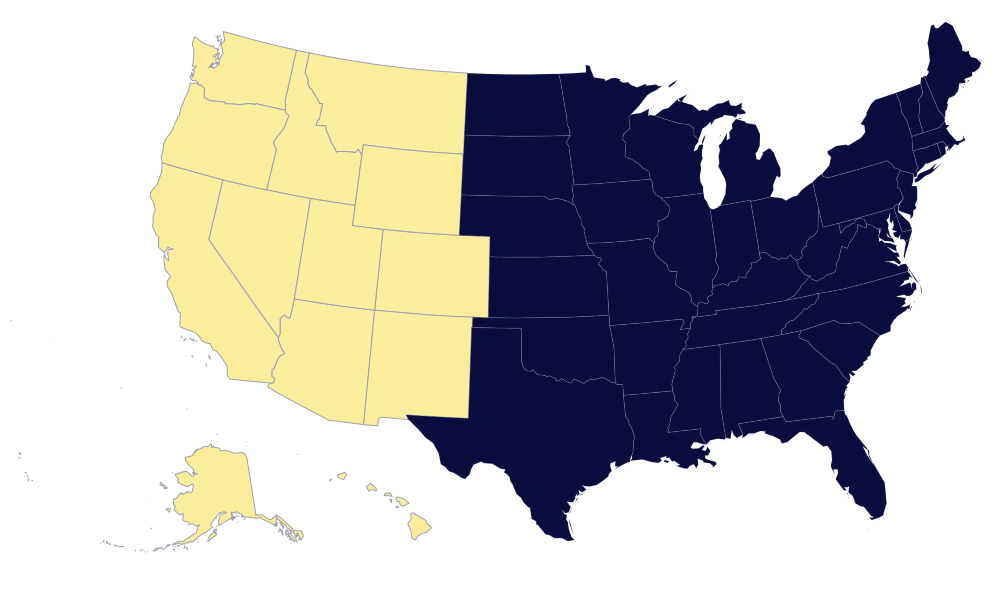
West Coast



*COMING SOON
East Coast
Central States
West Coast
AVLS Nationwide Services
CONTACT US
When your event matters, trust your audio visual labor needs to AV Labor Source.
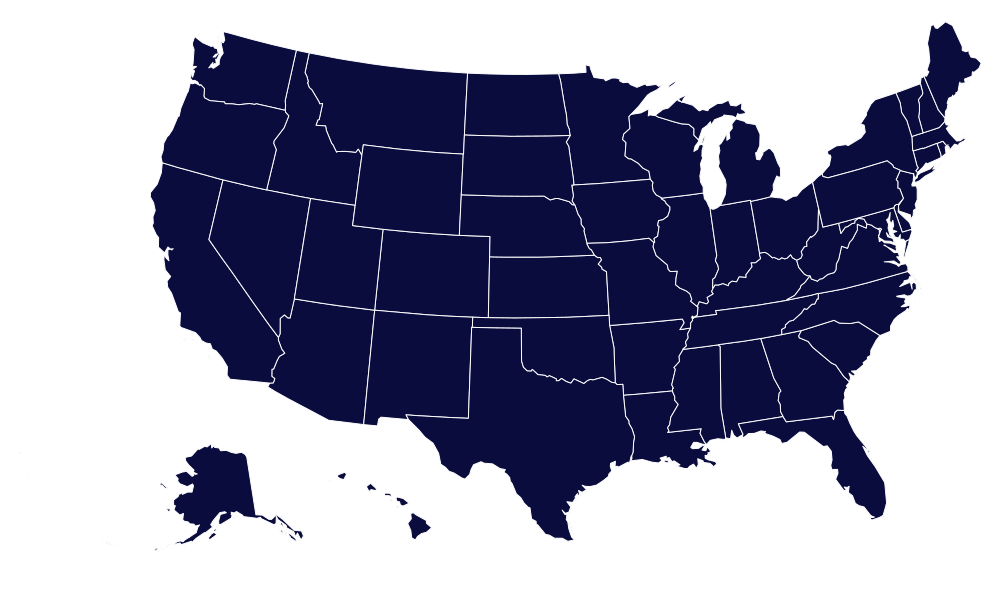
AVLS operate and has proven pool of AV technicians in major cities US Nationwide, such as Las Vegas, Los Angeles, Orlando, Dallas, San Antonio, Austin, Houston, Washington DC, Atlanta, New Orleans, Tennessee and more.
Please complete the form below and we will respond to you as soon as possible. We are available 24 hours a day to assist with your needs. We look forward to showing you what we can do toward the success of your next event.
AVLS operate and has proven pool of AV technicians in major cities US Nationwide, such as Las Vegas, Los Angeles, Orlando, Dallas, San Antonio, Austin, Houston, Washington DC, Atlanta, New Orleans, Tennessee and more.
Please complete the form below and we will respond to you as soon as possible. We are available 24 hours a day to assist with your needs. We look forward to showing you what we can do toward the success of your next event.
EVENT INFORMATION
