





July 17, 2026
Stage Lighting Setup Checklist for Conferences and Expos
Poor stage lighting ruins 67% of conference presentations according to event production data, yet most organizers only discover lighting problems when speakers take the stage. A comprehensive stage lighting setup checklist for conferences and expos ensures proper illumination, eliminates technical failures, and creates professional presentations that engage audiences effectively.
Key Takeaways
What Are the Essential Stage Lights You Need for a Conference
Conference lighting requires three fundamental layers: key lighting for speaker illumination, fill lighting to reduce shadows, and background lighting for stage depth. The minimum setup includes two LED panel lights positioned at 45-degree angles, one background wash light, and backup power connections.
Core Lighting Equipment:
Choose LED fixtures over traditional halogen lights for conferences because they produce less heat, consume 80% less energy, and maintain consistent color temperature throughout long events. Halogen lights create uncomfortable heat for speakers and cause color shifts as they warm up.
The biggest mistake conference organizers make is underestimating the light output needed for video recording. If your event includes livestreaming or recording, increase your lighting budget by 50% and add dedicated camera-facing fill lights.
How Do You Set Up Stage Lighting for a Small Expo Booth
Small expo booth lighting focuses on product visibility and attendee attraction rather than speaker illumination. Position two adjustable LED spotlights at opposite corners of your booth, angled inward at 30 degrees to create even coverage without harsh shadows on displayed materials.
Booth Lighting Setup Steps:
For expo booths under 100 square feet, battery-powered LED panels eliminate the need for electrical connections and reduce setup time by 75%. Larger booths require hardwired connections but offer more consistent power for multi-day events.
Common Booth Lighting Mistakes:
Working with experienced AV technicians ensures proper booth lighting that attracts visitors while maintaining professional appearance standards.
LED vs Traditional Stage Lights for Events: Which Should You Choose
LED stage lights outperform traditional halogen and incandescent fixtures in energy efficiency, heat output, and color consistency, making them the preferred choice for 85% of modern conference venues. Traditional lights still excel in specific applications requiring extremely high light output or warm color rendering.
Choose LED lights when:
Choose traditional lights when:
The total cost of ownership favors LED lights for events lasting more than two days, despite higher rental rates, because they reduce electrical costs and eliminate bulb replacement fees.
Professional Stage Lighting Rental Costs for Conferences
Professional stage lighting rental costs range from $500 for basic conference setups to $5,000+ for large expo halls, with most corporate events falling between $1,200-$2,500 including equipment, delivery, and basic setup services.
Typical Rental Price Ranges:
Additional Cost Factors:
Rental companies typically charge separately for delivery ($100-$300), setup labor ($75-$125 per hour per technician), and strike/removal services. Get quotes from multiple vendors and ask about package deals that bundle equipment with professional AV technician services.
Budget an additional 15% contingency for last-minute changes or equipment additions that commonly arise during event setup.
Why Your Stage Lighting Is Casting Shadows on Speakers
Speaker shadows occur when key lights are positioned too close together or directly above the presentation area, creating single-point illumination that blocks light when speakers move between the fixture and background. Proper lighting requires multiple angles to eliminate shadow zones.
Shadow Prevention Solutions:
Common Shadow-Causing Mistakes:
The "triangle lighting" method eliminates most shadow problems by positioning three light sources: two key lights at 45-degree angles and one fill light directly behind the camera or audience position. This creates even illumination from multiple directions.
If shadows persist after repositioning, the issue is usually insufficient total light output. Add more fixtures rather than moving existing lights closer, which worsens the shadow problem.
Stage Lighting Setup for Virtual Conference Streaming
Virtual conference streaming requires 2-3 times more light output than in-person events because cameras need higher illumination levels for clean video quality. Position key lights closer to speakers (6-8 feet) and add dedicated camera-facing fill lights to prevent unflattering shadows on video.
Streaming-Optimized Lighting Setup:
Critical Streaming Considerations:
Test your lighting setup with the actual streaming cameras and software before the event. What looks good to human eyes often appears too dark or color-shifted on camera. Many corporate event AV specialists recommend a full technical rehearsal with lighting adjustments based on camera feedback.
The biggest streaming lighting mistake is relying on venue house lights, which create uneven coverage and poor color rendering for video production.
Can You Use Regular Lights Instead of Stage Lights for Conferences
Regular LED bulbs and household fixtures can work for very small conferences under 50 attendees, but they lack the light output, beam control, and color consistency needed for professional presentations. Standard room lighting produces 200-400 lux while conferences need 800-1200 lux on speakers.
When Regular Lights Might Work:
Why Regular Lights Usually Fail:
Professional Stage Light Advantages:
For conferences requiring any level of professionalism, invest in proper stage lighting or work with experienced AV crews who bring appropriate equipment. The cost difference between amateur and professional lighting is minimal compared to the impact on audience perception.
How to Position Lights to Avoid Glare on Projection Screens
Screen glare elimination requires positioning lights below the projection plane and using barn doors or flags to control light spill. Never place lights where their beam path intersects with the projection surface, and maintain at least 15 degrees of separation between light angles and screen position.
Glare Prevention Techniques:
Screen-Safe Lighting Positions:
Critical Measurements:
The most effective approach combines lower-positioned key lights with careful barn door adjustment. Many venues require professional lighting technicians to properly balance speaker illumination with projection visibility.
Test all lighting positions during setup with projectors running at full brightness to identify and eliminate any glare issues before the event begins.
Best Color Temperature for Conference Stage Lighting
Conference stage lighting performs best at 4000K-5000K color temperature, which provides natural-looking skin tones while maintaining alertness and professional appearance. Avoid temperatures below 3000K (too warm/sleepy) or above 6000K (harsh/clinical) for speaker-focused events.
Color Temperature Guidelines:
Color Consistency Requirements:
All fixtures must use identical color temperature ratings within 200K tolerance. Mixed temperatures create unflattering color casts on speakers and cause camera white balance problems during recording.
Special Considerations:
Use a color temperature meter during setup to verify fixture consistency. Many LED panels allow adjustment between 3200K-5600K, making it easy to fine-tune for optimal appearance.
Do You Need a Lighting Technician or Can You Do It Yourself
Small conferences under 100 attendees with basic lighting needs can often manage DIY setups using plug-and-play LED panels, but events requiring truss mounting, DMX control, or complex positioning benefit significantly from professional technicians who prevent costly mistakes and safety issues.
DIY-Friendly Scenarios:
Professional Technician Required:
Cost-Benefit Analysis:
Professional technicians typically cost $400-$800 per day but prevent equipment damage, ensure safety compliance, and optimize lighting quality. DIY mistakes commonly result in $500-$2,000 in damaged rental equipment or venue penalties.
Skills Assessment Questions:
If you answer "no" to any of these questions, hire professionals. Many AV staffing services provide experienced lighting technicians who bring both equipment knowledge and venue-specific expertise.
The middle ground involves hiring technicians for setup and strike while managing simple operations yourself during the event.
How Far Should Stage Lights Be from Presenters
Stage lights should be positioned 8-12 feet from presenters for optimal illumination without creating harsh shadows or uncomfortable heat. Closer positioning increases light intensity but creates unflattering shadows, while distances over 15 feet require significantly more powerful fixtures to achieve proper exposure levels.
Distance Guidelines by Light Type:
Positioning Calculations:
The inverse square law means doubling the distance reduces light intensity by 75%. A 200-watt LED at 6 feet provides the same illumination as an 800-watt fixture at 12 feet, making closer positioning more energy-efficient when heat and shadows aren't concerns.
Safety and Comfort Factors:
Angle Considerations:
Combine distance with 45-degree positioning angles for best results. Lights positioned 10 feet away at 45-degree angles provide even illumination while minimizing shadows and maintaining comfortable presenter conditions.
Use light meters during setup to measure actual illumination levels and adjust distance accordingly. Target 800-1200 lux on presenter faces for professional appearance.
What Happens If You Don't Have Enough Stage Lighting
Insufficient stage lighting creates poor visibility, unflattering shadows, and unprofessional appearance that reduces audience engagement and makes video recording unusable. Speakers appear dim or silhouetted against brighter backgrounds, while facial features become difficult to distinguish beyond the first few rows.
Consequences of Inadequate Lighting:
Quick Solutions for Insufficient Lighting:
Minimum Lighting Standards:
Prevention Strategies:
Calculate lighting requirements during venue visits, not during setup. A 300-person conference typically needs 2000-3000 watts of LED lighting distributed across 8-12 fixtures for professional results.
Emergency lighting rentals cost 50-100% more than planned bookings, making proper advance planning essential for budget control.
Stage Lighting Setup: Outdoor Conference vs Indoor Venue Requirements
Outdoor conference lighting requires 3-5 times more light output than indoor venues to compete with natural sunlight, plus weather-resistant equipment rated IP65 or higher for protection against rain and dust. Indoor venues offer controlled environments but may have power limitations and rigging restrictions.
Outdoor Lighting Challenges:
Indoor Venue Advantages:
Outdoor Lighting Equipment Requirements:
• IP65-rated fixtures minimum
• Generator with 50% power overhead
• Ground-fault circuit interrupters (GFCI)
• Weighted truss bases (500+ lbs each)
• Backup equipment for weather delays
Cost Differences:
Outdoor events typically cost 2-3 times more for lighting due to higher-power requirements, weather-resistant equipment, and additional safety measures. Factor generator rental ($200-$500/day) and extra crew time for complex setups.
Timing Considerations:
How to Test Stage Lighting Before Your Event Starts
Stage lighting testing should occur 2-4 hours before attendees arrive, allowing time for adjustments and equipment replacement if needed. Create a systematic checklist covering power, positioning, color balance, and control systems to identify issues while solutions are still possible.
Pre-Event Testing Checklist:
Power and Connectivity (30 minutes)
Positioning and Coverage (45 minutes)
Color and Quality (30 minutes)
Control Systems (15 minutes)
Documentation Process:
Common Testing Oversights:
Many organizers test lighting without people on stage, missing how speakers affect light distribution and shadow patterns. Always test with actual presenters or stand-ins wearing similar clothing colors.
Schedule testing during similar ambient light conditions as your event. Morning setup for evening events can miss daylight interference issues that affect afternoon presentations.
Frequently Asked Questions
How many lights do I need for a 200-person conference?
A 200-person conference typically requires 6-10 LED fixtures: 2-3 key lights for speaker illumination, 2-3 fill lights for shadow control, 2-3 background wash lights, and 1-2 backup fixtures. Total power should be 1500-2500 watts distributed across multiple positions.
Can I rent just the lighting equipment without technicians?
Yes, most rental companies offer equipment-only packages, but you're responsible for setup, operation, and potential damage. Equipment-only rentals cost 40-60% less but require technical knowledge and increase liability risks for improper installation.
What's the difference between wash lights and spot lights for conferences?
Wash lights create wide, even coverage for backgrounds and general illumination, while spot lights provide focused beams for speaker highlighting. Conferences need both: spots for key lighting and washes for fill and background coverage.
How do I prevent lights from interfering with wireless mi
crophones?
Use LED fixtures instead of fluorescent lights, which can cause RF interference. Maintain 6+ feet between light fixtures and wireless receiver antennas. Cheap LED drivers sometimes create interference, so specify professional-grade equipment.
Should conference lighting be the same brightness throughout the event?
No, adjust lighting levels for different presentation types. Increase brightness during Q&A sessions for audience visibility, dim slightly during video presentations, and use full intensity for keynote speeches and panel discussions.
What backup lighting should I have for critical conferences?
Plan backup fixtures for key positions (typically 25% extra equipment), backup power sources (UPS or generator), and backup control methods (manual switches if DMX fails). Critical events need redundancy in all lighting systems.
How early should I book conference lighting equipment?
Book 4-6 weeks in advance for standard equipment, 8-12 weeks for peak seasons (spring conference season, holiday parties). Last-minute bookings cost 25-50% more and limit equipment selection.
Can I use colored lighting for corporate conferences?
Use colored lighting sparingly for backgrounds or accent lighting only. Keep speaker lighting neutral (3200K-5600K) for professional appearance. Colored key lighting creates unflattering skin tones and appears unprofessional.
What lighting works best for hybrid conferences with in-person and virtual attendees?
Hybrid events need higher light levels (1200+ lux) optimized for cameras, consistent color temperature (5000K), and additional fill lighting to eliminate shadows that appear worse on video than in person.
How do I calculate electrical requirements for conference lighting?
Add total wattage of all fixtures plus 20% safety margin. Divide by voltage (typically 120V) to get amperage. Most venues provide 15-20 amp circuits, so plan multiple circuits for loads over 12 amps total.
Should I use battery-powered or plug-in lights for conferences?
Use plug-in lights for events over 4 hours or fixtures requiring high output. Battery lights work for short presentations, backup situations, or venues with limited electrical access. Battery life rarely exceeds 6-8 hours at full brightness.
What's the most common conference lighting mistake to avoid?
The biggest mistake is insufficient testing time before the event. Allow minimum 2 hours for lighting setup and testing, with access to the venue during similar ambient light conditions as your actual event timing.
Conclusion
Proper stage lighting transforms conferences from amateur presentations into professional, engaging experiences that captivate audiences and enhance speaker performance. A comprehensive stage lighting setup checklist for conferences and expos ensures consistent illumination, eliminates technical failures, and creates the visual foundation for successful events.
The key elements include selecting appropriate LED fixtures with 4000K-5000K color temperature, positioning lights at 45-degree angles 8-12 feet from speakers, and maintaining 800-1200 lux illumination levels for optimal visibility. Professional equipment rental typically costs $1,200-$2,500 for medium conferences, while proper testing 2-4 hours before events prevents 90% of lighting problems.
Remember that virtual conferences require significantly higher light output, outdoor events need weather-resistant equipment with 3-5 times more power, and professional technicians become essential for complex setups or venues requiring specialized rigging. The investment in proper lighting pays dividends through improved audience engagement, better video quality, and enhanced professional credibility.
Start planning your lighting requirements during venue selection, not during event setup. Calculate power needs, test equipment compatibility, and schedule professional support well in advance to ensure flawless execution when your speakers take the stage.
Need Professional Lighting Support for Your Next Conference?
Planning a conference or expo and want to ensure perfect lighting execution? AV Labor Source connects you with experienced lighting technicians and complete equipment packages nationwide. Our certified professionals handle everything from small corporate meetings to large-scale conferences, ensuring your speakers look their best and your event maintains professional standards.
Contact us today for lighting consultation, equipment rental, and technical staffing solutions tailored to your specific event needs: Get Your Lighting Quote
Key Takeaways
- Essential conference lighting includes key lights, fill lights, and background illumination with 3200K-5600K color temperature
- LED fixtures offer 80% energy savings compared to traditional halogen lights and provide better color consistency
- Professional lighting rental costs range from $500-$5,000 depending on venue size and equipment complexity
- Proper light positioning requires 45-degree angles and 8-12 foot distances to eliminate shadows and screen glare
- Virtual conference streaming demands higher light output and careful white balance for camera optimization
- DIY lighting setups work for small events but professional technicians prevent costly mistakes at large conferences
- Pre-event testing identifies 90% of lighting issues before attendees arrive
What Are the Essential Stage Lights You Need for a Conference
Conference lighting requires three fundamental layers: key lighting for speaker illumination, fill lighting to reduce shadows, and background lighting for stage depth. The minimum setup includes two LED panel lights positioned at 45-degree angles, one background wash light, and backup power connections.
Core Lighting Equipment:
- Key Lights: Two 200-watt LED panels or spotlights for primary speaker illumination
- Fill Lights: Softer 100-watt panels to eliminate harsh shadows on faces
- Background Wash: Wide-beam LED strips or wash lights for stage backdrop
- Backup Lights: Secondary fixtures in case of equipment failure
- Control Console: Basic DMX controller or manual dimmer switches
Choose LED fixtures over traditional halogen lights for conferences because they produce less heat, consume 80% less energy, and maintain consistent color temperature throughout long events. Halogen lights create uncomfortable heat for speakers and cause color shifts as they warm up.
The biggest mistake conference organizers make is underestimating the light output needed for video recording. If your event includes livestreaming or recording, increase your lighting budget by 50% and add dedicated camera-facing fill lights.
How Do You Set Up Stage Lighting for a Small Expo Booth
Small expo booth lighting focuses on product visibility and attendee attraction rather than speaker illumination. Position two adjustable LED spotlights at opposite corners of your booth, angled inward at 30 degrees to create even coverage without harsh shadows on displayed materials.
Booth Lighting Setup Steps:
- Measure your booth space - Standard 10x10 booths need 400-600 watts total output
- Install corner-mounted lights - Use clamp-on LED spots with adjustable arms
- Add accent lighting - LED strip lights under counters or behind displays
- Test from visitor perspective - Walk through your booth to check for glare or dark spots
- Adjust color temperature - Use 4000K-5000K for product displays, 3200K for warmer ambiance
For expo booths under 100 square feet, battery-powered LED panels eliminate the need for electrical connections and reduce setup time by 75%. Larger booths require hardwired connections but offer more consistent power for multi-day events.
Common Booth Lighting Mistakes:
- Positioning lights too high, creating unflattering shadows on staff faces
- Using cool white LEDs (6500K+) that make products appear harsh or clinical
- Forgetting to light vertical display surfaces, leaving graphics poorly visible
Working with experienced AV technicians ensures proper booth lighting that attracts visitors while maintaining professional appearance standards.
LED vs Traditional Stage Lights for Events: Which Should You Choose
LED stage lights outperform traditional halogen and incandescent fixtures in energy efficiency, heat output, and color consistency, making them the preferred choice for 85% of modern conference venues. Traditional lights still excel in specific applications requiring extremely high light output or warm color rendering.
Feature | LED Lights | Traditional Lights |
Energy Consumption | 80% less than halogen | High power draw |
Heat Output | Minimal heat generation | Significant heat, requires cooling |
Color Temperature | Adjustable 2700K-6500K | Fixed based on bulb type |
Lifespan | 50,000+ hours | 1,000-2,000 hours |
Initial Cost | Higher upfront investment | Lower equipment cost |
Choose LED lights when:
- Event duration exceeds 4 hours daily
- Venue has limited electrical capacity
- You need color-changing capabilities
- Heat buildup affects speaker comfort
Choose traditional lights when:
- Maximum light output is critical (large venues over 500 seats)
- Budget constraints limit equipment options
- Existing venue infrastructure only supports halogen fixtures
The total cost of ownership favors LED lights for events lasting more than two days, despite higher rental rates, because they reduce electrical costs and eliminate bulb replacement fees.
Professional Stage Lighting Rental Costs for Conferences
Professional stage lighting rental costs range from $500 for basic conference setups to $5,000+ for large expo halls, with most corporate events falling between $1,200-$2,500 including equipment, delivery, and basic setup services.
Typical Rental Price Ranges:
- Small Conference (50-100 attendees): $500-$1,200
- 4-6 LED panels, basic controller, cables
- Medium Conference (100-300 attendees): $1,200-$2,500
- 8-12 fixtures, professional console, technician setup
- Large Conference (300+ attendees): $2,500-$5,000+
- 15+ fixtures, truss systems, full production crew
Additional Cost Factors:
- Venue accessibility: Difficult load-in adds 20-30% to labor costs
- Setup complexity: Multi-stage events require additional crew time
- Duration: Events over 3 days often qualify for weekly rates
- Geographic location: Major cities cost 15-25% more than secondary markets
Rental companies typically charge separately for delivery ($100-$300), setup labor ($75-$125 per hour per technician), and strike/removal services. Get quotes from multiple vendors and ask about package deals that bundle equipment with professional AV technician services.
Budget an additional 15% contingency for last-minute changes or equipment additions that commonly arise during event setup.
Why Your Stage Lighting Is Casting Shadows on Speakers
Speaker shadows occur when key lights are positioned too close together or directly above the presentation area, creating single-point illumination that blocks light when speakers move between the fixture and background. Proper lighting requires multiple angles to eliminate shadow zones.
Shadow Prevention Solutions:
- Use 45-degree positioning - Place key lights at 45-degree angles left and right of center stage
- Add fill lighting - Secondary lights from opposite angles fill in shadow areas
- Increase light distance - Position fixtures 8-12 feet from speakers to create softer shadows
- Raise fixture height - Mount lights 10-14 feet high to angle downward past speakers
- Add background separation - Create 6+ feet between speakers and backdrop
Common Shadow-Causing Mistakes:
- Mounting lights directly overhead (creates harsh facial shadows)
- Using single-point lighting sources instead of multiple fixtures
- Positioning lights too low (speakers block light to background)
- Insufficient light output requiring fixtures too close to subjects
The "triangle lighting" method eliminates most shadow problems by positioning three light sources: two key lights at 45-degree angles and one fill light directly behind the camera or audience position. This creates even illumination from multiple directions.
If shadows persist after repositioning, the issue is usually insufficient total light output. Add more fixtures rather than moving existing lights closer, which worsens the shadow problem.
Stage Lighting Setup for Virtual Conference Streaming
Virtual conference streaming requires 2-3 times more light output than in-person events because cameras need higher illumination levels for clean video quality. Position key lights closer to speakers (6-8 feet) and add dedicated camera-facing fill lights to prevent unflattering shadows on video.
Streaming-Optimized Lighting Setup:
- Primary Key Lights: 300-watt LED panels at 45-degree angles, 6-8 feet from speaker
- Camera Fill Light: 200-watt soft panel directly behind camera position
- Background Lights: Separate fixtures to prevent speaker silhouetting
- Color Temperature: Lock all fixtures to 5000K-5600K for camera white balance
- Light Meters: Use incident meters to maintain 800-1200 lux on speaker faces
Critical Streaming Considerations:
- Avoid mixed color temperatures - Cameras struggle with multiple light sources at different kelvin ratings
- Eliminate flicker - Use high-quality LED drivers or flicker-free fixtures for video
- Control spill light - Barn doors or flags prevent light from hitting camera lenses
- Monitor levels continuously - Assign crew to watch lighting consistency throughout broadcast
Test your lighting setup with the actual streaming cameras and software before the event. What looks good to human eyes often appears too dark or color-shifted on camera. Many corporate event AV specialists recommend a full technical rehearsal with lighting adjustments based on camera feedback.
The biggest streaming lighting mistake is relying on venue house lights, which create uneven coverage and poor color rendering for video production.
Can You Use Regular Lights Instead of Stage Lights for Conferences
Regular LED bulbs and household fixtures can work for very small conferences under 50 attendees, but they lack the light output, beam control, and color consistency needed for professional presentations. Standard room lighting produces 200-400 lux while conferences need 800-1200 lux on speakers.
When Regular Lights Might Work:
- Intimate boardroom presentations (10-20 people)
- Daytime events with significant natural light
- Informal workshops without video recording
- Emergency backup when professional equipment fails
Why Regular Lights Usually Fail:
- Insufficient output - Household LEDs rarely exceed 100 watts equivalent
- Poor beam control - No focusing or directional capability
- Color inconsistency - Consumer LEDs vary significantly in color temperature
- No dimming control - Can't adjust levels during presentations
- Heat issues - Incandescent bulbs create uncomfortable conditions
Professional Stage Light Advantages:
- Adjustable beam angles from 15-60 degrees
- Consistent color rendering index (CRI) above 90
- DMX control for remote adjustment
- Robust construction for repeated setup/breakdown
- Proper mounting hardware for safe installation
For conferences requiring any level of professionalism, invest in proper stage lighting or work with experienced AV crews who bring appropriate equipment. The cost difference between amateur and professional lighting is minimal compared to the impact on audience perception.
How to Position Lights to Avoid Glare on Projection Screens
Screen glare elimination requires positioning lights below the projection plane and using barn doors or flags to control light spill. Never place lights where their beam path intersects with the projection surface, and maintain at least 15 degrees of separation between light angles and screen position.
Glare Prevention Techniques:
- Map projection angles - Identify the projector beam path and screen surface
- Position lights low - Keep fixtures below screen height when possible
- Use side lighting - Angle lights from 45-60 degrees left and right of screen
- Install light control - Barn doors, flags, or gobos block stray light
- Create light zones - Separate speaker lighting from screen area illumination
Screen-Safe Lighting Positions:
- Floor-mounted uplights - Illuminate speakers from below screen level
- Side-stage positions - Lights angled across stage parallel to screen
- Audience-side fill - Soft lighting from front-of-house positions
- Background only - Light backdrop separately from projection area
Critical Measurements:
- Maintain 6+ feet between lights and screen edges
- Keep light beam angles 15+ degrees away from screen surface
- Use flags extending 2-3 feet beyond fixture housings
- Position key lights maximum 8 feet high to stay below typical screen mounting
The most effective approach combines lower-positioned key lights with careful barn door adjustment. Many venues require professional lighting technicians to properly balance speaker illumination with projection visibility.
Test all lighting positions during setup with projectors running at full brightness to identify and eliminate any glare issues before the event begins.
Best Color Temperature for Conference Stage Lighting
Conference stage lighting performs best at 4000K-5000K color temperature, which provides natural-looking skin tones while maintaining alertness and professional appearance. Avoid temperatures below 3000K (too warm/sleepy) or above 6000K (harsh/clinical) for speaker-focused events.
Color Temperature Guidelines:
- 3200K-3500K: Warm, intimate settings (evening galas, award ceremonies)
- 4000K-4500K: Standard conferences, corporate presentations
- 5000K-5600K: Video production, streaming events, trade shows
- 6000K+: Avoid for speaker lighting (unflattering, causes eye strain)
- Daylight venues: Use 5000K-5600K to match natural light
- Evening events: 3500K-4000K creates comfortable atmosphere
- Mixed lighting: Choose dominant light source temperature and match it
- Video recording: Lock to 5000K-5600K for camera white balance
Color Consistency Requirements:
All fixtures must use identical color temperature ratings within 200K tolerance. Mixed temperatures create unflattering color casts on speakers and cause camera white balance problems during recording.
Special Considerations:
- Skin tone rendering - 4000K-4500K provides most flattering appearance across diverse ethnicities
- Audience alertness - Cooler temperatures (4500K+) help maintain attention during long sessions
- Brand matching - Some companies specify color temperatures matching their brand guidelines
Use a color temperature meter during setup to verify fixture consistency. Many LED panels allow adjustment between 3200K-5600K, making it easy to fine-tune for optimal appearance.
Do You Need a Lighting Technician or Can You Do It Yourself
Small conferences under 100 attendees with basic lighting needs can often manage DIY setups using plug-and-play LED panels, but events requiring truss mounting, DMX control, or complex positioning benefit significantly from professional technicians who prevent costly mistakes and safety issues.
DIY-Friendly Scenarios:
- Single-stage presentations with 2-4 light fixtures
- Venues with built-in lighting infrastructure
- Events under 4 hours duration
- Budgets under $1,000 for lighting equipment
- Simple on/off switching without dimming needs
Professional Technician Required:
- Truss systems or overhead mounting
- DMX programming and control systems
- Multiple lighting zones or complex setups
- Union venues requiring certified electricians
- Events with video production requirements
- Budgets exceeding $2,500 in equipment value
Cost-Benefit Analysis:
Professional technicians typically cost $400-$800 per day but prevent equipment damage, ensure safety compliance, and optimize lighting quality. DIY mistakes commonly result in $500-$2,000 in damaged rental equipment or venue penalties.
Skills Assessment Questions:
- Can you safely lift 50+ pound fixtures to 10-foot heights?
- Do you understand electrical load calculations and circuit capacity?
- Can you troubleshoot DMX signal issues or fixture malfunctions?
- Are you familiar with venue safety and rigging requirements?
If you answer "no" to any of these questions, hire professionals. Many AV staffing services provide experienced lighting technicians who bring both equipment knowledge and venue-specific expertise.
The middle ground involves hiring technicians for setup and strike while managing simple operations yourself during the event.
How Far Should Stage Lights Be from Presenters
Stage lights should be positioned 8-12 feet from presenters for optimal illumination without creating harsh shadows or uncomfortable heat. Closer positioning increases light intensity but creates unflattering shadows, while distances over 15 feet require significantly more powerful fixtures to achieve proper exposure levels.
Distance Guidelines by Light Type:
- LED Panels (200W): 6-10 feet for key lighting
- LED Spotlights (300W): 8-12 feet for even coverage
- Traditional Halogen (500W): 10-15 feet due to heat output
- Wash Lights: 12-20 feet for background illumination
- Fill Lights: 6-8 feet for shadow reduction
Positioning Calculations:
The inverse square law means doubling the distance reduces light intensity by 75%. A 200-watt LED at 6 feet provides the same illumination as an 800-watt fixture at 12 feet, making closer positioning more energy-efficient when heat and shadows aren't concerns.
Safety and Comfort Factors:
- Heat zones - Keep halogen lights 12+ feet away to prevent speaker discomfort
- Movement space - Allow 4+ feet clearance for speaker movement without entering light beams
- Eye safety - Position fixtures above eye level or use barn doors to prevent direct glare
- Emergency access - Maintain clear pathways around lighting positions
Angle Considerations:
Combine distance with 45-degree positioning angles for best results. Lights positioned 10 feet away at 45-degree angles provide even illumination while minimizing shadows and maintaining comfortable presenter conditions.
Use light meters during setup to measure actual illumination levels and adjust distance accordingly. Target 800-1200 lux on presenter faces for professional appearance.
What Happens If You Don't Have Enough Stage Lighting
Insufficient stage lighting creates poor visibility, unflattering shadows, and unprofessional appearance that reduces audience engagement and makes video recording unusable. Speakers appear dim or silhouetted against brighter backgrounds, while facial features become difficult to distinguish beyond the first few rows.
Consequences of Inadequate Lighting:
- Audience disengagement - People struggle to see facial expressions and body language
- Poor video quality - Cameras compensate with high ISO, creating grainy footage
- Speaker discomfort - Presenters feel less confident in dimly lit conditions
- Reduced professionalism - Events appear amateur or poorly planned
- Safety concerns - Dark stage areas increase trip and fall risks
Quick Solutions for Insufficient Lighting:
- Add rental fixtures - Most AV companies provide same-day delivery
- Reposition existing lights - Move fixtures closer to increase intensity
- Remove competing light sources - Turn off house lights that create contrast issues
- Use reflectors - White foam boards bounce existing light onto speakers
- Adjust camera settings - Increase exposure for video recording
Minimum Lighting Standards:
- Speaker faces: 800 lux minimum for clear visibility
- Stage area: 400 lux for safe movement
- Background: 200 lux to prevent silhouetting
- Video recording: 1200+ lux for broadcast quality
Prevention Strategies:
Calculate lighting requirements during venue visits, not during setup. A 300-person conference typically needs 2000-3000 watts of LED lighting distributed across 8-12 fixtures for professional results.
Emergency lighting rentals cost 50-100% more than planned bookings, making proper advance planning essential for budget control.
Stage Lighting Setup: Outdoor Conference vs Indoor Venue Requirements
Outdoor conference lighting requires 3-5 times more light output than indoor venues to compete with natural sunlight, plus weather-resistant equipment rated IP65 or higher for protection against rain and dust. Indoor venues offer controlled environments but may have power limitations and rigging restrictions.
Outdoor Lighting Challenges:
- Sunlight competition - Daylight measures 10,000-100,000 lux vs typical indoor 200-500 lux
- Weather protection - Equipment needs waterproof ratings and secure mounting
- Power distribution - Generator capacity and cable run limitations
- Wind resistance - Truss systems require additional ballast and guy-wires
- Setup complexity - Ground-supported structures vs venue rigging points
Indoor Venue Advantages:
- Controlled lighting environment allows lower-power fixtures
- Existing electrical infrastructure and rigging points
- Weather protection for equipment and crew
- Acoustic benefits from enclosed spaces
- Climate control for equipment and attendee comfort
Outdoor Lighting Equipment Requirements:
• IP65-rated fixtures minimum
• Generator with 50% power overhead
• Ground-fault circuit interrupters (GFCI)
• Weighted truss bases (500+ lbs each)
• Backup equipment for weather delays
Cost Differences:
Outdoor events typically cost 2-3 times more for lighting due to higher-power requirements, weather-resistant equipment, and additional safety measures. Factor generator rental ($200-$500/day) and extra crew time for complex setups.
Timing Considerations:
- Morning events - Eastern sun creates backlighting challenges
- Midday - Overhead sun requires minimal artificial lighting
- Afternoon/evening - Western sun angle affects screen visibility
- Night events - Full artificial lighting needed, easier to control
How to Test Stage Lighting Before Your Event Starts
Stage lighting testing should occur 2-4 hours before attendees arrive, allowing time for adjustments and equipment replacement if needed. Create a systematic checklist covering power, positioning, color balance, and control systems to identify issues while solutions are still possible.
Pre-Event Testing Checklist:
Power and Connectivity (30 minutes)
- Verify all fixtures power on and reach full brightness
- Test DMX control signals and dimming functions
- Check backup power connections and emergency lighting
- Confirm circuit capacity handles full load without tripping breakers
Positioning and Coverage (45 minutes)
- Walk through speaker positions checking for shadows or dark spots
- Verify projection screen areas remain free of light spill
- Test sight lines from various audience positions
- Adjust barn doors and flags to control light direction
Color and Quality (30 minutes)
- Measure color temperature consistency across all fixtures
- Check for flicker or color shift during dimming
- Test camera white balance if recording video
- Verify skin tone rendering on actual people, not equipment
Control Systems (15 minutes)
- Program and test all lighting cues and scene changes
- Verify backup control methods (manual overrides)
- Train operators on console functions and emergency procedures
- Document final settings for reference during event
Documentation Process:
- Photograph final lighting positions for reference
- Record DMX channel assignments and intensity levels
- Create troubleshooting contact list for technical support
- Prepare backup plans for common failure scenarios
Common Testing Oversights:
Many organizers test lighting without people on stage, missing how speakers affect light distribution and shadow patterns. Always test with actual presenters or stand-ins wearing similar clothing colors.
Schedule testing during similar ambient light conditions as your event. Morning setup for evening events can miss daylight interference issues that affect afternoon presentations.
Frequently Asked Questions
How many lights do I need for a 200-person conference?
A 200-person conference typically requires 6-10 LED fixtures: 2-3 key lights for speaker illumination, 2-3 fill lights for shadow control, 2-3 background wash lights, and 1-2 backup fixtures. Total power should be 1500-2500 watts distributed across multiple positions.
Can I rent just the lighting equipment without technicians?
Yes, most rental companies offer equipment-only packages, but you're responsible for setup, operation, and potential damage. Equipment-only rentals cost 40-60% less but require technical knowledge and increase liability risks for improper installation.
What's the difference between wash lights and spot lights for conferences?
Wash lights create wide, even coverage for backgrounds and general illumination, while spot lights provide focused beams for speaker highlighting. Conferences need both: spots for key lighting and washes for fill and background coverage.
How do I prevent lights from interfering with wireless mi
crophones?
Use LED fixtures instead of fluorescent lights, which can cause RF interference. Maintain 6+ feet between light fixtures and wireless receiver antennas. Cheap LED drivers sometimes create interference, so specify professional-grade equipment.
Should conference lighting be the same brightness throughout the event?
No, adjust lighting levels for different presentation types. Increase brightness during Q&A sessions for audience visibility, dim slightly during video presentations, and use full intensity for keynote speeches and panel discussions.
What backup lighting should I have for critical conferences?
Plan backup fixtures for key positions (typically 25% extra equipment), backup power sources (UPS or generator), and backup control methods (manual switches if DMX fails). Critical events need redundancy in all lighting systems.
How early should I book conference lighting equipment?
Book 4-6 weeks in advance for standard equipment, 8-12 weeks for peak seasons (spring conference season, holiday parties). Last-minute bookings cost 25-50% more and limit equipment selection.
Can I use colored lighting for corporate conferences?
Use colored lighting sparingly for backgrounds or accent lighting only. Keep speaker lighting neutral (3200K-5600K) for professional appearance. Colored key lighting creates unflattering skin tones and appears unprofessional.
What lighting works best for hybrid conferences with in-person and virtual attendees?
Hybrid events need higher light levels (1200+ lux) optimized for cameras, consistent color temperature (5000K), and additional fill lighting to eliminate shadows that appear worse on video than in person.
How do I calculate electrical requirements for conference lighting?
Add total wattage of all fixtures plus 20% safety margin. Divide by voltage (typically 120V) to get amperage. Most venues provide 15-20 amp circuits, so plan multiple circuits for loads over 12 amps total.
Should I use battery-powered or plug-in lights for conferences?
Use plug-in lights for events over 4 hours or fixtures requiring high output. Battery lights work for short presentations, backup situations, or venues with limited electrical access. Battery life rarely exceeds 6-8 hours at full brightness.
What's the most common conference lighting mistake to avoid?
The biggest mistake is insufficient testing time before the event. Allow minimum 2 hours for lighting setup and testing, with access to the venue during similar ambient light conditions as your actual event timing.
Conclusion
Proper stage lighting transforms conferences from amateur presentations into professional, engaging experiences that captivate audiences and enhance speaker performance. A comprehensive stage lighting setup checklist for conferences and expos ensures consistent illumination, eliminates technical failures, and creates the visual foundation for successful events.
The key elements include selecting appropriate LED fixtures with 4000K-5000K color temperature, positioning lights at 45-degree angles 8-12 feet from speakers, and maintaining 800-1200 lux illumination levels for optimal visibility. Professional equipment rental typically costs $1,200-$2,500 for medium conferences, while proper testing 2-4 hours before events prevents 90% of lighting problems.
Remember that virtual conferences require significantly higher light output, outdoor events need weather-resistant equipment with 3-5 times more power, and professional technicians become essential for complex setups or venues requiring specialized rigging. The investment in proper lighting pays dividends through improved audience engagement, better video quality, and enhanced professional credibility.
Start planning your lighting requirements during venue selection, not during event setup. Calculate power needs, test equipment compatibility, and schedule professional support well in advance to ensure flawless execution when your speakers take the stage.
Need Professional Lighting Support for Your Next Conference?
Planning a conference or expo and want to ensure perfect lighting execution? AV Labor Source connects you with experienced lighting technicians and complete equipment packages nationwide. Our certified professionals handle everything from small corporate meetings to large-scale conferences, ensuring your speakers look their best and your event maintains professional standards.
Contact us today for lighting consultation, equipment rental, and technical staffing solutions tailored to your specific event needs: Get Your Lighting Quote
AVLS Nationwide Services
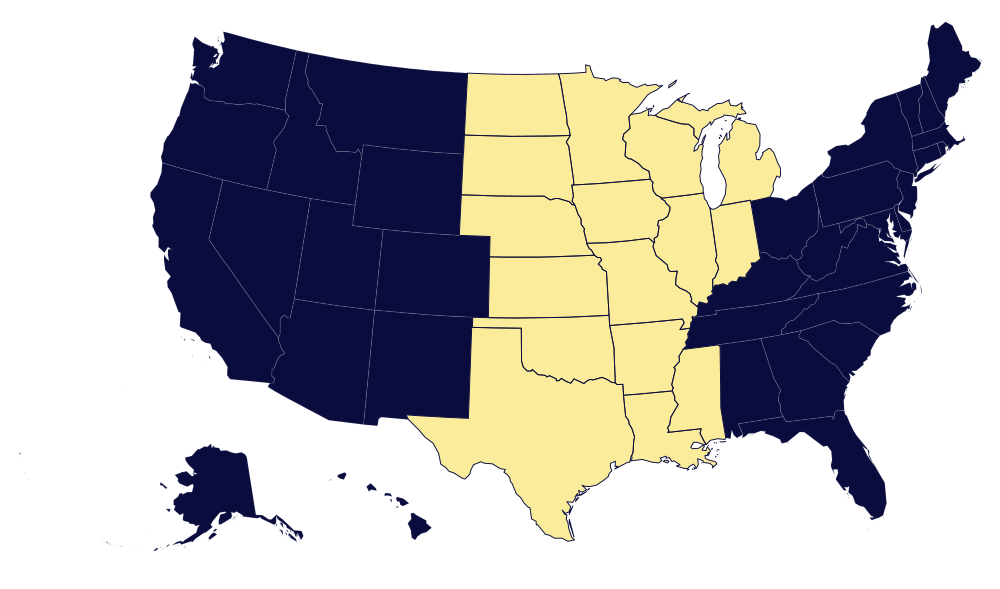
Central States
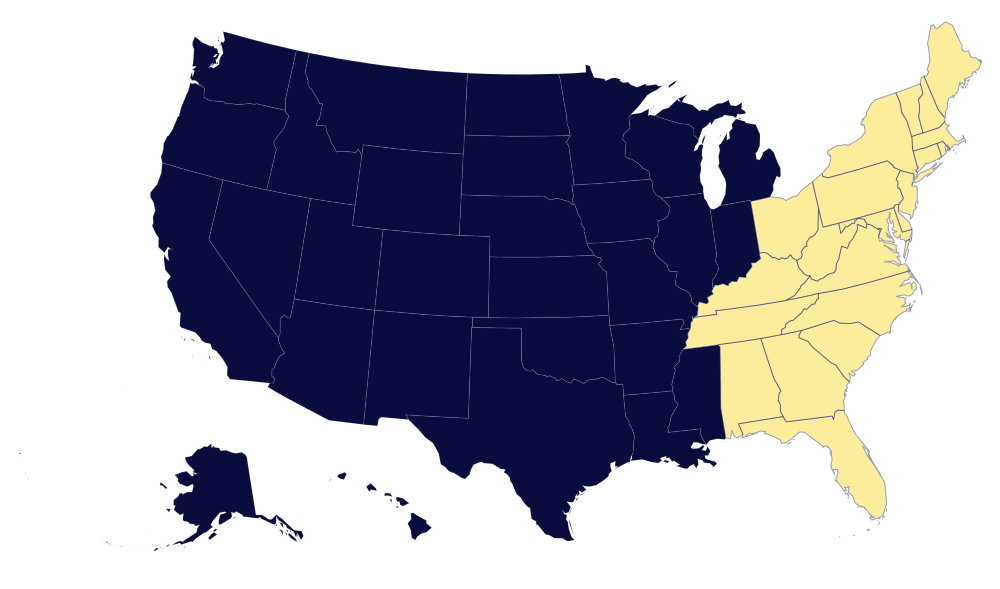
East Coast
*COMING SOON
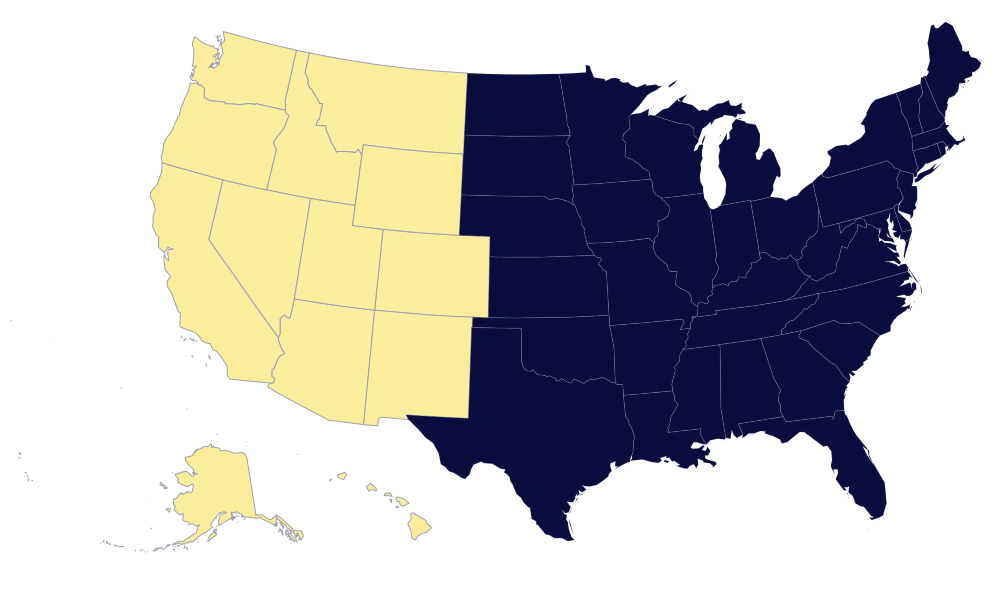
West Coast

*COMING SOON
East Coast
Central States
West Coast
AVLS Nationwide Services
CONTACT US
When your event matters, trust your audio visual labor needs to AV Labor Source.
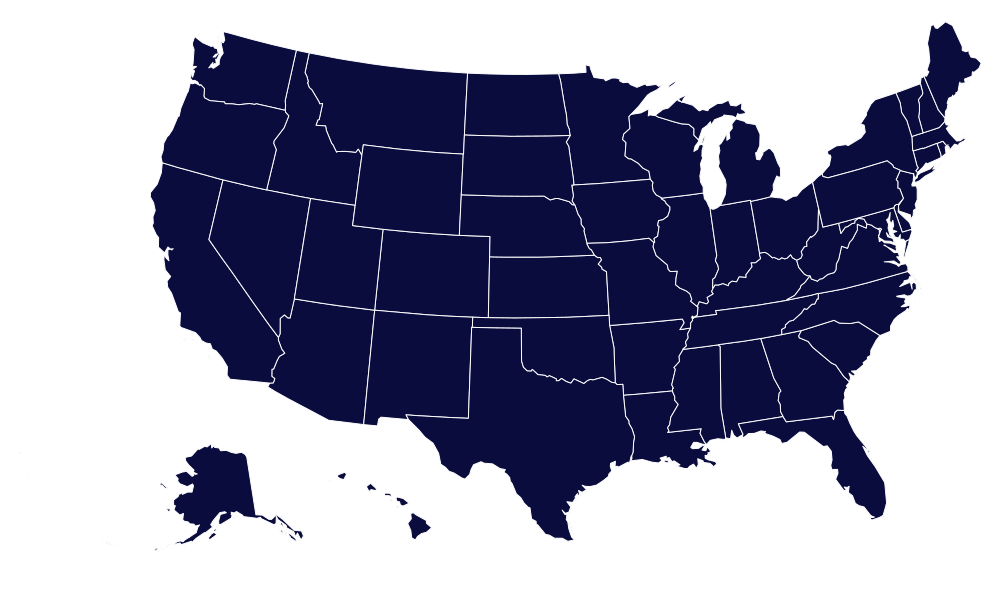
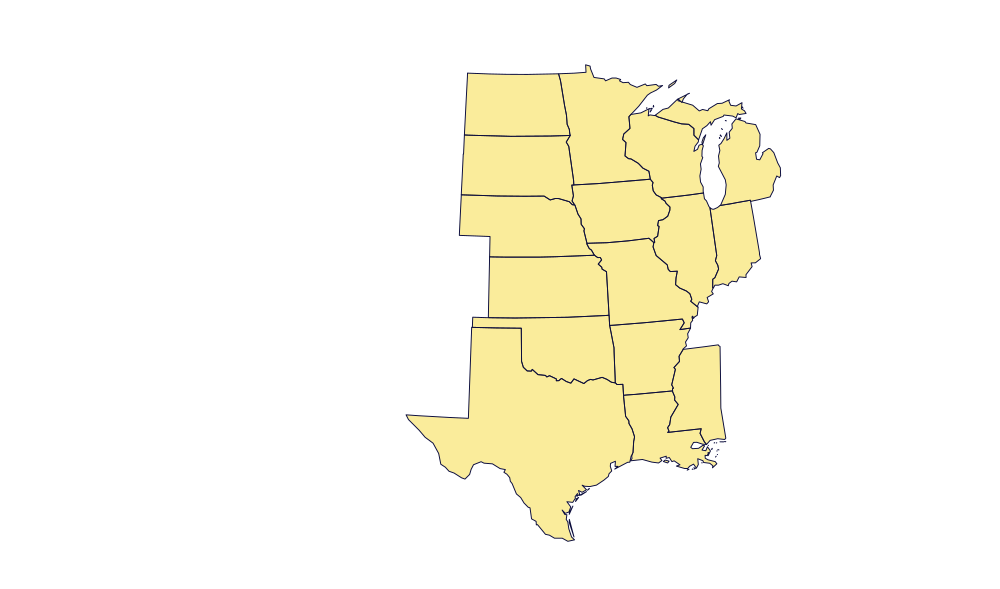
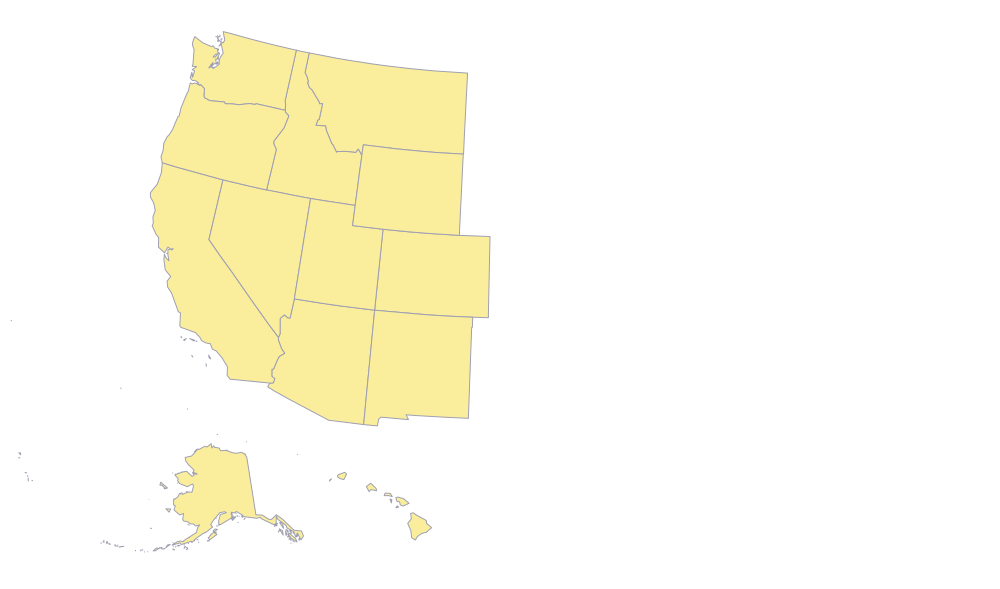
AVLS operate and has proven pool of AV technicians in major cities US Nationwide, such as Las Vegas, Los Angeles, Orlando, Dallas, San Antonio, Austin, Houston, Washington DC, Atlanta, New Orleans, Tennessee and more.
Please complete the form below and we will respond to you as soon as possible. We are available 24 hours a day to assist with your needs. We look forward to showing you what we can do toward the success of your next event.
AVLS operate and has proven pool of AV technicians in major cities US Nationwide, such as Las Vegas, Los Angeles, Orlando, Dallas, San Antonio, Austin, Houston, Washington DC, Atlanta, New Orleans, Tennessee and more.
Please complete the form below and we will respond to you as soon as possible. We are available 24 hours a day to assist with your needs. We look forward to showing you what we can do toward the success of your next event.
EVENT INFORMATION
