





July 12, 2026
L1 vs L2 Lighting Technician: Key Differences Explained
Quick Answer
L1 lighting technicians handle basic setup, cable management, and equipment operation under supervision, while L2 technicians manage complex lighting systems, program controllers, and lead technical teams. The key differences lie in responsibility level, technical expertise, certification requirements, and salary ranges that can vary by $15,000-25,000 annually.
Key Takeaways
What Does an L1 Lighting Technician Do
An L1 lighting technician performs entry-level tasks including equipment setup, cable management, and basic fixture installation under direct supervision. These professionals handle the physical labor aspects of lighting production while learning fundamental technical skills.
Primary L1 responsibilities include:
Common work environments for L1 technicians span corporate events, small concerts, theater productions, and convention centers. Most L1 positions require physical stamina for lifting equipment up to 50 pounds and working long hours during event setup and breakdown.
The role serves as an essential entry point into professional lighting careers, providing hands-on experience with industry-standard equipment and safety protocols. Professional AV technicians often start at the L1 level to build foundational skills.
What Does an L2 Lighting Technician Do
An L2 lighting technician manages complex lighting systems, programs control consoles, and leads technical teams during live events and productions. These professionals combine advanced technical knowledge with leadership responsibilities to execute sophisticated lighting designs.
Core L2 responsibilities encompass:
Advanced technical skills required include DMX protocol understanding, network configuration for lighting systems, and proficiency with moving light fixtures and LED technology. L2 technicians often specialize in specific areas like concert touring, broadcast lighting, or architectural installations.
The position demands both technical expertise and soft skills for managing teams and communicating with clients during high-pressure live events. Many L2 technicians work with specialized AV crews across multiple markets and venue types.
L1 vs L2 Lighting Technician Salary Differences by Location
L1 lighting technicians typically earn $35,000-50,000 annually while L2 technicians command $55,000-75,000, with significant variations based on geographic location and market demand. Major entertainment markets offer the highest compensation for both levels.
Freelance vs. staff positions also impact earnings significantly. Freelance L2 technicians in markets like Las Vegas or Los Angeles can earn $400-600 per day for specialized events, while staff positions offer benefits and consistent income.
Union membership affects compensation in major markets, with IATSE locals setting minimum rates that often exceed non-union positions by 15-30%. Choose union markets if you prioritize higher wages and benefits over scheduling flexibility.
L1 vs L2 Lighting Technician Certification Requirements
L1 lighting technician positions typically require basic safety certifications and on-the-job training, while L2 roles demand advanced technical certifications, formal education, or equivalent professional experience. The certification gap represents a significant barrier between levels.
L1 certification requirements:
L2 certification requirements:
Cost considerations vary significantly between levels. L1 certifications typically cost $200-500 total, while L2 certifications can exceed $2,000-4,000 when including console training and ETCP preparation courses.
The ETCP certification serves as the industry gold standard for L2 positions, requiring both written and practical examinations covering electrical theory, DMX protocols, and safety regulations. Most employers prefer or require ETCP certification for senior lighting positions.
How to Get Promoted from L1 to L2 Lighting Technician
Promotion from L1 to L2 lighting technician typically requires 2-4 years of experience, advanced technical training, and demonstrated leadership capabilities. The transition involves both skill development and professional networking within the industry.
Essential steps for L1 to L2 advancement:
Timeline expectations vary by individual commitment and market opportunities. Dedicated L1 technicians who pursue education and certifications aggressively can advance within 18-24 months, while those relying solely on experience may require 3-5 years.
Common advancement mistakes include focusing only on technical skills while neglecting communication and leadership development. L2 positions require managing people and client relationships, not just operating equipment.
Choose companies that offer clear advancement paths and training opportunities. Many AV staffing companies provide structured development programs for motivated L1 technicians.
Skills Required for L2 Lighting Technician Success
L2 lighting technicians need advanced technical expertise combined with leadership and project management skills to succeed in complex production environments. The skill set extends far beyond basic equipment operation into system design and team coordination.
Core technical skills:
Essential soft skills:
Specialized knowledge areas include color theory for LED mixing, video integration for media servers, and wireless technology for remote fixture control. L2 technicians often develop expertise in specific market segments like corporate events or concert touring.
Continuous learning remains essential as technology evolves rapidly. Successful L2 technicians dedicate time to manufacturer training, industry publications, and professional development courses throughout their careers.
Can You Start as L2 Without L1 Experience
Starting directly as an L2 lighting technician without L1 experience is possible but uncommon, typically requiring formal education in electrical engineering, theater technology, or equivalent technical background. Most employers prefer candidates with hands-on L1 experience for safety and practical knowledge reasons.
Alternative pathways to L2 level:
Challenges of skipping L1 experience include limited understanding of equipment limitations, safety protocols learned through repetition, and crew dynamics that develop through hands-on work. Many L2 candidates without L1 background struggle with practical troubleshooting and equipment handling.
Success factors for direct L2 entry include strong electrical fundamentals, demonstrated leadership experience, and willingness to learn equipment-specific knowledge quickly. Employers may offer lower starting salaries until practical skills develop.
Recommended approach involves seeking hybrid positions that combine L1 hands-on work with L2 responsibilities, allowing skill development while contributing at a higher level. Many AV companies offer accelerated development programs for qualified candidates.
Is L2 Lighting Technician Worth the Investment
L2 lighting technician advancement offers significant return on investment through higher salaries, better working conditions, and expanded career opportunities, but requires substantial time and financial commitment for training and certification. The decision depends on individual career goals and market conditions.
Financial benefits analysis:
Investment requirements:
Career advancement potential extends beyond immediate salary increases. L2 certification opens paths to lighting design, production management, and equipment sales roles with significantly higher earning potential.
Market demand varies by location and industry segment. Markets like Miami and Atlanta show strong demand for certified L2 technicians across corporate and entertainment sectors.
Choose L2 advancement if you enjoy technical challenges, want leadership responsibilities, and plan a long-term career in live events or entertainment production.
Career Path After L2 Lighting Technician
L2 lighting technician certification opens multiple career advancement opportunities including lighting design, production management, technical sales, and facility management roles. The advanced technical foundation and leadership experience provide valuable credentials for diverse industry positions.
Direct advancement opportunities:
Entrepreneurial paths include starting lighting rental companies, technical consulting firms, or specialized installation businesses. Many successful L2 technicians launch companies serving specific market niches like architectural lighting or small venue installations.
Geographic opportunities expand significantly with L2 credentials. Touring positions, international projects, and specialized installations become accessible with advanced certifications and demonstrated experience.
Specialization options allow focus on emerging technologies like LED integration, wireless control systems, or sustainable lighting solutions. Specialists often command premium rates and work on cutting-edge projects.
Education and training roles provide stable income through teaching at technical schools, community colleges, or manufacturer training centers. Many experienced L2 technicians supplement income through part-time instruction.
The key to successful advancement involves continuous learning, professional networking, and building a reputation for reliability and technical excellence across multiple project types.
Common Mistakes New L1 Lighting Technicians Make
New L1 lighting technicians frequently make preventable mistakes that can damage equipment, create safety hazards, or harm their professional reputation. Understanding these common errors helps accelerate learning and avoid costly problems during the critical early career period.
Equipment handling mistakes:
Communication and protocol errors:
Professional development mistakes:
Recovery strategies for mistakes include immediate disclosure to supervisors, documentation of lessons learned, and proactive steps to prevent recurrence. Most employers appreciate honesty and learning commitment over perfection.
Successful L1 technicians focus on safety first, ask questions when uncertain, and actively seek learning opportunities during every project assignment.
Do All Venues Require L2 Certified Lighting Technicians
Venue requirements for L2 certified lighting technicians vary significantly based on venue type, event complexity, insurance requirements, and local regulations. While not universally required, many venues prefer or mandate L2 certification for specific roles and responsibilities.
Venues typically requiring L2 certification:
Venues with flexible requirements:
Insurance and liability considerations increasingly drive certification requirements as venues seek to minimize risk exposure. Many insurance policies offer reduced premiums for venues employing certified technicians.
Market trends show growing preference for L2 certification even in traditionally flexible venues. Corporate event planners increasingly specify certification requirements in technical specifications.
Regional variations exist based on local union strength, regulatory environment, and market maturity. Markets like Chicago and New York show higher certification requirements than smaller markets.
Choose venues that match your current certification level while working toward advancement to access higher-tier opportunities and better compensation.
What Happens If You Work as L2 Without Proper Certification
Working as an L2 lighting technician without proper certification creates significant legal, financial, and professional risks for both technicians and employers. The consequences can include liability exposure, insurance coverage denial, and permanent damage to professional reputation.
Legal and regulatory consequences:
Professional reputation damage:
Financial risks:
Immediate consequences often include termination, payment withholding, and removal from venue-approved technician lists. Many venues maintain databases of problematic contractors shared across the industry.
Legitimate alternatives include working under direct L2 supervision while pursuing certification, accepting L1 positions with advancement opportunities, or pursuing accelerated certification programs to qualify properly.
The entertainment industry values trust and competence highly. Building credentials legitimately creates sustainable career opportunities while avoiding the severe risks of misrepresentation.
FAQ
How long does it take to advance from L1 to L2 lighting technician?
Typical advancement requires 2-4 years of L1 experience plus 6-12 months for certification preparation and testing. Accelerated paths through intensive training programs can reduce this to 18-24 months for dedicated individuals with strong technical backgrounds.
What's the most important skill difference between L1 and L2 lighting technicians?
L2 technicians must master lighting console programming and system design while L1 technicians focus on equipment setup and cable management. The transition from following instructions to creating technical solutions represents the fundamental skill gap.
Can L1 technicians work on the same projects as L2 technicians?
Yes, L1 and L2 technicians commonly work together on large productions with L2 staff handling programming and supervision while L1 staff manages equipment setup and operation under direction.
Do L2 lighting technicians need to maintain continuing education?
Most certifications require renewal every 3-5 years through continuing education units or re-examination. Technology advances also necessitate ongoing manufacturer training and professional development to remain current.
What's the job market outlook for L1 vs L2 lighting technicians?
L2 positions show stronger growth and stability due to increasing technical complexity in live events and corporate productions. L1 positions remain entry-level with higher turnover but consistent demand for new technicians.
Are there age restrictions for L1 or L2 lighting technician positions?
No formal age restrictions exist, though physical demands of L1 work and technical learning requirements for L2 advancement may favor younger candidates. Many successful technicians work well into their 60s and beyond.
How do union vs non-union markets affect L1 and L2 opportunities?
Union markets typically offer higher wages and better benefits but require union membership and adherence to strict certification requirements. Non-union markets provide more flexibility but generally lower compensation levels.
What equipment should L1 technicians own vs what employers provide?
L1 technicians typically need basic hand tools, work gloves, and safety equipment while employers provide lighting fixtures, cables, and major equipment. L2 technicians often invest in personal console software and design tools.
Can women succeed equally in L1 and L2 lighting technician roles?
Yes, though the industry historically skewed male, increasing numbers of women work successfully at both levels. Physical demands of L1 work and technical requirements of L2 positions apply equally regardless of gender.
How does freelance work differ between L1 and L2 lighting technicians?
L2 technicians typically enjoy more freelance opportunities, higher day rates, and direct client relationships while L1 freelancers often work through staffing agencies with less scheduling control but more consistent work availability.
What's the biggest challenge in transitioning from L1 to L2?
Most technicians struggle with the leadership and communication aspects rather than technical skills. Managing crews and interfacing with clients requires different abilities than equipment operation and setup work.
Do L2 lighting technicians work more or fewer hours than L1 technicians?
L2 technicians often work longer hours due to programming responsibilities and client meetings but may have more schedule control and advance notice compared to L1 technicians who primarily work during load-in and event execution periods.
Conclusion
Understanding the key differences between L1 and L2 lighting technicians helps both aspiring professionals and employers make informed decisions about career paths and staffing needs. L1 positions provide essential entry-level experience with equipment handling and basic operations, while L2 roles demand advanced technical expertise, leadership capabilities, and formal certification.
The salary differential of $15,000-25,000 annually reflects the increased responsibility and specialized knowledge required at the L2 level. However, the investment in certification and training typically pays for itself within 1-2 years through higher compensation and expanded opportunities.
Career advancement from L1 to L2 requires dedication to continuous learning, professional networking, and skill development beyond basic equipment operation. Success at either level depends on safety consciousness, reliability, and commitment to professional excellence in high-pressure live event environments.
Whether starting as an L1 technician or pursuing direct L2 certification, the lighting industry offers rewarding career paths with opportunities for growth, specialization, and entrepreneurship. The key lies in matching your current skills and career goals with appropriate certification levels and market opportunities.
For those ready to advance their lighting career or seeking qualified lighting technicians for upcoming projects, professional staffing support can make the difference between successful productions and costly mistakes.
Need Expert Lighting Technicians for Your Next Event?
Whether you need experienced L1 technicians for equipment setup or certified L2 professionals for complex lighting programming, AV Labor Source connects you with qualified lighting specialists nationwide. Our vetted technicians bring the right combination of technical expertise, safety training, and professional reliability to ensure your event's success.
Contact us today to discuss your lighting staffing needs and get matched with the right technical professionals for your project: https://avlaborsourceinc.com/#contacts
L1 lighting technicians handle basic setup, cable management, and equipment operation under supervision, while L2 technicians manage complex lighting systems, program controllers, and lead technical teams. The key differences lie in responsibility level, technical expertise, certification requirements, and salary ranges that can vary by $15,000-25,000 annually.
Key Takeaways
- L1 technicians focus on equipment setup, cable runs, and basic fixture positioning with 0-2 years experience required
- L2 technicians program lighting consoles, design lighting plots, and supervise L1 staff with 3+ years experience
- Salary difference ranges from $15,000-25,000 annually, with L2 positions earning $55,000-75,000 in major markets
- Certification paths differ significantly - L1 requires basic safety training while L2 demands advanced technical certifications
- Career progression typically requires 2-4 years in L1 role before advancing to L2 level
- Job responsibilities expand from hands-on labor (L1) to technical leadership and system design (L2)
- Equipment access varies - L1 handles basic fixtures while L2 operates advanced consoles and moving lights
- Work independence increases dramatically from supervised tasks (L1) to autonomous project management (L2)
What Does an L1 Lighting Technician Do
An L1 lighting technician performs entry-level tasks including equipment setup, cable management, and basic fixture installation under direct supervision. These professionals handle the physical labor aspects of lighting production while learning fundamental technical skills.
Primary L1 responsibilities include:
- Running and organizing electrical cables and DMX lines
- Loading and unloading lighting equipment from trucks
- Setting up basic lighting fixtures and stands
- Following detailed setup instructions from senior technicians
- Performing basic maintenance on lighting equipment
- Assisting with strike (teardown) operations
- Maintaining organized cable and equipment storage
Common work environments for L1 technicians span corporate events, small concerts, theater productions, and convention centers. Most L1 positions require physical stamina for lifting equipment up to 50 pounds and working long hours during event setup and breakdown.
The role serves as an essential entry point into professional lighting careers, providing hands-on experience with industry-standard equipment and safety protocols. Professional AV technicians often start at the L1 level to build foundational skills.
What Does an L2 Lighting Technician Do
An L2 lighting technician manages complex lighting systems, programs control consoles, and leads technical teams during live events and productions. These professionals combine advanced technical knowledge with leadership responsibilities to execute sophisticated lighting designs.
Core L2 responsibilities encompass:
- Programming and operating lighting control consoles (MA, Hog, ETC)
- Creating lighting plots and technical drawings
- Supervising and directing L1 technicians and crew
- Troubleshooting complex electrical and control system issues
- Coordinating with lighting designers and production managers
- Managing equipment inventory and maintenance schedules
- Training junior staff on advanced techniques and safety protocols
Advanced technical skills required include DMX protocol understanding, network configuration for lighting systems, and proficiency with moving light fixtures and LED technology. L2 technicians often specialize in specific areas like concert touring, broadcast lighting, or architectural installations.
The position demands both technical expertise and soft skills for managing teams and communicating with clients during high-pressure live events. Many L2 technicians work with specialized AV crews across multiple markets and venue types.
L1 vs L2 Lighting Technician Salary Differences by Location
L1 lighting technicians typically earn $35,000-50,000 annually while L2 technicians command $55,000-75,000, with significant variations based on geographic location and market demand. Major entertainment markets offer the highest compensation for both levels.
Market | L1 Annual Salary | L2 Annual Salary | Difference |
Las Vegas | $45,000-55,000 | $65,000-80,000 | $20,000-25,000 |
Los Angeles | $42,000-52,000 | $62,000-78,000 | $20,000-26,000 |
New York City | $48,000-58,000 | $68,000-85,000 | $20,000-27,000 |
Orlando | $38,000-46,000 | $55,000-68,000 | $17,000-22,000 |
Nashville | $36,000-44,000 | $52,000-65,000 | $16,000-21,000 |
Freelance vs. staff positions also impact earnings significantly. Freelance L2 technicians in markets like Las Vegas or Los Angeles can earn $400-600 per day for specialized events, while staff positions offer benefits and consistent income.
Union membership affects compensation in major markets, with IATSE locals setting minimum rates that often exceed non-union positions by 15-30%. Choose union markets if you prioritize higher wages and benefits over scheduling flexibility.
L1 vs L2 Lighting Technician Certification Requirements
L1 lighting technician positions typically require basic safety certifications and on-the-job training, while L2 roles demand advanced technical certifications, formal education, or equivalent professional experience. The certification gap represents a significant barrier between levels.
L1 certification requirements:
- OSHA 10-Hour Construction Safety certification
- Basic electrical safety training
- Equipment-specific manufacturer training (optional but preferred)
- CPR/First Aid certification for some venues
- Clean driving record for equipment transport
L2 certification requirements:
- Entertainment Technician Certification Program (ETCP) - Lighting specialty
- Advanced electrical knowledge or formal electronics education
- Manufacturer certifications for major console platforms (MA, ETC, Hog)
- OSHA 30-Hour certification for supervisory roles
- Rigging certifications for overhead lighting installations
Cost considerations vary significantly between levels. L1 certifications typically cost $200-500 total, while L2 certifications can exceed $2,000-4,000 when including console training and ETCP preparation courses.
The ETCP certification serves as the industry gold standard for L2 positions, requiring both written and practical examinations covering electrical theory, DMX protocols, and safety regulations. Most employers prefer or require ETCP certification for senior lighting positions.
How to Get Promoted from L1 to L2 Lighting Technician
Promotion from L1 to L2 lighting technician typically requires 2-4 years of experience, advanced technical training, and demonstrated leadership capabilities. The transition involves both skill development and professional networking within the industry.
Essential steps for L1 to L2 advancement:
- Master console operation - Learn major lighting control platforms during downtime and volunteer for programming opportunities
- Pursue ETCP certification - Complete formal study program and pass both written and practical examinations
- Develop leadership skills - Volunteer to train new L1 technicians and coordinate small crew assignments
- Build technical expertise - Study electrical theory, DMX networking, and advanced fixture programming
- Network professionally - Join PLSN, USITT, or local IATSE chapters to connect with industry professionals
- Seek mentorship - Partner with experienced L2 technicians willing to share knowledge and opportunities
Timeline expectations vary by individual commitment and market opportunities. Dedicated L1 technicians who pursue education and certifications aggressively can advance within 18-24 months, while those relying solely on experience may require 3-5 years.
Common advancement mistakes include focusing only on technical skills while neglecting communication and leadership development. L2 positions require managing people and client relationships, not just operating equipment.
Choose companies that offer clear advancement paths and training opportunities. Many AV staffing companies provide structured development programs for motivated L1 technicians.
Skills Required for L2 Lighting Technician Success
L2 lighting technicians need advanced technical expertise combined with leadership and project management skills to succeed in complex production environments. The skill set extends far beyond basic equipment operation into system design and team coordination.
Core technical skills:
- Console programming proficiency - MA GrandMA, ETC Eos, Hog 4 platforms with advanced features
- Electrical systems knowledge - Three-phase power, load calculations, and distribution design
- DMX networking expertise - Universe management, RDM protocols, and troubleshooting
- Fixture programming - Moving lights, LED panels, and specialty effects programming
- CAD software competency - Vectorworks, WYSIWYG, or similar for lighting plots and documentation
Essential soft skills:
- Team leadership - Managing crews of 5-15 technicians during high-pressure events
- Client communication - Translating technical concepts for non-technical stakeholders
- Problem-solving - Rapid troubleshooting during live events with minimal downtime
- Time management - Coordinating multiple tasks and deadlines simultaneously
- Adaptability - Adjusting to changing requirements and equipment limitations
Specialized knowledge areas include color theory for LED mixing, video integration for media servers, and wireless technology for remote fixture control. L2 technicians often develop expertise in specific market segments like corporate events or concert touring.
Continuous learning remains essential as technology evolves rapidly. Successful L2 technicians dedicate time to manufacturer training, industry publications, and professional development courses throughout their careers.
Can You Start as L2 Without L1 Experience
Starting directly as an L2 lighting technician without L1 experience is possible but uncommon, typically requiring formal education in electrical engineering, theater technology, or equivalent technical background. Most employers prefer candidates with hands-on L1 experience for safety and practical knowledge reasons.
Alternative pathways to L2 level:
- Formal education - Bachelor's degree in theater technology, electrical engineering, or related technical field
- Military experience - Electronics or communications specialties with leadership experience
- Related technical background - Broadcast engineering, industrial automation, or similar fields
- Intensive training programs - Accelerated certification courses combined with internships
- Apprenticeship programs - Union or manufacturer-sponsored programs that compress L1/L2 training
Challenges of skipping L1 experience include limited understanding of equipment limitations, safety protocols learned through repetition, and crew dynamics that develop through hands-on work. Many L2 candidates without L1 background struggle with practical troubleshooting and equipment handling.
Success factors for direct L2 entry include strong electrical fundamentals, demonstrated leadership experience, and willingness to learn equipment-specific knowledge quickly. Employers may offer lower starting salaries until practical skills develop.
Recommended approach involves seeking hybrid positions that combine L1 hands-on work with L2 responsibilities, allowing skill development while contributing at a higher level. Many AV companies offer accelerated development programs for qualified candidates.
Is L2 Lighting Technician Worth the Investment
L2 lighting technician advancement offers significant return on investment through higher salaries, better working conditions, and expanded career opportunities, but requires substantial time and financial commitment for training and certification. The decision depends on individual career goals and market conditions.
Financial benefits analysis:
- Salary increase - $15,000-25,000 annual bump typically recovers certification costs within 1-2 years
- Freelance opportunities - L2 technicians can command $400-600 daily rates vs. $250-350 for L1
- Job security - Higher skill level provides protection during economic downturns
- Benefits eligibility - Many L2 positions offer health insurance, retirement plans, and paid time off
Investment requirements:
- Certification costs - $2,000-4,000 for ETCP preparation, testing, and console training
- Time commitment - 6-12 months of study and practice while working L1 positions
- Equipment investment - Personal tools and software for advanced work ($1,000-2,000)
- Opportunity cost - Reduced income during training period and certification pursuit
Career advancement potential extends beyond immediate salary increases. L2 certification opens paths to lighting design, production management, and equipment sales roles with significantly higher earning potential.
Market demand varies by location and industry segment. Markets like Miami and Atlanta show strong demand for certified L2 technicians across corporate and entertainment sectors.
Choose L2 advancement if you enjoy technical challenges, want leadership responsibilities, and plan a long-term career in live events or entertainment production.
Career Path After L2 Lighting Technician
L2 lighting technician certification opens multiple career advancement opportunities including lighting design, production management, technical sales, and facility management roles. The advanced technical foundation and leadership experience provide valuable credentials for diverse industry positions.
Direct advancement opportunities:
- Lighting Designer - Creating artistic lighting concepts and managing design teams ($60,000-120,000 annually)
- Production Manager - Overseeing entire technical productions across multiple departments ($70,000-100,000)
- Technical Director - Managing venue operations and permanent installations ($65,000-95,000)
- Equipment Sales Specialist - Selling lighting systems with technical expertise ($55,000-85,000 plus commission)
- Freelance Consultant - Independent project management and technical consulting ($75-150 per hour)
Entrepreneurial paths include starting lighting rental companies, technical consulting firms, or specialized installation businesses. Many successful L2 technicians launch companies serving specific market niches like architectural lighting or small venue installations.
Geographic opportunities expand significantly with L2 credentials. Touring positions, international projects, and specialized installations become accessible with advanced certifications and demonstrated experience.
Specialization options allow focus on emerging technologies like LED integration, wireless control systems, or sustainable lighting solutions. Specialists often command premium rates and work on cutting-edge projects.
Education and training roles provide stable income through teaching at technical schools, community colleges, or manufacturer training centers. Many experienced L2 technicians supplement income through part-time instruction.
The key to successful advancement involves continuous learning, professional networking, and building a reputation for reliability and technical excellence across multiple project types.
Common Mistakes New L1 Lighting Technicians Make
New L1 lighting technicians frequently make preventable mistakes that can damage equipment, create safety hazards, or harm their professional reputation. Understanding these common errors helps accelerate learning and avoid costly problems during the critical early career period.
Equipment handling mistakes:
- Improper lifting techniques - Attempting to move heavy fixtures alone instead of using proper lifting methods or seeking assistance
- Cable management errors - Creating trip hazards or signal interference through poor cable routing and organization
- Connector damage - Forcing incompatible connections or failing to properly secure electrical and DMX connections
- Power distribution mistakes - Overloading circuits or connecting equipment without understanding power requirements
Communication and protocol errors:
- Bypassing chain of command - Speaking directly to clients or designers instead of working through designated supervisors
- Incomplete documentation - Failing to properly label cables, document changes, or maintain accurate equipment logs
- Safety shortcuts - Skipping lockout/tagout procedures or working on energized equipment without proper precautions
- Poor time management - Underestimating setup time or failing to prioritize critical tasks during tight schedules
Professional development mistakes:
- Avoiding learning opportunities - Declining chances to observe programming sessions or assist with advanced tasks
- Neglecting safety training - Postponing OSHA certification or equipment-specific safety courses
- Limited networking - Failing to build relationships with experienced technicians and industry professionals
Recovery strategies for mistakes include immediate disclosure to supervisors, documentation of lessons learned, and proactive steps to prevent recurrence. Most employers appreciate honesty and learning commitment over perfection.
Successful L1 technicians focus on safety first, ask questions when uncertain, and actively seek learning opportunities during every project assignment.
Do All Venues Require L2 Certified Lighting Technicians
Venue requirements for L2 certified lighting technicians vary significantly based on venue type, event complexity, insurance requirements, and local regulations. While not universally required, many venues prefer or mandate L2 certification for specific roles and responsibilities.
Venues typically requiring L2 certification:
- Major concert halls and arenas - Union requirements and insurance policies often mandate certified technicians for complex productions
- Broadcast facilities - Technical complexity and equipment value require advanced certification levels
- High-end corporate venues - Client expectations and liability concerns drive certification requirements
- Educational institutions - Safety regulations and equipment protection policies favor certified staff
- Government facilities - Security clearances and technical standards often include certification requirements
Venues with flexible requirements:
- Small clubs and bars - Basic lighting needs may not justify L2 certification requirements
- Community theaters - Budget constraints and volunteer staffing often preclude strict certification mandates
- Private event spaces - Requirements vary based on ownership policies and insurance coverage
- Outdoor festivals - Temporary nature and diverse staffing needs may allow mixed certification levels
Insurance and liability considerations increasingly drive certification requirements as venues seek to minimize risk exposure. Many insurance policies offer reduced premiums for venues employing certified technicians.
Market trends show growing preference for L2 certification even in traditionally flexible venues. Corporate event planners increasingly specify certification requirements in technical specifications.
Regional variations exist based on local union strength, regulatory environment, and market maturity. Markets like Chicago and New York show higher certification requirements than smaller markets.
Choose venues that match your current certification level while working toward advancement to access higher-tier opportunities and better compensation.
What Happens If You Work as L2 Without Proper Certification
Working as an L2 lighting technician without proper certification creates significant legal, financial, and professional risks for both technicians and employers. The consequences can include liability exposure, insurance coverage denial, and permanent damage to professional reputation.
Legal and regulatory consequences:
- OSHA violations - Improper supervision or safety protocol breaches can result in fines and legal liability
- Insurance claim denial - Many policies exclude coverage for incidents involving uncertified personnel
- Venue liability - Facilities may face legal exposure for employing unqualified technical staff
- Union violations - Working in union jurisdictions without proper credentials can result in fines and work stoppages
Professional reputation damage:
- Industry blacklisting - Word spreads quickly in tight-knit technical communities about certification fraud
- Client trust loss - Discovered misrepresentation can permanently damage relationships with venues and production companies
- Career advancement barriers - Reputation for dishonesty creates long-term obstacles to legitimate advancement
- Reference problems - Former employers may refuse recommendations or provide negative references
Financial risks:
- Equipment damage liability - Personal financial responsibility for expensive equipment damaged due to incompetence
- Project failure costs - Liability for production delays or failures caused by inadequate technical knowledge
- Legal defense expenses - Costs associated with defending against negligence or fraud claims
Immediate consequences often include termination, payment withholding, and removal from venue-approved technician lists. Many venues maintain databases of problematic contractors shared across the industry.
Legitimate alternatives include working under direct L2 supervision while pursuing certification, accepting L1 positions with advancement opportunities, or pursuing accelerated certification programs to qualify properly.
The entertainment industry values trust and competence highly. Building credentials legitimately creates sustainable career opportunities while avoiding the severe risks of misrepresentation.
FAQ
How long does it take to advance from L1 to L2 lighting technician?
Typical advancement requires 2-4 years of L1 experience plus 6-12 months for certification preparation and testing. Accelerated paths through intensive training programs can reduce this to 18-24 months for dedicated individuals with strong technical backgrounds.
What's the most important skill difference between L1 and L2 lighting technicians?
L2 technicians must master lighting console programming and system design while L1 technicians focus on equipment setup and cable management. The transition from following instructions to creating technical solutions represents the fundamental skill gap.
Can L1 technicians work on the same projects as L2 technicians?
Yes, L1 and L2 technicians commonly work together on large productions with L2 staff handling programming and supervision while L1 staff manages equipment setup and operation under direction.
Do L2 lighting technicians need to maintain continuing education?
Most certifications require renewal every 3-5 years through continuing education units or re-examination. Technology advances also necessitate ongoing manufacturer training and professional development to remain current.
What's the job market outlook for L1 vs L2 lighting technicians?
L2 positions show stronger growth and stability due to increasing technical complexity in live events and corporate productions. L1 positions remain entry-level with higher turnover but consistent demand for new technicians.
Are there age restrictions for L1 or L2 lighting technician positions?
No formal age restrictions exist, though physical demands of L1 work and technical learning requirements for L2 advancement may favor younger candidates. Many successful technicians work well into their 60s and beyond.
How do union vs non-union markets affect L1 and L2 opportunities?
Union markets typically offer higher wages and better benefits but require union membership and adherence to strict certification requirements. Non-union markets provide more flexibility but generally lower compensation levels.
What equipment should L1 technicians own vs what employers provide?
L1 technicians typically need basic hand tools, work gloves, and safety equipment while employers provide lighting fixtures, cables, and major equipment. L2 technicians often invest in personal console software and design tools.
Can women succeed equally in L1 and L2 lighting technician roles?
Yes, though the industry historically skewed male, increasing numbers of women work successfully at both levels. Physical demands of L1 work and technical requirements of L2 positions apply equally regardless of gender.
How does freelance work differ between L1 and L2 lighting technicians?
L2 technicians typically enjoy more freelance opportunities, higher day rates, and direct client relationships while L1 freelancers often work through staffing agencies with less scheduling control but more consistent work availability.
What's the biggest challenge in transitioning from L1 to L2?
Most technicians struggle with the leadership and communication aspects rather than technical skills. Managing crews and interfacing with clients requires different abilities than equipment operation and setup work.
Do L2 lighting technicians work more or fewer hours than L1 technicians?
L2 technicians often work longer hours due to programming responsibilities and client meetings but may have more schedule control and advance notice compared to L1 technicians who primarily work during load-in and event execution periods.
Conclusion
Understanding the key differences between L1 and L2 lighting technicians helps both aspiring professionals and employers make informed decisions about career paths and staffing needs. L1 positions provide essential entry-level experience with equipment handling and basic operations, while L2 roles demand advanced technical expertise, leadership capabilities, and formal certification.
The salary differential of $15,000-25,000 annually reflects the increased responsibility and specialized knowledge required at the L2 level. However, the investment in certification and training typically pays for itself within 1-2 years through higher compensation and expanded opportunities.
Career advancement from L1 to L2 requires dedication to continuous learning, professional networking, and skill development beyond basic equipment operation. Success at either level depends on safety consciousness, reliability, and commitment to professional excellence in high-pressure live event environments.
Whether starting as an L1 technician or pursuing direct L2 certification, the lighting industry offers rewarding career paths with opportunities for growth, specialization, and entrepreneurship. The key lies in matching your current skills and career goals with appropriate certification levels and market opportunities.
For those ready to advance their lighting career or seeking qualified lighting technicians for upcoming projects, professional staffing support can make the difference between successful productions and costly mistakes.
Need Expert Lighting Technicians for Your Next Event?
Whether you need experienced L1 technicians for equipment setup or certified L2 professionals for complex lighting programming, AV Labor Source connects you with qualified lighting specialists nationwide. Our vetted technicians bring the right combination of technical expertise, safety training, and professional reliability to ensure your event's success.
Contact us today to discuss your lighting staffing needs and get matched with the right technical professionals for your project: https://avlaborsourceinc.com/#contacts

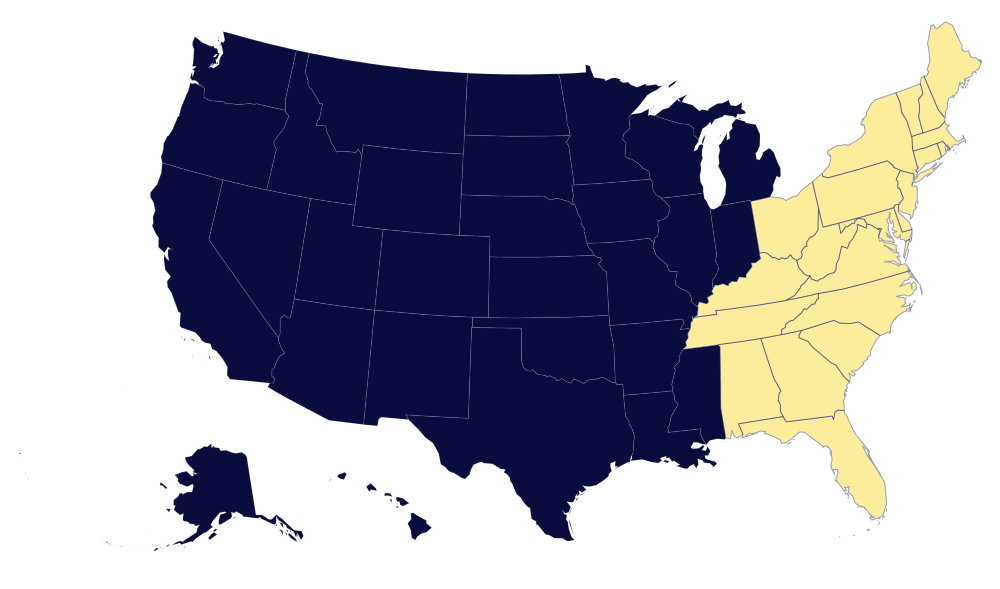
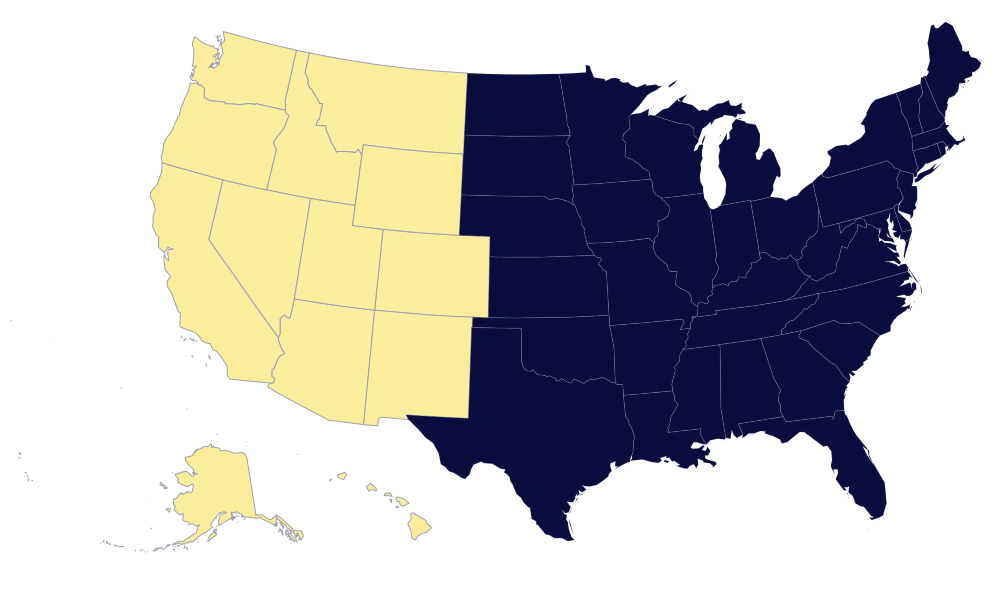
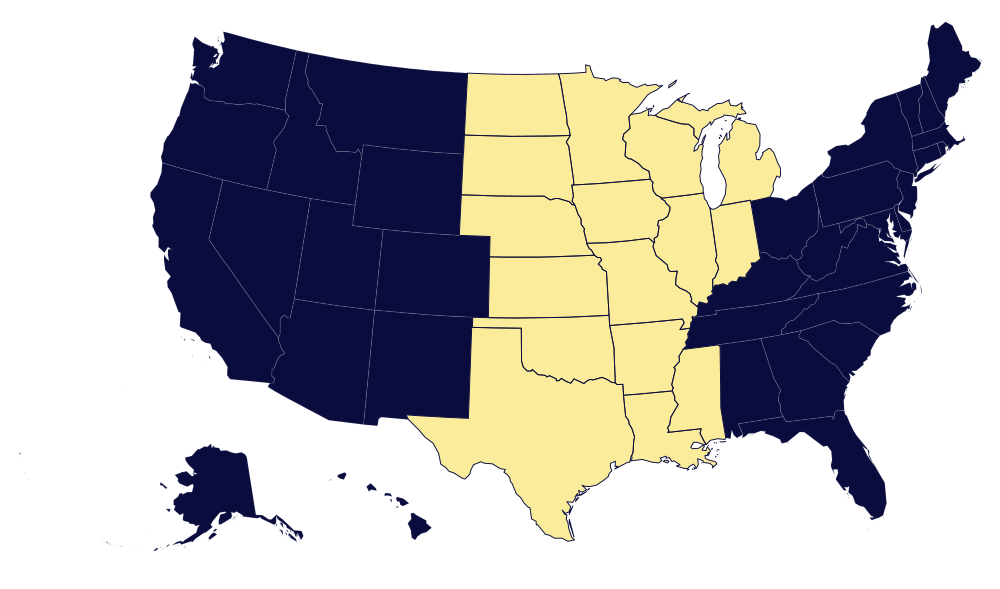
AVLS Nationwide Services
Central States
East Coast
*COMING SOON
West Coast



*COMING SOON
East Coast
Central States
West Coast
AVLS Nationwide Services
CONTACT US
When your event matters, trust your audio visual labor needs to AV Labor Source.
AVLS operate and has proven pool of AV technicians in major cities US Nationwide, such as Las Vegas, Los Angeles, Orlando, Dallas, San Antonio, Austin, Houston, Washington DC, Atlanta, New Orleans, Tennessee and more.
Please complete the form below and we will respond to you as soon as possible. We are available 24 hours a day to assist with your needs. We look forward to showing you what we can do toward the success of your next event.
AVLS operate and has proven pool of AV technicians in major cities US Nationwide, such as Las Vegas, Los Angeles, Orlando, Dallas, San Antonio, Austin, Houston, Washington DC, Atlanta, New Orleans, Tennessee and more.
Please complete the form below and we will respond to you as soon as possible. We are available 24 hours a day to assist with your needs. We look forward to showing you what we can do toward the success of your next event.
EVENT INFORMATION
