





August 10, 2026
Trade Show AV Labor Staffing Guide
Quick Answer: Trade show AV labor staffing involves hiring specialized audio-visual technicians to handle equipment setup, operation, and breakdown for exhibition events. Most exhibitors need 2-4 AV technicians per booth depending on complexity, with costs ranging from $35-85 per hour plus overtime rates. Book certified technicians 4-6 weeks in advance for major trade shows to ensure availability and avoid premium last-minute rates.
Key Takeaways
What is AV Labor Staffing for Trade Shows
Trade show AV labor staffing means hiring skilled technicians to handle audio, video, lighting, and technical equipment for exhibition booths and conference spaces. These specialists manage everything from initial setup and testing to live event operation and post-show breakdown.
Unlike general event staff, trade show AV technicians possess specific technical skills for complex equipment. They understand signal flow, troubleshoot technical issues under pressure, and work within tight venue timelines. Most exhibitors need these specialists because modern trade show displays involve LED walls, wireless presentation systems, interactive displays, and multi-zone audio that require professional installation and operation.
Key responsibilities include:
The complexity of your display determines staffing needs. Simple booth setups might need one technician for a few hours, while elaborate installations require specialized teams working multiple days.
How Much Does Trade Show AV Labor Cost
Trade show AV labor costs vary significantly by location, technician skill level, and event timing. Standard rates range from $35-85 per hour, with premium markets like Las Vegas, New York, and San Francisco commanding higher rates.
Typical rate structure:
Additional cost factors:
Budget approximately $2,000-8,000 for AV labor on a typical 20x20 booth over a 3-day show, depending on complexity. Large installations can exceed $15,000 in labor costs alone. For detailed pricing in specific markets, check our AV city guides for location-specific rate information.
How Do I Hire AV Technicians for a Trade Show
Hiring trade show AV technicians requires planning, clear communication, and understanding your technical requirements. Start by defining your equipment needs, then match technician skills to those specific requirements.
Step-by-step hiring process:
Essential questions to ask candidates:
Choose technicians who demonstrate both technical competence and professional communication skills. Trade shows involve client interaction, so personality matters alongside technical ability. For comprehensive staffing solutions, consider working with established AV labor staffing services that pre-screen candidates and handle logistics.
What Skills Do Trade Show AV Staff Need
Trade show AV technicians need a combination of technical expertise, problem-solving abilities, and interpersonal skills to handle the unique challenges of exhibition environments.
Core technical skills:
Essential soft skills:
Specialized certifications:
The most valuable technicians combine deep technical knowledge with strong customer service skills. They anticipate problems, communicate clearly with clients, and maintain calm professionalism during high-stress situations. For more details on specific roles, see our complete AV technician roles guide.
Trade Show AV Labor vs Hiring In-House
Choosing between contracted AV labor and in-house staff depends on event frequency, budget constraints, and technical complexity. Each approach offers distinct advantages for different business models.
Contracted AV labor advantages:
In-house staff advantages:
Decision factors:
Most mid-size exhibitors use a hybrid approach: maintaining core in-house staff for strategy and client relations while contracting specialized technicians for complex technical work. This balances cost control with access to specialized expertise.
Common Mistakes When Staffing AV for Trade Shows
Poor AV staffing decisions create cascading problems that impact exhibitor success and attendee experience. Understanding these common pitfalls helps ensure smooth event execution.
Under-staffing consequences:
Over-staffing problems:
Skill mismatch issues:
Timing mistakes:
Prevention strategies:
How Far in Advance Should I Book AV Labor
Booking timeline for trade show AV labor directly impacts both availability and cost. Major industry events require longer lead times due to high demand and limited qualified technicians.
Recommended booking windows:
Peak season considerations:
Early booking advantages:
Late booking risks:
Booking strategy:
Reserve core technician roles immediately after confirming booth space, then add specialized positions as technical requirements solidify. Maintain relationships with reliable AV technicians who understand your equipment and preferences.
What's the Difference Between AV Labor and General Event Staffing
AV labor and general event staffing serve different functions and require distinct skill sets. Understanding these differences ensures proper staffing for technical versus operational needs.
AV labor specialization:
General event staffing focus:
Cost differences:
When to use each:
Most successful exhibitors use both types of staffing strategically. AV technicians handle technical systems while general staff manages attendee interaction and booth operations. This division maximizes both technical reliability and customer engagement effectiveness.
Trade Show AV Labor for Small vs Large Events
Event size significantly impacts AV labor requirements, from staffing levels and skill needs to cost structure and logistics coordination. Understanding these differences helps optimize staffing for your specific event scale.
Small event characteristics (under 100 attendees):
Large event requirements (500+ attendees):
Staffing scale comparison:
Budget implications:
Scaling strategies:
Start with core technical needs and add specialized roles as complexity increases. Large events benefit from experienced technical directors who coordinate multiple crews and interface with venue management.
How to Manage AV Crew on Show Floor
Effective AV crew management during live events requires clear communication, defined responsibilities, and proactive problem-solving protocols. Success depends on preparation and real-time coordination.
Pre-show crew briefing essentials:
During-show management practices:
Communication tools:
Common management challenges:
Best practices:
Designate a lead technician with decision-making authority and client communication responsibility. Establish clear protocols for common scenarios before problems arise. Maintain spare equipment and backup plans for critical systems.
What Goes Wrong with Under-Staffed AV Teams
Under-staffing AV teams creates predictable problems that compound throughout an event. Understanding these failure modes helps justify appropriate staffing investments and avoid costly mistakes.
Setup phase problems:
Live event failures:
Financial consequences:
Real-world scenarios:
A major product launch with one technician faces disaster when the LED wall fails during the keynote presentation. Without backup support, the 20-minute repair disrupts the entire schedule and damages the client relationship.
Prevention strategies:
The cost of proper staffing is always less than the cost of technical failure during a high-stakes event.
Do I Need Certified AV Technicians for My Trade Show
Certification requirements depend on your equipment complexity, venue regulations, and risk tolerance. While not always mandatory, certifications provide valuable quality assurance and may be required for certain installations.
When certifications are required:
Key certification types:
Certification benefits:
Cost considerations:
Certified technicians typically command 15-25% higher rates but provide corresponding value through expertise and reduced risk. The premium often pays for itself through faster installations and fewer technical issues.
Decision framework:
For guidance on specific certification requirements, consult our AV technician staffing guide for detailed role specifications.
Trade Show AV Labor Rates by City
AV labor rates vary significantly across major trade show markets due to local demand, cost of living, and union requirements. Understanding regional differences helps budget accurately and plan staffing strategies.
Premium markets ($60-85/hour):
Standard markets ($45-65/hour):
Value markets ($35-50/hour):
Rate factors by location:
Budget planning tips:
Research local market conditions early in the planning process. Consider bringing key technicians from lower-cost markets for major installations while using local labor for standard roles. For specific market insights, check our location-specific guides for Las Vegas, Orlando, and Chicago.
How Many AV Staff Do I Actually Need
Determining optimal AV staffing levels requires analyzing your technical requirements, event timeline, and complexity factors. Right-sizing your crew balances cost efficiency with operational reliability.
Basic staffing formula:
Staffing considerations by phase:
Load-in requirements:
Show operation needs:
Load-out planning:
Decision matrix:
Cost optimization strategies:
Use senior technicians for complex setup and junior staff for operation and breakdown. Cross-train team members on multiple systems to provide flexibility. Consider our corporate event AV staffing checklist for detailed planning guidance.
FAQ
How much does trade show AV labor typically cost per day?
Daily AV labor costs range from $500-2,000 for basic booth support to $5,000-15,000 for complex installations. Factors include technician skill level ($35-85/hour), overtime requirements, and local market rates. Budget approximately $1,500-3,000 per day for standard 20x20 booth coverage.
What's the difference between union and non-union AV labor?
Union AV labor follows collective bargaining agreements with standardized rates, benefits, and work rules. Union technicians typically cost 20-30% more but offer guaranteed training standards and insurance coverage. Major convention centers often require union labor for electrical and rigging work.
Can I hire freelance AV technicians directly instead of using a staffing agency?
Yes, but direct hiring requires more management overhead including vetting, insurance verification, and logistics coordination. Staffing agencies provide pre-screened technicians, handle payroll and insurance, and offer backup coverage if problems arise. Direct hiring works best for established relationships with proven technicians.
What happens if my AV technician doesn't show up on event day?
Professional staffing agencies maintain backup technician pools and emergency response protocols. When hiring directly, always have backup contacts and consider paying a small retainer to secure secondary options. Establish clear communication protocols and confirm attendance 24-48 hours before the event.
Do I need different technicians for setup versus live event operation?
Not necessarily. Experienced technicians can handle both setup and operation, but complex events benefit from specialized roles. Setup requires installation expertise while live operation emphasizes troubleshooting and client interaction skills. Consider using senior technicians for setup and qualified operators for show coverage.
How do overtime rates work for trade show AV labor?
Standard overtime is 1.5x regular rate after 8 hours and 2x rate after 12 hours. Some markets have different thresholds. Weekend and holiday work often carries premium rates. Union contracts may have specific overtime rules. Always clarify overtime policies before booking to avoid budget surprises.
What insurance coverage do I need for hired AV technicians?
Verify that technicians carry general liability insurance ($1-2 million typical) and workers compensation coverage. Many venues require certificates of insurance before allowing access. Staffing agencies usually provide comprehensive coverage while freelancers may need individual verification.
Can AV technicians work with equipment they haven't used before?
Experienced technicians can adapt to new equipment, but complex or specialized systems require specific training. Always discuss equipment familiarity during hiring and allow extra time for unfamiliar systems. Manufacturer training or certification may be required for warranty coverage on high-end equipment.
How do I coordinate AV labor with other event vendors?
Establish clear communication protocols and designate a lead technician for vendor coordination. Share contact information, schedules, and technical requirements with all parties. Plan load-in sequences to avoid conflicts and ensure adequate power and space allocation for all vendors.
What should I do if technical problems arise during the show?
Maintain clear escalation procedures with primary technician contact information and backup support options. Document issues for insurance claims and future prevention. Consider having spare equipment available for critical systems. Professional technicians should provide real-time problem-solving and communication with stakeholders.
Conclusion
Successful trade show AV labor staffing requires strategic planning, appropriate budgeting, and careful technician selection. The key factors for success include booking qualified technicians 4-6 weeks in advance, matching technical skills to your specific equipment needs, and budgeting appropriately for local market rates and overtime requirements.
Remember that under-staffing creates cascading problems that cost more than proper initial investment. Focus on finding certified technicians with relevant experience, establish clear communication protocols, and maintain backup plans for critical systems. The difference between a successful trade show and a technical disaster often comes down to having the right AV professionals managing your technology.
For your next trade show, start planning your AV staffing requirements early in the process. Consider the complexity of your installation, the criticality of your presentations, and the specific venue requirements when determining your crew size and skill requirements.
Ready to Staff Your Next Trade Show?
AV Labor Source provides experienced, certified technicians for trade shows nationwide. Our pre-screened professionals handle everything from basic booth setups to complex multi-system installations. Get reliable AV staffing with transparent pricing and comprehensive support.
Contact us today to discuss your trade show AV labor needs and receive a detailed staffing proposal for your next event.
Key Takeaways
- Book early: Reserve AV technicians 4-6 weeks before major trade shows to secure the best rates and availability
- Budget appropriately: Expect $35-85/hour for AV labor depending on location, with overtime rates after 8 hours
- Match skills to needs: LED wall setup requires different expertise than basic audio mixing or lighting operation
- Plan for show flow: Most events need technicians for load-in, daily operation, and load-out phases
- Consider local vs. travel crews: Local technicians cost less but may have limited availability during peak show seasons
- Verify certifications: Complex installations often require ETCP-certified riggers or manufacturer-trained specialists
- Account for union requirements: Major convention centers may mandate union labor for certain tasks
- Size your crew properly: Under-staffing creates delays and technical issues that damage exhibitor experience
What is AV Labor Staffing for Trade Shows
Trade show AV labor staffing means hiring skilled technicians to handle audio, video, lighting, and technical equipment for exhibition booths and conference spaces. These specialists manage everything from initial setup and testing to live event operation and post-show breakdown.
Unlike general event staff, trade show AV technicians possess specific technical skills for complex equipment. They understand signal flow, troubleshoot technical issues under pressure, and work within tight venue timelines. Most exhibitors need these specialists because modern trade show displays involve LED walls, wireless presentation systems, interactive displays, and multi-zone audio that require professional installation and operation.
Key responsibilities include:
- Equipment setup and system integration
- Signal routing and testing
- Live event technical support
- Troubleshooting during show hours
- Equipment breakdown and load-out
- Coordination with venue technical staff
The complexity of your display determines staffing needs. Simple booth setups might need one technician for a few hours, while elaborate installations require specialized teams working multiple days.
How Much Does Trade Show AV Labor Cost
Trade show AV labor costs vary significantly by location, technician skill level, and event timing. Standard rates range from $35-85 per hour, with premium markets like Las Vegas, New York, and San Francisco commanding higher rates.
Typical rate structure:
- Entry-level technicians: $35-45/hour
- Experienced AV techs: $50-65/hour
- Specialized roles (LED tech, rigger): $65-85/hour
- Overtime rates: 1.5x after 8 hours, 2x after 12 hours
- Show day premiums: 10-25% markup during peak hours
Additional cost factors:
- Travel expenses for out-of-market technicians
- Union requirements at certain venues
- Rush booking fees (less than 2 weeks notice)
- Equipment handling and transportation
- Multi-day event discounts
Budget approximately $2,000-8,000 for AV labor on a typical 20x20 booth over a 3-day show, depending on complexity. Large installations can exceed $15,000 in labor costs alone. For detailed pricing in specific markets, check our AV city guides for location-specific rate information.
How Do I Hire AV Technicians for a Trade Show
Hiring trade show AV technicians requires planning, clear communication, and understanding your technical requirements. Start by defining your equipment needs, then match technician skills to those specific requirements.
Step-by-step hiring process:
- Define technical requirements 4-6 weeks before the event
- Request detailed proposals from staffing agencies or freelancers
- Verify certifications and experience with your equipment types
- Confirm availability for your entire event timeline
- Review insurance coverage and venue compliance requirements
- Establish clear communication protocols and emergency contacts
Essential questions to ask candidates:
- Experience with your specific equipment brands
- Familiarity with your venue's technical requirements
- Availability for load-in, show days, and load-out
- Certifications (ETCP, CTS, manufacturer training)
- References from recent similar events
Choose technicians who demonstrate both technical competence and professional communication skills. Trade shows involve client interaction, so personality matters alongside technical ability. For comprehensive staffing solutions, consider working with established AV labor staffing services that pre-screen candidates and handle logistics.
What Skills Do Trade Show AV Staff Need
Trade show AV technicians need a combination of technical expertise, problem-solving abilities, and interpersonal skills to handle the unique challenges of exhibition environments.
Core technical skills:
- Audio systems: Mixing consoles, wireless microphones, line arrays
- Video technology: LED walls, projectors, signal distribution, HDMI/SDI routing
- Lighting control: Moving lights, LED fixtures, DMX programming
- Networking: IP-based AV systems, streaming, wireless troubleshooting
- Rigging knowledge: Safe equipment mounting and weight calculations
Essential soft skills:
- Time management: Working within strict venue deadlines
- Communication: Explaining technical issues to non-technical clients
- Problem-solving: Quick troubleshooting under pressure
- Teamwork: Coordinating with other trades and venue staff
- Flexibility: Adapting to last-minute changes and client requests
Specialized certifications:
- ETCP certification for rigging and structural work
- CTS (Certified Technology Specialist) for AV system design
- Manufacturer training for specific equipment (Christie, Barco, d&b audiotechnik)
- OSHA safety training for working at height
The most valuable technicians combine deep technical knowledge with strong customer service skills. They anticipate problems, communicate clearly with clients, and maintain calm professionalism during high-stress situations. For more details on specific roles, see our complete AV technician roles guide.
Trade Show AV Labor vs Hiring In-House
Choosing between contracted AV labor and in-house staff depends on event frequency, budget constraints, and technical complexity. Each approach offers distinct advantages for different business models.
Contracted AV labor advantages:
- Specialized expertise for complex installations
- No long-term employment costs (benefits, training, equipment)
- Scalability for varying event sizes
- Local market knowledge and venue relationships
- Equipment access through technician networks
In-house staff advantages:
- Brand familiarity and consistent messaging
- Long-term cost efficiency for frequent exhibitors
- Direct control over quality and training
- Immediate availability for last-minute changes
- Investment in employee development
Decision factors:
- Event frequency: More than 8 shows annually may justify in-house staff
- Technical complexity: Specialized installations often require contracted experts
- Geographic spread: Multi-city exhibitors benefit from local contractor networks
- Budget predictability: In-house provides fixed costs vs. variable contractor rates
Most mid-size exhibitors use a hybrid approach: maintaining core in-house staff for strategy and client relations while contracting specialized technicians for complex technical work. This balances cost control with access to specialized expertise.
Common Mistakes When Staffing AV for Trade Shows
Poor AV staffing decisions create cascading problems that impact exhibitor success and attendee experience. Understanding these common pitfalls helps ensure smooth event execution.
Under-staffing consequences:
- Setup delays that compress testing time
- Technical issues during show hours with no backup support
- Rushed installations that increase safety risks
- Burnout and errors from overworked technicians
- Poor attendee experience due to technical problems
Over-staffing problems:
- Unnecessary labor costs that impact event ROI
- Coordination challenges with too many people in limited space
- Unclear responsibilities leading to duplicated effort
Skill mismatch issues:
- Hiring general laborers for specialized technical work
- Booking audio specialists for complex video installations
- Using inexperienced technicians for high-stakes presentations
- Ignoring venue-specific requirements and certifications
Timing mistakes:
- Late booking resulting in premium rates and limited options
- Inadequate load-in time creating rushed installations
- No contingency planning for technical failures
- Poor communication between shifts and team members
Prevention strategies:
- Plan staffing requirements during initial event design
- Build 15-20% buffer time into all technical schedules
- Verify technician experience with your specific equipment
- Establish clear communication protocols and backup plans
- Book qualified technicians well in advance of major shows
How Far in Advance Should I Book AV Labor
Booking timeline for trade show AV labor directly impacts both availability and cost. Major industry events require longer lead times due to high demand and limited qualified technicians.
Recommended booking windows:
- Major trade shows (CES, NAB, InfoComm): 6-8 weeks minimum
- Regional exhibitions: 4-6 weeks for best selection
- Corporate events: 3-4 weeks for standard requirements
- Emergency bookings: 1-2 weeks with premium rates
Peak season considerations:
- Q4 trade show season (September-November) requires earliest booking
- Convention center clusters (Las Vegas, Orlando, Chicago) have higher competition
- Holiday periods reduce available technician pools
- Industry-specific events may conflict with technician schedules
Early booking advantages:
- Better rate negotiations and volume discounts
- First choice of experienced technicians
- Detailed planning time for complex installations
- Contingency options if initial plans change
Late booking risks:
- Premium rates (25-50% markup for rush jobs)
- Limited technician availability and skill mismatches
- Compressed planning time increasing error likelihood
- No backup options if problems arise
Booking strategy:
Reserve core technician roles immediately after confirming booth space, then add specialized positions as technical requirements solidify. Maintain relationships with reliable AV technicians who understand your equipment and preferences.
What's the Difference Between AV Labor and General Event Staffing
AV labor and general event staffing serve different functions and require distinct skill sets. Understanding these differences ensures proper staffing for technical versus operational needs.
AV labor specialization:
- Technical expertise: Equipment operation, signal routing, troubleshooting
- Safety training: Electrical systems, rigging, equipment handling
- Industry certifications: ETCP, CTS, manufacturer-specific training
- Equipment familiarity: Brand-specific knowledge and best practices
- Problem-solving: Real-time technical issue resolution
General event staffing focus:
- Customer service: Attendee interaction and information sharing
- Logistics coordination: Registration, crowd management, material handling
- Brand representation: Product knowledge and sales support
- Administrative tasks: Data collection, lead qualification, scheduling
Cost differences:
- AV technicians: $35-85/hour depending on specialization
- General staff: $15-25/hour for basic event roles
- Skill premium: Technical expertise commands 2-3x higher rates
- Certification value: Specialized training justifies premium pricing
When to use each:
- AV labor: Equipment setup, technical operation, troubleshooting
- General staff: Booth management, attendee engagement, administrative support
- Hybrid roles: Some positions benefit from both technical and customer service skills
Most successful exhibitors use both types of staffing strategically. AV technicians handle technical systems while general staff manages attendee interaction and booth operations. This division maximizes both technical reliability and customer engagement effectiveness.
Trade Show AV Labor for Small vs Large Events
Event size significantly impacts AV labor requirements, from staffing levels and skill needs to cost structure and logistics coordination. Understanding these differences helps optimize staffing for your specific event scale.
Small event characteristics (under 100 attendees):
- Minimal staffing: 1-2 technicians for setup and operation
- Basic equipment: Standard audio, simple lighting, basic projection
- Flexible roles: Technicians often handle multiple systems
- Cost efficiency: Focus on essential technical support only
- Local talent: Regional technicians usually sufficient
Large event requirements (500+ attendees):
- Specialized teams: Dedicated audio, video, lighting, and rigging crews
- Complex systems: LED walls, distributed audio, automated lighting
- Redundancy planning: Backup technicians and equipment
- Coordination overhead: Technical directors and crew chiefs
- Travel considerations: May require bringing specialized talent
Staffing scale comparison:
Event Size | Typical Crew | Specializations | Duration |
Small (50-100) | 1-2 techs | General AV | 1-2 days |
Medium (100-500) | 3-6 techs | Audio, Video, Lighting | 2-3 days |
Large (500+) | 8-15 techs | Specialized roles + management | 3-5 days |
Budget implications:
- Small events: $1,000-3,000 total labor cost
- Medium events: $5,000-12,000 including specializations
- Large events: $15,000-50,000+ with full production teams
Scaling strategies:
Start with core technical needs and add specialized roles as complexity increases. Large events benefit from experienced technical directors who coordinate multiple crews and interface with venue management.
How to Manage AV Crew on Show Floor
Effective AV crew management during live events requires clear communication, defined responsibilities, and proactive problem-solving protocols. Success depends on preparation and real-time coordination.
Pre-show crew briefing essentials:
- Technical system overview and troubleshooting procedures
- Communication protocols and emergency contacts
- Schedule coordination and break rotations
- Client interaction guidelines and escalation procedures
- Safety protocols and venue-specific requirements
During-show management practices:
- Regular check-ins every 2-3 hours minimum
- Proactive monitoring of critical systems and potential issues
- Clear problem escalation procedures and decision authority
- Documentation of issues and solutions for future reference
- Coordination with other vendors and venue staff
Communication tools:
- Two-way radios for immediate crew coordination
- Mobile apps for scheduling and issue tracking
- Shared documents for technical specifications and contacts
- Video calls for remote technical support when needed
Common management challenges:
- Shift changes during multi-day events
- Client requests that impact technical operations
- Equipment failures requiring rapid response
- Venue restrictions that limit access or procedures
- Crew coordination across multiple booth locations
Best practices:
Designate a lead technician with decision-making authority and client communication responsibility. Establish clear protocols for common scenarios before problems arise. Maintain spare equipment and backup plans for critical systems.
What Goes Wrong with Under-Staffed AV Teams
Under-staffing AV teams creates predictable problems that compound throughout an event. Understanding these failure modes helps justify appropriate staffing investments and avoid costly mistakes.
Setup phase problems:
- Compressed installation time leading to incomplete testing
- Safety shortcuts due to time pressure and fatigue
- Quality compromises in cable management and system integration
- Missing backup systems that would normally be configured
- Inadequate documentation of system configuration and settings
Live event failures:
- No redundancy when primary technician handles emergencies
- Delayed problem response with single-person coverage
- Technical issues escalate without immediate expert attention
- Client dissatisfaction from visible technical struggles
- Missed opportunities for system optimization and improvements
Financial consequences:
- Overtime penalties from extended work hours
- Equipment damage from rushed installations
- Lost business from poor event execution
- Emergency staffing costs at premium rates
- Reputation damage affecting future bookings
Real-world scenarios:
A major product launch with one technician faces disaster when the LED wall fails during the keynote presentation. Without backup support, the 20-minute repair disrupts the entire schedule and damages the client relationship.
Prevention strategies:
- Build 25% staffing buffer for critical events
- Cross-train technicians on multiple systems
- Establish clear escalation procedures and backup contacts
- Maintain equipment spares and rapid replacement protocols
- Document lessons learned from previous events
The cost of proper staffing is always less than the cost of technical failure during a high-stakes event.
Do I Need Certified AV Technicians for My Trade Show
Certification requirements depend on your equipment complexity, venue regulations, and risk tolerance. While not always mandatory, certifications provide valuable quality assurance and may be required for certain installations.
When certifications are required:
- Rigging and overhead installations (ETCP certification)
- Union venues with specific trade requirements
- High-value equipment requiring manufacturer training
- Safety-critical installations in public spaces
- Insurance requirements for liability coverage
Key certification types:
- ETCP (Entertainment Technician Certification Program): Rigging and electrical safety
- CTS (Certified Technology Specialist): AV system design and integration
- Manufacturer certifications: Brand-specific equipment training
- OSHA safety training: Workplace safety and hazard recognition
- Local electrical licenses: For permanent installations
Certification benefits:
- Quality assurance through standardized training
- Insurance advantages and liability protection
- Venue acceptance and faster approval processes
- Technical competence verification
- Professional credibility with clients and vendors
Cost considerations:
Certified technicians typically command 15-25% higher rates but provide corresponding value through expertise and reduced risk. The premium often pays for itself through faster installations and fewer technical issues.
Decision framework:
- Complex installations: Always use certified specialists
- Standard setups: Certification helpful but not essential
- High-stakes events: Certification provides valuable insurance
- Budget constraints: Balance certification with experience and references
For guidance on specific certification requirements, consult our AV technician staffing guide for detailed role specifications.
Trade Show AV Labor Rates by City
AV labor rates vary significantly across major trade show markets due to local demand, cost of living, and union requirements. Understanding regional differences helps budget accurately and plan staffing strategies.
Premium markets ($60-85/hour):
- Las Vegas: High demand, union requirements, entertainment industry competition
- New York City: Premium market, high cost of living, union labor
- San Francisco: Tech industry demand, expensive market, limited supply
- Los Angeles: Entertainment industry, union requirements, high demand
Standard markets ($45-65/hour):
- Chicago: Major convention center, balanced supply and demand
- Orlando: Tourism industry, good technician supply, moderate rates
- Atlanta: Growing market, reasonable costs, good availability
- Dallas: Business hub, competitive rates, adequate supply
Value markets ($35-50/hour):
- Phoenix: Lower cost of living, growing AV market
- Denver: Emerging market, reasonable rates, good availability
- Salt Lake City: Lower demand, competitive pricing
- Austin: Growing tech scene, moderate rates
Rate factors by location:
- Union requirements: Add 20-30% in union markets
- Travel costs: Out-of-market technicians add expenses
- Local competition: High demand markets command premiums
- Venue relationships: Established local crews offer efficiency
Budget planning tips:
Research local market conditions early in the planning process. Consider bringing key technicians from lower-cost markets for major installations while using local labor for standard roles. For specific market insights, check our location-specific guides for Las Vegas, Orlando, and Chicago.
How Many AV Staff Do I Actually Need
Determining optimal AV staffing levels requires analyzing your technical requirements, event timeline, and complexity factors. Right-sizing your crew balances cost efficiency with operational reliability.
Basic staffing formula:
- Simple booth (basic audio/video): 1 technician
- Standard installation (LED wall, multi-zone audio): 2-3 technicians
- Complex setup (multiple systems, interactive elements): 4-6 technicians
- Large installation (custom builds, extensive rigging): 6+ specialists
Staffing considerations by phase:
Load-in requirements:
- Equipment setup: 1 tech per major system
- System integration: Additional specialist for complex routing
- Testing and optimization: Lead technician plus assistants
- Timeline pressure: Add 25% buffer for tight schedules
Show operation needs:
- Single booth: 1 technician for 8-hour coverage
- Multiple locations: 1 tech per site plus roving support
- High-stakes presentations: Dedicated specialist plus backup
- Multi-day events: Plan for shift coverage and rest periods
Load-out planning:
- Equipment breakdown: 50% of setup crew typically sufficient
- Coordination: Lead technician for vendor coordination
- Timeline management: Additional help for tight deadlines
Decision matrix:
Booth Complexity | Setup Crew | Show Operation | Load-out |
Basic (10x10) | 1-2 techs | 1 tech | 1 tech |
Standard (20x20) | 2-3 techs | 1-2 techs | 2 techs |
Complex (40x40+) | 4-6 techs | 2-3 techs | 3-4 techs |
Cost optimization strategies:
Use senior technicians for complex setup and junior staff for operation and breakdown. Cross-train team members on multiple systems to provide flexibility. Consider our corporate event AV staffing checklist for detailed planning guidance.
FAQ
How much does trade show AV labor typically cost per day?
Daily AV labor costs range from $500-2,000 for basic booth support to $5,000-15,000 for complex installations. Factors include technician skill level ($35-85/hour), overtime requirements, and local market rates. Budget approximately $1,500-3,000 per day for standard 20x20 booth coverage.
What's the difference between union and non-union AV labor?
Union AV labor follows collective bargaining agreements with standardized rates, benefits, and work rules. Union technicians typically cost 20-30% more but offer guaranteed training standards and insurance coverage. Major convention centers often require union labor for electrical and rigging work.
Can I hire freelance AV technicians directly instead of using a staffing agency?
Yes, but direct hiring requires more management overhead including vetting, insurance verification, and logistics coordination. Staffing agencies provide pre-screened technicians, handle payroll and insurance, and offer backup coverage if problems arise. Direct hiring works best for established relationships with proven technicians.
What happens if my AV technician doesn't show up on event day?
Professional staffing agencies maintain backup technician pools and emergency response protocols. When hiring directly, always have backup contacts and consider paying a small retainer to secure secondary options. Establish clear communication protocols and confirm attendance 24-48 hours before the event.
Do I need different technicians for setup versus live event operation?
Not necessarily. Experienced technicians can handle both setup and operation, but complex events benefit from specialized roles. Setup requires installation expertise while live operation emphasizes troubleshooting and client interaction skills. Consider using senior technicians for setup and qualified operators for show coverage.
How do overtime rates work for trade show AV labor?
Standard overtime is 1.5x regular rate after 8 hours and 2x rate after 12 hours. Some markets have different thresholds. Weekend and holiday work often carries premium rates. Union contracts may have specific overtime rules. Always clarify overtime policies before booking to avoid budget surprises.
What insurance coverage do I need for hired AV technicians?
Verify that technicians carry general liability insurance ($1-2 million typical) and workers compensation coverage. Many venues require certificates of insurance before allowing access. Staffing agencies usually provide comprehensive coverage while freelancers may need individual verification.
Can AV technicians work with equipment they haven't used before?
Experienced technicians can adapt to new equipment, but complex or specialized systems require specific training. Always discuss equipment familiarity during hiring and allow extra time for unfamiliar systems. Manufacturer training or certification may be required for warranty coverage on high-end equipment.
How do I coordinate AV labor with other event vendors?
Establish clear communication protocols and designate a lead technician for vendor coordination. Share contact information, schedules, and technical requirements with all parties. Plan load-in sequences to avoid conflicts and ensure adequate power and space allocation for all vendors.
What should I do if technical problems arise during the show?
Maintain clear escalation procedures with primary technician contact information and backup support options. Document issues for insurance claims and future prevention. Consider having spare equipment available for critical systems. Professional technicians should provide real-time problem-solving and communication with stakeholders.
Conclusion
Successful trade show AV labor staffing requires strategic planning, appropriate budgeting, and careful technician selection. The key factors for success include booking qualified technicians 4-6 weeks in advance, matching technical skills to your specific equipment needs, and budgeting appropriately for local market rates and overtime requirements.
Remember that under-staffing creates cascading problems that cost more than proper initial investment. Focus on finding certified technicians with relevant experience, establish clear communication protocols, and maintain backup plans for critical systems. The difference between a successful trade show and a technical disaster often comes down to having the right AV professionals managing your technology.
For your next trade show, start planning your AV staffing requirements early in the process. Consider the complexity of your installation, the criticality of your presentations, and the specific venue requirements when determining your crew size and skill requirements.
Ready to Staff Your Next Trade Show?
AV Labor Source provides experienced, certified technicians for trade shows nationwide. Our pre-screened professionals handle everything from basic booth setups to complex multi-system installations. Get reliable AV staffing with transparent pricing and comprehensive support.
Contact us today to discuss your trade show AV labor needs and receive a detailed staffing proposal for your next event.
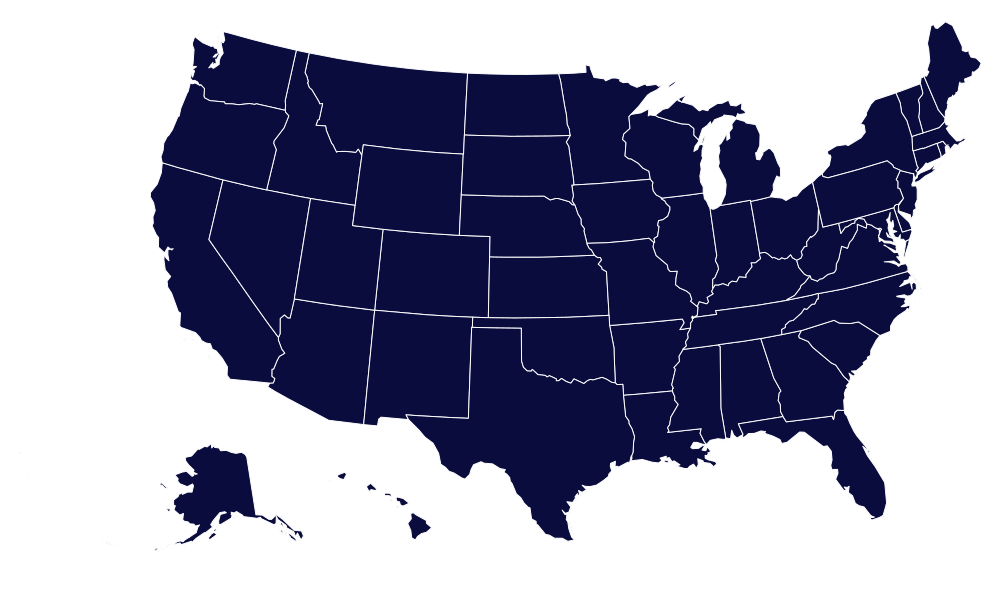
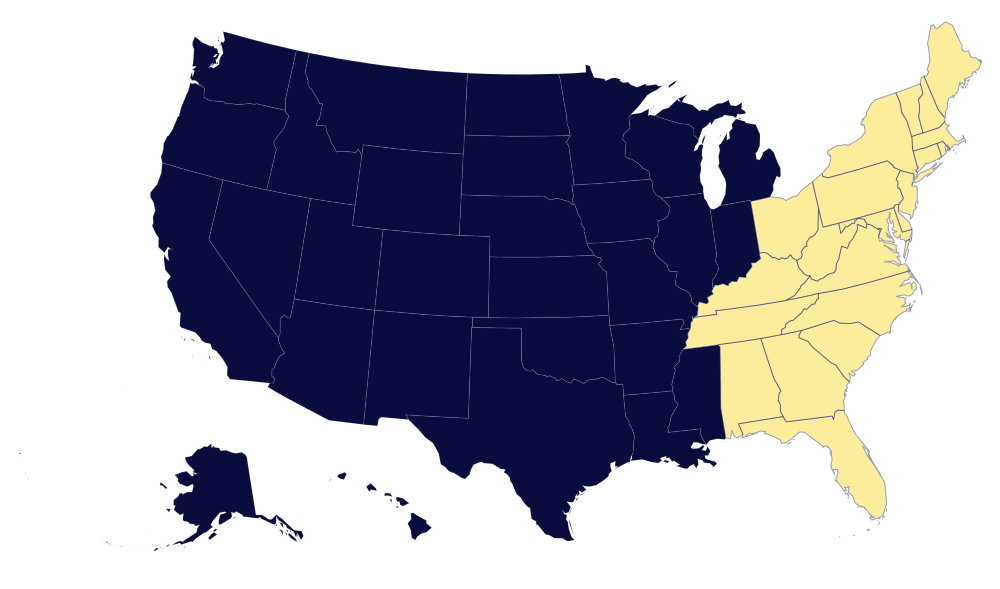
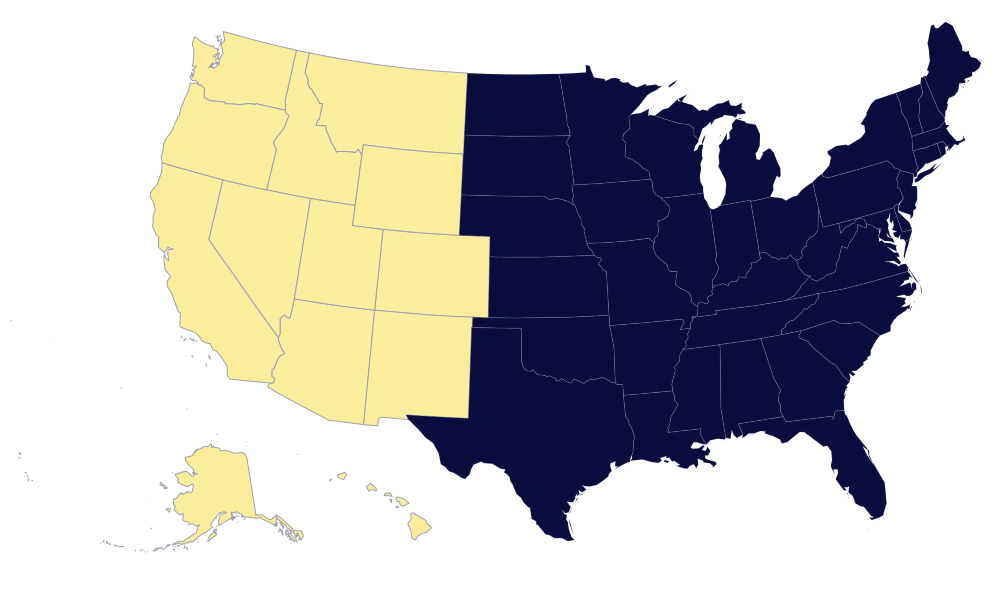
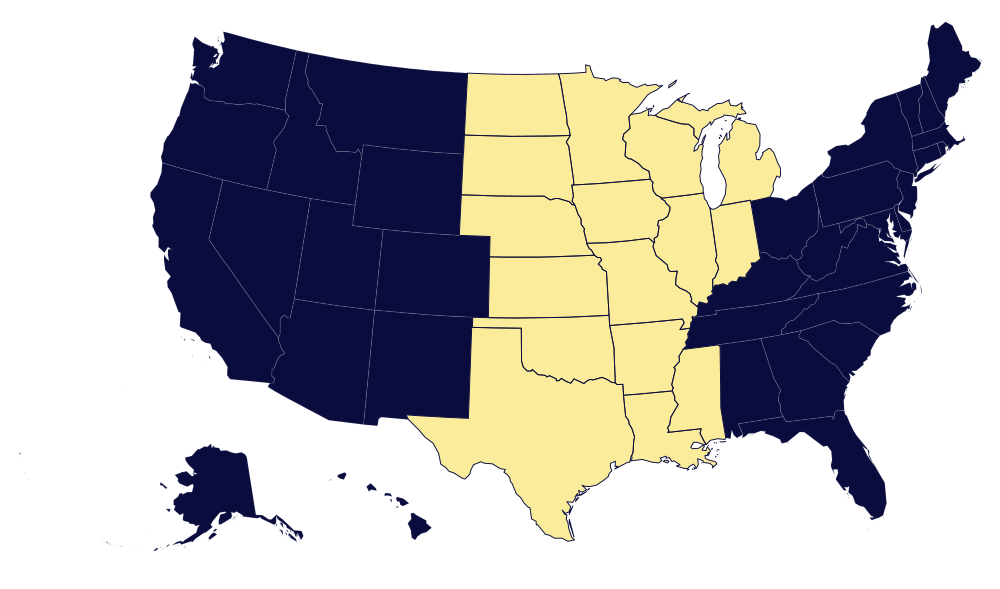
AVLS Nationwide Services
Central States
East Coast
*COMING SOON
West Coast

*COMING SOON
East Coast
Central States
West Coast
AVLS Nationwide Services
CONTACT US
When your event matters, trust your audio visual labor needs to AV Labor Source.
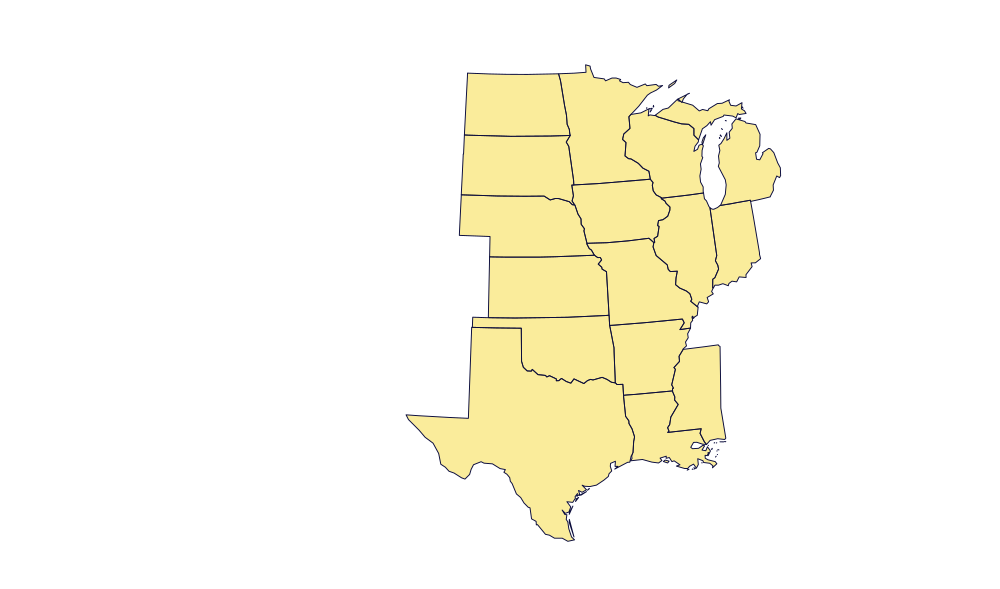
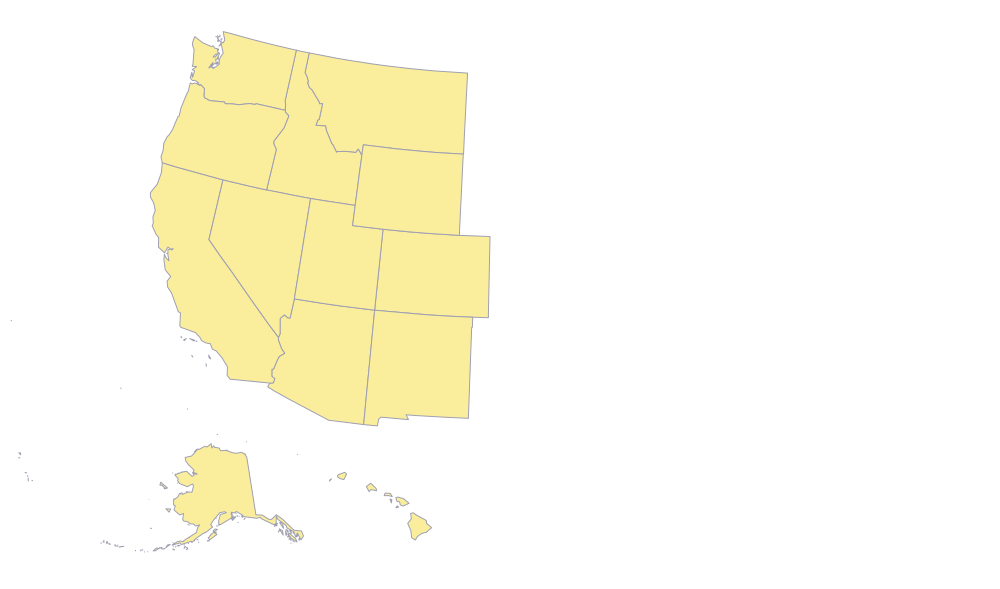
AVLS operate and has proven pool of AV technicians in major cities US Nationwide, such as Las Vegas, Los Angeles, Orlando, Dallas, San Antonio, Austin, Houston, Washington DC, Atlanta, New Orleans, Tennessee and more.
Please complete the form below and we will respond to you as soon as possible. We are available 24 hours a day to assist with your needs. We look forward to showing you what we can do toward the success of your next event.
AVLS operate and has proven pool of AV technicians in major cities US Nationwide, such as Las Vegas, Los Angeles, Orlando, Dallas, San Antonio, Austin, Houston, Washington DC, Atlanta, New Orleans, Tennessee and more.
Please complete the form below and we will respond to you as soon as possible. We are available 24 hours a day to assist with your needs. We look forward to showing you what we can do toward the success of your next event.
EVENT INFORMATION
