





July 21, 2026
What Does a V1 Video Engineer Do at an Event?
Quick Answer
A V1 video engineer operates the primary video switcher at live events, making real-time decisions about which camera feeds appear on screens and in recordings. They control the main video output that audiences see on LED walls, projection screens, and live streams, working as the visual director of the event's video production.
Key Takeaways
What Is a V1 Video Engineer Role at Events
A V1 video engineer serves as the primary video operator and technical director for live event productions. They control the main video switcher, making split-second decisions about which camera angles, graphics, and video sources appear on event screens and in live broadcasts.
The V1 engineer acts as the visual quarterback of the production team. They receive direction from the event director or producer while managing multiple video inputs including cameras, presentation slides, pre-recorded content, and live graphics. Their work directly impacts what attendees see on LED walls, projection screens, confidence monitors, and streaming platforms.
Core responsibilities include:
V1 engineers must maintain constant communication with camera operators, directors, and other technical crew members. They work in high-pressure environments where technical mistakes can affect thousands of attendees or online viewers.
V1 Video Engineer Responsibilities and Duties
V1 video engineers handle the technical execution of an event's visual elements under tight deadlines and high stakes. Their primary duty involves operating video switching equipment that controls what appears on all event displays and streaming outputs.
Technical operations include:
Coordination responsibilities:
V1 engineers must anticipate problems before they occur. Common issues include camera failures, signal dropouts, or last-minute content changes that require immediate technical adjustments.
V1 Video Engineer vs Other Video Roles at Events
V1 video engineers occupy the senior technical position in event video production hierarchies, with distinct responsibilities compared to other video crew members. Understanding these role differences helps event planners build appropriate production teams.
V1 vs V2 Video Engineers:
V1 engineers control the primary video switcher and make all creative switching decisions. V2 engineers serve as assistants, handling camera operation, cable management, and technical support tasks. V2 roles typically require 1-2 years of experience compared to the V1's 3-5 years.
V1 vs Camera Operators:
Camera operators focus on capturing quality footage from assigned positions. V1 engineers select which camera feeds go live and coordinate the overall visual flow. Camera operators take direction from the V1 engineer regarding shot composition and timing.
V1 vs Video Directors:
Video directors make creative decisions about shot selection and visual storytelling. V1 engineers execute those creative decisions through technical operation of switching equipment. Directors focus on the artistic vision while V1 engineers handle technical implementation.
V1 vs Projection Technicians:
AV technicians managing projection systems handle equipment setup and maintenance. V1 engineers control the content that appears on those projection surfaces during live events.
The V1 engineer serves as the technical bridge between creative direction and equipment operation, requiring both artistic sensibility and deep technical knowledge.
What Equipment Does a V1 Video Engineer Use
V1 video engineers operate sophisticated switching and routing equipment designed for live production environments. Their equipment setup forms the central nervous system of an event's video production infrastructure.
Primary switching equipment:
Signal processing gear:
Monitoring and communication:
V1 engineers must understand signal flow diagrams and troubleshoot complex routing issues quickly. They often work with professional AV specialists who handle equipment setup and configuration.
How Much Does a V1 Video Engineer Cost for an Event
V1 video engineer costs vary significantly based on event complexity, location, and duration. Understanding pricing structures helps event planners budget appropriately for professional video production services.
Daily rate ranges:
Geographic variations:
Major markets like Las Vegas, New York, and Los Angeles command premium rates due to higher demand and cost of living. Secondary markets may offer 15-25% lower rates while maintaining quality standards.
Additional cost factors:
Budget planning considerations:
Factor in the total production team when budgeting. V1 engineers work alongside camera operators, lighting technicians, and audio engineers. Total video crew costs typically represent 25-40% of overall AV labor budgets.
Choose experienced V1 engineers for mission-critical events where technical failures could damage your organization's reputation or audience experience.
Do I Need a V1 Video Engineer for My Event
V1 video engineers become essential when events require professional video switching, multiple camera angles, or live streaming capabilities. Simple presentations with single cameras rarely justify the expense, while complex productions depend on skilled V1 operation.
Events that require V1 engineers:
Events that may not need V1 engineers:
Decision factors to consider:
Evaluate your event's visual complexity, audience size, and quality expectations. Events with C-level executives, external audiences, or marketing objectives typically benefit from professional video production. Internal training sessions or small team meetings may not justify the investment.
Consider hiring V1 engineers when video quality directly impacts your event's success or when technical failures could embarrass your organization. The cost of professional video production often represents good insurance against technical disasters.
V1 Video Engineer Live Streaming vs Recording
V1 video engineers handle both live streaming and recording outputs simultaneously, but each application requires different technical approaches and quality standards. Understanding these differences helps event planners communicate requirements effectively.
Live streaming considerations:
Live streams demand real-time decision making with no opportunity for corrections. V1 engineers must maintain consistent video quality while managing bandwidth limitations and encoding requirements. They monitor streaming platforms for technical issues and adjust settings dynamically.
Recording requirements:
Recorded content allows for higher quality settings and multiple backup copies. V1 engineers typically record program feeds plus individual camera isolations for post-production flexibility. Recording workflows require more storage management and file organization.
Technical differences:
Workflow management:
V1 engineers coordinate with event production teams to ensure both outputs meet requirements. They may adjust switching styles for streaming audiences versus in-room attendees, accounting for different viewing experiences and technical limitations.
Many events require both streaming and recording simultaneously, requiring V1 engineers to balance real-time performance with archival quality standards.
Common Mistakes V1 Video Engineers Make
Even experienced V1 video engineers can make errors that impact event quality and audience experience. Understanding common mistakes helps event planners set expectations and implement quality control measures.
Technical mistakes:
Operational errors:
Prevention strategies:
Experienced V1 engineers conduct thorough equipment tests, maintain clear communication protocols, and prepare backup plans for common failure scenarios. They work with skilled technical crews who understand professional production standards.
Event planners should hire V1 engineers with relevant experience for their specific event type and provide adequate rehearsal time for complex productions.
V1 Video Engineer Technical Requirements and Skills
V1 video engineers must master both technical equipment operation and live production workflows to succeed in high-pressure event environments. Their skill set combines hands-on technical knowledge with creative problem-solving abilities.
Essential technical skills:
Production knowledge:
Professional qualifications:
Most V1 positions require 3-5 years of video production experience, often starting in V2 or camera operator roles. Many engineers hold certifications from equipment manufacturers or have formal training in broadcast technology.
Soft skills requirements:
V1 engineers must remain calm under pressure, communicate clearly with diverse team members, and adapt quickly to changing requirements. They often work long hours in challenging environments while maintaining consistent quality standards.
When Should You Hire a V1 Video Engineer
Timing and event characteristics determine when V1 video engineers provide value that justifies their cost. Strategic hiring decisions balance budget constraints with quality requirements and risk management.
Hire V1 engineers when:
Consider alternatives when:
Planning timeline:
Book experienced V1 engineers 4-8 weeks in advance for major events, especially during peak conference seasons. Last-minute bookings often require premium rates or compromise on engineer experience levels.
Risk assessment:
Consider the cost of technical failures versus V1 engineer fees. Events where video problems could embarrass executives, lose customers, or waste attendee time typically justify professional video production investment.
V1 Video Engineer for Small Events vs Large Conferences
V1 video engineer requirements scale dramatically between intimate corporate meetings and major conference productions, affecting equipment needs, crew size, and operational complexity.
Small events (50-200 attendees):
Small events typically use 2-4 cameras with basic switching requirements. V1 engineers operate compact switchers and handle multiple roles including graphics operation and streaming management. Equipment setups emphasize portability and quick deployment.
Large conferences (500+ attendees):
Major conferences require sophisticated video systems with 6-12+ cameras, multiple LED walls, and complex signal routing. V1 engineers focus exclusively on switching while specialized technicians handle graphics, streaming, and technical support. Productions often include backup V1 engineers for redundancy.
Operational differences:
Cost scaling:
Small event V1 services range from $400-600 per day while large conference productions may require $700-800+ daily rates plus overtime. Total video production costs can range from $2,000 for small events to $25,000+ for major conferences.
Quality expectations:
Large conferences demand broadcast-quality production values while small events may accept more modest technical standards. V1 engineers adjust their approach based on audience expectations and budget constraints.
How to Become a V1 Video Engineer
Becoming a V1 video engineer requires progressive skill development through hands-on experience, technical training, and industry networking. The career path typically spans 3-5 years from entry-level positions to senior V1 roles.
Entry-level pathway:
Start as a V2 assistant or camera operator to learn basic video production workflows. Entry positions provide exposure to professional equipment and production environments while building foundational skills. Many engineers begin with AV technician roles that include video responsibilities.
Skill development steps:
Career advancement:
Progress from V2 assistant to lead V1 positions by demonstrating reliability, technical competence, and leadership skills. Many V1 engineers specialize in specific event types like corporate conferences, broadcast productions, or entertainment events.
Professional development:
Join industry organizations like IATSE, InfoComm, or local AV guilds for networking and continuing education opportunities. Attend trade shows and training seminars to stay current with evolving technology and industry standards.
Income potential:
Experienced V1 engineers in major markets can earn $50,000-80,000 annually as freelancers or $45,000-70,000 in staff positions. Specialists in broadcast or high-end corporate production may command premium rates.
FAQ
How long does it take to become a V1 video engineer?
Most V1 engineers require 3-5 years of progressive video production experience, starting from V2 assistant or camera operator roles. The timeline depends on the frequency of work, variety of events, and quality of mentorship received.
What's the difference between V1 and V2 video engineers?
V1 engineers operate the primary video switcher and make all live switching decisions. V2 engineers serve as assistants, handling camera operation, cable management, and technical support tasks under V1 supervision.
Do V1 video engineers work with their own equipment?
Some V1 engineers own portable switching gear for smaller events, but most work with equipment provided by production companies or venues. Large events typically require specialized equipment beyond individual ownership capabilities.
Can V1 video engineers handle audio mixing too?
While V1 engineers understand audio basics, they typically focus exclusively on video switching during events. Audio mixing requires specialized skills and is usually handled by dedicated A1 audio engineers for professional productions.
What happens if a V1 video engineer makes mistakes during live events?
Minor mistakes like missed cuts can usually be corrected quickly, but major errors affecting streaming or recording may require backup systems. Experienced V1 engineers prepare contingency plans and maintain backup equipment for critical events.
How much do V1 video engineers charge for overtime?
Overtime rates typically start at 1.5x regular rates after 10-12 hours, with double-time rates after 14-16 hours. Rates vary by market and contract terms, with some engineers negotiating flat daily rates that include extended hours.
Do I need a V1 engineer for virtual events?
Virtual events often require more complex switching than in-person events, managing multiple presenters, screen shares, and interactive elements. Experienced V1 engineers help ensure professional virtual event production quality.
What size events justify hiring a V1 video engineer?
Events with 3+ cameras, live streaming requirements, or audiences over 100 people typically benefit from professional V1 services. The decision depends on quality expectations, budget, and risk tolerance for technical issues.
Can V1 video engineers work remotely?
Some V1 engineers can operate cloud-based switching systems remotely, but most live events require on-site presence for equipment operation and crew coordination. Remote capabilities depend on available technology and internet infrastructure.
How do V1 video engineers stay current with technology?
Professional V1 engineers attend industry trade shows, manufacturer training programs, and continuing education seminars. Many maintain certifications with major equipment manufacturers and participate in professional organizations.
What backup plans do V1 video engineers prepare?
Experienced V1 engineers prepare backup switchers, redundant signal paths, and alternative streaming methods. They coordinate with technical crews to ensure rapid failover capabilities for mission-critical events.
Do V1 video engineers handle post-production editing?
V1 engineers focus on live production switching and typically don't handle post-production editing. However, they often coordinate with editors by providing organized recordings and technical specifications for post-event processing.
Conclusion
V1 video engineers serve as the visual directors of live events, controlling sophisticated switching equipment that determines what audiences see on screens and in live streams. Their expertise becomes essential for events using multiple cameras, requiring live streaming, or demanding broadcast-quality production values.
Understanding what a V1 video engineer does at an event helps event planners make informed decisions about video production needs and budgets. These professionals combine technical expertise with creative sensibility, working under pressure to deliver seamless visual experiences for both in-person and remote audiences.
When planning your next event, consider whether professional video switching will enhance your audience experience and support your event objectives. The investment in skilled V1 engineering often pays dividends through improved production quality and reduced technical risk.
Ready to hire experienced V1 video engineers for your next event? AV Labor Source connects you with skilled video professionals who deliver exceptional live event production. Our nationwide network includes experienced V1 engineers, camera operators, and complete video production crews ready to support events of any size. Contact us today to discuss your video production staffing needs and ensure your event's visual success.
A V1 video engineer operates the primary video switcher at live events, making real-time decisions about which camera feeds appear on screens and in recordings. They control the main video output that audiences see on LED walls, projection screens, and live streams, working as the visual director of the event's video production.
Key Takeaways
- V1 engineers control the primary video switcher and make all live switching decisions during events
- They manage multiple camera feeds, graphics, and video sources in real-time
- V1 roles require 3-5 years of video production experience and advanced technical skills
- Costs range from $400-800 per day depending on event complexity and location
- V1 engineers work closely with directors and A1 audio engineers for seamless production
- They handle both live streaming outputs and recording feeds simultaneously
- Equipment includes professional video switchers, monitors, and signal routing gear
- V1 engineers differ from V2 assistants who handle camera operation and technical support
- Essential for events with multiple cameras, live streaming, or complex visual requirements
What Is a V1 Video Engineer Role at Events
A V1 video engineer serves as the primary video operator and technical director for live event productions. They control the main video switcher, making split-second decisions about which camera angles, graphics, and video sources appear on event screens and in live broadcasts.
The V1 engineer acts as the visual quarterback of the production team. They receive direction from the event director or producer while managing multiple video inputs including cameras, presentation slides, pre-recorded content, and live graphics. Their work directly impacts what attendees see on LED walls, projection screens, confidence monitors, and streaming platforms.
Core responsibilities include:
- Operating professional video switching consoles
- Managing camera feeds from multiple sources
- Integrating presentation content and graphics overlays
- Coordinating with lighting and audio teams
- Ensuring proper signal routing and video quality
- Handling live streaming technical requirements
V1 engineers must maintain constant communication with camera operators, directors, and other technical crew members. They work in high-pressure environments where technical mistakes can affect thousands of attendees or online viewers.
V1 Video Engineer Responsibilities and Duties
V1 video engineers handle the technical execution of an event's visual elements under tight deadlines and high stakes. Their primary duty involves operating video switching equipment that controls what appears on all event displays and streaming outputs.
Technical operations include:
- Live switching: Making real-time cuts between camera feeds during presentations, performances, or speeches
- Graphics integration: Adding lower thirds, logos, and branded elements to live video feeds
- Signal management: Routing video signals to multiple destinations including LED walls, confidence monitors, and streaming encoders
- Quality control: Monitoring video levels, color accuracy, and technical specifications throughout the event
- Backup management: Maintaining redundant systems and quickly switching to backup feeds when needed
Coordination responsibilities:
- Following shot sheets and rundown documents provided by directors
- Communicating with camera operators about framing and focus requirements
- Syncing video transitions with audio cues and lighting changes
- Managing presentation slides and video playback timing
- Coordinating with A1 audio engineers for synchronized audio-visual elements
V1 engineers must anticipate problems before they occur. Common issues include camera failures, signal dropouts, or last-minute content changes that require immediate technical adjustments.
V1 Video Engineer vs Other Video Roles at Events
V1 video engineers occupy the senior technical position in event video production hierarchies, with distinct responsibilities compared to other video crew members. Understanding these role differences helps event planners build appropriate production teams.
V1 vs V2 Video Engineers:
V1 engineers control the primary video switcher and make all creative switching decisions. V2 engineers serve as assistants, handling camera operation, cable management, and technical support tasks. V2 roles typically require 1-2 years of experience compared to the V1's 3-5 years.
V1 vs Camera Operators:
Camera operators focus on capturing quality footage from assigned positions. V1 engineers select which camera feeds go live and coordinate the overall visual flow. Camera operators take direction from the V1 engineer regarding shot composition and timing.
V1 vs Video Directors:
Video directors make creative decisions about shot selection and visual storytelling. V1 engineers execute those creative decisions through technical operation of switching equipment. Directors focus on the artistic vision while V1 engineers handle technical implementation.
V1 vs Projection Technicians:
AV technicians managing projection systems handle equipment setup and maintenance. V1 engineers control the content that appears on those projection surfaces during live events.
The V1 engineer serves as the technical bridge between creative direction and equipment operation, requiring both artistic sensibility and deep technical knowledge.
What Equipment Does a V1 Video Engineer Use
V1 video engineers operate sophisticated switching and routing equipment designed for live production environments. Their equipment setup forms the central nervous system of an event's video production infrastructure.
Primary switching equipment:
- Video switchers: Professional consoles like Blackmagic ATEM, Roland V-Series, or Ross Video systems with 8-40+ inputs
- Control surfaces: Physical panels with buttons, faders, and joysticks for real-time operation
- Multi-viewer monitors: Large displays showing all camera feeds, program output, and preview content simultaneously
- Routing matrices: Systems that distribute video signals to multiple destinations
Signal processing gear:
- Scalers and converters: Equipment that adjusts resolution and format between different video sources
- Frame synchronizers: Devices that align video timing from multiple cameras and sources
- Distribution amplifiers: Hardware that splits video signals to multiple outputs without quality loss
- Recording devices: Professional recorders that capture program feeds and individual camera isolations
Monitoring and communication:
- Reference monitors: Calibrated displays for accurate color and quality assessment
- Audio monitoring: Speakers or headphones for monitoring embedded audio in video signals
- Intercom systems: Clear-com or similar communication gear for crew coordination
- Streaming encoders: Hardware or software that prepares video for online distribution
V1 engineers must understand signal flow diagrams and troubleshoot complex routing issues quickly. They often work with professional AV specialists who handle equipment setup and configuration.
How Much Does a V1 Video Engineer Cost for an Event
V1 video engineer costs vary significantly based on event complexity, location, and duration. Understanding pricing structures helps event planners budget appropriately for professional video production services.
Daily rate ranges:
- Basic corporate events: $400-550 per day for simple switching with 3-6 cameras
- Complex conferences: $550-700 per day for multi-room productions with graphics integration
- Broadcast-level events: $650-800+ per day for high-end productions with streaming and recording
- Overtime rates: 1.5x regular rate after 10-12 hours, double-time after 14-16 hours
Geographic variations:
Major markets like Las Vegas, New York, and Los Angeles command premium rates due to higher demand and cost of living. Secondary markets may offer 15-25% lower rates while maintaining quality standards.
Additional cost factors:
- Travel and lodging: Required for out-of-market engineers, typically $150-300 per day
- Equipment rental: V1 engineers may provide their own gear for additional fees
- Prep and strike time: Setup and breakdown often billed at reduced rates
- Multi-day discounts: Extended events may qualify for 10-15% rate reductions
Budget planning considerations:
Factor in the total production team when budgeting. V1 engineers work alongside camera operators, lighting technicians, and audio engineers. Total video crew costs typically represent 25-40% of overall AV labor budgets.
Choose experienced V1 engineers for mission-critical events where technical failures could damage your organization's reputation or audience experience.
Do I Need a V1 Video Engineer for My Event
V1 video engineers become essential when events require professional video switching, multiple camera angles, or live streaming capabilities. Simple presentations with single cameras rarely justify the expense, while complex productions depend on skilled V1 operation.
Events that require V1 engineers:
- Multi-camera productions: Any event using 3+ cameras needs professional switching
- Live streaming: Professional streams require real-time switching between sources
- LED wall events: Large displays need professional video control and graphics integration
- Broadcast productions: TV or webcast events require broadcast-standard switching
- Awards ceremonies: Complex rundowns with video playback and live switching
- Product launches: Events mixing live presentation with pre-produced video content
Events that may not need V1 engineers:
- Simple presentations: Single-camera recordings with basic audio
- Small meetings: Internal corporate meetings under 50 attendees
- Static displays: Events using only presentation slides without live switching
- Budget-conscious events: When video production represents less than 5% of total event budget
Decision factors to consider:
Evaluate your event's visual complexity, audience size, and quality expectations. Events with C-level executives, external audiences, or marketing objectives typically benefit from professional video production. Internal training sessions or small team meetings may not justify the investment.
Consider hiring V1 engineers when video quality directly impacts your event's success or when technical failures could embarrass your organization. The cost of professional video production often represents good insurance against technical disasters.
V1 Video Engineer Live Streaming vs Recording
V1 video engineers handle both live streaming and recording outputs simultaneously, but each application requires different technical approaches and quality standards. Understanding these differences helps event planners communicate requirements effectively.
Live streaming considerations:
Live streams demand real-time decision making with no opportunity for corrections. V1 engineers must maintain consistent video quality while managing bandwidth limitations and encoding requirements. They monitor streaming platforms for technical issues and adjust settings dynamically.
Recording requirements:
Recorded content allows for higher quality settings and multiple backup copies. V1 engineers typically record program feeds plus individual camera isolations for post-production flexibility. Recording workflows require more storage management and file organization.
Technical differences:
- Latency: Streaming prioritizes low delay while recording can buffer for quality
- Compression: Live streams use aggressive compression while recordings preserve quality
- Backup systems: Recording allows multiple redundant copies while streaming needs instant failover
- Quality monitoring: Streaming requires constant bandwidth monitoring while recording focuses on file integrity
Workflow management:
V1 engineers coordinate with event production teams to ensure both outputs meet requirements. They may adjust switching styles for streaming audiences versus in-room attendees, accounting for different viewing experiences and technical limitations.
Many events require both streaming and recording simultaneously, requiring V1 engineers to balance real-time performance with archival quality standards.
Common Mistakes V1 Video Engineers Make
Even experienced V1 video engineers can make errors that impact event quality and audience experience. Understanding common mistakes helps event planners set expectations and implement quality control measures.
Technical mistakes:
- Audio-video sync issues: Failing to maintain proper timing between audio and video signals
- Wrong aspect ratios: Sending 4:3 content to 16:9 displays or vice versa, creating distorted images
- Color space errors: Mismatched color settings between cameras and displays
- Signal routing failures: Sending wrong feeds to streaming platforms or recording devices
- Graphics timing: Poor coordination of lower thirds and overlay graphics with live content
Operational errors:
- Missed cues: Failing to follow director instructions or rundown timing
- Camera selection: Choosing unflattering angles or poorly framed shots during critical moments
- Backup failures: Not testing redundant systems before they're needed
- Communication breakdowns: Poor coordination with camera operators and other crew members
- Equipment overload: Pushing switchers beyond their processing capabilities
Prevention strategies:
Experienced V1 engineers conduct thorough equipment tests, maintain clear communication protocols, and prepare backup plans for common failure scenarios. They work with skilled technical crews who understand professional production standards.
Event planners should hire V1 engineers with relevant experience for their specific event type and provide adequate rehearsal time for complex productions.
V1 Video Engineer Technical Requirements and Skills
V1 video engineers must master both technical equipment operation and live production workflows to succeed in high-pressure event environments. Their skill set combines hands-on technical knowledge with creative problem-solving abilities.
Essential technical skills:
- Switcher operation: Proficiency with major video switching platforms including Blackmagic, Ross, and Roland systems
- Signal flow understanding: Knowledge of video routing, conversion, and distribution systems
- Streaming protocols: Familiarity with RTMP, SRT, and other streaming technologies
- Video standards: Understanding of resolution, frame rates, color spaces, and broadcast specifications
- Troubleshooting: Ability to diagnose and resolve technical issues quickly during live events
Production knowledge:
- Live direction: Understanding of shot composition, pacing, and visual storytelling
- Show flow: Ability to follow complex rundowns and anticipate upcoming segments
- Team coordination: Skills in communicating with directors, camera operators, and technical crew
- Graphics integration: Experience with character generators and overlay systems
- Multi-format output: Managing simultaneous feeds for different display types and streaming platforms
Professional qualifications:
Most V1 positions require 3-5 years of video production experience, often starting in V2 or camera operator roles. Many engineers hold certifications from equipment manufacturers or have formal training in broadcast technology.
Soft skills requirements:
V1 engineers must remain calm under pressure, communicate clearly with diverse team members, and adapt quickly to changing requirements. They often work long hours in challenging environments while maintaining consistent quality standards.
When Should You Hire a V1 Video Engineer
Timing and event characteristics determine when V1 video engineers provide value that justifies their cost. Strategic hiring decisions balance budget constraints with quality requirements and risk management.
Hire V1 engineers when:
- Multiple cameras required: Events using 3+ cameras need professional switching coordination
- Live streaming critical: When online audience experience directly impacts event success
- High-stakes presentations: C-level executives, product launches, or investor presentations
- Complex visual requirements: Events mixing live content, graphics, and pre-recorded video
- Large audiences: In-person attendance over 200 or streaming audiences over 500 viewers
- Brand reputation matters: When technical failures could damage organizational credibility
Consider alternatives when:
- Simple recordings: Single-camera documentation without live switching needs
- Limited budgets: When video production represents less than 3% of total event costs
- Internal meetings: Routine corporate communications without external audiences
- Venue limitations: Locations without adequate power, internet, or technical infrastructure
Planning timeline:
Book experienced V1 engineers 4-8 weeks in advance for major events, especially during peak conference seasons. Last-minute bookings often require premium rates or compromise on engineer experience levels.
Risk assessment:
Consider the cost of technical failures versus V1 engineer fees. Events where video problems could embarrass executives, lose customers, or waste attendee time typically justify professional video production investment.
V1 Video Engineer for Small Events vs Large Conferences
V1 video engineer requirements scale dramatically between intimate corporate meetings and major conference productions, affecting equipment needs, crew size, and operational complexity.
Small events (50-200 attendees):
Small events typically use 2-4 cameras with basic switching requirements. V1 engineers operate compact switchers and handle multiple roles including graphics operation and streaming management. Equipment setups emphasize portability and quick deployment.
Large conferences (500+ attendees):
Major conferences require sophisticated video systems with 6-12+ cameras, multiple LED walls, and complex signal routing. V1 engineers focus exclusively on switching while specialized technicians handle graphics, streaming, and technical support. Productions often include backup V1 engineers for redundancy.
Operational differences:
- Crew size: Small events may have 2-4 video crew members while large conferences employ 8-15+ specialists
- Equipment complexity: Small events use integrated switchers while large productions require modular systems
- Rehearsal time: Small events may have 1-2 hours of setup while conferences need full day rehearsals
- Backup systems: Large events require redundant switchers, cameras, and signal paths
Cost scaling:
Small event V1 services range from $400-600 per day while large conference productions may require $700-800+ daily rates plus overtime. Total video production costs can range from $2,000 for small events to $25,000+ for major conferences.
Quality expectations:
Large conferences demand broadcast-quality production values while small events may accept more modest technical standards. V1 engineers adjust their approach based on audience expectations and budget constraints.
How to Become a V1 Video Engineer
Becoming a V1 video engineer requires progressive skill development through hands-on experience, technical training, and industry networking. The career path typically spans 3-5 years from entry-level positions to senior V1 roles.
Entry-level pathway:
Start as a V2 assistant or camera operator to learn basic video production workflows. Entry positions provide exposure to professional equipment and production environments while building foundational skills. Many engineers begin with AV technician roles that include video responsibilities.
Skill development steps:
- Equipment training: Learn major switcher platforms through manufacturer training programs or technical schools
- Production experience: Work on diverse event types to understand different switching styles and requirements
- Technical knowledge: Study video engineering concepts including signal flow, formats, and streaming protocols
- Communication skills: Develop clear communication abilities for high-pressure production environments
Career advancement:
Progress from V2 assistant to lead V1 positions by demonstrating reliability, technical competence, and leadership skills. Many V1 engineers specialize in specific event types like corporate conferences, broadcast productions, or entertainment events.
Professional development:
Join industry organizations like IATSE, InfoComm, or local AV guilds for networking and continuing education opportunities. Attend trade shows and training seminars to stay current with evolving technology and industry standards.
Income potential:
Experienced V1 engineers in major markets can earn $50,000-80,000 annually as freelancers or $45,000-70,000 in staff positions. Specialists in broadcast or high-end corporate production may command premium rates.
FAQ
How long does it take to become a V1 video engineer?
Most V1 engineers require 3-5 years of progressive video production experience, starting from V2 assistant or camera operator roles. The timeline depends on the frequency of work, variety of events, and quality of mentorship received.
What's the difference between V1 and V2 video engineers?
V1 engineers operate the primary video switcher and make all live switching decisions. V2 engineers serve as assistants, handling camera operation, cable management, and technical support tasks under V1 supervision.
Do V1 video engineers work with their own equipment?
Some V1 engineers own portable switching gear for smaller events, but most work with equipment provided by production companies or venues. Large events typically require specialized equipment beyond individual ownership capabilities.
Can V1 video engineers handle audio mixing too?
While V1 engineers understand audio basics, they typically focus exclusively on video switching during events. Audio mixing requires specialized skills and is usually handled by dedicated A1 audio engineers for professional productions.
What happens if a V1 video engineer makes mistakes during live events?
Minor mistakes like missed cuts can usually be corrected quickly, but major errors affecting streaming or recording may require backup systems. Experienced V1 engineers prepare contingency plans and maintain backup equipment for critical events.
How much do V1 video engineers charge for overtime?
Overtime rates typically start at 1.5x regular rates after 10-12 hours, with double-time rates after 14-16 hours. Rates vary by market and contract terms, with some engineers negotiating flat daily rates that include extended hours.
Do I need a V1 engineer for virtual events?
Virtual events often require more complex switching than in-person events, managing multiple presenters, screen shares, and interactive elements. Experienced V1 engineers help ensure professional virtual event production quality.
What size events justify hiring a V1 video engineer?
Events with 3+ cameras, live streaming requirements, or audiences over 100 people typically benefit from professional V1 services. The decision depends on quality expectations, budget, and risk tolerance for technical issues.
Can V1 video engineers work remotely?
Some V1 engineers can operate cloud-based switching systems remotely, but most live events require on-site presence for equipment operation and crew coordination. Remote capabilities depend on available technology and internet infrastructure.
How do V1 video engineers stay current with technology?
Professional V1 engineers attend industry trade shows, manufacturer training programs, and continuing education seminars. Many maintain certifications with major equipment manufacturers and participate in professional organizations.
What backup plans do V1 video engineers prepare?
Experienced V1 engineers prepare backup switchers, redundant signal paths, and alternative streaming methods. They coordinate with technical crews to ensure rapid failover capabilities for mission-critical events.
Do V1 video engineers handle post-production editing?
V1 engineers focus on live production switching and typically don't handle post-production editing. However, they often coordinate with editors by providing organized recordings and technical specifications for post-event processing.
Conclusion
V1 video engineers serve as the visual directors of live events, controlling sophisticated switching equipment that determines what audiences see on screens and in live streams. Their expertise becomes essential for events using multiple cameras, requiring live streaming, or demanding broadcast-quality production values.
Understanding what a V1 video engineer does at an event helps event planners make informed decisions about video production needs and budgets. These professionals combine technical expertise with creative sensibility, working under pressure to deliver seamless visual experiences for both in-person and remote audiences.
When planning your next event, consider whether professional video switching will enhance your audience experience and support your event objectives. The investment in skilled V1 engineering often pays dividends through improved production quality and reduced technical risk.
Ready to hire experienced V1 video engineers for your next event? AV Labor Source connects you with skilled video professionals who deliver exceptional live event production. Our nationwide network includes experienced V1 engineers, camera operators, and complete video production crews ready to support events of any size. Contact us today to discuss your video production staffing needs and ensure your event's visual success.
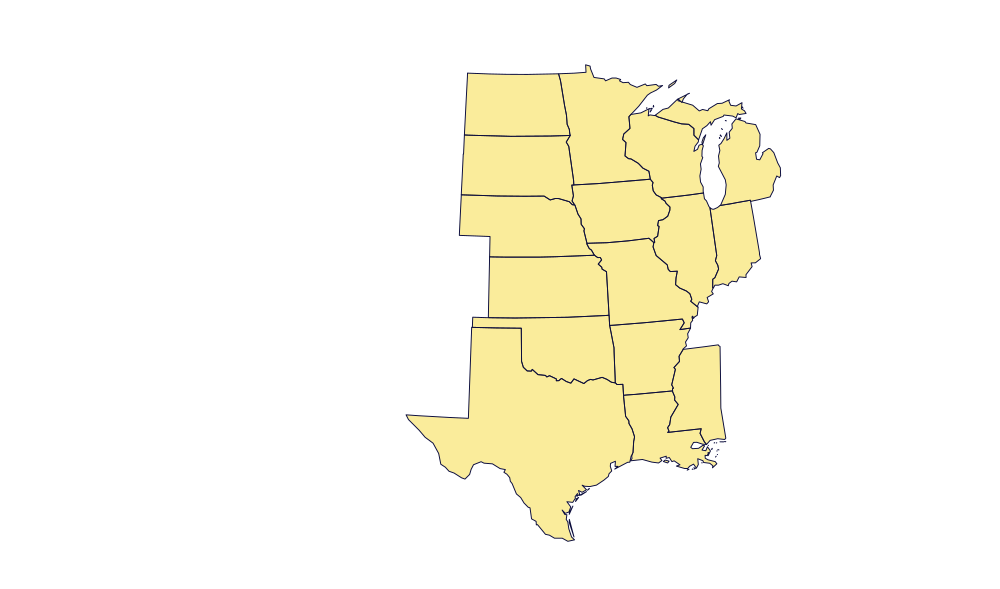
AVLS Nationwide Services
Central States
East Coast
*COMING SOON
West Coast


*COMING SOON
East Coast
Central States
West Coast
AVLS Nationwide Services
CONTACT US
When your event matters, trust your audio visual labor needs to AV Labor Source.
AVLS operate and has proven pool of AV technicians in major cities US Nationwide, such as Las Vegas, Los Angeles, Orlando, Dallas, San Antonio, Austin, Houston, Washington DC, Atlanta, New Orleans, Tennessee and more.
Please complete the form below and we will respond to you as soon as possible. We are available 24 hours a day to assist with your needs. We look forward to showing you what we can do toward the success of your next event.
AVLS operate and has proven pool of AV technicians in major cities US Nationwide, such as Las Vegas, Los Angeles, Orlando, Dallas, San Antonio, Austin, Houston, Washington DC, Atlanta, New Orleans, Tennessee and more.
Please complete the form below and we will respond to you as soon as possible. We are available 24 hours a day to assist with your needs. We look forward to showing you what we can do toward the success of your next event.
EVENT INFORMATION
