





August 7, 2026
Breakout Room Operator Guide for Conferences
Quick Answer
A breakout room operator manages virtual conference sessions by creating, monitoring, and facilitating smaller group discussions within larger events. They handle technical setup, participant assignments, troubleshooting connection issues, and ensure productive discussions stay on track. This role requires both technical platform knowledge and strong communication skills to deliver seamless conference experiences.
Key Takeaways
What Is a Breakout Room Operator and What Do They Do
A breakout room operator is a specialized conference technician who manages virtual small-group sessions within larger online events. They create, configure, and monitor multiple simultaneous discussion rooms while providing technical support to participants and facilitators.
The operator's primary responsibilities include pre-event platform setup, real-time session management, and troubleshooting technical issues. Before conferences begin, they configure room settings, test audio and video functionality, and prepare participant assignment lists. During events, operators create rooms on demand, move attendees between sessions, and coordinate timing with the main conference schedule.
Core operator duties:
Operators work behind the scenes to ensure seamless transitions between main presentations and small group activities. They serve as the technical backbone that enables productive networking, workshops, and collaborative discussions within virtual conference environments.
How to Set Up Breakout Rooms for Virtual Conferences
Setting up breakout rooms requires systematic platform configuration and participant preparation before conference day arrives. Start by enabling breakout room features in your chosen platform and configuring default settings for room capacity, time limits, and moderator permissions.
Pre-event setup checklist:
Platform-specific considerations:
Test your complete setup with a small group of colleagues at least one week before the actual conference. This rehearsal helps identify potential technical issues and allows operators to practice room management workflows. Document any platform-specific quirks or workarounds discovered during testing.
Choose your assignment method based on conference goals. Random assignments work well for networking events, while strategic groupings based on industry, experience level, or geographic location better serve targeted discussions. Prepare both primary and backup assignment lists to handle no-shows and last-minute registrations.
Breakout Room Operator vs Conference Moderator Differences
Breakout room operators and conference moderators serve distinct but complementary roles in virtual event management. Operators focus on technical platform management and logistics, while moderators handle content facilitation and participant engagement within individual sessions.
Breakout room operators handle:
Conference moderators manage:
The operator typically manages 5-10 breakout rooms simultaneously from a central control position, while moderators focus intensively on one specific room's discussion quality. Operators need strong technical skills and multitasking abilities, whereas moderators require excellent communication and group facilitation experience.
When to use both roles:
For smaller events under 50 participants, one experienced person can often handle both operator and moderator responsibilities, though this requires careful session planning and simplified room configurations.
Best Practices for Managing Breakout Rooms During Events
Effective breakout room management requires proactive monitoring, clear communication protocols, and quick response systems for technical issues. Successful operators maintain awareness of all active rooms while providing unobtrusive support that enhances rather than disrupts participant experiences.
Real-time management strategies:
Communication best practices:
Timing and transitions:
Monitor room activity without being intrusive. Most platforms allow operators to see participant lists and basic engagement metrics without joining rooms or listening to conversations. Use this information to identify rooms that might need technical support or facilitation assistance.
Keep detailed logs of technical issues, participant feedback, and successful solutions. This documentation helps improve future events and provides valuable insights for conference organizers about platform performance and participant needs.
How to Assign Attendees to Breakout Rooms Automatically
Automatic assignment features streamline participant distribution and reduce operator workload during large conferences. Most platforms offer random assignment, pre-configured groupings, or algorithm-based distribution options that can be customized based on registration data and session objectives.
Platform automatic assignment options:
Setting up automatic assignments:
Best practices for automatic systems:
Random assignment works well for networking sessions where diverse interactions are desired. Strategic assignments based on industry, experience level, or geographic location better serve targeted learning objectives or regional networking goals.
Consider hybrid approaches that combine automatic distribution with manual adjustments. Start with algorithm-based assignments, then allow operators to make strategic modifications based on real-time attendance patterns and participant requests.
What Software Platforms Support Breakout Rooms for Conferences
Major video conferencing platforms offer breakout room functionality with varying feature sets, capacity limits, and management tools. Platform selection should align with conference size, technical requirements, and budget constraints while ensuring reliable performance for your specific event needs.
Leading platforms and capabilities:
Platform-specific advantages:
Essential features to evaluate:
Consider platform familiarity among your target audience. Organizations already using Microsoft Teams for daily operations may prefer staying within that ecosystem, while events targeting diverse audiences might benefit from Zoom's widespread adoption and intuitive interface.
Test your chosen platform thoroughly with realistic participant numbers and network conditions. Some platforms perform differently under load, and breakout room performance can vary significantly from main session quality.
Troubleshooting Breakout Room Connection Issues
Connection problems in breakout rooms typically stem from network bandwidth limitations, platform-specific bugs, or user device configurations. Effective troubleshooting requires systematic diagnosis procedures and multiple solution pathways to minimize disruption to ongoing sessions.
Common connection issues and solutions:
Audio/Video Problems:
Room Access Issues:
Platform Performance Issues:
Systematic troubleshooting approach:
Prevention strategies:
Document all technical issues and their solutions during events. This information helps improve future conferences and provides valuable feedback to platform vendors about performance under real-world conditions.
How Long Should Breakout Room Sessions Be
Optimal breakout room session length depends on discussion objectives, participant engagement levels, and overall conference schedule constraints. Most effective sessions run 15-20 minutes for networking or quick discussions, while workshop-style sessions may extend to 45-60 minutes with structured agendas.
Recommended session lengths by purpose:
Factors affecting optimal timing:
Session management best practices:
Timing strategies for different conference formats:
Monitor participant engagement during sessions and adjust future timing based on observed discussion patterns. Rooms that consistently finish early may benefit from additional structured activities, while rooms struggling to complete objectives may need extended time or simplified agendas.
Can Breakout Room Operators See What Attendees Are Discussing
Breakout room operators cannot automatically see or hear participant discussions unless they specifically join rooms or participants explicitly invite them. Most platforms provide operators with basic monitoring capabilities like participant counts, room activity status, and technical performance metrics without access to actual conversation content.
What operators can monitor:
What operators cannot access:
Privacy and access considerations:
When operators might need room access:
Best practices for operator access:
This privacy design allows participants to engage in open discussions while ensuring operators can provide necessary technical support without being intrusive or compromising conversation quality.
Tips for Keeping Breakout Room Discussions on Track
Productive breakout room discussions require clear objectives, structured activities, and gentle guidance to maintain focus without stifling natural conversation flow. Effective facilitation combines pre-planned discussion frameworks with flexible response to participant interests and energy levels.
Pre-session preparation strategies:
During-session facilitation techniques:
Discussion structure options:
Maintaining engagement without being intrusive:
Handling common challenges:
Work with experienced corporate event AV crews to ensure technical reliability supports rather than hinders discussion quality.
Breakout Rooms for Small Conferences vs Large Conferences
Conference size significantly impacts breakout room strategy, technical requirements, and operator responsibilities. Small conferences allow for more personalized attention and flexible management, while large events require systematic processes and specialized technical support teams.
Small conferences (under 100 participants):
Large conferences (100+ participants):
Operational differences:
Scaling considerations:
Best practices by size:
Consider hiring experienced AV technicians for corporate events to ensure professional technical support that scales appropriately with your conference size and complexity requirements.
Common Mistakes Breakout Room Operators Make
Inexperienced operators often struggle with timing, communication, and technical preparation issues that can significantly impact participant experience and conference success. Understanding these common pitfalls helps operators develop better procedures and contingency plans.
Technical preparation mistakes:
Participant management errors:
Communication and timing issues:
Operational oversights:
Prevention strategies:
Quality assurance measures:
Learn from experienced AV labor and staffing professionals who understand the technical and operational complexities of managing large-scale virtual events effectively.
How to Handle No-Shows in Assigned Breakout Rooms
No-shows create unbalanced room assignments and can negatively impact discussion quality for attending participants. Effective management requires real-time monitoring, flexible reassignment procedures, and backup participant strategies to maintain optimal group sizes and engagement levels.
Real-time monitoring and response:
Reassignment strategies:
Communication protocols:
Backup strategies for chronic no-shows:
Prevention measures:
Post-event analysis:
Recording Breakout Room Sessions Best Practices
Recording breakout room sessions requires careful consideration of privacy, consent, technical capabilities, and legal compliance requirements. Effective recording policies balance documentation needs with participant comfort and platform technical limitations.
Legal and privacy considerations:
Technical recording options:
Recording management strategies:
Content organization and distribution:
Alternative documentation methods:
Best practices for recorded sessions:
Work with professional corporate event AV staffing teams to ensure reliable recording capabilities that meet your specific documentation and compliance requirements.
Frequently Asked Questions
How many breakout rooms can one operator manage effectively?
One experienced operator can manage 5-8 breakout rooms simultaneously for small conferences under 100 participants. Large events with 100+ participants typically require 2-4 operators with specialized roles to ensure adequate technical support and participant assistance.
What happens if the main platform crashes during breakout sessions?
Prepare backup communication methods like phone bridges or alternative platforms. Maintain participant contact lists and pre-configured backup rooms. Most platforms recover within 5-10 minutes, but having contingency plans prevents complete session loss.
Can participants move themselves between breakout rooms?
Platform capabilities vary significantly. Zoom allows self-movement if enabled by administrators, while Microsoft Teams requires operator assistance. Configure settings based on your event's need for structure versus participant flexibility.
How do you handle participants who refuse to participate in breakout discussions?
Offer alternative engagement methods like chat participation or observer roles. Some participants prefer listening and taking notes rather than active discussion. Avoid forcing participation, as this can create negative experiences for other room members.
What's the minimum number of participants needed for effective breakout rooms?
Groups of 3-4 participants work well for focused discussions, while 5-8 participants suit broader networking or brainstorming sessions. Avoid rooms with only 2 participants, as discussions often feel awkward and forced.
How do you prevent technical issues from disrupting ongoing discussions?
Test all platform features thoroughly before events, maintain backup room configurations, and provide clear troubleshooting instructions to participants. Quick response to technical issues minimizes disruption to productive discussions.
Can breakout rooms have different settings or features enabled?
Yes, most platforms allow customized settings per room including recording permissions, chat features, screen sharing capabilities, and moderator controls. Configure settings based on specific session objectives and content requirements.
How do you manage breakout rooms across different time zones?
Schedule sessions during overlapping business hours when possible, clearly communicate all times in multiple time zones, and consider regional breakout sessions for better participant engagement and technical performance.
What backup plans should operators prepare for large conferences?
Maintain alternative platform accounts, prepare backup room configurations, establish communication protocols with technical support teams, and create simplified session formats that work with reduced technical capabilities if needed.
How do you measure breakout room session success?
Track participant engagement metrics, collect post-session feedback, monitor technical performance data, and evaluate achievement of stated session objectives. Document lessons learned for continuous improvement of future events.
Can operators provide real-time support without joining rooms?
Yes, use private chat messages, platform announcement features, and direct messaging to provide technical support and guidance without disrupting ongoing discussions. Most issues can be resolved without operator presence in rooms.
What training do breakout room operators need?
Operators need platform-specific technical training, customer service skills, basic troubleshooting knowledge, and experience with virtual event management. Hands-on practice with realistic scenarios builds confidence and competence.
Conclusion
Successful breakout room operation requires careful planning, technical expertise, and strong communication skills to create engaging virtual conference experiences. Operators serve as the invisible backbone that enables productive small-group discussions within larger events, managing everything from technical setup to real-time troubleshooting.
The key to effective breakout room management lies in thorough preparation, systematic monitoring, and quick response to participant needs. Whether managing small networking sessions or complex multi-room conferences, operators must balance technical reliability with participant experience to achieve conference objectives.
As virtual and hybrid events continue evolving, breakout room operators play an increasingly critical role in conference success. Investing in proper training, reliable technology, and experienced technical support ensures that breakout sessions enhance rather than hinder overall event quality.
Ready to ensure flawless breakout room management for your next conference? AV Labor Source provides experienced operators and technical support teams who specialize in virtual event management. Our professionals handle everything from platform setup to real-time troubleshooting, ensuring your breakout sessions run smoothly and achieve their objectives. Contact our team to discuss your conference technical staffing needs and discover how professional operator support can elevate your virtual event experience.
A breakout room operator manages virtual conference sessions by creating, monitoring, and facilitating smaller group discussions within larger events. They handle technical setup, participant assignments, troubleshooting connection issues, and ensure productive discussions stay on track. This role requires both technical platform knowledge and strong communication skills to deliver seamless conference experiences.
Key Takeaways
- Breakout room operators create and manage virtual small-group sessions during conferences
- Pre-event setup includes testing platforms, configuring room settings, and preparing participant assignments
- Operators monitor multiple rooms simultaneously while providing real-time technical support
- Effective session management requires 15-20 minute time blocks with clear objectives
- Common platforms include Zoom, Microsoft Teams, and WebEx with varying feature sets
- Operators cannot see or hear discussions unless specifically invited by participants
- Success depends on proactive communication, quick problem-solving, and backup contingency plans
- Small conferences (under 100) need one operator while large events require dedicated teams
- Recording policies must be clearly communicated and consistently enforced across all rooms
What Is a Breakout Room Operator and What Do They Do
A breakout room operator is a specialized conference technician who manages virtual small-group sessions within larger online events. They create, configure, and monitor multiple simultaneous discussion rooms while providing technical support to participants and facilitators.
The operator's primary responsibilities include pre-event platform setup, real-time session management, and troubleshooting technical issues. Before conferences begin, they configure room settings, test audio and video functionality, and prepare participant assignment lists. During events, operators create rooms on demand, move attendees between sessions, and coordinate timing with the main conference schedule.
Core operator duties:
- Creating and naming breakout rooms according to session agendas
- Assigning participants to appropriate rooms based on registration data or random distribution
- Monitoring room activity levels and participant engagement
- Providing technical support for connection, audio, and video issues
- Coordinating session timing and transitions back to main sessions
- Managing late arrivals and room reassignments
- Communicating with session facilitators about room status and participant counts
Operators work behind the scenes to ensure seamless transitions between main presentations and small group activities. They serve as the technical backbone that enables productive networking, workshops, and collaborative discussions within virtual conference environments.
How to Set Up Breakout Rooms for Virtual Conferences
Setting up breakout rooms requires systematic platform configuration and participant preparation before conference day arrives. Start by enabling breakout room features in your chosen platform and configuring default settings for room capacity, time limits, and moderator permissions.
Pre-event setup checklist:
- Enable breakout room functionality in platform admin settings
- Create room naming conventions that match session agendas
- Configure default room settings (capacity limits, recording permissions, chat features)
- Test audio and video quality across different room configurations
- Prepare participant assignment spreadsheets with backup groupings
- Set up co-host permissions for session facilitators
- Create troubleshooting quick-reference guides for common issues
Platform-specific considerations:
- Zoom: Allows up to 50 breakout rooms with manual or automatic assignment options
- Microsoft Teams: Supports up to 20 breakout rooms with integrated file sharing
- WebEx: Offers advanced polling and whiteboard features within rooms
- GoToMeeting: Provides simplified room creation with basic collaboration tools
Test your complete setup with a small group of colleagues at least one week before the actual conference. This rehearsal helps identify potential technical issues and allows operators to practice room management workflows. Document any platform-specific quirks or workarounds discovered during testing.
Choose your assignment method based on conference goals. Random assignments work well for networking events, while strategic groupings based on industry, experience level, or geographic location better serve targeted discussions. Prepare both primary and backup assignment lists to handle no-shows and last-minute registrations.
Breakout Room Operator vs Conference Moderator Differences
Breakout room operators and conference moderators serve distinct but complementary roles in virtual event management. Operators focus on technical platform management and logistics, while moderators handle content facilitation and participant engagement within individual sessions.
Breakout room operators handle:
- Technical room creation and configuration
- Participant assignment and movement between rooms
- Platform troubleshooting and connection support
- Session timing and coordination with main event schedule
- Backend monitoring of multiple rooms simultaneously
- Communication with event organizers about technical issues
Conference moderators manage:
- Discussion facilitation and content guidance within specific rooms
- Participant engagement and interaction encouragement
- Session objective achievement and agenda adherence
- Conflict resolution and group dynamics management
- Note-taking or summary preparation for reporting back to main session
- Individual participant support for content-related questions
The operator typically manages 5-10 breakout rooms simultaneously from a central control position, while moderators focus intensively on one specific room's discussion quality. Operators need strong technical skills and multitasking abilities, whereas moderators require excellent communication and group facilitation experience.
When to use both roles:
- Large conferences with 100+ participants benefit from dedicated operators and moderators
- Complex multi-session agendas require specialized technical coordination
- High-stakes events where both technical reliability and content quality are critical
- International conferences spanning multiple time zones with varying technical needs
For smaller events under 50 participants, one experienced person can often handle both operator and moderator responsibilities, though this requires careful session planning and simplified room configurations.
Best Practices for Managing Breakout Rooms During Events
Effective breakout room management requires proactive monitoring, clear communication protocols, and quick response systems for technical issues. Successful operators maintain awareness of all active rooms while providing unobtrusive support that enhances rather than disrupts participant experiences.
Real-time management strategies:
- Monitor participant counts and engagement levels across all rooms
- Maintain open communication channels with session facilitators
- Provide 5-minute and 2-minute warnings before session transitions
- Keep backup rooms configured for unexpected technical failures
- Document issues and solutions for post-event analysis
- Coordinate with main session presenters for smooth transitions
Communication best practices:
- Use private chat messages to contact individual participants about technical issues
- Send broadcast announcements for timing updates and general instructions
- Establish clear escalation procedures for complex technical problems
- Maintain professional, helpful tone in all participant interactions
- Prepare standard response templates for common questions and issues
Timing and transitions:
- Start sessions promptly to maximize discussion time
- Provide clear instructions for returning to main sessions
- Allow buffer time between sessions for technical transitions
- Handle late arrivals without disrupting ongoing discussions
- Coordinate with AV technicians for complex technical requirements
Monitor room activity without being intrusive. Most platforms allow operators to see participant lists and basic engagement metrics without joining rooms or listening to conversations. Use this information to identify rooms that might need technical support or facilitation assistance.
Keep detailed logs of technical issues, participant feedback, and successful solutions. This documentation helps improve future events and provides valuable insights for conference organizers about platform performance and participant needs.
How to Assign Attendees to Breakout Rooms Automatically
Automatic assignment features streamline participant distribution and reduce operator workload during large conferences. Most platforms offer random assignment, pre-configured groupings, or algorithm-based distribution options that can be customized based on registration data and session objectives.
Platform automatic assignment options:
- Random distribution: Evenly distributes participants across available rooms
- Pre-assigned groups: Uses uploaded participant lists with predetermined room assignments
- Balanced assignment: Considers participant roles, experience levels, or other criteria
- Self-selection: Allows participants to choose their preferred discussion topics or rooms
Setting up automatic assignments:
- Upload participant registration data with relevant grouping criteria
- Configure assignment rules based on conference objectives (networking vs. skill-based discussions)
- Set room capacity limits to ensure optimal group sizes (typically 4-8 participants per room)
- Test assignment algorithms with sample data before the event
- Prepare manual override procedures for special requests or technical issues
Best practices for automatic systems:
- Always maintain 10-15% buffer capacity for last-minute registrations
- Create backup assignment scenarios for different attendance levels
- Include VIP or speaker assignment protocols that override automatic systems
- Test assignment speed and accuracy with realistic participant numbers
- Prepare manual assignment procedures as backup for system failures
Random assignment works well for networking sessions where diverse interactions are desired. Strategic assignments based on industry, experience level, or geographic location better serve targeted learning objectives or regional networking goals.
Consider hybrid approaches that combine automatic distribution with manual adjustments. Start with algorithm-based assignments, then allow operators to make strategic modifications based on real-time attendance patterns and participant requests.
What Software Platforms Support Breakout Rooms for Conferences
Major video conferencing platforms offer breakout room functionality with varying feature sets, capacity limits, and management tools. Platform selection should align with conference size, technical requirements, and budget constraints while ensuring reliable performance for your specific event needs.
Leading platforms and capabilities:
Platform | Max Rooms | Capacity per Room | Key Features |
Zoom | 50 | 200 participants | Advanced assignment options, co-host controls, timer features |
Microsoft Teams | 20 | 300 participants | Integrated file sharing, Office 365 compatibility, recording |
WebEx | 100 | 1000 participants | Polling, whiteboard, advanced moderation tools |
GoToMeeting | 25 | 150 participants | Simple interface, reliable audio, basic collaboration |
Platform-specific advantages:
- Zoom: Most flexible assignment options and operator controls, extensive third-party integrations
- Microsoft Teams: Seamless integration with corporate environments and Office applications
- WebEx: Enterprise-grade security and advanced collaboration features for large organizations
- GoToMeeting: User-friendly interface ideal for less technical audiences and smaller events
Essential features to evaluate:
- Real-time room monitoring and participant tracking capabilities
- Assignment flexibility (manual, automatic, self-selection options)
- Audio and video quality consistency across multiple simultaneous rooms
- Recording and playback options for individual breakout sessions
- Integration capabilities with registration systems and conference audio setup
- Mobile app functionality for participants joining from various devices
- Technical support availability during live events
Consider platform familiarity among your target audience. Organizations already using Microsoft Teams for daily operations may prefer staying within that ecosystem, while events targeting diverse audiences might benefit from Zoom's widespread adoption and intuitive interface.
Test your chosen platform thoroughly with realistic participant numbers and network conditions. Some platforms perform differently under load, and breakout room performance can vary significantly from main session quality.
Troubleshooting Breakout Room Connection Issues
Connection problems in breakout rooms typically stem from network bandwidth limitations, platform-specific bugs, or user device configurations. Effective troubleshooting requires systematic diagnosis procedures and multiple solution pathways to minimize disruption to ongoing sessions.
Common connection issues and solutions:
Audio/Video Problems:
- Restart participant's audio/video connections within the breakout room
- Switch from computer audio to phone dial-in for participants with bandwidth issues
- Reduce video quality settings for participants experiencing lag
- Move affected participants to backup rooms with fewer technical demands
Room Access Issues:
- Verify participant permissions and platform compatibility
- Clear browser cache and cookies for web-based platform users
- Switch participants from mobile apps to desktop applications or vice versa
- Manually reassign participants to different rooms if specific rooms show consistent problems
Platform Performance Issues:
- Monitor overall platform status and reported outages
- Reduce concurrent room numbers if platform performance degrades
- Implement backup communication methods (phone bridges, alternative platforms)
- Document recurring issues for post-event platform evaluation
Systematic troubleshooting approach:
- Identify whether issues affect individual participants or entire rooms
- Test solutions with affected participants in isolated environments
- Implement fixes that cause minimal disruption to ongoing discussions
- Communicate clearly with participants about expected resolution timeframes
- Escalate complex issues to platform technical support when necessary
Prevention strategies:
- Require participants to test their setup before conference day
- Provide pre-event technical check sessions for less experienced users
- Maintain backup room configurations ready for immediate deployment
- Keep alternative communication methods available (chat, phone bridges)
- Work with experienced AV technicians for complex technical requirements
Document all technical issues and their solutions during events. This information helps improve future conferences and provides valuable feedback to platform vendors about performance under real-world conditions.
How Long Should Breakout Room Sessions Be
Optimal breakout room session length depends on discussion objectives, participant engagement levels, and overall conference schedule constraints. Most effective sessions run 15-20 minutes for networking or quick discussions, while workshop-style sessions may extend to 45-60 minutes with structured agendas.
Recommended session lengths by purpose:
- Quick networking: 10-15 minutes for introductions and contact exchange
- Focused discussions: 20-30 minutes for specific topic exploration with clear objectives
- Workshop activities: 45-60 minutes for collaborative problem-solving or skill development
- Case study analysis: 30-45 minutes for group review and presentation preparation
- Brainstorming sessions: 25-35 minutes for idea generation and initial organization
Factors affecting optimal timing:
- Participant attention spans decrease significantly after 30 minutes without structured activities
- Technical transitions require 2-3 minutes between sessions for room reassignment
- Group size impacts discussion pace (smaller groups move faster through agendas)
- Time zone differences affect participant energy levels and engagement
- Session complexity determines whether objectives can be achieved within time constraints
Session management best practices:
- Provide clear timing expectations at session start
- Send 5-minute and 2-minute warnings before transitions
- Allow flexibility for high-engagement discussions to run slightly over
- Build buffer time into overall conference schedule for technical delays
- Plan shorter initial sessions to gauge participant engagement levels
Timing strategies for different conference formats:
- Half-day events: 2-3 breakout sessions of 20-25 minutes each
- Full-day conferences: 4-6 sessions varying from 15-45 minutes based on content depth
- Multi-day events: Longer sessions (45-60 minutes) with more complex collaborative activities
- International conferences: Shorter sessions (15-20 minutes) to accommodate varying participant energy levels
Monitor participant engagement during sessions and adjust future timing based on observed discussion patterns. Rooms that consistently finish early may benefit from additional structured activities, while rooms struggling to complete objectives may need extended time or simplified agendas.
Can Breakout Room Operators See What Attendees Are Discussing
Breakout room operators cannot automatically see or hear participant discussions unless they specifically join rooms or participants explicitly invite them. Most platforms provide operators with basic monitoring capabilities like participant counts, room activity status, and technical performance metrics without access to actual conversation content.
What operators can monitor:
- Participant names and counts in each room
- Basic activity indicators (audio/video usage, chat activity levels)
- Technical performance metrics (connection quality, bandwidth usage)
- Room duration and timing information
- Participant movement between rooms and main sessions
What operators cannot access:
- Audio or video content of discussions without joining rooms
- Private chat messages between participants within rooms
- Screen sharing content unless specifically invited to view
- Recording content unless granted explicit access permissions
- Detailed engagement metrics or conversation transcripts
Privacy and access considerations:
- Operators must request permission to join rooms for troubleshooting or support
- Platform settings can restrict operator access to maintain discussion privacy
- Recording permissions require clear participant consent and operator oversight
- Chat monitoring capabilities vary by platform and administrator settings
- Legal and compliance requirements may mandate specific access restrictions
When operators might need room access:
- Technical troubleshooting that requires direct platform interaction
- Facilitator support requests for group management assistance
- Emergency situations requiring immediate communication with participants
- Quality assurance monitoring for training or improvement purposes
- Compliance requirements for recorded sessions or content documentation
Best practices for operator access:
- Establish clear protocols for when operators may join rooms
- Communicate access policies transparently to all participants
- Use private messaging for technical support rather than joining rooms when possible
- Document any room access for compliance and transparency purposes
- Respect participant privacy expectations and discussion confidentiality
This privacy design allows participants to engage in open discussions while ensuring operators can provide necessary technical support without being intrusive or compromising conversation quality.
Tips for Keeping Breakout Room Discussions on Track
Productive breakout room discussions require clear objectives, structured activities, and gentle guidance to maintain focus without stifling natural conversation flow. Effective facilitation combines pre-planned discussion frameworks with flexible response to participant interests and energy levels.
Pre-session preparation strategies:
- Provide clear discussion objectives and expected outcomes before rooms open
- Share structured question sets or activity guides with participants
- Assign informal discussion leaders or note-takers within each room
- Set specific deliverables (key insights, action items, or summary points) for reporting back
- Prepare backup discussion topics for groups that finish early
During-session facilitation techniques:
- Use timed activities to create natural discussion structure and momentum
- Encourage equal participation through round-robin sharing or structured turn-taking
- Provide discussion prompts via chat or brief announcements when energy lags
- Monitor room activity levels and provide additional guidance to struggling groups
- Send gentle timing reminders to help groups pace their discussions effectively
Discussion structure options:
- Problem-solving format: Present challenge, brainstorm solutions, evaluate options, select recommendations
- Experience sharing: Structured storytelling with specific prompts and time limits per participant
- Case study analysis: Provide scenario, discuss implications, develop action plans
- Skill development: Mini-workshops with practice exercises and peer feedback
- Strategic planning: Goal setting, barrier identification, resource planning, next steps
Maintaining engagement without being intrusive:
- Use private chat messages to provide gentle guidance rather than interrupting discussions
- Offer optional resources or additional questions for groups that need more structure
- Allow natural conversation evolution while gently redirecting when discussions drift too far off-topic
- Recognize and celebrate productive discussions to encourage continued engagement
- Provide clear transition signals to help groups wrap up effectively
Handling common challenges:
- Dominant participants: Suggest structured turn-taking or time limits per person
- Silent participants: Offer alternative engagement methods like chat contributions or written responses
- Off-topic discussions: Acknowledge interesting tangents while redirecting to session objectives
- Technical difficulties: Quickly address issues while maintaining discussion momentum for other participants
Work with experienced corporate event AV crews to ensure technical reliability supports rather than hinders discussion quality.
Breakout Rooms for Small Conferences vs Large Conferences
Conference size significantly impacts breakout room strategy, technical requirements, and operator responsibilities. Small conferences allow for more personalized attention and flexible management, while large events require systematic processes and specialized technical support teams.
Small conferences (under 100 participants):
- Single operator can manage 5-8 breakout rooms effectively
- More flexible room assignments and real-time adjustments possible
- Personal attention to individual technical issues and participant needs
- Simplified platform requirements with basic collaboration features
- Direct communication between operators and session facilitators
- Budget-friendly solutions using standard platform features
Large conferences (100+ participants):
- Multiple operators required with specialized role assignments
- Systematic processes essential for participant management and technical support
- Advanced platform features needed for automated assignment and monitoring
- Dedicated technical support team for complex troubleshooting
- Formal communication protocols between operators, facilitators, and organizers
- Enterprise-grade platforms with enhanced security and performance capabilities
Operational differences:
Conference Size | Operator Ratio | Technical Complexity | Management Style |
Under 50 | 1 operator | Basic platform features | Personal, flexible |
50-100 | 1-2 operators | Standard features plus backup systems | Semi-formal processes |
100-300 | 2-4 operators | Advanced automation and monitoring | Formal procedures |
300+ | 4+ operators | Enterprise platforms with dedicated support | Systematic management |
Scaling considerations:
- Technical infrastructure: Large events require redundant systems and backup platforms
- Staffing requirements: Complex events need specialized roles (lead operator, technical support, facilitator liaison)
- Communication systems: Large conferences require formal protocols and escalation procedures
- Quality assurance: Systematic monitoring and feedback collection becomes essential
- Budget implications: Enterprise platforms and additional staffing increase costs significantly
Best practices by size:
- Small conferences: Focus on participant experience and flexible problem-solving
- Medium conferences: Develop standardized procedures while maintaining personal touch
- Large conferences: Implement systematic processes with clear role definitions and escalation procedures
Consider hiring experienced AV technicians for corporate events to ensure professional technical support that scales appropriately with your conference size and complexity requirements.
Common Mistakes Breakout Room Operators Make
Inexperienced operators often struggle with timing, communication, and technical preparation issues that can significantly impact participant experience and conference success. Understanding these common pitfalls helps operators develop better procedures and contingency plans.
Technical preparation mistakes:
- Failing to test platform features thoroughly before events
- Not preparing backup room configurations for technical failures
- Underestimating bandwidth requirements for multiple simultaneous rooms
- Inadequate participant device and platform compatibility testing
- Missing integration testing between breakout rooms and main conference systems
Participant management errors:
- Creating unbalanced room assignments without considering group dynamics
- Failing to communicate clear instructions for room access and participation
- Not providing adequate technical support contact information
- Overlooking accessibility requirements for participants with disabilities
- Insufficient preparation for handling disruptive or non-participating attendees
Communication and timing issues:
- Providing inadequate advance notice for session transitions
- Using unclear or confusing room naming conventions
- Failing to coordinate timing with main session presenters
- Not establishing clear escalation procedures for complex technical problems
- Inadequate documentation of issues and solutions for future reference
Operational oversights:
- Not maintaining detailed participant lists and assignment records
- Failing to monitor room activity levels and participant engagement
- Overlooking privacy and recording policy communication requirements
- Inadequate preparation for different time zones and international participants
- Missing backup communication methods for platform failures
Prevention strategies:
- Develop comprehensive pre-event checklists and testing procedures
- Create detailed operator manuals with step-by-step troubleshooting guides
- Establish clear communication protocols and escalation procedures
- Conduct thorough rehearsals with realistic participant numbers and scenarios
- Document lessons learned from each event for continuous improvement
Quality assurance measures:
- Assign backup operators for critical conference components
- Implement real-time monitoring systems for technical performance
- Establish participant feedback collection methods for immediate issue identification
- Create post-event analysis procedures to identify improvement opportunities
- Maintain relationships with platform technical support for complex issue resolution
Learn from experienced AV labor and staffing professionals who understand the technical and operational complexities of managing large-scale virtual events effectively.
How to Handle No-Shows in Assigned Breakout Rooms
No-shows create unbalanced room assignments and can negatively impact discussion quality for attending participants. Effective management requires real-time monitoring, flexible reassignment procedures, and backup participant strategies to maintain optimal group sizes and engagement levels.
Real-time monitoring and response:
- Track actual attendance against expected participants within first 2-3 minutes of sessions
- Identify rooms with significantly fewer participants than planned
- Monitor rooms with only 1-2 participants who may benefit from reassignment
- Watch for rooms where key facilitators or subject matter experts fail to appear
- Maintain awareness of overall attendance patterns that might indicate systemic issues
Reassignment strategies:
- Move participants from oversized rooms to balance group sizes
- Combine small rooms when multiple rooms have low attendance
- Reassign participants based on backup grouping criteria (industry, experience level, interests)
- Create new room configurations that better match actual attendance patterns
- Maintain flexibility to adjust session objectives based on final participant counts
Communication protocols:
- Notify affected participants about room changes via private chat or direct messaging
- Explain reassignment rationale to minimize confusion and maintain engagement
- Coordinate with session facilitators about attendance changes and group dynamics
- Update main session organizers about significant attendance variations
- Document reassignments for post-event analysis and future planning improvement
Backup strategies for chronic no-shows:
- Maintain waitlist participants who can join sessions on short notice
- Prepare flexible session formats that work effectively with varying group sizes
- Create hybrid activities that can accommodate both small and large groups
- Develop backup discussion topics suitable for different participant combinations
- Establish protocols for canceling or combining sessions when attendance is critically low
Prevention measures:
- Send reminder communications 24-48 hours before conferences
- Require confirmation responses for breakout room assignments
- Provide clear instructions for notifying organizers about attendance changes
- Offer alternative participation methods for participants who cannot attend scheduled sessions
- Build realistic no-show expectations (typically 10-20%) into initial room planning
Post-event analysis:
- Track no-show patterns by participant demographics, session types, and timing
- Analyze correlation between no-show rates and registration methods or communication approaches
- Evaluate effectiveness of different reassignment strategies on participant satisfaction
- Document successful backup strategies for future event planning reference
- Use attendance data to improve future registration and communication processes
Recording Breakout Room Sessions Best Practices
Recording breakout room sessions requires careful consideration of privacy, consent, technical capabilities, and legal compliance requirements. Effective recording policies balance documentation needs with participant comfort and platform technical limitations.
Legal and privacy considerations:
- Obtain explicit consent from all participants before recording any breakout room sessions
- Clearly communicate recording policies during registration and session introductions
- Comply with local privacy laws and organizational data protection requirements
- Establish data retention and deletion policies for recorded content
- Provide opt-out alternatives for participants who prefer not to be recorded
Technical recording options:
- Platform-integrated recording: Most reliable but may have limited availability in breakout rooms
- Third-party recording software: Offers more control but requires additional technical setup
- Individual participant recording: Allows selective recording but creates consistency challenges
- Audio-only recording: Reduces file sizes and privacy concerns while capturing key discussions
- Screen recording: Captures visual collaboration but may miss important audio discussions
Recording management strategies:
- Designate specific rooms for recorded sessions and clearly label them
- Assign recording responsibilities to trained operators or facilitators
- Implement consistent file naming conventions for easy organization and retrieval
- Establish quality control procedures to ensure recording completeness and clarity
- Create backup recording methods for critical sessions
Content organization and distribution:
- Develop systematic file organization with session names, dates, and participant information
- Create searchable metadata for easy content retrieval and analysis
- Establish secure storage systems with appropriate access controls
- Prepare content editing and distribution procedures for post-event sharing
- Document recording quality issues and technical lessons learned
Alternative documentation methods:
- Live note-taking: Assign dedicated note-takers for key discussion points
- Summary reports: Have facilitators prepare written summaries of major outcomes
- Action item tracking: Focus on capturing decisions and next steps rather than full discussions
- Key insight documentation: Record only the most important conclusions and recommendations
- Participant-generated content: Encourage participants to share their own notes and takeaways
Best practices for recorded sessions:
- Start recordings after introductions and consent confirmation
- Pause recordings during breaks or off-topic discussions
- Provide clear verbal indicators when recording starts and stops
- Test recording quality and backup systems before critical sessions
- Establish clear protocols for handling recording technical failures
Work with professional corporate event AV staffing teams to ensure reliable recording capabilities that meet your specific documentation and compliance requirements.
Frequently Asked Questions
How many breakout rooms can one operator manage effectively?
One experienced operator can manage 5-8 breakout rooms simultaneously for small conferences under 100 participants. Large events with 100+ participants typically require 2-4 operators with specialized roles to ensure adequate technical support and participant assistance.
What happens if the main platform crashes during breakout sessions?
Prepare backup communication methods like phone bridges or alternative platforms. Maintain participant contact lists and pre-configured backup rooms. Most platforms recover within 5-10 minutes, but having contingency plans prevents complete session loss.
Can participants move themselves between breakout rooms?
Platform capabilities vary significantly. Zoom allows self-movement if enabled by administrators, while Microsoft Teams requires operator assistance. Configure settings based on your event's need for structure versus participant flexibility.
How do you handle participants who refuse to participate in breakout discussions?
Offer alternative engagement methods like chat participation or observer roles. Some participants prefer listening and taking notes rather than active discussion. Avoid forcing participation, as this can create negative experiences for other room members.
What's the minimum number of participants needed for effective breakout rooms?
Groups of 3-4 participants work well for focused discussions, while 5-8 participants suit broader networking or brainstorming sessions. Avoid rooms with only 2 participants, as discussions often feel awkward and forced.
How do you prevent technical issues from disrupting ongoing discussions?
Test all platform features thoroughly before events, maintain backup room configurations, and provide clear troubleshooting instructions to participants. Quick response to technical issues minimizes disruption to productive discussions.
Can breakout rooms have different settings or features enabled?
Yes, most platforms allow customized settings per room including recording permissions, chat features, screen sharing capabilities, and moderator controls. Configure settings based on specific session objectives and content requirements.
How do you manage breakout rooms across different time zones?
Schedule sessions during overlapping business hours when possible, clearly communicate all times in multiple time zones, and consider regional breakout sessions for better participant engagement and technical performance.
What backup plans should operators prepare for large conferences?
Maintain alternative platform accounts, prepare backup room configurations, establish communication protocols with technical support teams, and create simplified session formats that work with reduced technical capabilities if needed.
How do you measure breakout room session success?
Track participant engagement metrics, collect post-session feedback, monitor technical performance data, and evaluate achievement of stated session objectives. Document lessons learned for continuous improvement of future events.
Can operators provide real-time support without joining rooms?
Yes, use private chat messages, platform announcement features, and direct messaging to provide technical support and guidance without disrupting ongoing discussions. Most issues can be resolved without operator presence in rooms.
What training do breakout room operators need?
Operators need platform-specific technical training, customer service skills, basic troubleshooting knowledge, and experience with virtual event management. Hands-on practice with realistic scenarios builds confidence and competence.
Conclusion
Successful breakout room operation requires careful planning, technical expertise, and strong communication skills to create engaging virtual conference experiences. Operators serve as the invisible backbone that enables productive small-group discussions within larger events, managing everything from technical setup to real-time troubleshooting.
The key to effective breakout room management lies in thorough preparation, systematic monitoring, and quick response to participant needs. Whether managing small networking sessions or complex multi-room conferences, operators must balance technical reliability with participant experience to achieve conference objectives.
As virtual and hybrid events continue evolving, breakout room operators play an increasingly critical role in conference success. Investing in proper training, reliable technology, and experienced technical support ensures that breakout sessions enhance rather than hinder overall event quality.
Ready to ensure flawless breakout room management for your next conference? AV Labor Source provides experienced operators and technical support teams who specialize in virtual event management. Our professionals handle everything from platform setup to real-time troubleshooting, ensuring your breakout sessions run smoothly and achieve their objectives. Contact our team to discuss your conference technical staffing needs and discover how professional operator support can elevate your virtual event experience.
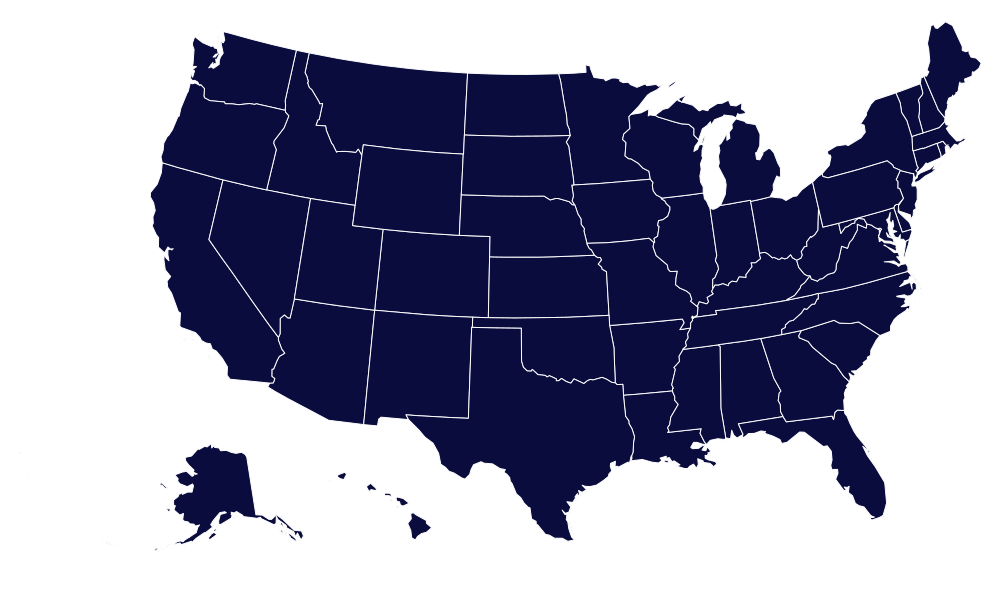
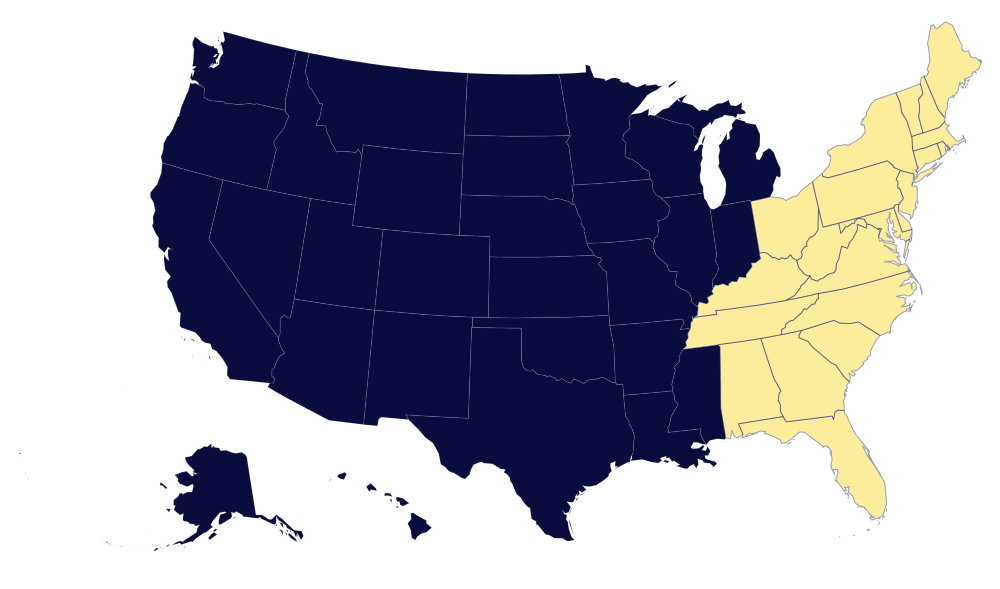
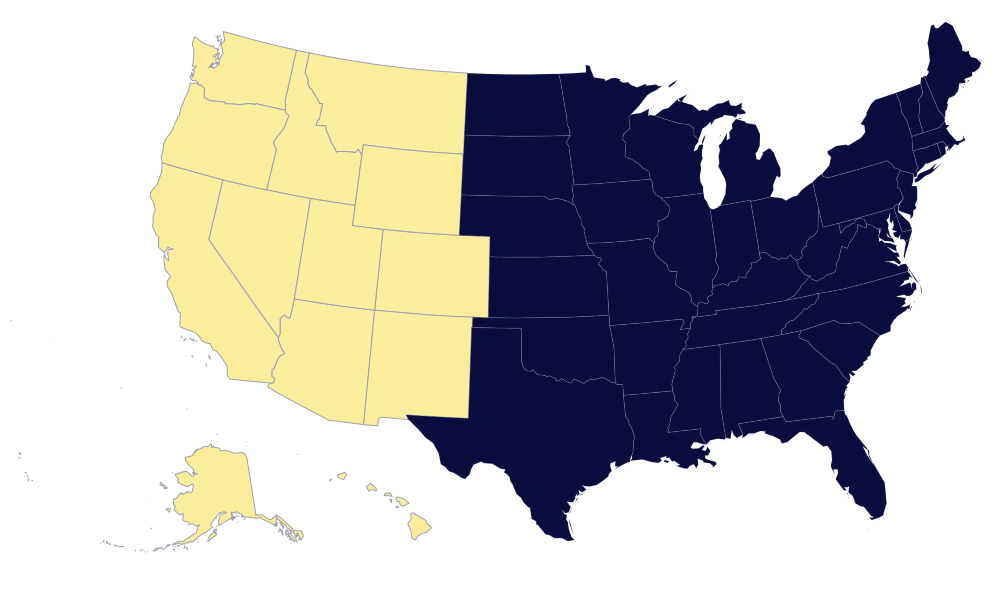
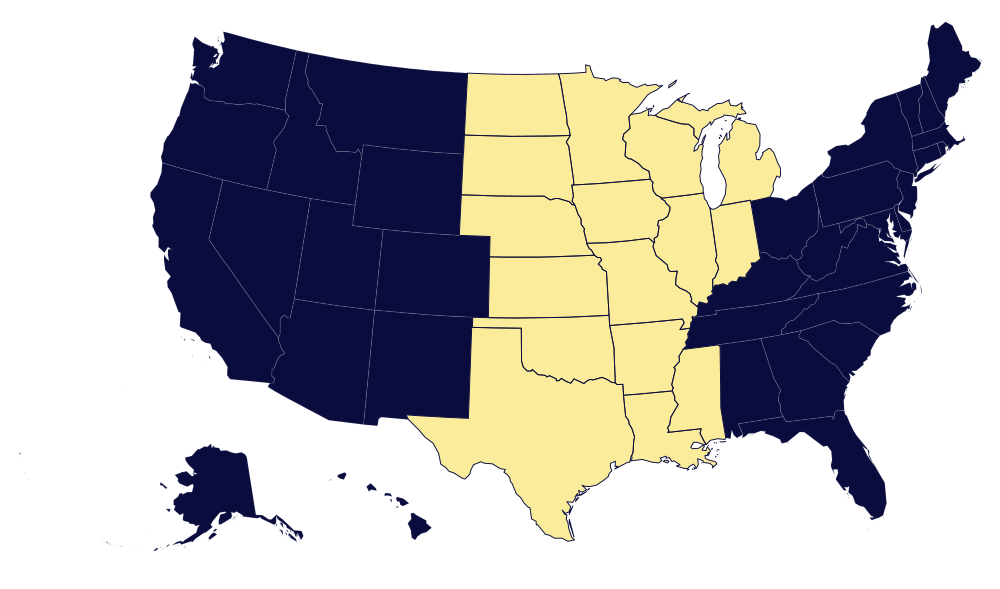
AVLS Nationwide Services
Central States
East Coast
*COMING SOON
West Coast


*COMING SOON
East Coast
Central States
West Coast
AVLS Nationwide Services
CONTACT US
When your event matters, trust your audio visual labor needs to AV Labor Source.
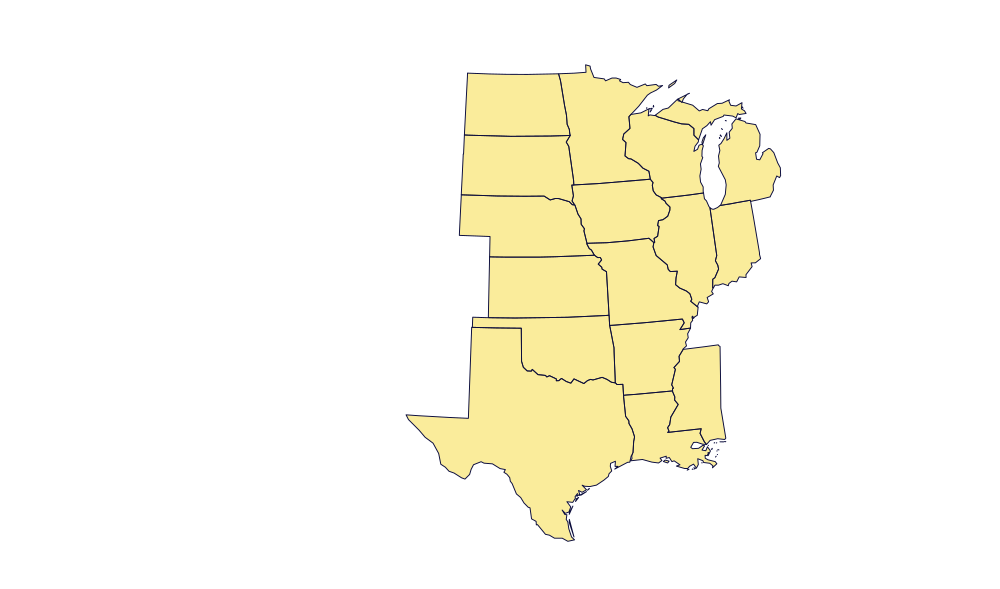
AVLS operate and has proven pool of AV technicians in major cities US Nationwide, such as Las Vegas, Los Angeles, Orlando, Dallas, San Antonio, Austin, Houston, Washington DC, Atlanta, New Orleans, Tennessee and more.
Please complete the form below and we will respond to you as soon as possible. We are available 24 hours a day to assist with your needs. We look forward to showing you what we can do toward the success of your next event.
AVLS operate and has proven pool of AV technicians in major cities US Nationwide, such as Las Vegas, Los Angeles, Orlando, Dallas, San Antonio, Austin, Houston, Washington DC, Atlanta, New Orleans, Tennessee and more.
Please complete the form below and we will respond to you as soon as possible. We are available 24 hours a day to assist with your needs. We look forward to showing you what we can do toward the success of your next event.
EVENT INFORMATION
